























Sebastian Smith leads this three-part ABC News Studios investigation into Sarah Pender’s life, conviction, and escape. Pender was serving a 110-year sentence for the 2000 murders of Andrew Cataldi and Tricia Nordman before she disappeared from Indiana’s Rockville Correctional Facility. Her 2008 flight became a striking entry in criminal history, complete with federal authorities, national television appeals, and the kind of manhunt that true crime producers hear in their sleep.
The series uses modern interviews and archival footage to follow Pender’s four months as a fugitive in Chicago. Pender and her former partner, Richard Hull, speak directly from prison, giving the production unusual access to the central figures in a case that drew wide public attention.
Across three episodes, the series tracks Pender’s Purdue University background, the practical details of her escape, and the 2025 legal proceedings challenging her original conviction. It presents a woman once labeled the most dangerous in the country, then asks how much power that label still carries.
Walmart Shotguns and Conflicting Stories
The series builds its structure through split timelines, moving between the 2008 escape and the 2000 murders with brisk, sometimes breathless editing. Smith cuts from the urgent tempo of the manhunt to the drug-fueled atmosphere of Pender’s youth, giving the episodes the rhythm of a procedural with a memory problem. The past keeps interrupting the chase.
The 2000 double homicide supplies the case’s grim foundation. A shotgun purchased at Walmart became the weapon used to kill Cataldi and Nordman. Pender and Hull give sharply different accounts of that night. Pender says she was out for a walk during the killings. Hull says he found her holding the weapon over the bodies. That contradiction becomes the engine of the early episodes, a story beat with the stubbornness of a locked door.
Much of the original prosecution case relied on a letter sent to Floyd Pennington. The document contained an alleged confession that helped secure Pender’s fate. The first episode explains the mechanics of her prison break. The second follows federal agents as they trace her movements. The final chapter shifts into the legal terrain of 2025, where recent hearings examine possible fabrication of the Pennington letter.
Also Read





The production races through those legal developments with a pace that keeps the series moving, though some details might have benefited from extra breathing room. The 2008 escape works as the hook, drawing viewers back toward the older verdict and its possible flaws. The result is a true crime structure built on competing pressures: the thrill of a fugitive story and the slower, messier question of a conviction’s reliability.
The Suburban Manson
Law enforcement officials repeatedly describe Pender as a female Charles Manson, a label with all the subtlety of a cymbal crash. The image clashes with the woman seen in the interviews, where she appears closer to an ordinary middle-aged citizen than a cult leader. The camera holds on her in long, steady shots, asking viewers to study her face for sincerity, deception, calculation, or some uneasy mixture of all three.

The series pays close attention to Pender’s power over people around her. Scott Spitler, a corrections officer, destroyed his career by helping her escape. He traded his freedom for money and physical favors, a bargain the show presents with grim disbelief. U.S. Marshal Ryan Harmon serves as the opposing force. He speaks openly about his years-long fixation on Pender, and his personal struggles during the search give the fugitive material a human counterweight.
Other figures, including Jamie Long and Peggy Darlington, appear in the account of Pender’s time on the run. Pender reflects on her earlier life as a promising Purdue University student and describes her slide into the drug world occupied by Richard Hull. The show frames her intelligence as one of its central tensions. Was it a survival tool, a means of manipulation, or both at different points? That question gives the interviews their charge.
As direction, the series favors restraint in these moments. The stillness matters. Pender’s face becomes a contested screen, with every pause and glance treated like evidence. The episode also taps into a familiar TV tradition: the ordinary-looking suspect assigned a mythic nickname by the machinery of law enforcement and media. True crime has long loved a catchy monster label. Here, the label threatens to flatten the human being beneath it.
Regret and the Missing Perspective
The series leans heavily on standard true crime language. Overhead shots of Indiana prisons create isolation. The sound design sustains a low thrum of dread, the unofficial house band of the genre. Reenactments arrive often to fill gaps in the archival record. Some of those staged scenes feel excessive given the amount of actual news footage available. The show already has enough material without dressing every shadow in a trench coat.
A major absence shapes the emotional register. The families of Andrew Cataldi and Tricia Nordman are missing from the production. Their absence leaves the tragedy’s human cost underdeveloped. The series gives greater focus to legal mechanics and Pender’s charisma, which makes the viewing experience sharp yet uneven. The victims remain present through the facts of the case, while the emotional force of their loss receives less space than the legal puzzle surrounding Pender.
Larry Sells offers one of the series’ clearest moments of professional candor. The original prosecutor now expresses regret about his role in the case and regards the conviction as a mistake built on flawed evidence. Legal experts, including Martin Tankleff, broaden that discussion through commentary on wrongful convictions. They argue that systemic misogyny influenced Pender’s harsh treatment, while the media image of her as a manipulative mastermind helped the prosecution’s case.
The epilogue covers the 2025 hearings and leaves the court’s final decision undisclosed. That choice gives the ending a suspended quality, fitting for a story about labels, evidence, and the machinery of public certainty. The series looks at the cost of high-profile prosecution and the strange double life of a fugitive chase: a search for a person, and perhaps a search for the truth hiding in plain sight.
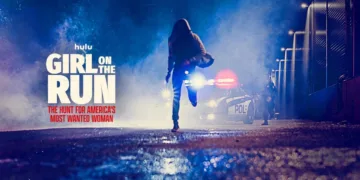
Girl on the Run: The Hunt for America’s Most Wanted Woman premiered on February 19, 2026, as a three-part docuseries from ABC News Studios. It is currently available to stream on Hulu and Hulu on Disney+ for subscribers in the United States and through Disney+ in international markets. The series provides an exhaustive look at the 2008 escape of Sarah Pender from the Rockville Correctional Facility and the subsequent nationwide manhunt led by federal authorities. With its first season complete, the program remains a prominent fixture in the true crime catalog of Disney-owned streaming platforms.
Where to Watch Girl on the Run: The Hunt for America’s Most Wanted Woman Online

Full Credits
Title: Girl on the Run: The Hunt for America’s Most Wanted Woman
Distributor: Hulu, ABC News Studios, Disney+
Release date: February 19, 2026
Rating: TV-14
Running time: 42 minutes per episode
Director: Sebastian Smith
Writers: Sebastian Smith, David Sloan
Producers and Executive Producers: Stuart Cabb, Tom Pearson, David Sloan, Beth Hoppe
Cast: Sarah Pender, Richard Hull, Ryan Harmon, Larry Sells, Scott Spitler, Jamie Long, Peggy Darlington, Roland Pender, Bonnie Prosser, Tom Welch
Editors: Adam Grant
The Review
Girl on the Run: The Hunt for America's Most Wanted Woman
This investigation moves quickly through a complex history of flight and legal doubt. Pender presents as a polite citizen while the state paints a picture of a dangerous manipulator. The missing perspective of the victims creates an imbalance that the production never quite fixes. It remains a fascinating look at how media labels shape our perception of guilt. The 2025 legal updates provide a necessary anchor for the story.
PROS
- Direct participation from Sarah Pender and Richard Hull.
- Fast-moving three-episode structure.
- Updated information regarding the 2025 legal hearings.
CONS
- Excessive use of dramatic reenactments.
- Total absence of the victims' families.
- Short runtime limits the depth of the initial murder case.