




















“What if you could never sleep again?” Sleep Awake opens with this terrifying premise and spends the next five hours exploring every psychological corner of that nightmare. Developer Eyes Out, led by Spec Ops: The Line director Cory Davis and Nine Inch Nails guitarist Robin Finck, has crafted an experimental horror experience that feels less like a traditional game and more like an interactive fever dream.
You play as Katja, a young woman navigating The Crush, a crumbling dystopian metropolis where a supernatural phenomenon called The Hush erases anyone who dares to sleep. This isn’t a game about fighting monsters with weapons or solving intricate puzzles. Sleep Awake is a hallucinogenic journey through a world teetering on the edge of total collapse, where the audiovisual presentation and atmospheric world-building carry far more weight than the actual mechanics of playing it.
Building a Nightmare Society
The foundation of Sleep Awake rests on one of the most viscerally uncomfortable premises I’ve encountered in gaming. Sleep is a fundamental human need, something our bodies will eventually demand regardless of our willpower. The game weaponizes this biological imperative by making that inevitable surrender a death sentence.
The Hush doesn’t just kill people in their sleep. It erases them entirely, leaving behind only glowing Void Shadows where bodies once lay. There’s something cosmically horrifying about this kind of disappearance that makes traditional murder seem almost merciful by comparison. Eyes Out understands that this premise alone carries enough weight to sustain the entire experience.
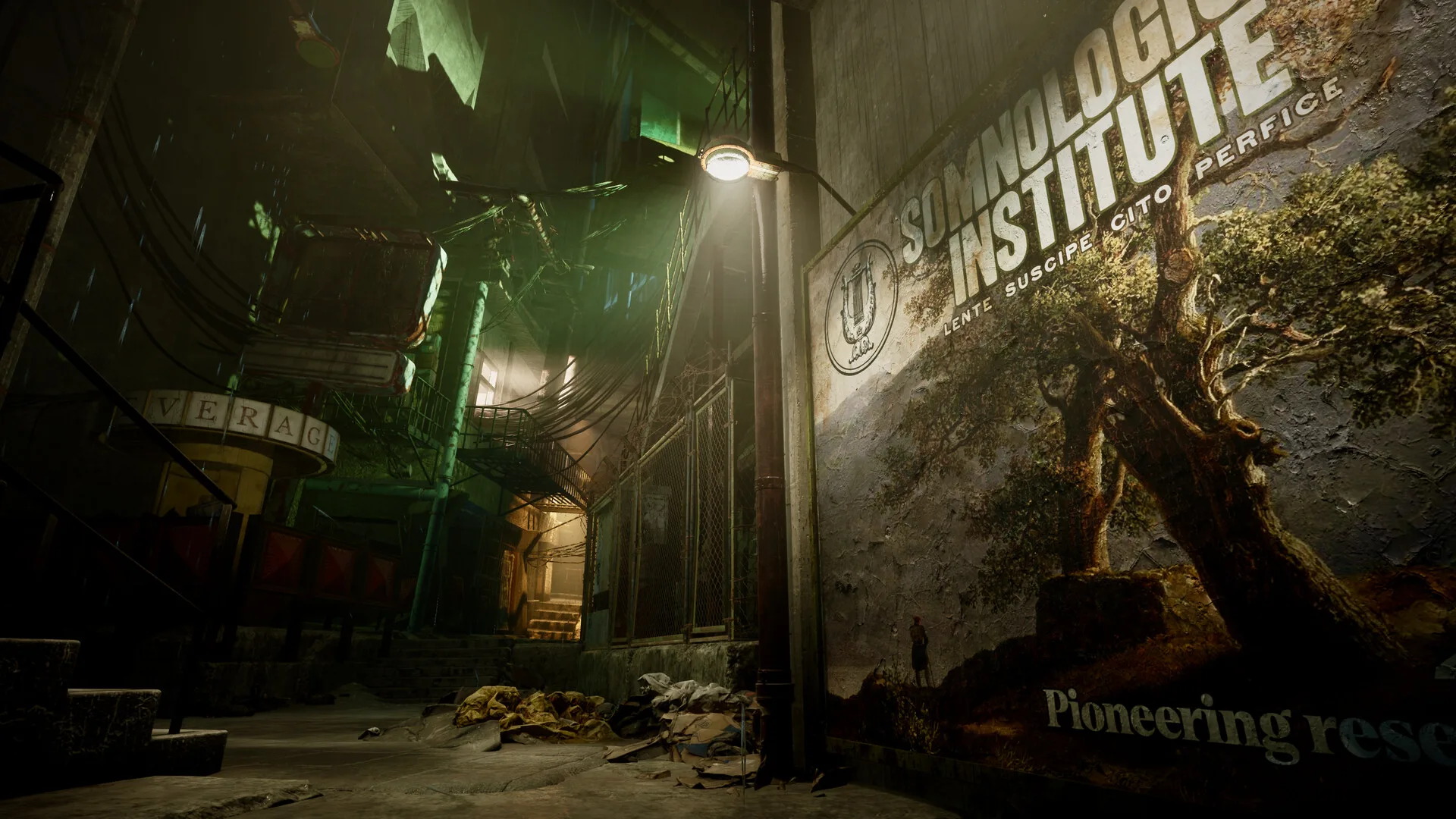
The Crush itself serves as a monument to humanity’s failed attempts at survival. Layers of desperate solutions are visible everywhere you look. Propaganda posters advertise pharmaceutical treatments that stopped working months ago. A “Thoughts and Prayers” vending machine offers nothing but impotent jostling as comfort. The environmental storytelling here rivals anything in BioShock or Fallout, painting a picture of incremental collapse that feels both absurd and grimly realistic.
What struck me most was how accurately the game captures the way humans politicize survival during a crisis. Society splintered into competing ideologies. Some turned to pain, grafting their bodies with spikes and scars to maintain awareness. Others pursued electrical stimulation, inserting runes into their skin. The Delta Transport Ministry emerged as a fascist enforcement arm, hazmat-suited goons who patrol with authoritarian zeal.
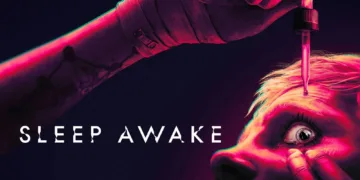
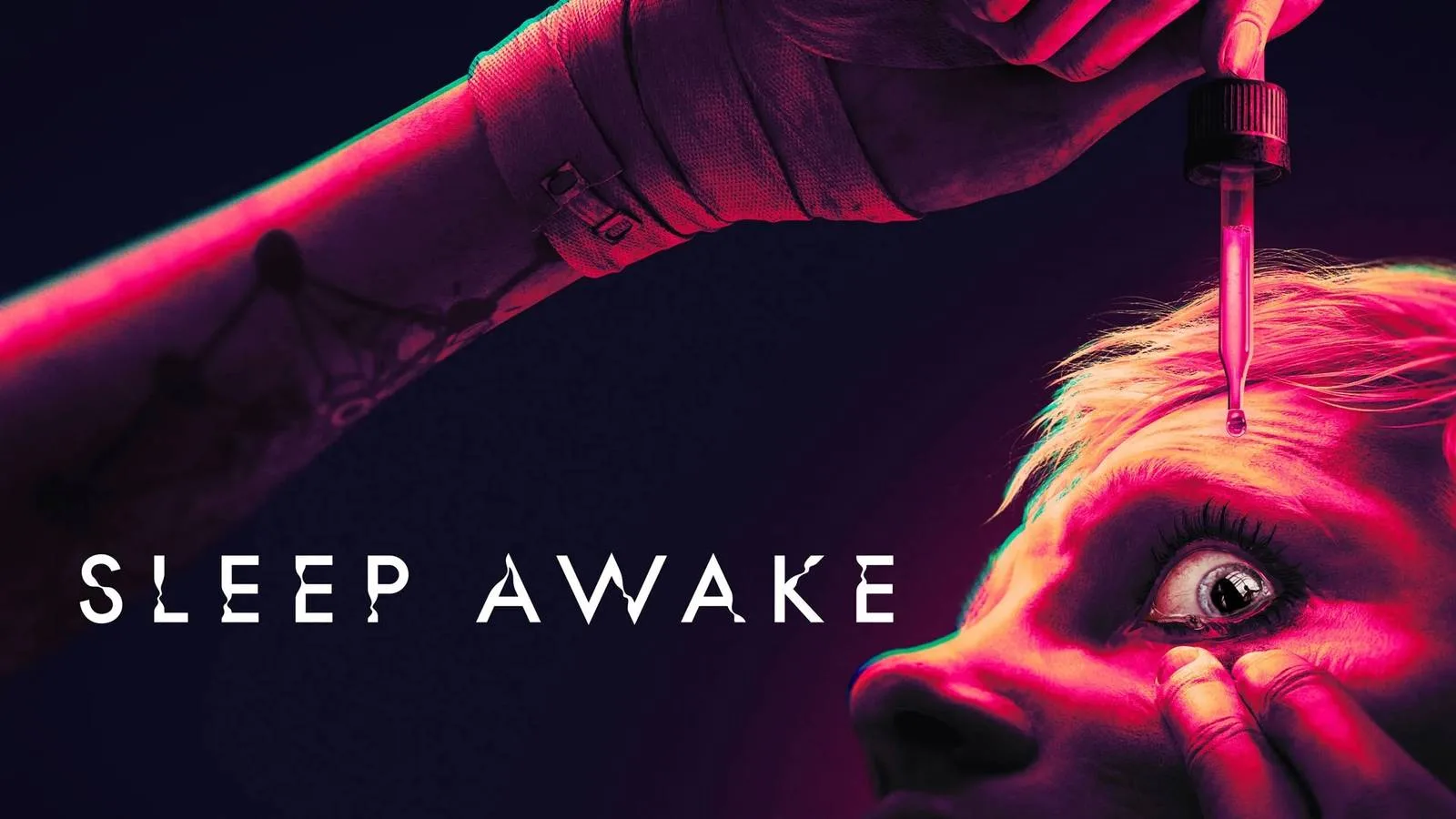
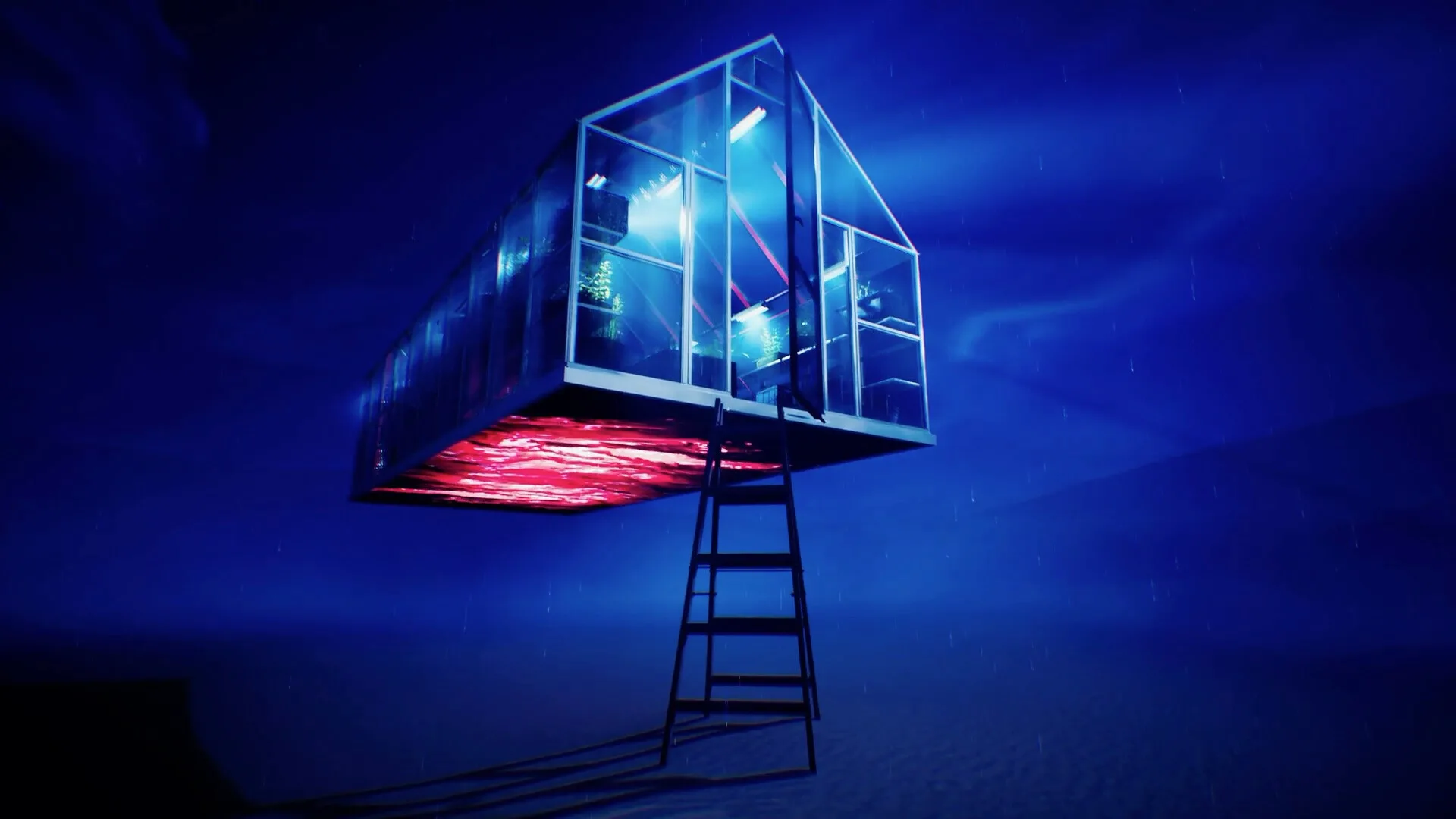
Katja’s connection to this world runs deeper than most. Her father worked at the Somnological Institute studying The Hush. Her brother Bo was taken in his sleep as a child. Now Katja brews homemade eyedrop remedies from plants and sound vibrations, the last remnant of her father’s research. These drops keep The Hush at bay but come with brutal side effects: vivid hallucinations and episodes of “drifting” where Katja loses all sense of time and place. Her mission to deliver these drops to Amma, an elderly woman who refuses to leave her apartment, gives structure to what would otherwise be aimless wandering through a dead city.
When Sound and Vision Become the Story
Robin Finck’s involvement isn’t just a marketing bullet point. His industrial soundscape is the beating heart of this experience. From the moment that bone-chilling piano chord reverberates through the main menu, you know this game understands the power of audio design.
I played through Sleep Awake with a decent pair of headphones, and I cannot stress enough how essential that setup is. Finck’s score moves between minimal ambient drones and pulse-pounding industrial crescendos, always knowing exactly when to retreat into silence and when to assault your senses. The mix of harsh synths, sci-fi textures, and ambient noise creates constant unease, even during moments of relative calm. Music defies traditional structure here, eschewing predictable beats for something that feels actively hostile to your sense of comfort.
The visual presentation operates on a similar wavelength. Sleep Awake won’t win awards for photorealistic graphics, and frankly, it doesn’t need to. The art direction compensates for any technical limitations through sheer creative audacity. The Crush feels lived-in despite being mostly abandoned, with crumbling concrete jungles and makeshift shacks stapled to twisted skyscrapers. The color palette of harsh reds, sickly purples, and glowing blue scars creates a world that looks simultaneously alien and uncomfortably familiar.
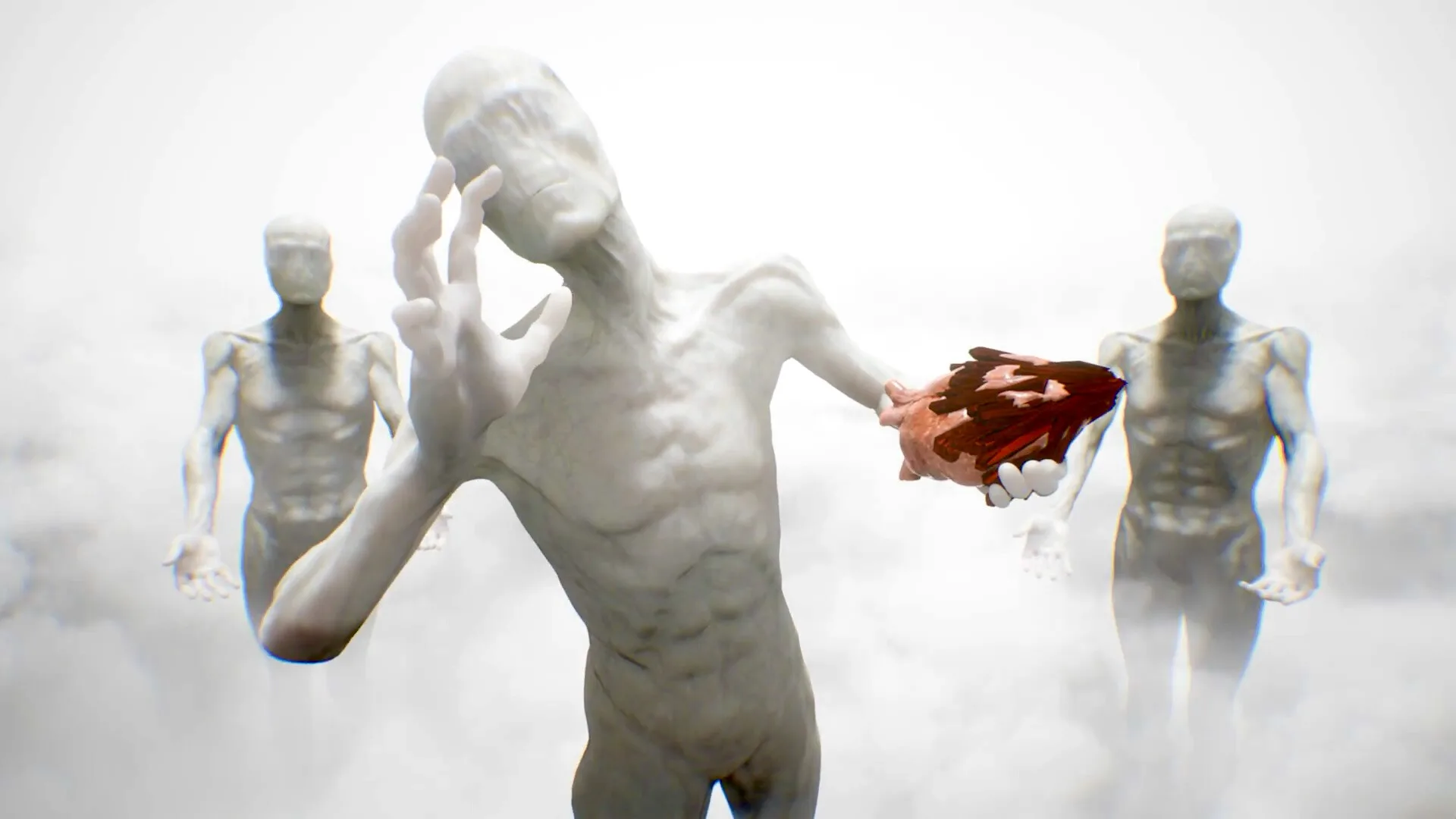
Where the game truly distinguishes itself is in its approach to psychedelic horror. Katja’s hallucinations manifest through aggressive FMV segments, kaleidoscopic imagery, and Rorschach-like patterns that assault the screen without warning. Live-action frames of screaming faces and extreme close-ups of eyeballs flash by in rapid succession. The screen mirrors itself, folds into quarters, or phases entire walls away to reveal fractured realities beneath.
At first, I thought my copy was glitching. Then I realized that uncertainty is precisely the point. Sleep Awake wants you to question what you’re seeing, to feel the same disorientation that Katja experiences. Games like Control and Eternal Darkness played similar tricks with reality, but Sleep Awake pushes the envelope further into pure surrealism. The Fathom, a liminal space between life and death that Katja periodically visits, exemplifies this approach. You’re never quite sure what’s real, what’s memory, and what’s pure hallucination.
Playing Through the Cracks
The actual moment-to-moment gameplay is, to put it bluntly, the weakest element of an otherwise fascinating experience. This is a game that succeeds in spite of its mechanics rather than because of them.
The core loop revolves around exploration and light environmental puzzles. You’ll adjust radio dials to match specific frequencies, gather ingredients to brew remedies, and flip switches to open doors. The puzzles never frustrate because they’re never complex enough to inspire frustration. Everything you need sits within a few meters of where you need to use it.
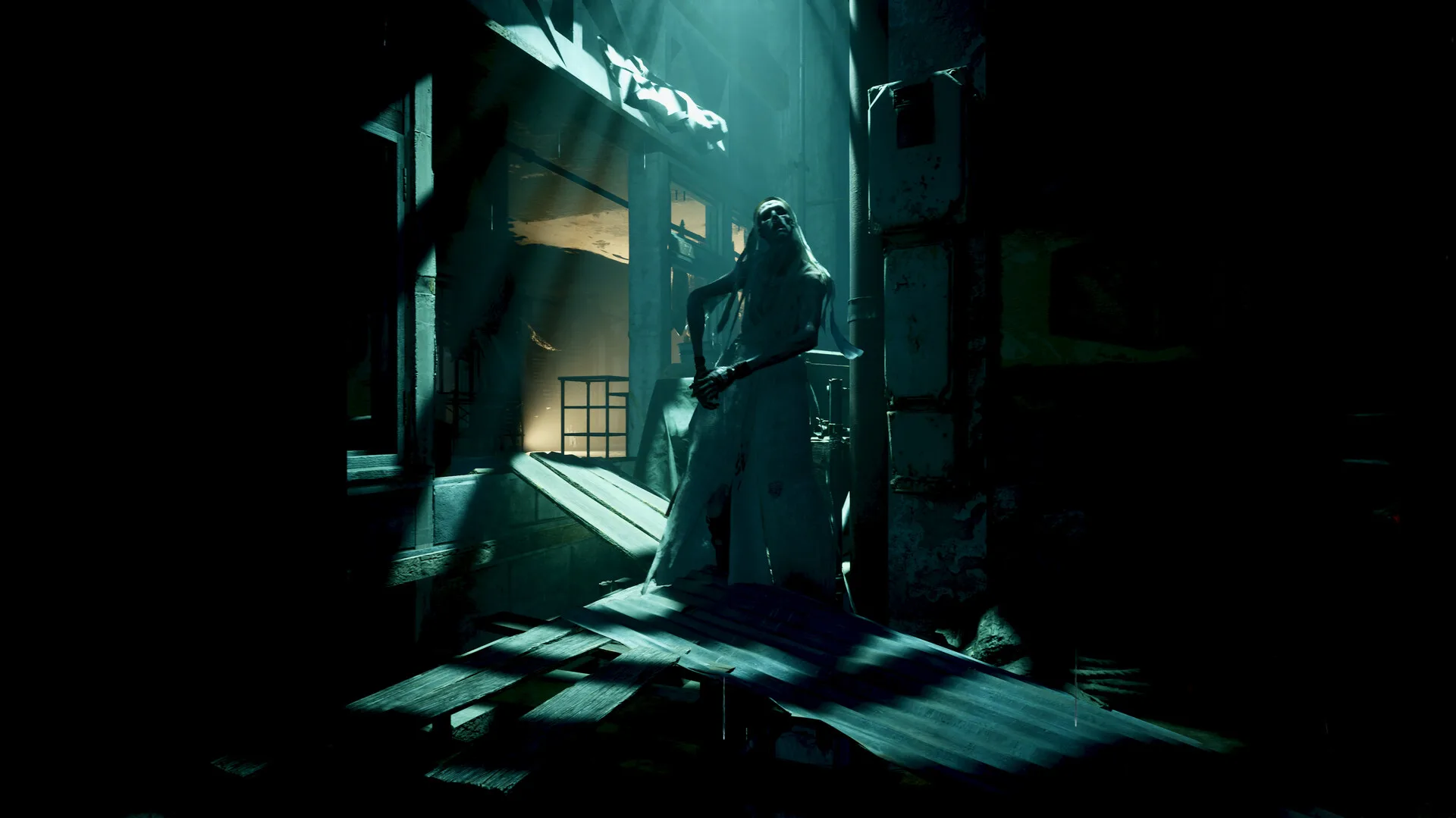
Then the stealth sections arrive, and the entire experience grinds to a halt. Sneaking past Delta Transport Ministry guards should feel tense, but their AI operates at such a basic level that any tension evaporates immediately. Crouch beneath a table and you become completely invisible, even if a guard watched you dive under there seconds earlier. The movement patterns feel arbitrary rather than logical, transforming stealth from a test of observation into a frustrating guessing game.
What makes this particularly disappointing is that Sleep Awake occasionally demonstrates it can do better. One late-game enemy introduces a “don’t look at it” mechanic that creates genuine tension through sound design and peripheral vision gameplay. It’s creative, unnerving, and actually frightening in a way the gas-masked guards never manage to be. Chase sequences work better than stealth because they require less mechanical depth, generating brief moments of excitement.
The death and respawn system presents an interesting case study in thematic design versus practical functionality. When you fail, you get dropped into a void-like space where you must move toward a distant light to respawn. It’s atmospheric the first few times. By the tenth time, after failing the same stealth section repeatedly, it just becomes tedious.
When Mystery Works Better Than Answers
The opening hours dump an overwhelming amount of information on you at once. Proper nouns fly past faster than you can process them. Characters speak in dense technobabble that prioritizes world-building exposition over natural dialogue. It takes roughly five or six chapters out of thirteen to find its rhythm, and that slow burn requires patience.

Katja as a protagonist presents a complicated case. She’s defined almost entirely by loss and survival, which makes sense given her circumstances. The problem is that grief and exhaustion don’t leave much room for personality. The voice acting itself is solid, but the character never feels like more than a vessel for exposition. Supporting characters fare even worse, speaking almost exclusively in technobabble.
Environmental storytelling picks up the slack. Documents and scattered files fill in details about how society collapsed. Some of this written lore feels dry and overlong, but other pieces hit harder, particularly the propaganda posters showing how quickly exploitation follows crisis.
The second half improves significantly as the surreal elements integrate with core gameplay. Hallucinations stop feeling like random visual noise and start functioning as narrative information. The game’s directorial sense becomes more confident.
Then the final hour arrives, and Sleep Awake stumbles in its rush to provide answers. The cosmic horror works best when it remains unknowable. Pulling back the curtain diminishes that power. A late-game boss fight feels awkward and out of place, transforming an internal, psychological struggle into an external combat scenario. The ending itself manages to salvage some of that misstep, providing genuine emotional catharsis even if the path there feels rushed.
What Keeps You Awake at Night
Beneath all the psychedelic horror and flawed stealth mechanics, Sleep Awake grapples with questions that extend beyond its immediate narrative. The central tension is about examining what makes life worth living when survival becomes the only goal.
Katja’s daily routine involves brewing remedies, avoiding guards, and fighting to stay conscious. That’s not living. It’s just delaying death for another day with no endpoint in sight. The game keeps asking “What’s the point?” through environmental details and character interactions.
The various cults and factions represent different attempts to answer that question. None of these solutions work, but the desperation behind them feels painfully human. What resonates most is how Sleep Awake parallels real-world crisis responses. The way humanity politicized survival methods mirrors how we fragment during disasters, prioritizing ideology over collective action.
The game explores internal horror in ways that most horror games avoid. You can’t shoot sleep. The enemy is your own body’s fundamental need for rest, and that fight has only one possible outcome. Sleep Awake also interrogates the nature of reality and perception through Katja’s hallucinations, refusing to provide clear answers about which events were real and which were products of her deteriorating mental state.
An Imperfect Vision Executed With Conviction
Sleep Awake runs for approximately five to six hours, a runtime that feels appropriate. The game maintains technical stability throughout, with no significant bugs or performance issues. There’s a premium, curated quality to how Eyes Out constructs this world, and Blumhouse Games’ involvement as publisher makes perfect sense given how cinematic the experience feels.
Sleep Awake will not connect with everyone. If you need combat or complex mechanical systems, this isn’t your game. The “walking simulator” label applies, though some of the most memorable experiences in gaming involve walking through carefully crafted spaces while absorbing environmental storytelling. The opening hours require patience, but if you engage with the environmental storytelling and allow yourself to sink into the hallucinogenic atmosphere, Sleep Awake rewards that investment.
What lingers after the credits roll is the imagery. Specific moments burn themselves into memory. The world and premise create a hunger for more. Sleep Awake represents something genuinely different in the horror game space. It’s uncompromising in its artistic vision, willing to sacrifice mechanical polish for atmospheric impact.
The stealth sections hold it back from greatness, and the rushed finale undermines some of the mystery. But when Eyes Out leans fully into psychedelic horror and existential dread, when the audiovisual assault synchronizes perfectly with thematic intent, Sleep Awake achieves something rare. It makes you feel the exhaustion, the disorientation, the creeping dread of fighting against your own biology.
SLEEP AWAKE is an immersive, first-person psychedelic horror narrative experience exploring the dark boundary between sleep and death. Developed by EYES OUT, LLC., the studio co-founded and led by Spec Ops: The Line director Cory Davis and Nine Inch Nails guitarist Robin Finck, the game is published by Blumhouse Games. It is set in the last known city on Earth, where citizens are disappearing during “The HUSH” whenever they fall asleep, leading to a desperate crisis of reckless experiments to stay awake. Players take on the role of Katja, who must solve puzzles and use stealth to navigate a distorted reality and survive various death cults. The game was released on December 2, 2025, and is available to play on Windows PC (via Steam), PlayStation 5, and Xbox Series X|S.
Full Credits
Director (Creative/Game Director): Cory Davis, Robin Finck
Writers (Lead Writer/Narrative Designer): Cory Davis
Producers/Studio Leadership (Producers, Executive Producers, and Key Studio Heads): Cory Davis, Robin Finck, EYES OUT, LLC., Blumhouse Games
Art Director/Lead Artist: Charles Bae
Composer/Sound Director: Robin Finck
Developer, Publisher: EYES OUT, LLC., Blumhouse Games
Release Date: December 2, 2025
The Review
SLEEP AWAKE
Sleep Awake is a bold, uncompromising horror experience that prioritizes atmosphere and audiovisual experimentation over traditional gameplay. When it leans into psychedelic terror and existential dread, it creates something genuinely memorable. The world-building is exceptional, Robin Finck's soundtrack is phenomenal, and the hallucinogenic imagery will stay with you long after the credits roll. However, tedious stealth sections and a rushed finale prevent it from reaching its full potential. This is essential playing for fans of experimental horror, but mechanical purists should look elsewhere.
PROS
- Exceptional audiovisual presentation with haunting industrial soundtrack
- Fascinating premise that weaponizes humanity's need for sleep
- Genuinely unsettling psychedelic horror sequences
- Meticulous world-building with outstanding environmental storytelling
- Strong thematic exploration of existential dread and survival
CONS
- Tedious stealth sections with poor enemy AI
- Weak character development and dialogue-heavy exposition
- Rushed finale that over-explains the mystery
- Repetitive respawn mechanic becomes annoying
- Slow opening hours require significant patience