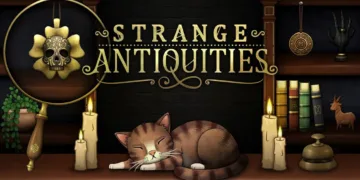



















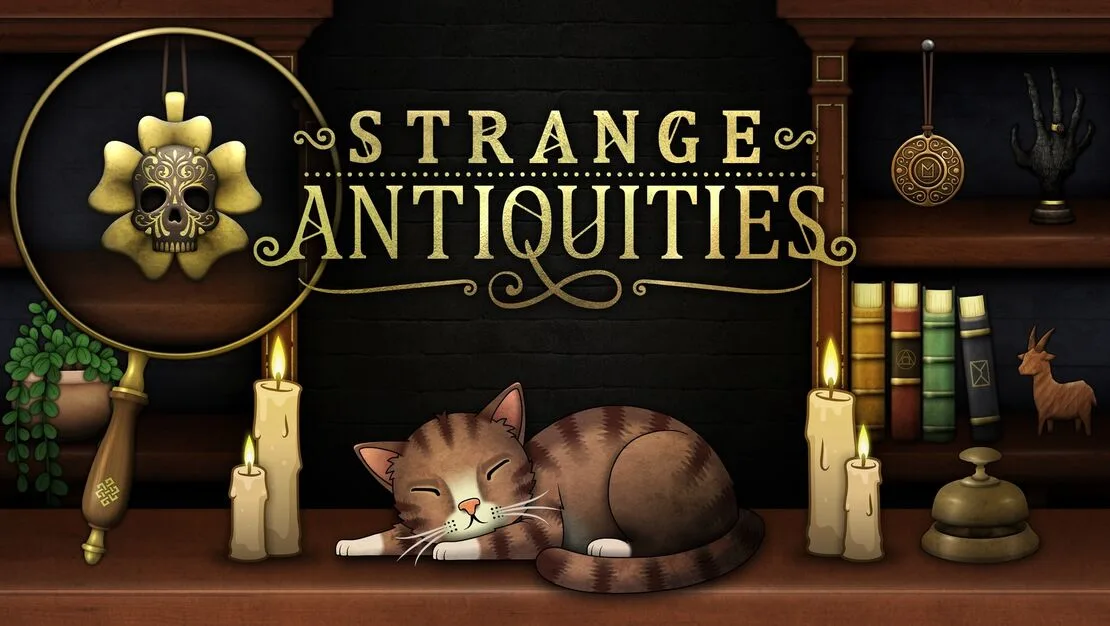

Strange Antiquities positions itself within a curious intersection of British Gothic tradition and contemporary puzzle gaming, creating what might be called a “domestic occultism” that reflects distinctly Anglo sensibilities around the mysterious and mundane. Set in Undermere, a fictional town in England’s Lake District, the game establishes its cultural coordinates through careful attention to regional folklore while packaging these elements for a global audience hungry for cozy mystery experiences.
The premise centers on your role as temporary caretaker of an occult antique shop, filling in for a thaumaturge who has departed to investigate supernatural disturbances. This setup immediately evokes the British literary tradition of amateur detectives thrust into extraordinary circumstances, from Arthur Conan Doyle’s methodical investigations to the village mysteries of Agatha Christie. Yet Strange Antiquities translates these narrative frameworks into interactive mechanics, asking players to become the detective rather than simply observe one.
Your customers arrive seeking magical solutions to everyday problems—nightmares, hearing loss, theft—creating a fascinating tension between the supernatural and the prosaic that characterizes much British supernatural fiction. The shop itself contains dozens of unlabeled mystical objects: cursed items, protective talismans, healing artifacts that must be identified through careful examination and deduction. This 12-hour experience creates an addictive loop of mystery-solving that feels distinctly rooted in the British tradition of patient, methodical investigation while appealing to global gaming audiences who appreciate cerebral challenges.
The Sensory Epistemology of Detection
The game’s five-sense examination system represents a fascinating convergence of phenomenological investigation and digital interactivity, creating what amounts to a virtual archaeology of meaning. Players hover their cursor over mysterious objects, using sight to identify materials, smell to detect scents, hearing to catch unusual sounds, touch to gauge textures, and “inner perception” to register emotional or spiritual impressions. This mechanic transforms the screen into a space of tactile investigation, though mediated through the necessarily visual interface of digital gaming.
This sensory approach reflects broader cultural attitudes toward knowledge acquisition that span multiple traditions. The emphasis on intuitive perception alongside empirical observation echoes both Western esoteric traditions and Eastern philosophical approaches to understanding, while the systematic cataloging process mirrors the taxonomical impulses of Enlightenment science. Players must consult multiple reference books—a comprehensive artifact guide, specialized volumes on symbolism, gemstones, and runes—creating a research process that feels authentically scholarly while remaining accessible to general audiences.
The customer interaction system reveals interesting cultural assumptions about problem-solving and authority. Some visitors know exactly what they seek, while others describe their troubles and trust your expertise to provide appropriate solutions. This dynamic reflects the traditional role of the wise merchant or healer in folk cultures, someone who possesses specialized knowledge unavailable to the general population. The game’s progressive difficulty curve ensures that straightforward identifications give way to complex deductive challenges, while a well-designed hint system prevents frustration without eliminating the satisfaction of independent discovery.
The consequence system, where incorrect guesses lead to a dice-rolling minigame designed to reduce accumulated “fear,” introduces an element of mystical psychology that transcends simple failure states. This mechanic suggests that mistakes in handling occult objects carry spiritual rather than merely practical consequences, reflecting beliefs about the dangerous nature of magical artifacts found across many cultures.
Cartographic Storytelling and the Limits of Digital Space
Strange Antiquities expands beyond its central shop through a map-based exploration system that reveals the constraints and possibilities of narrative space in contemporary gaming. Three maps—the town of Undermere, an ancient castle, and mysterious catacombs—provide access to text-based adventures written in prose reminiscent of Victorian adventure fiction. This approach acknowledges the limitations of visual representation while leveraging the imaginative power of well-crafted language.
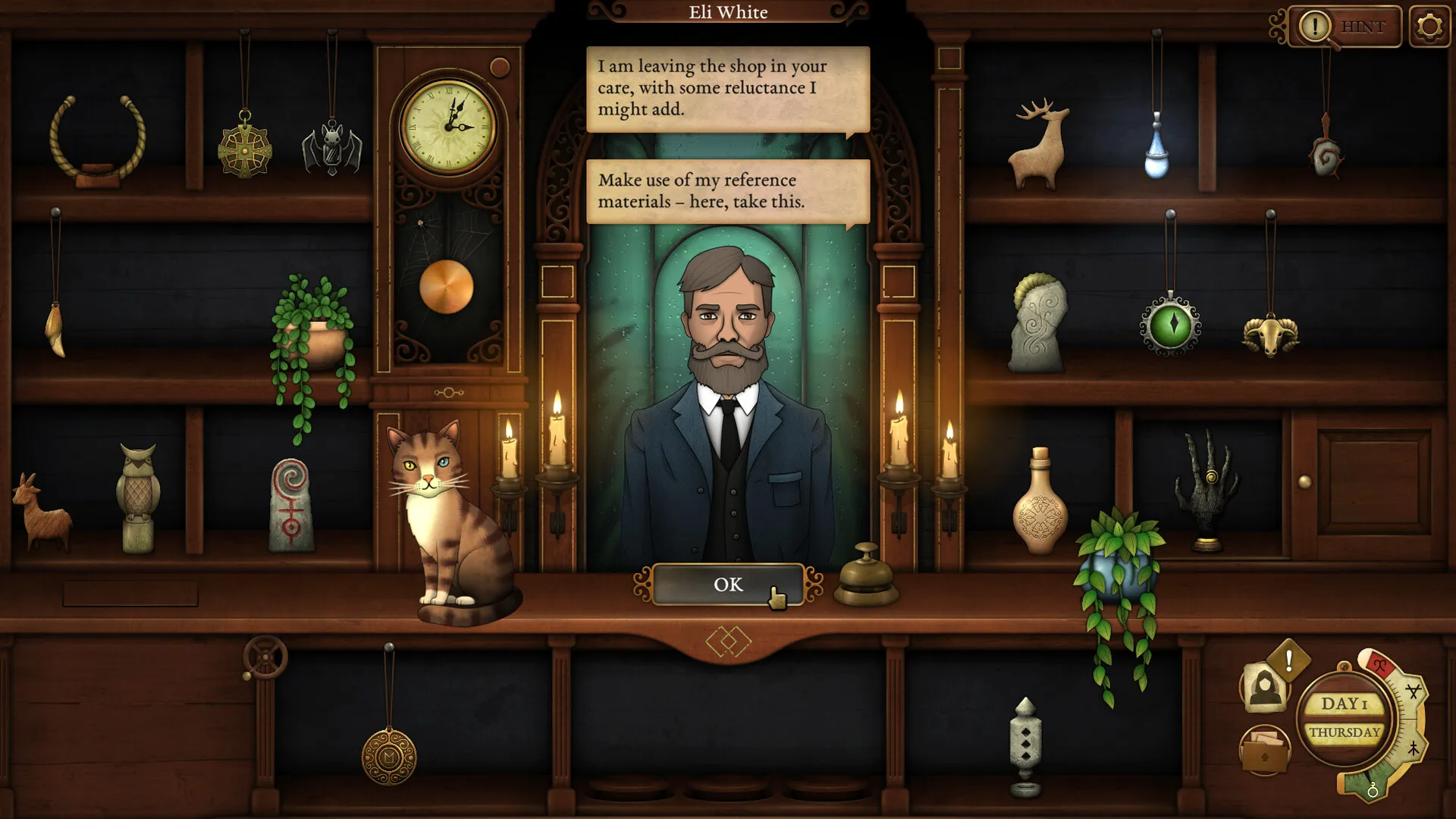
The exploration system reflects a specifically European approach to landscape as palimpsest, where every location contains layers of historical meaning waiting to be uncovered. Players receive cryptic clues through letters, dreams, and cards that must be decoded to locate new artifacts, creating a correspondence-based mystery that evokes the epistolary traditions of Gothic fiction. This method of storytelling through documents and maps reflects colonial-era adventure narratives while adapting them for interactive media.
The game’s approach to choice and consequence operates through artifact selection rather than dialogue trees, creating moral decisions that feel organic to the shopkeeping premise. When customers can be helped by either of two different magical objects, players must consider the broader implications of their choices, recognizing that each decision shapes the narrative trajectory. This system reflects a more subtle approach to agency than many Western role-playing games, where moral choices are often explicitly labeled and categorized.
The overarching mystery—townspeople falling into trances with blackened eyes—builds tension through incremental revelation rather than dramatic set pieces. This pacing reflects the slow-burn tradition of British supernatural fiction, where horror emerges from the gradual recognition of wrongness rather than sudden shocks. The interconnected puzzle structure, where clues from different investigations inform each other, creates satisfying moments of synthesis that reward careful attention and note-taking.
Aesthetic Translation and Global Gaming Culture
The visual design of Strange Antiquities navigates the challenge of making distinctly British cultural elements accessible to international audiences without losing their regional specificity. The art style balances dark occult imagery with cartoonish approachability, creating what might be described as “domesticated gothic”—supernatural elements rendered safe enough for broad consumption while retaining their mysterious appeal.
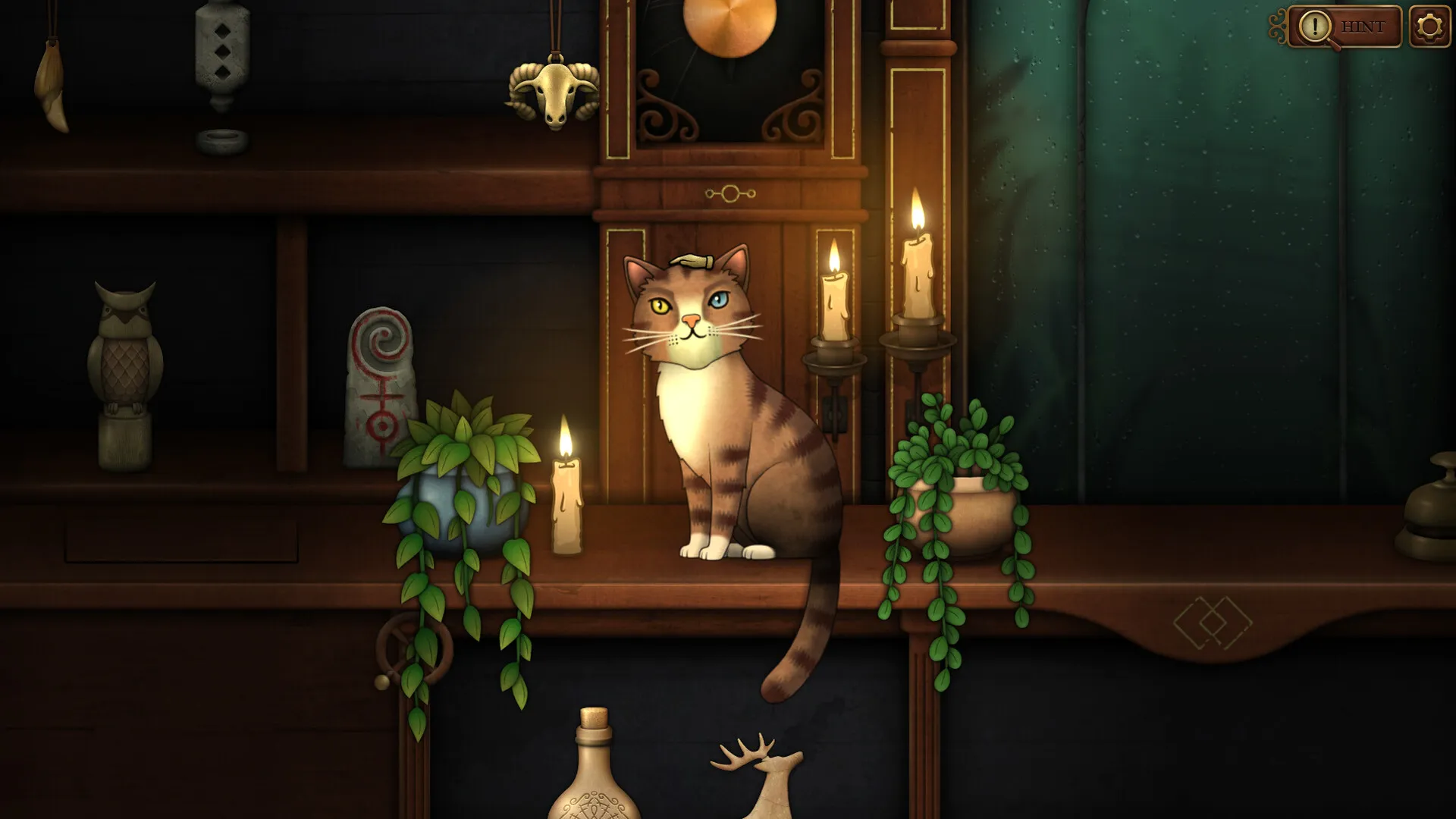
This aesthetic choice reflects broader trends in how regional folklore gets packaged for global media consumption, similar to how Studio Ghibli films translate Japanese spiritual concepts through universally appealing visual language. The intricate detail lavished on each artifact, map, and character demonstrates the kind of craftsmanship that international audiences have come to expect from indie games, where limited budgets are compensated by exceptional artistic attention.
The audio design employs minor-key piano compositions that create an eerie atmosphere without genuine horror, establishing the “cozy-spooky” tone that has become increasingly popular in global gaming culture. This musical approach reflects the influence of Scandinavian design sensibilities on contemporary indie gaming, where minimalism and emotional restraint create sophisticated atmospheric experiences.
The point-and-click interface acknowledges the game’s PC origins while providing accessibility options that reflect international market considerations. Features like arachnophobia mode, adjustable cursor speeds, and auto-labeling demonstrate awareness of diverse player needs and preferences. These design choices suggest how cultural products must adapt to serve global audiences while maintaining their essential character.
The game’s appeal to puzzle enthusiasts and detective game fans transcends cultural boundaries, tapping into universal human drives toward pattern recognition and mystery-solving. Yet its specific implementation—the emphasis on patient observation, systematic cataloging, and intuitive leaps—reflects distinctly Western European approaches to knowledge and investigation that may resonate differently across cultural contexts.
Strange Antiquities succeeds by creating a space where regional folklore traditions can be explored through contemporary digital interfaces, allowing players worldwide to engage with British supernatural culture through interactive participation rather than passive consumption. The result feels both authentically rooted in its cultural origins and genuinely accessible to global audiences seeking thoughtful, atmospheric puzzle experiences.
The Review
Strange Antiquities
Strange Antiquities masterfully translates British Gothic sensibilities into engaging puzzle mechanics, creating an atmospheric detective experience that rewards patience and analytical thinking. While it follows a familiar formula, the game's sophisticated approach to cultural adaptation and sensory investigation elevates it beyond simple imitation. The seamless integration of folklore elements with contemporary gaming design makes this essential for puzzle enthusiasts and mystery lovers alike.
PROS
- Innovative five-sense examination system
- Satisfying interconnected puzzle design
- Rich cultural atmosphere and folklore integration
- Beautiful hand-crafted art style
CONS
- Very similar format to Strange Horticulture
- Story elements less compelling than puzzles
- Requires external note-taking
- Limited innovation in established formula