























Nightmares of Nature builds a smart conceit that marries the methodical instruction of a nature documentary with the pulse and precision of a horror blueprint. The format recalls cross-genre experiments seen across world cinema, including traditions in Indian parallel cinema and mainstream Bollywood that reframe familiar forms to produce fresh emotional charge. Season 2, titled “Lost in the Jungle,” extends this idea into the dense, perilous Central American rainforest, where survival design shapes every creative choice.
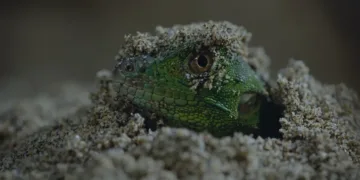
The new run tracks three focal creatures: an opossum, a baby iguana, and a jumping spider. Their shared path leads toward an abandoned laboratory buried in the rainforest, a concrete objective that organizes the season’s movement and gives the animal journeys a clear waypoint. The series keeps the brisk, concentrated format of the first installment with three concise episodes that play fast and bright, and the core approach proves strong enough to scale.
Heightened Tropics and The Art of Threat
The tropical jungle setting raises the stakes with scale and variety. The rainforest supplies a crowded field of hazards that outstrip the temperate woods from the first season, and the threats feel charged by the environment itself.

Visual choices heighten peril while preserving factual integrity, so the fear grows from what the camera observes. This emphasis on tactile danger aligns with realist streaks in international action traditions and with Indian survival thrillers that lean on physical geography for tension.
The abandoned science lab acts as a savvy piece of cinematic design. It sets a tight perimeter for the animals’ objective and gives the action a lean, B-movie charge that clarifies risk and reward. Predators arrive with sharp specificity: venomous snakes, stealthy crocodiles, patient hawks, scorpions, giant centipedes, and aggressive praying mantises. The biome feels thick with possibility, and the three-episode span samples that abundance while hinting at further conflicts waiting in the canopy and on the forest floor.
Integrating Factual Twists into Screenplay
The show runs on a deliberate balance between accurate nature study and straight horror mechanics. That dual structure powers its appeal. Filmmaking tools cue dread with extreme close-ups, sharp musical stings, pointed sound design, and a narrative frame that treats the jungle like a nocturnal maze seen in daylight.
Key facts lock into turning points rather than sitting outside the drama. The opossum’s resistance to snake venom surfaces during a decisive confrontation, so a biological trait lands like a plot reveal. Young green iguanas forming groups becomes a survival tactic against a vulture, and the script allows that behavior to read as character strategy.
The series slips in striking context, including the long lineage of opossums dating back to the age of dinosaurs. Some sequencing choices, such as the handling of leaf-cutter ants, bend toward tension, and the steady flow of verified information keeps the emphasis on credible behavior and ecology.
Performance, Cinematography, and Tone
Maya Hawke’s returning narration anchors the delivery. Her read threads clarity with unease, passing along facts with a pulse that fits the images, and the track sits beside the footage rather than pulling focus. The performance supports the show’s balance between explanation and suspense.
Image craft and cutting hold a consistent edge. The team shapes large-scale set pieces around creature encounters, and the camera places viewers inside tight spaces where small movements matter. Editorial tempo sharpens the shock in moments like an opossum meeting a snake.
Repeated use of squirm-inducing close-ups suits the horror palette and cements the mood. Season 2 plays like a confident step forward for the concept, reaffirming a hybrid form that connects to global film grammar while staying rooted in observable animal behavior and clear, teachable facts.
Nightmares of Nature Season 2: Lost in the Jungle is a documentary series that creatively fuses the natural world’s educational elements with the narrative tension and visual style of a horror film. This season shifts the focus to the Central American jungle, following three new animal protagonists—an opossum, a baby iguana, and a jumping spider—as they navigate a landscape full of formidable predators and environmental dangers, climaxing in a mystery surrounding an abandoned laboratory. The series, which consists of three approximately 45-minute episodes, premiered on October 28, 2025, and is available to stream on Netflix.
Credits
Title: Nightmares of Nature Season 2: Lost in the Jungle
Distributor: Netflix
Release date: October 28, 2025
Rating: TV-PG
Running time: 3 episodes, approximately 45 minutes each
Director: Charlotte Lathane
Producers and Executive Producers: Jason Blum, Martha Holmes, Mark Brownlow, Grant Mansfield, Gretchen Palek, Matt Sarshik, Doug Mackay-Hope, Charlotte Lathane
Cast: Maya Hawke
Director of Photography (Cinematographer): Steve Downer
Composer: Stuart Roslyn
The Review
Nightmares of Nature Season 2
Nightmares of Nature Season 2 is a successful evolution of its distinct, hybrid format. By shifting the action to the Central American jungle, the series raises the stakes and introduces deadlier, more visually compelling conflicts. The production excels at integrating authentic nature facts as narrative twists, making the educational material feel essential to the horror storyline. Maya Hawke's foreboding narration and the sharp, close-up cinematography solidify its identity as essential, genre-bending viewing.
PROS
- Elevated setting provides intrinsically higher, more diverse dangers.
- Brilliant fusion of factual information and horror narrative structure.
- The "abandoned lab" setting adds effective B-movie stylization.
- Strong technical execution with sharp, suspenseful cinematography.
- Maya Hawke's narration perfectly balances dread and instruction.
CONS
- The core concept does not significantly evolve beyond the first season.
- Some creative liberties are taken to maximize dramatic tension.
- The brief, three-episode format leaves many story possibilities unexplored.