
























![Kingdom Hearts Collection [I-III] Review](https://gazettely.com/wp-content/uploads/2026/10/Kingdom-Hearts-Collection-I-III-1-360x180.webp "Kingdom Hearts Collection [I-III] Review: KHII Holds Steady as Newer Entries Fluctuate 37")





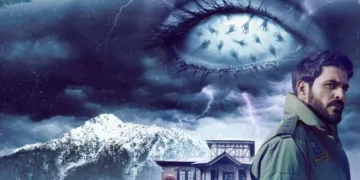
The screen opens on Baramulla, a Kashmiri town wrapped in snow and quiet. Director Aditya Suhas Jambhale, working from a story developed with Aditya Dhar, sets a mood of cold beauty with steady unease. The film mixes a grounded police procedural with domestic horror. DSP Ridwaan Sayyed (Manav Kaul) arrives to probe a string of child disappearances that coincide with the appearance of a pale white tulip.
At the same time, Ridwaan, his wife Gulnaar, and their children Noorie and Ayaan settle into a sprawling antique house where every step creaks and night sounds carry. The familiar haunted house frame becomes a way to study the echo of historical trauma and political strain in the region. The genre mix argues that old wounds live on as present ghosts.
The Architecture of Dual Narratives
Baramulla sets up two parallel plotlines that aim for a complex structure. This approach challenges common studio habits and, when tight, can land with real force. One track follows Ridwaan’s rational investigation into the missing children. It begins with a disappearance at a magic show and moves through a logical trail that edges against the recruitment of young people by local militants. This line stays rooted in procedure, facts, and police work.

The other track plays out in the creaky geometry of the new home. Gulnaar and the children encounter signs of a spectral presence. The horror grows from the house’s past ownership by a Hindu family and gathers around the mounting trauma of their teenage daughter, Noorie. The script links djinn lore and the unexplained vanishings to a history of displacement and violence, shaping real conflict as a spiritual haunting.
Pacing and cohesion present the early challenge. The first hour builds tension and atmosphere, yet the two lines sit apart for too long. I like genre blends that plant subtle connecting clues early. Here, the film withholds too many hints, asking viewers to link dots that never quite appear. The climax unites the historical events with the present hauntings in a way that makes sense, although the rush to resolution blunts the impact. Once the past is revealed in full, the suspense around the supernatural fades, and the drama points its finger where a steadier, more layered approach could have deepened the effect.
Emotional Geography of the Cast
A layered design like this leans on authentic feeling from the actors. Manav Kaul gives DSP Ridwaan Sayyed a quiet intensity. He plays a troubled officer marked by a past professional scandal and a visible distance from Noorie. Kaul remains reliable, though the writing does not always give Ridwaan enough interior life to feel fully engaged. His inquiry sometimes reads as tentative, and the scale of the mystery keeps him at arm’s length.

Bhasha Sumbli’s Gulnaar becomes central. She channels a mother’s resilience, steady under fear. Gulnaar often steps toward the uncanny with clear resolve, and she acts as the spark that ties present danger to the house’s history. She carries a current of righteous anger that drives the revelation anchoring the film’s theme.
The younger performers make a mark. Arista Mehta plays Noorie’s trauma with conviction. Her scenes with Kaul land, and the family’s shared pain feels present. The production reaches for cultural verisimilitude through local attire and accents, which roots the characters in the snow-covered setting. Some supporting roles feel thin on the page, yet the core family, and Gulnaar’s path in particular, give the narrative its emotional weight.
Visual Language and Technical Craft
Baramulla shows strong technical control, using Kashmir’s stark winter to shape a world soaked in dread. The location functions like a character, pressing on every secret. The visual palette leans on grey, blue, and black, which deepens the chill. At times frames skew too dark, yet the look draws unease from wood, shadow, and snow.

The haunted house stands out as a space that feels lived in and wrong at the same time. Sound design supports the tension, from floorboards that complain to stray whispers that catch the ear. Some genre beats rely on familiar sighs, but the track still builds suspense.
The major artistic concern arises with the heavy use of special effects in the climax. The attempt to fuse brutal historical injustice with CGI apparitions and shadow figures does not sit easily. Strong horror often holds back. Here, the effects tip scenes toward simplicity and soften the gravity of the subject. The closing moments recover grace with a haunting track sung by Shilpa Rao, which leaves a chill that lingers.
Allegory, Trauma, and Cultural Reflection
Social horror needs care, since the film itself stands as a cultural artifact. Baramulla links its supernatural events, from disappearances to haunting, to the long tragedy of Kashmir, with a focus on the displacement of Kashmiri Pandits. This approach aims to turn a genre frame into a statement about shared anxiety.
The symbols carry weight. Missing children taken by spirits and drawn toward a militant group sketch a picture of youth swallowed by endless conflict. The bruised white tulip returns as a sign of a land wounded and unable to thrive. The house acts as a store of memory, keeping the marks of those who lived there before.
Delivery becomes the sticking point. In the final act, the film pulls back the curtain and bares the violence of history in direct terms. That move flattens a complex, painful story into a simple moral picture of good and evil. The intention reads as sincere, and the film leaves a message about coexistence and stopping the cycle of extremist violence. The presentation often speaks too loudly, which can reduce the weight of the real trauma it seeks to honor, even with a heartfelt coda dedicated to the displaced community.
The film Baramulla is a supernatural drama mystery set in the snow-covered valley of Kashmir. It was released globally on the streaming platform Netflix on November 7, 2025. The story follows DSP Ridwaan Sayyed, a police officer investigating the mysterious disappearance of children, while his family faces unsettling supernatural occurrences in their new house, intertwining a procedural thriller with folklore and the region’s historical trauma.
Credits
Title: Baramulla
Distributor: Netflix
Release date: November 7, 2025
Director: Aditya Suhas Jambhale
Writers: Aditya Dhar (Story), Aditya Suhas Jambhale (Screenplay, Dialogue), Monal Thaakar (Screenplay, Dialogue)
Producers and Executive Producers: Jyoti Deshpande, Aditya Dhar, Lokesh Dhar
Cast: Manav Kaul, Bhasha Sumbli, Arista Mehta, Rohaan Singh, Neelofar Hamid, Ashwini Koul, Mir Sarwar, Shahid Latief
Director of Photography (Cinematographer): Arnold Fernandes
Editors: Shivkumar V. Panicker
Composer: Susmit Limaye
The Review
Baramulla
Baramulla succeeds in creating a chilling atmosphere through its stunning visuals of snow-covered Kashmir and its unsettling haunted house. The film ambitiously blends a police procedural with historical allegory, resulting in a structurally complex work. While the central performances anchor the emotional weight, particularly Bhasha Sumbli's portrayal of resilience, the narrative struggles to seamlessly converge its dual plots. The movie impresses with its technical craft and intentions to discuss deep societal wounds, but its messaging becomes too explicit in the final act, undermining the subtlety established earlier. It is an an interesting, though imperfect, attempt at social horror.
PROS
- The use of the snow-covered Kashmir landscape and the creaking house creates powerful dread.
- Effective cinematography utilizes a bleak, cold color palette to enhance the mood.
- Her role as Gulnaar provides much of the film's emotional anchoring and dramatic drive.
- Attempts to address complex historical trauma through genre filmmaking.
CONS
- The initial disconnect between the police and horror plots tests the audience's patience.
- The thematic allegory becomes heavy-handed and too obvious in the final revelation.
- Special effects for the spectral elements are sometimes awkward and distract from the serious themes.
- Manav Kaul's character, Ridwaan, is written with restraint that sometimes limits his emotional complexity.







