






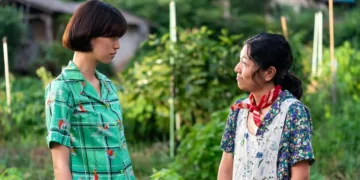
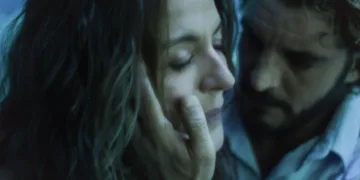
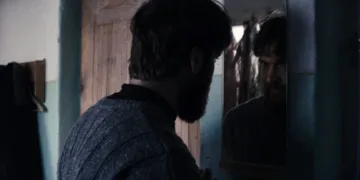












Climbing For Life frames Junko Tabei’s story as a character-driven biopic, built around the legendary Japanese mountaineer who, in 1975, became the first woman to reach the summit of Mount Everest. Director Junji Sakamoto leans on star power, with national icon Sayuri Yoshinaga playing Tabei in later life and Non portraying her during the historic expedition, so the film’s emotional weight rests heavily on performance and presence.
The narrative runs on a flashback structure that cuts between the hazardous climb in the 1970s and Tabei’s life after a terminal cancer diagnosis. The dual timeline repeatedly draws energy from Tabei’s earlier achievement to frame her present-day struggle with illness. The script keeps its attention on perseverance, memory, and the attempt to push past personal limits. The film aims for a true-life inspirational tone, with a rousing and sentimental mood that sits inside a very traditional, even old-fashioned, approach to storytelling craft.
Ascending Against the Current: The Everest Story
The most gripping material sits in the 1975 expedition thread. The path to the summit is presented as a constant fight against resistance. Tabei and her all-female team run into entrenched sexism and discrimination in 1970s Japan, especially when they try to secure funding, proper equipment, and institutional support.

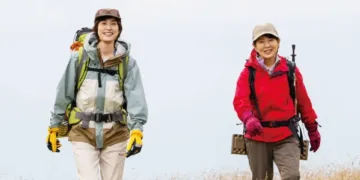
Their eventual progress grows out of sheer determination, with the group forced to improvise DIY answers to technical problems that would stop a less driven team. Tabei’s group gains definition as a tight unit, particularly once journalist Etsuko Kitayama joins the climb and becomes her close friend, adding a clear interpersonal rhythm to the mountain sections.
From a storytelling mechanics perspective, the mountain sequences work in a sturdy, functional way but rarely reach the sense of awe most viewers associate with large-scale climbing cinema. The production uses locations in Japan’s Toyama Prefecture rather than the Himalayas, and that choice tends to keep the action visually contained. Key story beats that should hit with maximum force, like the team’s near-disaster with an avalanche or the dangerous final stretch to the summit, often feel muted, with staging and scale that appear hemmed in by budget.
Pacing becomes a problem once the film moves past the summit. The script introduces a crucial line of conflict around the team’s internal disunity after Tabei’s fame eclipses that of her colleagues, yet this fracture receives minimal exploration. The film sidesteps that tension, and the decision to move quickly past it flattens the emotional curve of the narrative. A richer look at that rift would have deepened the character work and sharpened the story’s dramatic stakes.
The Second Climb: Legacy and Personal Peaks
The later-years storyline functions as the emotional spine of the film and frames how the audience processes the earlier Everest material. After Tabei receives her terminal cancer diagnosis, she treats her remaining time as a different kind of ascent, refusing to surrender to the illness. She turns her energy toward organizing Mount Fuji trips for high school students affected by the 2011 Great East Japan Earthquake, channeling her love of climbing into a concrete way of supporting young people.
The film spends careful time on how fame rearranges her family life. Tabei and her husband, Masaaki, live in a gender arrangement that feels striking for 1970s Japan, with him staying home as the primary caregiver while she travels the world. The script also tracks the strain with their son, Shintaro, who initially resents growing up as the child of a public figure. Their eventual reconciliation lands as a clear emotional beat, one of the few places where the film lets the long-term cost of fame and absence settle into the performances.
These later segments carry a tone of reflection, mixed with gentle humor and a surprisingly light sense of joy in aging and choosing to stretch life through willpower. The stakes are literally life and death, yet the scenes do not always generate strong dramatic urgency. Sayuri Yoshinaga supplies plenty of charm and a commanding presence, and her work sets the emotional temperature for these passages. The writing, however, tends to treat Tabei as an idealized figure and keeps her psychology on the surface, which limits how much vulnerability Yoshinaga can draw out. Her star power does most of the heavy lifting in this half of the story.
A Conventional Structure Over Cinematic Sweep
Junji Sakamoto’s direction leans into a sentimental mode that consistently avoids direct confrontation. His choices steer the film away from the sharper social or feminist angles built into Tabei’s life and achievements. The tone favors inspirational melodrama, a register that can connect with a broad audience while softening the historical edge that could have given the film more bite.
Screenwriter Riko Sakaguchi works within a very familiar biopic pattern: early passion, landmark success, strain at home, personal crisis, and an emphasis on legacy. The dialogue repeatedly backs away from the most charged personal or political nodes, including the fight against institutional sexism, and instead prioritizes simple, heartfelt exchanges. That structural caution limits how far the film can go as a character study or as a portrait of a social moment.
On a visual level, the camerawork and staging echo the narrative approach. The images serve the story clearly and cleanly, yet they often resemble a midday television docudrama rather than a large-scale theatrical experience. The rhythm of the edit drags in places, and the film devotes relatively little screen time to the sheer physical and cinematic spectacle of the Everest climb. The result is a film that remains easy to watch and is firmly anchored by a strong lead performance, but its conventional, sentimental shape keeps it from feeling as striking or memorable as the pioneering woman whose life it sets out to portray.
Climbing For Life is a 2025 Japanese biographical drama that chronicles the extraordinary life of Junko Tabei, the first woman to conquer Mount Everest. The film interweaves her historic 1975 expedition with her final years after a cancer diagnosis, using the power of memory and perseverance to tell an inspirational story. It premiered at the 73rd San Sebastián International Film Festival on September 19, 2025, and opened the 38th Tokyo International Film Festival on October 27, 2025. The movie is scheduled for theatrical release in Japan on October 31, 2025.
Full Credits
Title: Climbing For Life
Distributor: Kino Films Co., Ltd.
Release date: September 19, 2025 (San Sebastián), October 31, 2025 (Japan)
Running time: 123 minutes, 130 minutes
Director: Junji Sakamoto
Writers: Riko Sakaguchi
Producers and Executive Producers: Rioko Tominaga (Producer)
Cast: Sayuri Yoshinaga, Non, Kōichi Satō, Yuki Amami, Ryuya Wakaba, Asuka Kudo, Mizuki Kayashima, Fumino Kimura, Wan Marui, Wako Ando, Chisato Nakai, Misa Wada
Director of Photography (Cinematographer): Norimichi Kasamatsu
Editors: Shinichi Fushima
Composer: Goro Yasukawa
The Review
Climbing For Life
Climbing For Life successfully celebrates the spirit of Junko Tabei and her pioneering life, anchored by Sayuri Yoshinaga's captivating star power. The film's dual-timeline structure provides an inspirational look at perseverance against both social barriers and illness. However, director Junji Sakamoto’s preference for gentle sentimentality and a conservative biopic structure ultimately leads the film to underplay the drama of Tabei's struggle against entrenched sexism and the spectacular danger of the mountain. It’s a watchable, moving tribute that prioritizes comfort over complexity.
PROS
- Sayuri Yoshinaga's magnetic performance and undeniable charm.
- Inspirational narrative focusing on perseverance against illness and social odds.
- Highlights the groundbreaking achievement of the all-female climbing team.
- Thoughtful, if brief, depiction of unusual 1970s gender roles within Tabei's family life.
CONS
- Conventional, sentimental approach that avoids deeper social or feminist commentary.
- Understated mountain action that lacks cinematic scope and spectacle, likely due to budget.
- Screenplay brushes over potentially rich conflicts, such as the team's post-summit disunity.
- Pacing can be sluggish, and the idealized character portrayal limits emotional depth.