

























Cannes Jury Prize winner Sirāt has touched down at the Marrakech International Film Festival, where director Oliver Laxe is using the desert-set road movie’s success to signal a sharp change of scenery for his next project: the Amazon rainforest.
Screening in Marrakech’s 22nd edition, Sirāt follows a father and son who arrive at an all-night rave in southern Morocco, handing out flyers for a missing daughter who vanished months earlier at one of these parties. They fall in with a group of ravers heading deeper into the Sahara, a trek that turns into a test of endurance as war rumours and environmental collapse seep into the background. The festival describes the film as shot in the Sahara Desert, with long takes and an emphasis on physical and psychological limits.
The feature, Laxe’s fourth, premiered in competition at Cannes in May, where it won the Jury Prize, and has gone on to healthy box office in Spain and France alongside awards at Chicago and Montclair. Spain selected Sirāt as its submission for the international feature Oscar, putting the Spanish-French co-production into a busy awards-season corridor while it continues to roll out theatrically.
Speaking in Marrakech, Laxe said he now feels pulled toward a very different landscape. “I’m very drawn to the Amazon,” he told Variety, citing the rainforest’s “ceremonies, the soul of the place, its rituals and its medicines” as the seedbed for a future film. For him, the move from arid plains to dense jungle extends a longstanding interest in cinema as a kind of ceremony, built around spiritual questions rather than plot mechanics.
Recent interviews paint Sirāt as the culmination of that approach. Laxe has described his work as “spiritual geometry,” arguing that images should evoke rather than over-explain, and that he wanted this film to reach younger, more mainstream audiences without abandoning that method. He links the rave scenes to his own years on dance floors in North Africa and Europe, treating dance as a form of prayer and the cinema as a shared trance in the dark.
Reaction has been intense. Sirāt topped at least one Cannes critics’ poll and has been hailed as a harrowing fusion of road movie, apocalyptic sci-fi and grief drama, while a sharply critical review in a British newspaper attacked it as an overpraised mirage dressed up with desert spectacle.
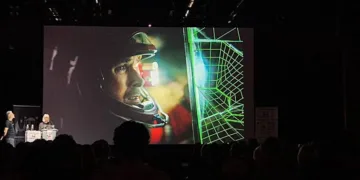
At Marrakech, though, the emphasis sits on Laxe’s presence as much as the film. The festival slot gives Sirāt a return to the region where it was shot and offers the director a stage to sketch out an Amazonian follow-up, keeping his focus on landscapes where spiritual practice, environmental stress and human restlessness collide.