

























![Kingdom Hearts Collection [I-III] Review](https://gazettely.com/wp-content/uploads/2026/10/Kingdom-Hearts-Collection-I-III-1-360x180.webp "Kingdom Hearts Collection [I-III] Review: KHII Holds Steady as Newer Entries Fluctuate 37")



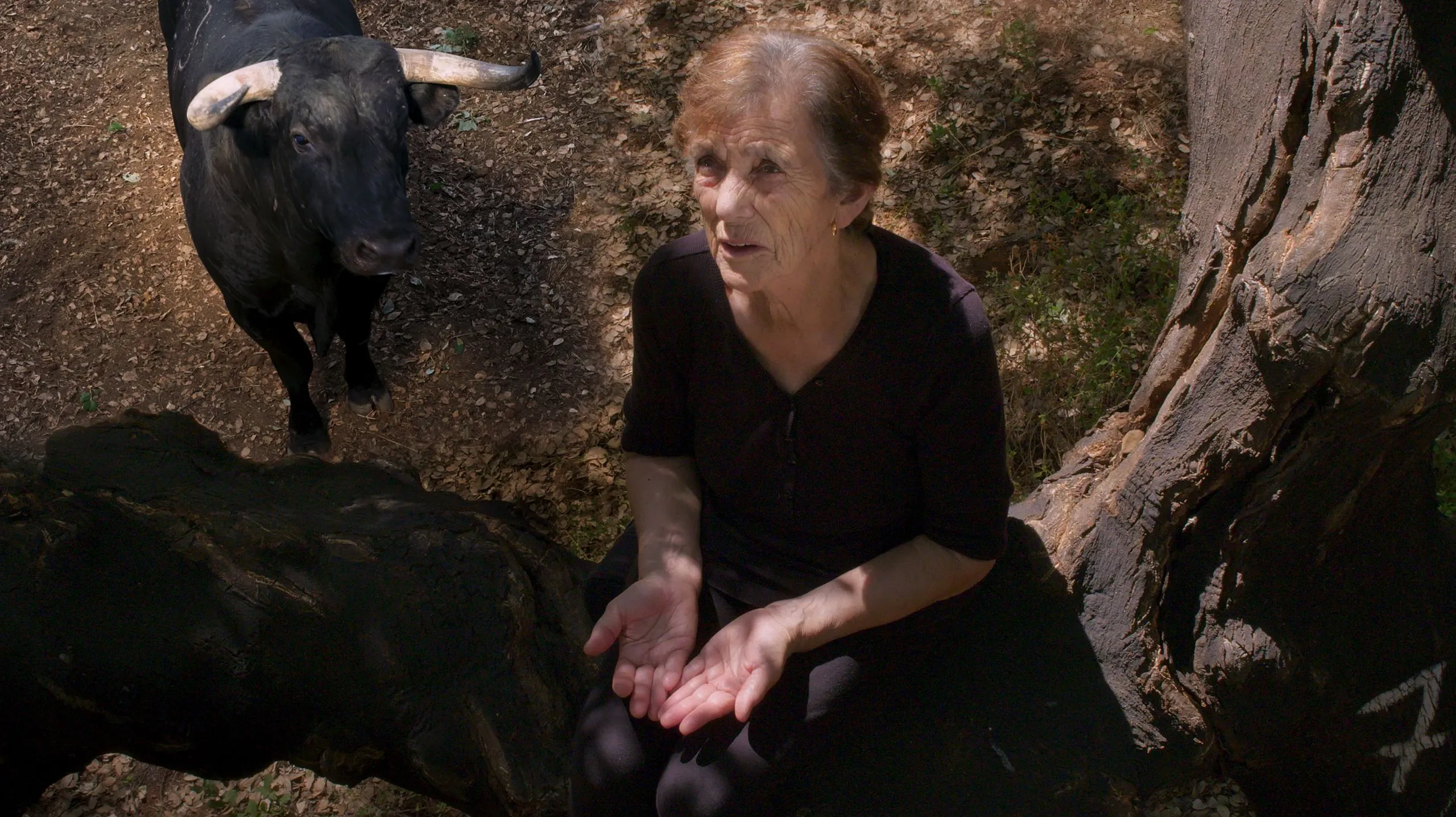

Marta Mateus’s feature debut, Fire of Wind (Fogo do Vento), presents an abstract, mythic fable set within a vineyard community in Alentejo, Portugal. The film leaves behind psychological realism and declares a commitment to severe conceptual art. The opening movement follows grape harvesters whose steady labor halts when a young woman, Soraia, cuts her hand.
A drop of blood separates from the body and feels like a summons from another plane. A black bull arrives, a figure of instinct or design, and the workers climb into the oak trees. They become suspended presences above the ground. Mateus works with local, nonprofessional actors whose voices sound ritual and archetypal, closer to heralds than to characters. Time feels held in place. The past presses forward into a day that looks present.
Exile and the Weight of History
The trees create a condition of precarity. The workers gain height without safety. The ground withdraws while fatigue remains. The plot holds still so that memory can occupy the frame. Voices gather. Memories, folklore, and personal histories move across the branches.
The recitation runs through modern Portuguese anguish, the Salazar dictatorship appears in witness, and the Carnation Revolution returns as a stored hope. The film turns this chorus into political cinema. Centuries of exploitative labor practices receive a direct reply through shared speech. The workers look down and face two kinds of threat, an animal force that waits and a machine that refuses to look back.
A combine harvester cuts through the orchard at night and breaks the tie between person and earth. Temporal borders loosen. A wounded young soldier from an earlier time crosses into the present. Old photographs pass from hand to hand.
The relics make time concrete while the branches keep it open. Soraia stands within this mixture of mystical sign and material wound. Some in the community see her as a scapegoat, a human marker for the shock that enters the field. A trace of folk dread surrounds her injury.
The Stillness of Vision
The images speak with their own weight. Compositions arrive like paintings, careful mise en scène gives the frame a measured order, and textures carry meaning. Tree bark looks rough, faces hold the sun, and detail becomes narrative.
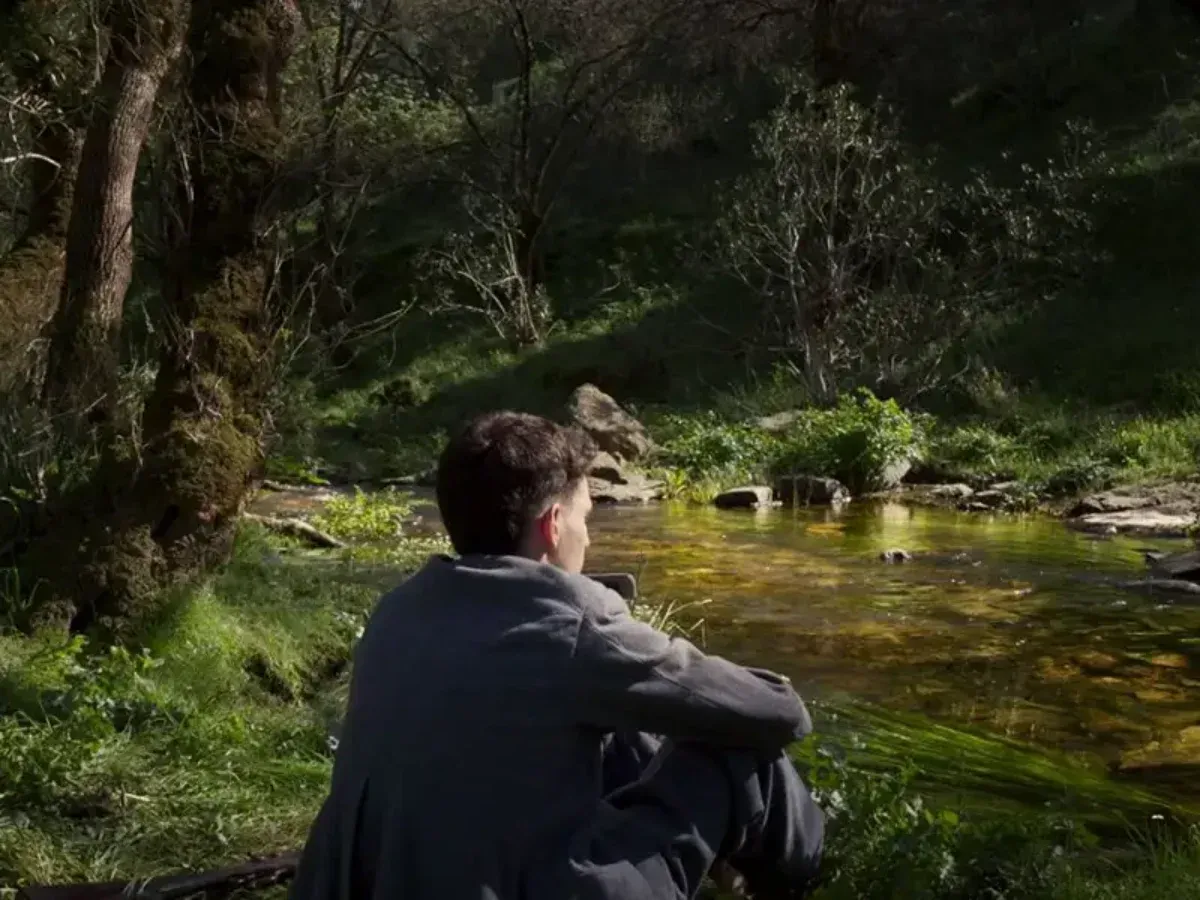
With Vítor Carvalho on cinematography, Mateus builds a sun-drenched palette. Light remains pervasive yet often gentle, a kind of soft touch across bodies and bark. Reflected light creates precise illuminations within darker passages, a flash that turns into portraiture. The film favors static tableaux and long takes. Plot movement recedes so that a meditative attention can develop.
Violence appears after it has happened. The rampage of the bull leaves traces and silence rather than spectacle. The nonprofessional cast stands with stylized stillness and distilled gesture. Presence replaces psychological display. The approach lines up with an experimental tradition and accepts an ethical task. People and place receive careful regard, and the camera behaves like a patient witness.
A Voice in the Cinematic Void
Fire of Wind feels like an audacious first statement and a personal reckoning with the history of political filmmaking. Mateus extends the focus on community and historical struggle from her short Barbs, Wastelands. The film absorbs the shadowed gravity associated with Pedro Costa and the formal rigor linked to Jean-Marie Straub and Danièle Huillet.
Mateus makes the stage entirely outdoors and holds politics and threat in the same field. The abstract vectors of exploitation meet the immediate tension of a lurking bull. The runtime, about seventy four minutes, breathes with swells and retreats that resemble collective memory. The clarity of the idea leaves a mark, and the fixed perspective can weigh heavily near the end.
A charge emerges that statement overpowers development, and the sensation of exhaustion enters the final passages. The film still reads as an offering to people and to land. Style and substance meet in an oppositional stance to commercial cinema’s reductive rhetoric. The piece asks for attention and asks for endurance, and it leaves a residue of unanswered questions about labor, sacrifice, and the cost of memory.
The film Fire of Wind (Fogo do Vento) is a Portuguese, Swiss, and French co-production that made its world premiere at the Locarno International Film Festival in 2024. In the US, it was theatrically released on October 31, 2025, distributed by The Cinema Guild. This poetic and symbolic feature debut follows a community of vineyard workers in Portugal’s Alentejo region who are forced to hide in the branches of oak trees to escape a dangerous runaway bull. Trapped in the dark, they share stories and memories, blending the immediate reality of their situation with the political and historical struggles of their community, echoing the lasting impact of the Salazar dictatorship.
Credits
Title: Fire of Wind (Fogo do Vento)
Distributor: The Cinema Guild
Release date: October 31, 2025 (United States theatrical release)
Running time: 72 minutes or 1 hour 12 minutes
Director: Marta Mateus
Writers: Marta Mateus
Producers and Executive Producers: Marta Mateus, Pedro Costa, Fabrice Aragno, Richard Copans
Cast: Soraia Prudêncio, Maria Catarina Sapata, Safir Eizner, José Moura, Maria Clara Madeira
Director of Photography (Cinematographer): Marta Mateus, Vítor Carvalho
Editors: Marta Mateus, Claire Atherton
The Review
Fire of Wind
Marta Mateus’s debut is a stark, visually stunning meditation on history, labor, and existential stillness. The film uses its simple premise—workers exiled in trees—to stage a profound, atemporal conversation about exploitation and memory in Portugal. While its deliberate pace and declamatory style demand patience, the artistic courage and ethical vision solidify its place as a necessary, challenging work of political cinema. This film transcends mere topicality, forging a lasting work of art.
PROS
- Visually stunning, with consistently painterly compositions.
- Profound political and historical depth regarding labor and memory.
- Unique aesthetic: stylized, declamatory performances by nonprofessional actors.
- Meticulous cinematography and highly effective use of light and shadow.
- An audacious, singular directorial vision for a feature debut.
CONS
- Highly static narrative and deliberate pace require significant viewer patience.
- Conceptual nature may feel thin or lacking development in the final third.
- Archetypal performances may alienate viewers seeking traditional psychological realism.







