






Director Klára Tasovská’s documentary feature, “I’m Not Everything I Want to Be,” operates as a study in cinematic subversion. The piece rejects standard biography and stages a spectral communion built from a single source: the extensive photographic archive of Czech artist Libuše Jarcovjáková. Structured as a relentless photoroman, the ninety-minute film assembles only Jarcovjáková’s black-and-white stills from 1970 to 1989. The images arrive with the artist’s own voice, a stark reading drawn from contemporaneous diaries.
The result functions as an autobiography in sequential frames. We move with Jarcovjáková through Prague and a restrictive Soviet-era Czechoslovakia, then into pivotal displacements in Tokyo and West Berlin. The film treats her life as excavation, an artistic and intensely personal search for identity, belonging, and freedom. The original title conveys that motion: “I’m Not Yet Who I Want to Be,” a statement of constant transformation. The work registers as an inquiry into existence.
The Architecture of the Photoroman
The film’s nerve sits in its technical design. Editor Alexander Kashcheev and Tasovská draw kinetic force from static matter. Jarcovjáková’s habit of shooting in consecutive, serial bursts becomes the engine for movement and pacing. A setup that resembles a slideshow shifts into a fully cinematic mechanism.
Kashcheev’s contribution in sound design matters to the same degree, building a diegetic field around the stills through precise foley: the low hum of a crowded room, the clack of a press, the scrape of footsteps. These details give planar photographs a sense of volume and air.
The score, with electronic tracks by Oliver Torr and DJ GÄP, refuses period nostalgia and drives the decades with a contemporary pulse. Jarcovjáková’s narration, sourced from her diaries, speaks in the present tense and fixes an immediate link with the viewer. Form mirrors voice. The structure preserves the artist as her own principal interpreter.
Camera movement exists here as imagined propulsion, produced by edit rhythm and serial composition. Shot adjacency simulates a tracking glide or a jump cut. Composition becomes dramaturgy: faces and bodies recur in tight frames that answer one another across time.
The lighting inside the photographs works like noir grammar, with chiaroscuro shaping mood and meaning. Expressionistic framings isolate a hand, a bruise, a stare. The sound field completes the illusion of motion, and tension develops through alternation of silence and mechanical texture. The apparatus is spare and exact. It teaches the viewer how to read it.
Chiaroscuro of the Self
Jarcovjáková works with blunt contrast. Deep blacks and blown highlights act as veils and revelators, covering and exposing by turn. The lineage reaches toward the intense, observational humanism associated with artists like Nan Goldin, yet the vision carries the pressure of Soviet Prague.
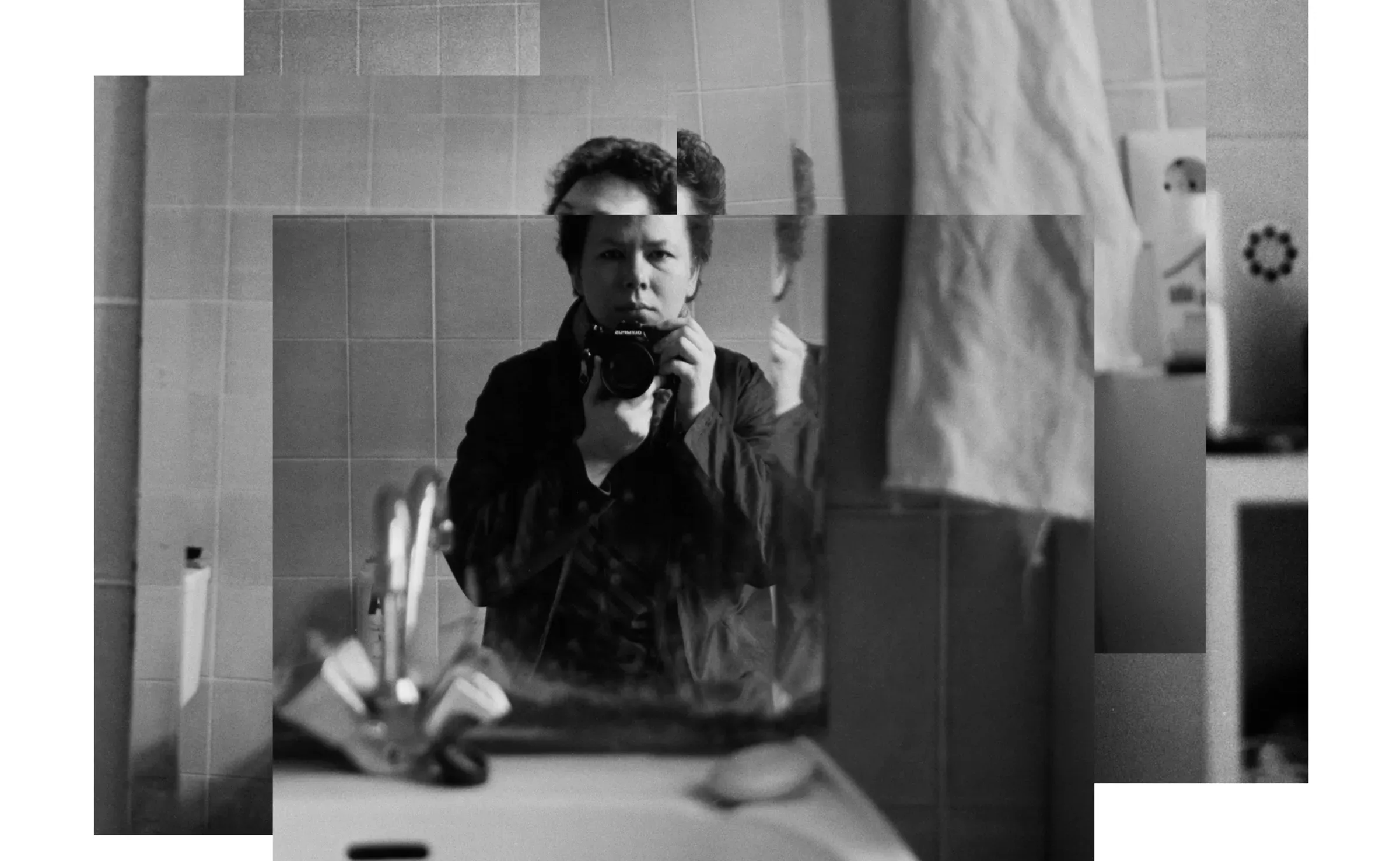
The catalogue she assembles maps marginalized existence: factory routines, volatile queer nightlife, private episodes of physical trauma, faces of lovers. Through her own body and desires, she prints dissatisfaction and loneliness onto film. The archive reads as a record of endurance.
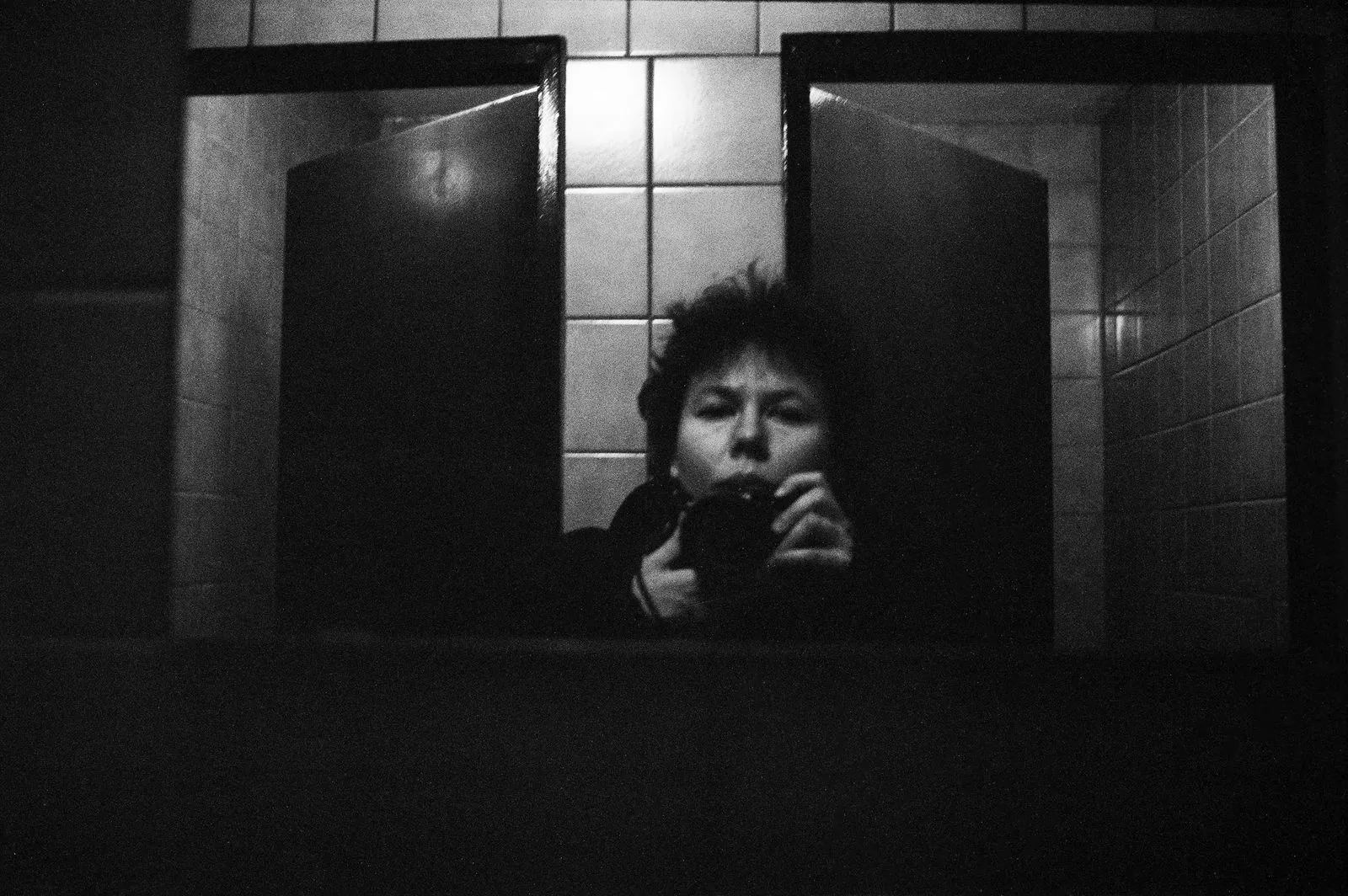
Self-portraiture threads the series. Mirrors recur. The camera becomes a diagnostic instrument for a fluctuating identity. The private sphere becomes a site of political force under constraint. Travel and edges of habitation define her status as a persistent outsider.
The genre affinity quietly shifts toward a psychological noir, where illumination never fully clarifies motive and where the protagonist interrogates the frame that contains her. Light carves the cheekbone and hides the eye. A small joke emerges in the repetition of mirrors: the most reliable witness keeps changing with every angle. The humor is dry. The question remains steady.
Pacing and Existential Velocity
The film keeps a punishing tempo. Rapid succession replaces the gallery’s slow gaze and can feel breathless. The speed risks a reduction of single images as standalone compositions. The same speed clarifies theme.
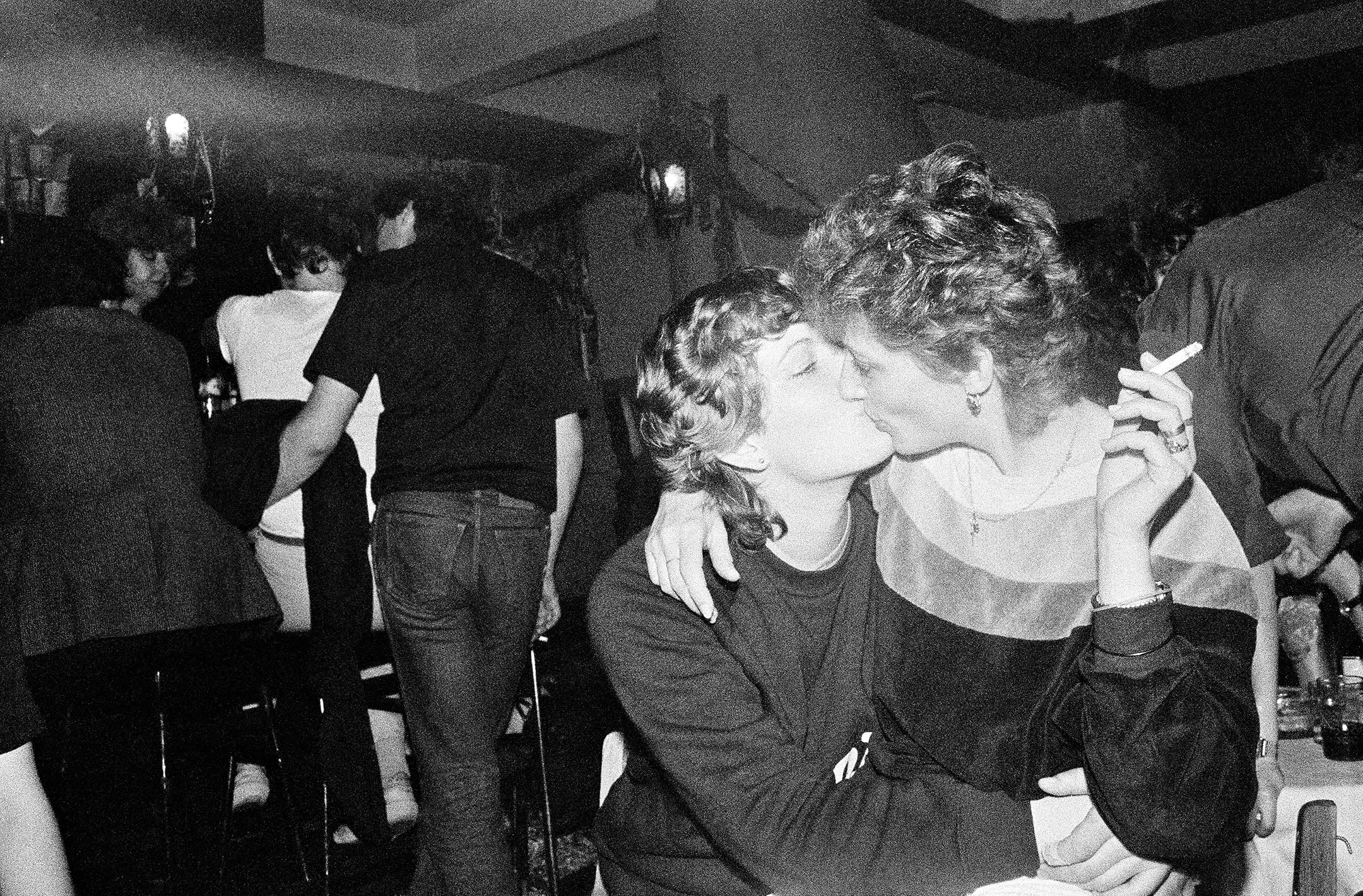
Jarcovjáková’s internal weather arrives as motion, a life recorded under duress and restlessness. Rhythm becomes thesis. Time compresses into beats that carry decades. The major ideas surface from that acceleration: the search for freedom in art, sex, and geography, and the basic, unresolved interrogation of self.
Tension depends on montage and sound. The cut sharpens perception. The foley expands space and then retracts it, like a room that grows and shrinks with each footfall. Perception gets managed in increments, and the viewer learns to anticipate the next flash of contrast, the next face, the next fragment of diary text. The effect recalls thriller craft where pacing directs attention and uncertainty powers engagement. The noir thread tightens again. Shadows do narrative work. Overexposure becomes a kind of confession.
Her final diary words in the film state a suspicion that the question of identity will never stop. Process replaces resolution. That drive, paired with candor and unfiltered testimony, secures the film’s hold. Tasovská organizes a method in which editing precision and layered sound translate still photographs into an animated portrait of a personal revolution that refuses to close.
The movie is “I’m Not Everything I Want to Be”, a 2024 Czech documentary. It premiered at the 74th Berlin International Film Festival in February 2024 and has been shown at numerous festivals worldwide. The film is a portrait of photographer Libuše Jarcovjáková’s life and work between 1970 and 1989, told exclusively through her photographs and diary entries, which she reads aloud. The documentary’s unique, cinematic form transforms still images into a moving narrative about her search for freedom and identity in Soviet-occupied Prague and her travels abroad. The film secured US distribution through Grasshopper Film and is also streaming on Netflix in the Czech Republic.
Credits
Title: I’m Not Everything I Want to Be (Original Czech title: Ještě nejsem, kým chci být)
Distributor: Square Eyes (International Sales), Grasshopper Film (US Distribution)
Release date: 18 February 2024 (Berlinale)
Running time: 90 minutes
Director: Klára Tasovská
Writers: Klára Tasovská, Alexander Kashcheev
Producers and Executive Producers: Lukáš Kokeš, Klára Tasovská, Jakub Viktorín (Co-Producer), Ralph Wieser (Co-Producer)
Cast: Libuše Jarcovjáková (Self)
Director of Photography (Cinematographer): Libuše Jarcovjáková
Editors: Alexander Kashcheev
Composer: Prokop Korb (badfocus), Adam Matej, Oliver Torr
The Review
I’m Not Everything I Want to Be
Klára Tasovská’s documentary transforms the static image into a vital, moving exploration of identity. Its technical brilliance—the dynamic editing and immersive sound design—creates a pioneering cinematic form. Libuše Jarcovjáková's raw honesty, channeled through her photographs and diary, presents a profound existential account of self-discovery against political restriction. This is a powerful, demanding film, an unsparing portrait of a continuous, interior revolution.
PROS
- Pioneering cinematic structure that utilizes static images as dynamic film.
- Exceptional, layered sound design creates a deeply immersive diegetic space.
- Libuše Jarcovjáková's unfiltered honesty provides an intimate, compelling portrait.
- Profound exploration of identity, freedom, and political resistance through personal work.
CONS
- The unrelenting pace can challenge the viewer's ability to ruminate on individual images.
- The experimental structure may prove too demanding for some audiences.