
























Vince Gilligan, long associated with the Albuquerque crime sagas Breaking Bad and Better Call Saul, returns to science fiction with Pluribus. The shift in genre recalls his earlier contributions to The X-Files. He reunites with Rhea Seehorn, whose move from legal drama standout to lead in a speculative series lands with quiet assurance.
The series begins with an abrupt global alteration. A major event called “The Joining” sweeps the planet and appears to create a collective consciousness, a kind of psychic glue that binds billions. The visible effect is immediate empathy and widespread contentment.
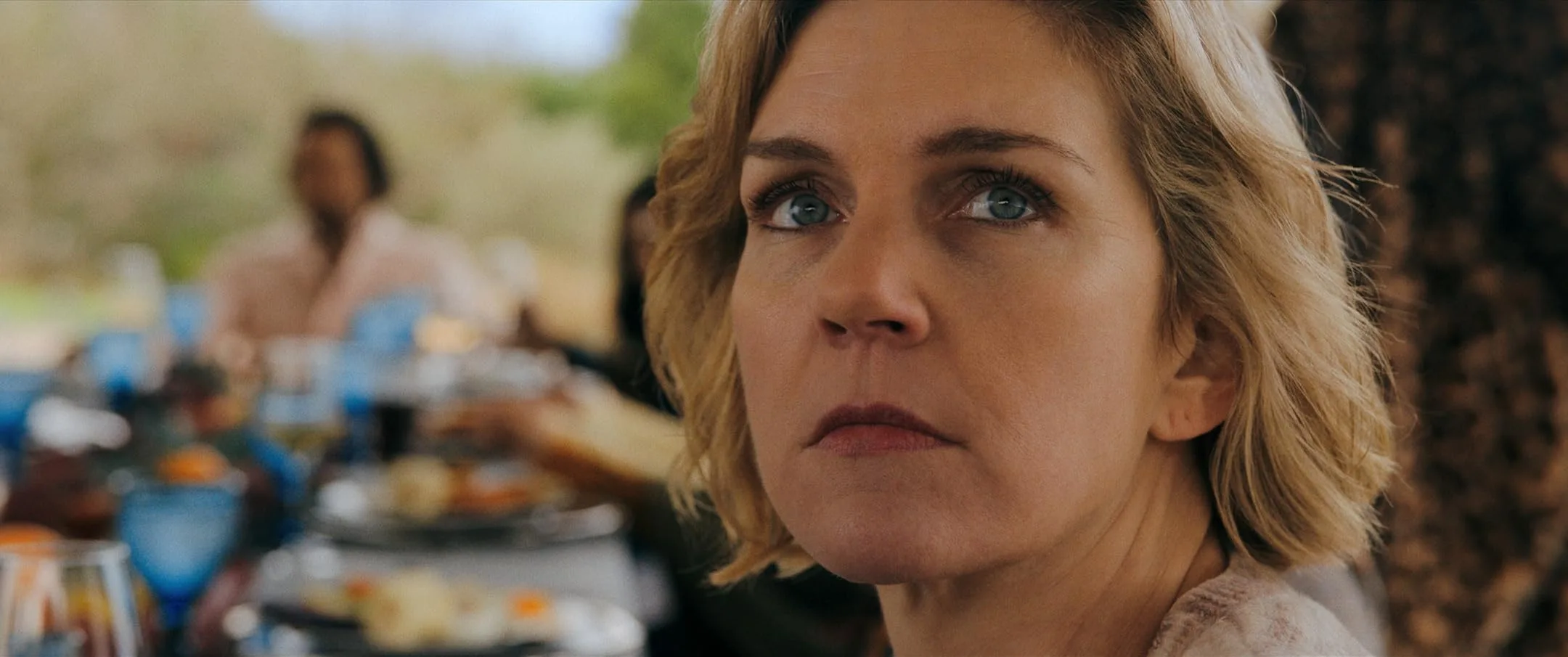
The narrative follows one holdout: Carol Sturka (Seehorn). She writes bestselling romances (an irony the text points out) and she alone remains untouched. Her continuing isolation and pronounced hostility toward a suddenly saccharine peace establish the core dramatic friction: a deeply flawed individual confronting an apparently perfect world.
The Tyranny of Unity
Pluribus mounts its argument by inverting familiar post-apocalyptic conventions. The plot proceeds without mechanical villains or hordes of the undead. The antagonist manifests as universal, unearned happiness. Carol occupies the moral center as an angry, authentically miserable person facing a unified collective whose empathy often reads as almost frighteningly genuine. The viewer is asked to consider the value of volition in a world that guarantees calm. What becomes of liberty when the self is smoothed into collective contentment?
Answers in the series arrive in a manner that privileges Carol’s perspective. Questions multiply, and the creative team supplies explanations that function less as prizes for patient viewers and more as provocations for the protagonist. That formal choice reduces breathless serialized suspense and converts it into an intellectual anxiety about truth and satisfaction.
Stylistically, the show departs from investigative DNA and approaches a sequence of moral fables in the spirit of The Twilight Zone. Ordinary people confront ethical dilemmas made urgent by an altered social condition. Themes of sudden isolation, shared trauma, and community register strongly. The show loosens its tension with a bleak humor that stems from Carol’s misanthropy in the face of unasked-for benevolence. The moments of comedy read as a satire of enforced niceness.
The Tyranny of Unity: Expanded Analysis
Pluribus frames philosophical inquiry through the lens of societal homogenization. The central concern is not technological domination but a voluntary-looking consensus that abolishes many of what we call flaws. Carol’s resistance reads as an assertion of singularity against an everywhere-imposed consensus of empathy. Viewers confront a question about authenticity: if tranquility arrives at the expense of contradiction, is that state still human?
The title, Pluribus (from E pluribus unum), emphasizes the multiple that coalesces into unity and measures that unity against Carol’s stubborn singularity. The series casts the dilemma in quasi-political terms, asking what cost attaches to absolute acceptance. Flaws appear here as marks of personhood, necessary indicators that call attention to individuality.
The narrative implies a stark outcome: global cohesion achieved through the removal of those identifying imperfections. The implication calls to mind historical anxieties about ideological conformity and the erasure of dissent (the review explicitly gestures to mid-20th-century preoccupations with monolithic systems). The peaceful collective, benign on the surface, threatens the surrender of autonomous consciousness.
Formally, Pluribus avoids the conventional reward economy of serialized mystery. Questions accumulate; the writers often respond with tidy explanations that shut down curiosity from Carol’s vantage point. When she seeks truth, the replies are frequently cheerfully reductive. That decision curtails page-turning suspense and replaces it with existential dread: if everyone accepts a simple account, what is the function of uncovering a harsher truth?
The show’s tone draws from moral fable traditions. Its sequences about sudden social reconfiguration and collective trauma feel timely, functioning as an attempt to process recent global crises and the weird social habits those crises produced. The sensation of immediate, non-negotiable change lands with particular force in a culture that grew accustomed to enforced separation and fragile social contact.
Humor in Pluribus skews dark. Carol’s acidic reactions to pervasive kindness create an off-kilter comedy: she registers the absurdity of constant consolation and the relentless cheer of strangers. That comedic layer often rides just below the dramatic surface, allowing the series to be playful without letting it cut the seriousness. Carol describes her own work as “mindless crap,” and that self-loathing operates as a lens through which she both judges and appreciates the situation’s lunacy. Her ability to respond with irony rewards viewers who prize intellectual attention. The show performs as a cerebral experience that invites sustained engagement rather than instant gratification.
The Cynic as Oracle
Pluribus rests on Seehorn’s performance as Carol Sturka. The character sketches a successful author who despises the popular fiction she writes, an introvert animated by a reservoir of cynicism, depression, and rage. She functions as a reluctant protagonist, propelled into motion after the disappearance of her partner.

Her flaws—miserable temperament and antagonism—stand as qualities the Joining removed from everyone else. Carol therefore operates as a last visible trace of unvarnished humanity. The casting reframes Gilligan’s interest in morally complicated figures: Carol is the flawed hero who refuses assimilation, and the audience remains aligned with her refusal.
Seehorn supplies a performance of tight control and wide range. She modulates between seething fury and palpable grief without collapsing into caricature. Many scenes require her to act largely alone or in scenes opposite the emotionally flattened presence of The Joined (a mass of extras moving with uncanny synchronicity). The work demands that she carry the narrative’s psychic weight.
Supporting elements generate necessary friction. The loss of her partner, Helen (Miriam Shor), provides an intimate stake and an early emotional core. The arrival of Zosia (Karolina Wydra), a figure who echoes characters from Carol’s own popular novels, introduces external tension. Zosia balances helpfulness with an eerie collective logic. The interaction between Seehorn and Wydra navigates a tense oscillation between alliance and suppressed longing. Their bond supplies the series’ principal emotional pivot, a negotiation of personhood and contact that avoids easy resolution.
The show positions Carol as an interpretive engine, the skeptical reader in a world that prefers agreement. She functions as oracle of dissatisfaction: her presence reveals what has been smoothed away and forces viewers to consider whether the smoothed result is worth the excision.
Grandeur of the Stillness
Pluribus displays a scale that often astonishes. The production values are conspicuous; widescreen cinematography makes the altered world feel monumental. Directors stage large, mostly wordless sequences and complex choreography to communicate The Joining’s synchronous reach. The spectacle earns its place in the drama.
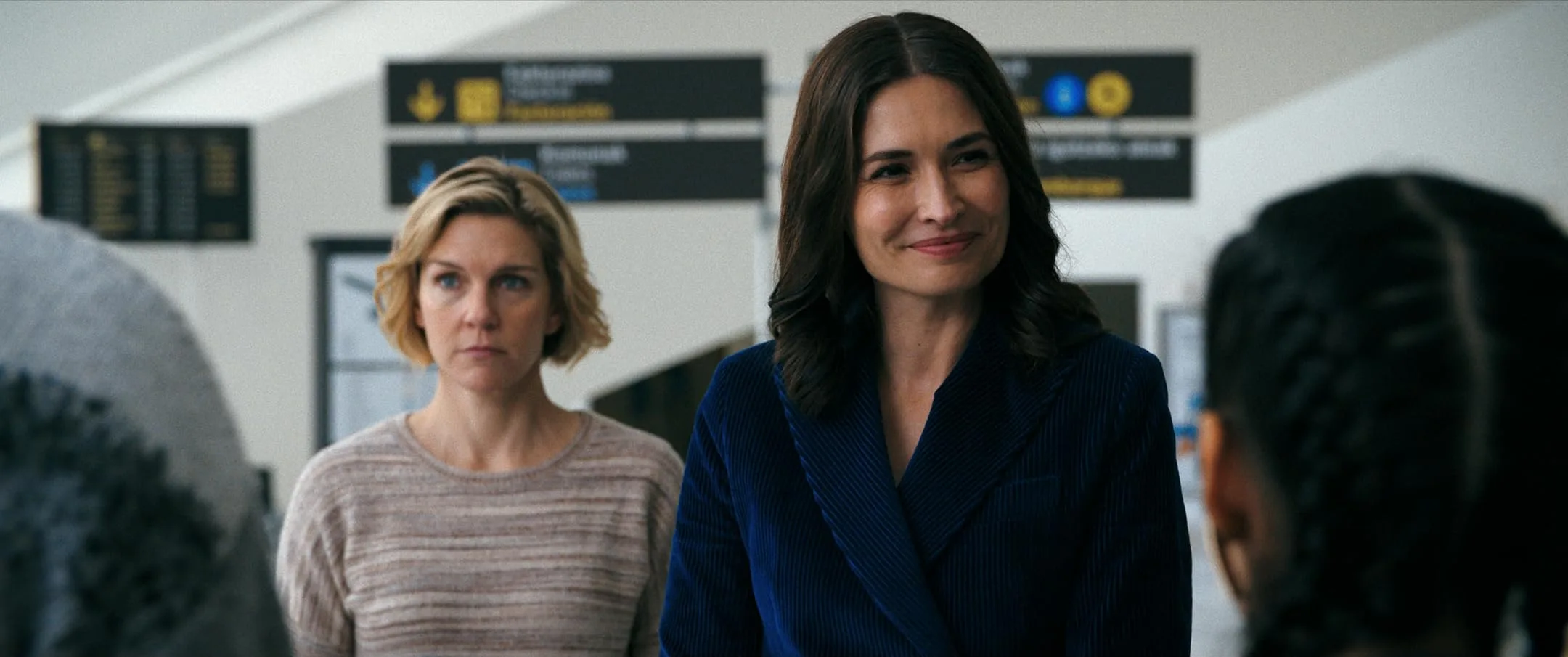
Marshall Adams’s visual approach refreshes the show’s look. The camera moves with deliberate economy and asks viewers to observe closely. Blocking and choreography transform commonplace public spaces into arenas of coordinated behavior. The series returns to Albuquerque, New Mexico, using familiar visual cues but refashioning them for a global phenomenon.
The series favors the patient, methodical pacing of Better Call Saul. The tempo privileges process and attention to detail, and the show often insists on the value of procedure in a changed environment. That rhythm creates a thematic tension. The devotion to process and the initial looseness of Carol’s quest occasionally slow narrative momentum.
The technical scale sometimes feels disproportionate to a story focused on one woman’s inward struggle. The production’s vastness and the intimacy of Carol’s interior life create a productive friction: the work reads as an epic in stillness, cinematic in reach but memoir-like in focus. The visual material suggests a global event while the dramatic action remains concentrated on personal reckoning.
The Architecture of Unknowing
The writing staff (including Gordon Smith and Alison Tatlock from the Saul era) shows a clear appetite for genre awareness and playful subversion. The series favors revelations that arrive gradually rather than the instant shock of sudden twists. The writers expect patience.
Dave Porter’s score departs from percussion-heavy textures and leans on choral elements, fitting for a narrative about collective identity. Silence and stillness function as active components of the sound design.
The narrative structure privileges acute emotional attention. The series rests on sound structural bones and promises extended character study. The work performs best when it privileges emotional impact over expository fill. Sometimes worldbuilding recedes in favor of psychological interrogation, making the viewing experience demanding and, for attentive viewers, often rewarding.
Pluribus premiered its first two episodes on November 7, 2025, exclusively on the streaming service Apple TV+. The series, created by Vince Gilligan, is a genre-bending science fiction drama about a mysterious global event called “The Joining” that infects nearly all of humanity with unrelenting happiness, leaving the cynical romance novelist Carol Sturka (Rhea Seehorn) as the only exception in a world of unsettling contentment.
Full Credits
Title: Pluribus
Distributor: Apple TV+ (Apple TV)
Release date: November 7, 2025 (Series Premiere)
Rating: TV-MA
Running time: 56–62 minutes (per episode)
Director: Vince Gilligan, others
Writers: Vince Gilligan, Gordon Smith, Alison Tatlock, Vera Blasi, Jenn Carroll, Jonny Gomez, Ariel Levine
Producers and Executive Producers: Vince Gilligan, Jeff Frost, Diane Mercer, Allyce Ozarski, Rhea Seehorn, Gordon Smith, Alison Tatlock, Jenn Carroll, Trina Siopy
Cast: Rhea Seehorn, Karolina Wydra, Carlos Manuel Vesga, Miriam Shor, Samba Schutte, Peter Bergman
Director of Photography (Cinematographer): Marshall Adams, Paul Donachie
Editors: Chris McCaleb, others
Composer: Dave Porter
The Review
Pluribus
Pluribus is a cerebral, visually striking piece of science fiction, anchored by Rhea Seehorn’s magnificent, volatile performance. Gilligan subverts post-apocalyptic tropes, trading typical tension for profound philosophical inquiry into the cost of mandatory peace. The show’s patient pacing and grand cinematic scale occasionally feel discordant with its intimate psychological drama. However, its ambitious themes and high production quality make it a demanding, ultimately rewarding, watch that sets a new standard for thoughtful genre television.
PROS
- Rhea Seehorn delivers a demanding, virtuosic performance as the isolated protagonist.
- The unique sci-fi premise brilliantly inverts post-apocalyptic tropes; the collective is benign but unsettling.
- Exceptional technical execution, including widescreen cinematography and high production value.
- Strong philosophical depth concerning free will, individualism, and communal empathy.
- Thoughtful sound design, including a unique choral score that enhances the series’ themes.
CONS
- The deliberate, patient pacing may frustrate viewers accustomed to fast-paced serialized narratives.
- The immense global scale occasionally clashes with the intimate focus on one character’s personal turmoil.
- Key world-building information is doled out very slowly, sometimes hindering narrative momentum.