
























![Kingdom Hearts Collection [I-III] Review](https://gazettely.com/wp-content/uploads/2026/10/Kingdom-Hearts-Collection-I-III-1-360x180.webp "Kingdom Hearts Collection [I-III] Review: KHII Holds Steady as Newer Entries Fluctuate 37")





Co-directed by Mariana Rondón and Marité Ugás, It Would Be Night in Caracas adapts Karina Sainz Borgo’s novel and drops the viewer into the 2017 street riots and humanitarian crisis in Caracas, Venezuela. The film positions itself as a taut thriller about survival inside a collapsing society, pairing immediate historical realism with dystopian textures.
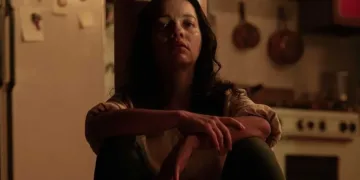
Adelaida (Natalia Reyes), a writer, sees her private life fracture alongside the political chaos; her path begins with the loss of her mother amid urban violence. The central tension tracks Adelaida’s shift from private mourning to the urgent need to escape a country turning hostile toward its citizens. The film stresses that this backdrop reflects an ongoing reality for millions.
Direction and the Arc of Desperation
Rondón and Ugás chart a swift movement from personal tragedy to pragmatic fear. Adelaida’s first trauma takes shape at her mother’s funeral, where solemn grief sits beside the unruly spectacle of a biker gang funeral and a gravedigger’s terse warning to leave before nightfall.

Displacement accelerates when a self-ordained militia led by Mariscala (Sheila Monterola) seizes her apartment, leaving Adelaida exposed and rootless. Her next steps break moral comfort: after finding a corpse in a neighbor’s flat, she assumes the dead woman’s identity to obtain documents and a plane ticket.
The direction commits to the thriller mode, with fast pacing and nervy editing by Soledad Salfate creating a breathless rhythm. The film avoids a narrative of political awakening or heroics and concentrates on the personal cost of staying alive. The portrayal of conflict remains unsentimental, with the Mariscala-led group reflecting the same capacity for cruelty and corruption that marks the power structure they oppose.
Vision, Isolation, and Universal Themes
Juan Pablo Ramírez’s cinematography shapes the mood with low light and night-time frames that blur the line between reality and nightmare. The camera often adopts Adelaida’s point of view, as she watches the war unfold from windows, creating isolation and a voyeuristic charge that mirrors middle-class helplessness.
Certain images stand out: Adelaida trapped between opposing forces during a riot, and a riveting staircase scene at the passport office where citizens hold papers that signify a path out. The film probes identity under pressure. Names, culture, and memory become unstable measures of self, and the title, It Would Be Night in Caracas, carries a wistful echo of a city preserved in the thoughts of exiles far from home.
The story reads as a rare record of a humanitarian disaster, asserting that those living through it experience a war regardless of external definitions. Its social lens aligns with Indian parallel cinema, which often roots political turmoil in intimate character studies, turning systemic breakdown into lived experience.
Performance and Lasting Impact
Natalia Reyes anchors the film with a performance of quiet desperation. Her dazed, numb expressions communicate grief and fear that sink deep into the body. Moisés Angola’s Santiago, the brother of a friend, brings another current of despair; his admission of torture and coerced betrayal sharpens the portrait of survival inside the country.
The film’s urgency turns authoritarian crisis, economic collapse, and mass migration into shared themes for international audiences. The result is a tense, steadily tightening experience that confronts viewers with the choices forced upon people in failing states. The story captures a crisis that continues to shape the lives of Venezuelans in exile.
It Would Be Night in Caracas premiered at the Venice Film Festival in September 2025. The film is a powerful, tense thriller that chronicles one woman’s struggle for survival and identity in Caracas during the tumultuous 2017 street riots. It follows Adelaida, a writer whose life is upended by the loss of her mother and the forceful seizure of her apartment by a violent militia. The story focuses on her desperate attempt to flee the country, forcing her to abandon her past and assume a new identity. As of this time, the film is primarily circulating through international film festivals and its wide theatrical or streaming distribution platform has not been widely announced, though it was produced by companies based in Mexico and the U.S.
Credits
Title: It Would Be Night in Caracas (Aún es de Noche en Caracas)
Distributor: Creative Artists Agency
Release date: Premiered at the Venice Film Festival in September 2025.
Running time: 97 minutes.
Director: Marité Ugás, Mariana Rondón
Writers: Marité Ugás, Mariana Rondón, Karina Sainz Borgo (Novel)
Producers and Executive Producers: Stacy Perskie, Stephanie Correa, Francisco Ramos, Edgar Ramírez, Jill Littman, Natalia Reyes, Karina Sainz Borgo
Cast: Natalia Reyes, Moisés Angola, Sheila Monterola, Édgar Ramírez, Samantha Castillo, Alexandra Braun
Director of Photography (Cinematographer): Juan Pablo Ramírez
Editors: Soledad Salfate
Composer: Camilo Froideval
The Review
It Would Be Night in Caracas
This film presents a powerful cinematic record of the contemporary cost of authoritarian crises. Directors Rondón and Ugás deliver a tense, realistic thriller that grounds a national humanitarian crisis in one woman's desperate fight for survival. The film avoids easy political answers, choosing instead to focus on the terrifying, necessary choices of displacement and identity. Reyes' compelling performance anchors this urgent, universal story about what happens when home turns against its people.
PROS
- Urgent, realistic portrayal of a humanitarian crisis.
- Strong central performance by Natalia Reyes.
- Taut, propulsive pacing creates high cinematic tension.
- Effective use of low-light cinematography and visual symbolism.
- Nuanced perspective on the complexity of the political opposition.
CONS
- Political ambivalence might frustrate audiences seeking a straightforward heroic arc.
- Narrative remains largely isolated, focusing on one apartment and minimizing direct street action.







