
























![Kingdom Hearts Collection [I-III] Review](https://gazettely.com/wp-content/uploads/2026/10/Kingdom-Hearts-Collection-I-III-1-360x180.webp "Kingdom Hearts Collection [I-III] Review: KHII Holds Steady as Newer Entries Fluctuate 37")





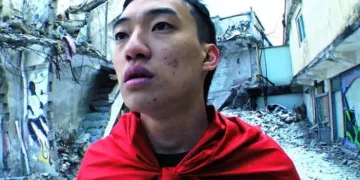
Funky Freaky Freaks announces a searing feature debut from writer and director Han Chang-lok. The contemporary high school here functions as social purgatory, an unforgiving arena where status and rumor set the rules. The narrative follows a triangle of inseparable friends whose flaws keep them locked in the same orbit. Yong-gi is an awkward adolescent who projects himself as a hero. Ji-sook struggles with a chaotic home life and a visible eating disorder.
Dum-bo profits from online deception and catfishing. Their closed ecosystem fractures when Woo-joo arrives, a transfer student armed with wealth and popularity. Ji-sook’s attention drifts toward the newcomer. Yong-gi responds with jealousy that grows hot and corrosive. The conflict begins with that shift in gravity and climbs through betrayal and violence as Yong-gi attempts to shield Ji-sook from Woo-joo’s dark history. The film moves with raw, frenzied energy, surveying the suffering of youth, the cruelty of social media, and adolescent fury that knows no brake.
The Expressionistic Lens
The film’s style embraces aggressive, livewire aestheticism. Han’s visual language builds a gritty, punk rock charge through audacious mise en scène. Cinematographer Kim Jong-soo favors a restless handheld approach that keeps the frame in flux. Kinetic editing accelerates the rhythm with rapid, frequent cuts that deny visual comfort.
Dutch angles tilt the world and signal moral disorientation, an expressionistic device that turns hallways and streets into skewed moral diagrams. Saturated color and psychedelic interference read as psychological cartography, mapping teenage volatility in blazing hues and electronic noise. The camera prowls. Shots bend and torque. Then another cut arrives. Fever dream becomes a visual register rather than a one-off flourish.
Sound locks to image with equal intensity. Livigesh supplies a propulsive electronic score that acts like adrenaline, a pulse that quickens perception and narrows focus. Beats push the gaze forward, and the frame seems to breathe in short, sharp bursts. Form amplifies feeling.
Structure reinforces that charge. The narrative adopts a deterministic arc built into three chapters titled Impulse, Collision, and Shock. Each label announces direction. Momentum flows downward from the start, and the staging follows suit. The style at times rides ahead of the plot and claims the foreground. The effect still lands. The design mirrors the inner weather of young, disaffected characters with uncomfortable precision.
The Ethics of Betrayal and the Digital Abyss
The philosophical thread opens inside the trio’s fragile bond. Yong-gi, Ji-sook, and Dum-bo assemble a surrogate family to withstand a hostile environment, a provisional identity that gives them a shared sense of worth. Woo-joo acts as catalyst, a figure of status and danger moving outside their marginal class. Yong-gi’s arc reads as tragedy.
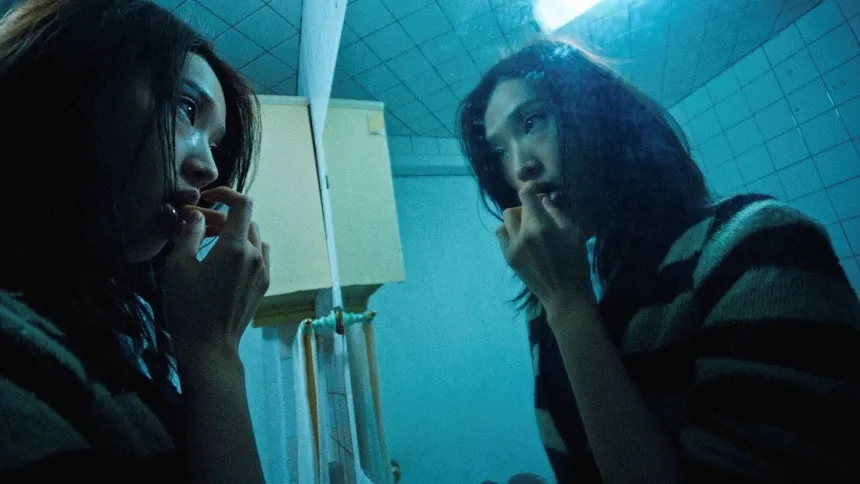
He seeks agency and drifts toward violence while chasing the moral clarity of a superhero he can never quite become. Ji-sook’s attraction to Woo-joo grows out of a messy home life and past trauma, a turn that writes pain into her path. Dum-bo conducts schemes in the digital arena and meets the vacuum of that space. Fame and money appear as a promise with no floor. Anonymous masses watch, judge, and then turn.
Han treats the internet like a neo-noir alley. The glow of the screen becomes a streetlight that draws insult and invites incitements to self-harm. The frame does not ask if tragedy will arrive. The frame tracks how each character exerts limited free will inside a system designed to betray them. Choice narrows. Consequence multiplies. Jealousy tightens. Rage misses its target. The film’s philosophy lives there, in a portrait of adolescent agony that spirals toward predictable wreckage while still feeling painfully immediate. Free will survives as a flicker. Determinism casts the longer shadow.
IV. Performances and Filmmaker Promise
Performance grounds the sensory assault. The acting cuts through the kinetic surface and plants pockets of sincerity that recalibrate the temperature of a scene. Joo Min-hyeong’s Yong-gi stands out. He shapes awkward intensity into a steady line and finds the confusion inside a would-be hero with careful nuance. Baek Ji-hye gives Ji-sook a charged interior life.
The contradictions play clearly when the camera pauses and allows her silence to carry meaning. Jeong Soo-hyun brings the required arrogance to Woo-joo, a predatory presence who treats charm like a tool. Shin Jun-hang completes the trio as Dum-bo with firm, unfussy control.
Camera tricks sometimes take the driver’s seat. Han Chang-lok still delivers focus and energy that feel fully owned. The perspective on contemporary youth stays clear across scenes and across the chaptered structure. A distinctive voice emerges with confidence. The film functions as a fierce introduction to a filmmaker already carving a strong line through image, rhythm, and moral unease.
Funky Freaky Freaks premiered in competition at the 30th Busan International Film Festival on September 20, 2025. The thriller follows three troubled high school friends—Yong-gi, Ji-sook, and Dum-bo—whose already precarious dynamic unravels with the arrival of a handsome, popular transfer student named Woo-joo. The movie is characterized by a frenzied, punk-rock intensity, employing an aggressive visual style with rapid cuts and handheld camera work to reflect the turbulent inner lives of the characters as they spiral into a cycle of jealousy, betrayal, and violence. The film won the Special Jury Award at the Busan International Film Festival. While the film has played at international festivals, information on a wide theatrical release or streaming platform is not yet widely available.
Credits
Title: Funky Freaky Freaks
Distributor: Apocofilm, Korea National University of Arts
Release date: September 20, 2025 (Busan International Film Festival Premiere)
Running time: 87 minutes
Director: Han Chang-lok
Writers: Han Chang-lok
Producers and Executive Producers: Bae Young-kyung, Lee Ji-won
Cast: Joo Min-hyeong, Baek Ji-hye, Jeong Soo-hyun, Shin Jun-hang
Director of Photography (Cinematographer): Kim Jong-soo
Editors: Kim Ji-hyun, Han Chang-lok
Composer: Livigesh
The Review
Funky Freaky Freaks
Han Chang-lok’s feature debut is a visceral, demanding piece of cinema. It effectively captures the ugly, intense emotional reality of contemporary youth, trading narrative subtlety for a hyper-stylized visual scream. While the film’s relentless aesthetic energy sometimes exhausts the viewer, its critique of digital cruelty and the powerful performances from the young cast ensure it leaves a memorable impression. This is an exhilarating, if uneven, arrival from a director with a distinct voice.
PROS
- Strong core performances, especially from Joo Min-hyeong and Baek Ji-hye.
- Visceral, aggressive, and highly distinctive visual aesthetic ("punk rock intensity").
- Effectively critiques digital life and social media's role in adolescent misery.
- Clear, propulsive electronic soundtrack amplifying the frenetic energy.
CONS
- The visual style is sometimes excessive, distracting from the narrative.
- The plot trajectory is predictable given the chapter-based structure.
- The character of Woo-joo is somewhat underwritten compared to the main trio.
- Narrative subtlety is sacrificed for stylistic force, making the beginning feel overloaded.







