




























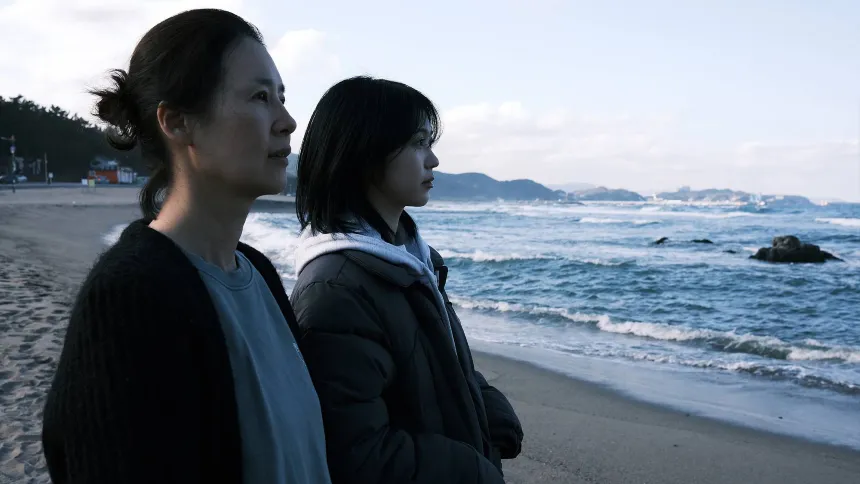

Beautiful Dreamer, Lee Kwang-kuk’s fifth feature, opens with quiet solemnity. The film studies the emotional wreckage after sudden tragedy and narrows its frame to two women: In-seon, the mother, and Su-yeon, the daughter. Ji-ho’s suicide three years earlier sets the conditions for everything that follows and hangs over the story like a permanent shadow that refuses to disperse.
The drama turns on a plain, wrenching conflict. In-seon seeks closure, wishing to scatter the ashes and sell the family home. Su-yeon freezes at the threshold of farewell and refuses to approve any final act. The friction between them becomes a delicate performance of competing sorrows, often staged in silence. Lee traces grief, guilt, blame, and the social stain that follows self-destruction. The mixed emotions feel universal and carry past national specifics, which gives the film a wide entry point for viewers. The portrait remains grounded and unflinching, a study of an ongoing catastrophe that never stops shaping daily life.
The Geography of Emotional Quarantine
The film organizes its characters with physical distance that mirrors emotional isolation. In-seon runs a guesthouse in the eastern coastal city of Dongbae and looks for fragile relief in grief counseling. Su-yeon works as an academic loner in Seoul, avoids her landlord, and cultivates a sombre self-reliance.
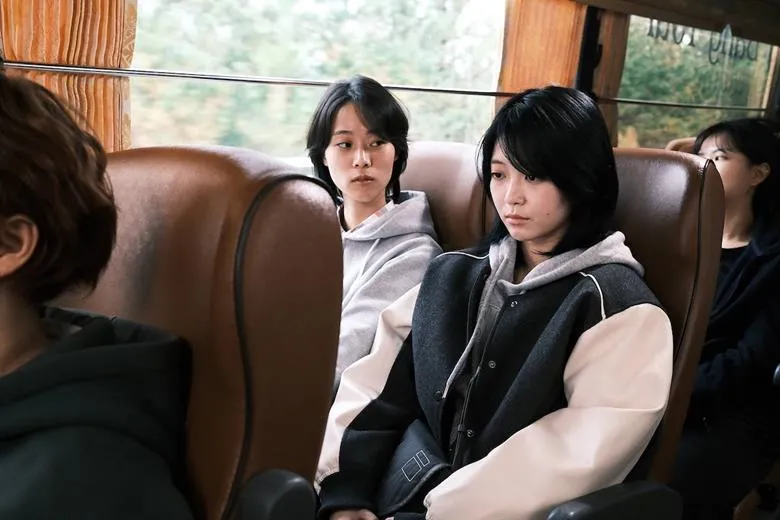
This two-city solitude functions as a narrative device. The film alternates between their separate vantage points until the central link comes into view, showing a shared pain and different coping habits. The pair occupies what could be called two provinces of sorrow, mapped by routine and avoidance.
Lee’s formal course correction is clear. The whimsical touches and formal embellishments associated with A Matter of Interpretation and A Tiger in Winter recede. The style tightens. No musical score steps in to soften the quiet devastation on screen. The camera holds its ground and stays with the two central figures.
Also Read






Lee shows a clinical steadiness with emotional fallout, most vivid in quiet confrontations that sit without relief. Social convention appears with a hard edge. An aunt asks In-seon to skip a family wedding out of fear that her presence might bring “bad karma,” a stark measure of how survivors of suicide can face punishment from the living. The image of an imposed cultural quarantine takes shape in moments like this.
The A-Temporality of Trauma
The structure admits that trauma ignores tidy timelines. Flashback and fantasy mingle with lived reality. Lee Kwang-kuk blends the subjective memory of Ji-ho with the present and avoids full surrealism. The mixing works as a controlled flourish that lights up interior states rather than a wholesale frame for the narrative.
One scene, simple and resonant, seats mother and daughter in a car. They ride together and remain miles apart. Su-yeon drifts into a half-sleep and imagines her father, while In-seon keeps her hands on the wheel. A run of quick closeups on their eyes links them across the seats during separate reveries. The moment catches a brief synchrony within solitude and then lets it go.
Cinematographer Kim Hyung-koo, known as the eye behind Memories of Murder, favors unfettered compositions. The camera often holds at a distance and lets the world keep moving while the protagonists stay fixed in emotional stasis. They feel like they are running in place, a phrase the film quietly earns. Awkward encounters with shopkeepers and old friends underline the sense of drift. Su-yeon’s inherited broken watch fits the mood with almost schematic precision, a small timepiece that cannot move forward and a compact figure of suspended life. The object functions as an emblem of arrested time, a pocket-sized thesis.
The Actors’ Burden and the Cultural Echo
The weight of this inward-facing film rests on the two leads. Lee Ji-hyun’s In-seon gives a wounded matriarch who carries accumulated grief and searches for closure while wearing the mark of social humiliation. The performance often registers through an inability to return another person’s gaze. A brief, cutting exchange with Ji-ho’s friend, Sang-woo, brings the fear she dreads into speech when he drunkenly hints at her share of responsibility. Lee plays the moment with startling vulnerability that leaves a residue.
Hong Seung-hee’s Su-yeon provides the counterpoint. The daughter clings to her father’s memory with fierce energy and reads movement as betrayal. Hong sidesteps the easy route of bratty self-absorption and reveals the raw hurt that feeds the obstinate stance. The character holds her line, and the performance gives that stance a credible emotional supply.
When mother and daughter finally reach a difficult, halting conversation, the film locates its catharsis. The release arrives in spare form and feels necessary. The project reads as cultural critique as well as intimate portrait. By concentrating on stigma and quiet devastation, Beautiful Dreamer undertakes difficult work and voices a subtle plea for a society to equip itself for a reality it keeps trying to exile. The film may stand as one of Lee’s most accessible and culturally penetrating works to date, a piece that speaks with precision about sorrow, memory, and the social afterlife of a single, irrevocable act.
Beautiful Dreamer (also known by its Korean title, Danjam) is a South Korean independent drama that premiered at the 30th Busan International Film Festival (BIFF) in September 2025. Directed by Lee Kwang-kuk, the film is a sensitive exploration of grief and the social stigma surrounding suicide, focusing on a mother and daughter struggling to move past the death of their husband/father three years prior. The film has a running time of 109 minutes. While it premiered at BIFF, general theatrical or streaming availability on major platforms like Netflix or Amazon Prime will depend on future distribution deals, as specific wider release details are not yet available.
Credits
Title: Beautiful Dreamer
Distributor: M-LINE (Sales Agent/International Distributor), Busan International Film Festival (Premiere)
Release date: September 2025 (Busan International Film Festival Premiere)
Running time: 109 minutes
Director: Kwang-kuk Lee
Writers: Kwang-kuk Lee
Cast: Lee Ji-hyun, Hong Seung-hee, Lee Ju-won, Kwan Hyuk, Shin Ah-jin
Director of Photography (Cinematographer): Hyung-koo Kim (based on reviews that mention his work)
The Review
Beautiful Dreamer
Lee Kwang-kuk’s film succeeds through profound restraint. It offers a difficult, necessary portrait of post-suicide existence, avoiding the pitfalls of easy melodrama for a study in quiet devastation. The performances by Lee Ji-hyun and Hong Seung-hee anchor this grounded tragedy, making the emotional quarantine of the survivors acutely felt. Its formal precision and thematic resonance make it a vital work of contemporary cinema. It stands as a powerful statement on societal and personal grief.
PROS
- An intimate, unvarnished look at the emotional fallout of suicide
- Avoids distracting musical scores or formal embellishments, keeping focus on the characters.
- Both Lee Ji-hyun and Hong Seung-hee deliver strong, emotionally affecting performances.
- Effective use of non-linear structure to blend memory and reality as a subtle flourish.
- Directly addresses the deep-seated stigma of suicide in a conservative society.
CONS
- The commitment to realism and restraint may lead some viewers to perceive the film as slow or too quiet.
- The narrative is sometimes perceived as straightforward despite the structural flourishes.
- Deals exclusively with difficult themes of death, guilt, and social stigma.
- The film lacks the wry humor that marked the director's earlier works.