





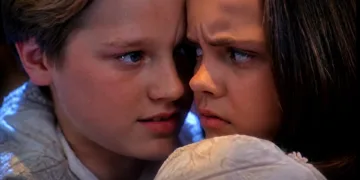



















Same Time, Next Christmas presents a second-chance holiday romance that trades the usual winter postcard scenery for a sunlit Hawaiian resort. The story follows Olivia Anderson and Jeff Williams, childhood sweethearts whose families share an annual Christmas vacation. Their connection begins as a first love that stretches across decades and runs into obstacle after obstacle.
A tragedy in their youth breaks their contact for years. When they find each other again as adults, careers, long-term relationships, and family obligations keep disrupting any attempt to reconnect. The island backdrop provides a visual alternative to the familiar snow-covered setting and frames a gentle, low-stakes experience designed for relaxed viewing. The film’s structure and location try to mark a distinction from standard holiday fare, even as it still moves within a very recognizable template.
The Global Casting and Character Archetypes
Genre romance often depends on how much the audience believes in the central couple, and this film leans heavily on its leads. Lea Michele plays Olivia as a relaxed, grounded architect whose focus on work hides a deep fear of emotional abandonment and vulnerability. The performance softens the more tightly wound persona associated with many of her previous roles and gives Olivia an unhurried, introspective quality.
Opposite her, Charles Michael Davis brings Jeff to life with an easy charm and emotional transparency. His portrayal captures an ongoing sense of yearning and quiet ache, supported by a wide, disarming smile that keeps the character approachable. The connection between Michele and Davis feels tangible and satisfying, and that emotional charge becomes the force that carries the film’s episodic structure.
The surrounding ensemble strengthens this pattern. Nia Vardalos and George Newbern, playing Olivia’s long-married parents, embody a vision of affectionate partnership that has lasted across many years. Their playful, flirtatious marriage offers a warm example of mature love that stands in contrast to Olivia and Jeff’s more turbulent romantic history.
The casting strategy leans into a visibly diverse group of performers, spanning different ages, races, and ethnic backgrounds. A same-sex couple forms part of the extended family and appears as a straightforward element of the holiday gathering rather than a highlighted “issue,” which builds a portrait of a modern, globalized family celebration.
The film falters with its treatment of Gregg Harris, portrayed by Bryan Greenberg, who functions as the romantic obstacle. Gregg appears as a flat, work-obsessed figure fixated on professional hierarchy and status, best captured in his choice to skip a picnic and eat an energy bar instead. This kind of writing reflects a familiar Hollywood tactic: turning the alternative partner into an obviously poor match so the audience never questions the intended endgame.
The bluntness of this approach diminishes any sense of nuance and weakens the attempt at realism. Olivia is framed as open, spirited, and ready for adventure, which makes her serious, long-term commitment to such a humorless and rigid partner difficult to reconcile. Gregg operates less as a fully realized character and more as a device designed to keep Olivia and Jeff apart for as long as possible.
Storytelling Through Discontinuity and Realism
Same Time, Next Christmas relies on a time-jump framework that returns to the same holiday every year to move the story forward. Each meeting during the “Same Time, Next Christmas” reunion creates a new chapter, which allows the script to skip the usual step-by-step romantic comedy courtship. Instead, it focuses on the complications that accumulate over many years.

The film shows Olivia and Jeff dealing with divorce, the logistics of co-parenting Jeff’s daughter, their ambitions at work, and existing relationships that stand in the way of a clean reunion. The structure tries to bring a sense of real-world messiness into a holiday film landscape that often smooths over such difficulties. It suggests that enduring love grows through sustained effort, interruptions, and imperfect timing rather than a single magical season.
This narrative choice adds a feeling of maturity to the central relationship, yet it also interacts awkwardly with the certainty built into the genre. Viewers can anticipate the destination from early on, so each time jump offers comfort but also erodes suspense. The fundamental problem remains the same each year: the characters keep missing each other. Jeff’s decision not to pick up Olivia’s call after his mother dies becomes the first major rupture, creating a long silence that defines their separation.
Later Christmas gatherings keep placing them out of sync, with one available while the other is attached to someone else. External issues such as Jeff’s complicated divorce and Olivia’s doomed engagement to Gregg repeat across the timeline like mechanical failures in their romantic machinery. This repetition begins to feel constructed for the sake of delay, designed to keep two people who clearly belong together from reconciling until the final stretch.
The climax reinforces familiar holiday romance beats. Olivia cancels her wedding to Gregg at the last moment and races back to Jeff, accompanied by a “snow in Hawaii” moment that gives a literal seasonal image to their reunion. Smaller story decisions point to padding rather than necessity, such as the appearance of a dog that has little narrative purpose or the absence of siblings in childhood flashbacks, which stands out in a film so focused on family vacations. These details hint at a script that sometimes fills space instead of deepening the central story of separation and reconnection.
Visual Narrative and Cultural Ambience
Hawaii functions as the film’s signature visual ingredient and marks a clear shift away from the widely circulated image of a North American small-town Christmas. The island setting delivers golden light, beach scenes, and lush surroundings that instantly separate this story from snow-laden holiday streets.

Cinematographer Christopher Baffa presents the location with glossy care, and many shots would fit smoothly into a tourism campaign that highlights ocean views and gentle sunsets. The landscape takes on an almost character-like presence through this emphasis on scenery and atmosphere.
At the same time, the way the script uses the setting shows a limited engagement with the deeper cultural possibilities of Hawaii. The film assembles a diverse cast and includes elements such as luaus and hula performances, yet the narrative attention stays close to the vacation rituals of the white American families who return each year. Hawaiian culture appears mainly through familiar tourist images rather than lived experience.
The film hints at the idea of cross-cultural connection but rarely ties the romance to the specific history or social fabric of the islands. This choice turns Hawaii into a striking background rather than a source of narrative meaning, creating a gap between the visual freshness of the location and the conventional shape of the story.
Christmas itself feels secondary to the geographic concept. There is no threatened town, no family business to rescue, and no local institution that depends on a holiday miracle. Instead, Christmas functions as a calendar anchor that guarantees the characters will meet once a year and forces them to confront the state of their relationship at fixed intervals.
Seasonal warmth comes through family sing-alongs, including the charming closing duet by Lea Michele and Jonathan Groff, and through familiar rituals like exchanging gifts. The tone fits comfortably within the “cheesy” space associated with many holiday romances, yet the film keeps a gentle sweetness, supported by its glowing island images and the easy charisma of its leads.
Same Time, Next Christmas is a romantic comedy film that premiered on ABC on December 5, 2019, before becoming available on platforms like Freeform, Hulu, and Disney+. The movie is set primarily in Hawaii, a change from the traditional snowy Christmas setting, and follows Olivia Anderson and Jeff Williams, who met as children during their families’ annual Christmas visits to the same Hawaiian resort. The film tracks their on-again, off-again romance over the years, as distance, tragedy, and poor timing conspire to keep the childhood sweethearts apart until they find their lives intersecting once again.
Credits
Title: Same Time, Next Christmas
Distributor: ABC, Freeform, Disney+
Release date: December 5, 2019
Rating: TV-G
Running time: 1 hour 30 minutes
Director: Stephen Herek
Writers: Karen Bloch Morse
Producers and Executive Producers: Angi Bones (Producer), Simon Lythgoe, Matt Code (Executive Producers)
Cast: Lea Michele, Charles Michael Davis, Bryan Greenberg, George Newbern, Nia Vardalos, Phil Morris, Dannah Lane, Christina Souza
Director of Photography (Cinematographer): Christopher Baffa
Editors: Maysie Hoy
Composer: Jeff Cardoni
The Review
Same Time, Next Christmas
Same Time, Next Christmas is an enjoyable addition to the holiday romance genre, successful due to its excellent lead chemistry and the visually captivating Hawaiian backdrop. While the film embraces its feel-good mandate, its narrative is hampered by a predictable structure and the cartoonishly written character of the romantic foil. It offers a comfortable, warm diversion that skillfully navigates emotional realism without sacrificing its seasonal sweetness, making it a reliable watch for fans of the genre.
PROS
- The palpable connection between Lea Michele and Charles Michael Davis anchors the entire narrative.
- The Hawaiian location provides a visually stunning and fresh alternative to traditional snowy Christmas scenery.
- Lea Michele delivers a surprisingly low-key, successful performance.
- The film features a commendable level of inclusion across age, race, and sexual orientation within the family units.
- The time jump structure introduces genuine, complex adult obstacles (divorce, co-parenting) into the romance.
CONS
- The outcome is inevitable due to the heavy-handed writing of the romantic foil.
- The character of Gregg Harris is too cartoonishly unpleasant, serving only as an artificial plot device.
- The film uses the Hawaiian setting for aesthetics but only lightly engages with local culture or people.
- The time jumps, while innovative, can feel jarring and sacrifice narrative tension.