























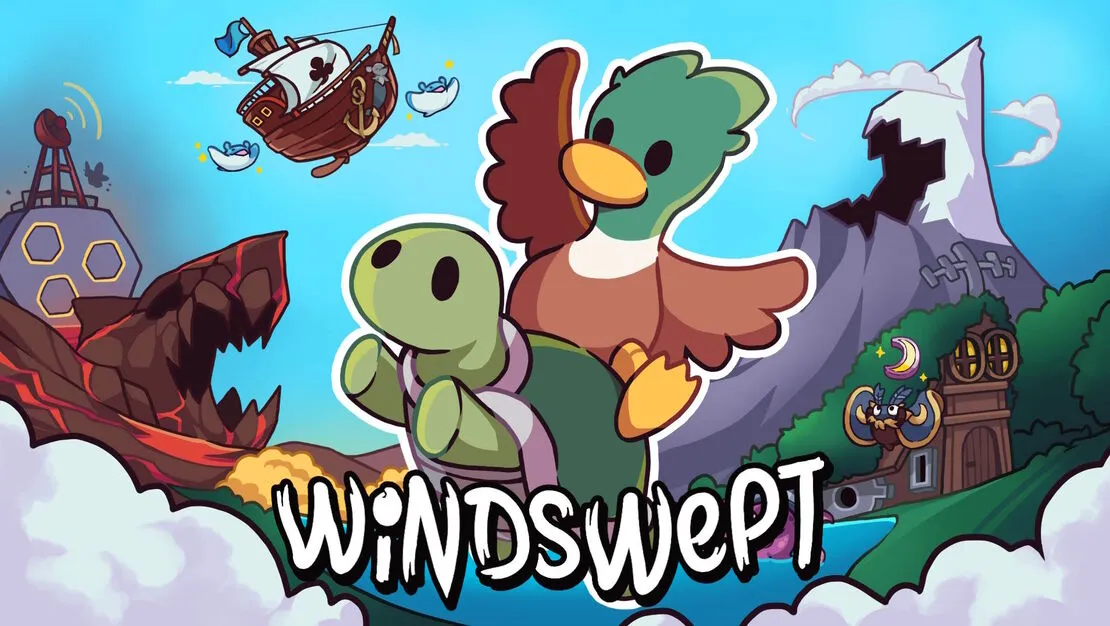

Windswept, a fast-paced side-scrolling platformer from developer WeatherFell, quickly defines itself as a clear tribute to the 16-bit gaming era. The visual style immediately recalls the 1990s, with detailed pixel art and a bold color palette that feels like watching a classic CRT television flicker to life. The story keeps the same direct spirit.
Players meet Marbles the Duck, swept away from home by a tornado, who soon teams up with Checkers the Turtle. Their shared objective is simple: find a way back home. This concise setup keeps attention on tight execution and precision movement, which forms the core of the experience. The game features over 40 side-scrolling stages, all arranged on a charming overworld map that will feel instantly familiar to fans of Super Mario World.
Dual-Character Movement and Mechanical Depth
The central hook of Windswept’s design lies in its dual-character system, which requires constant swapping and coordination. Players shift between Marbles and Checkers at a moment’s notice, leaning on their distinct abilities to cross each environment. Marbles can glide after a jump for longer airtime and can toss Checkers forward to hit distant enemies or bridge gaps.
Checkers delivers a strong ground pound and can launch Marbles upward, sending the duck to ledges and platforms that would otherwise sit out of reach. These individual skills combine into a movement toolkit that appears simple at first and supports careful layering in practice.
The opening stage walks players through every available move, then quickly steps back and lets them pursue mastery. Progress soon depends on chaining actions smoothly to solve intricate platforming challenges, echoing the mechanical depth of games like Celeste. Landing a hit on an enemy provides a speed boost, which encourages aggressive, momentum-driven play.
The 40 levels spread across multiple biomes, each one bringing fresh visual motifs and matching music. Temporary mounts such as a dolphin, bat, or puppy add variety, working in a similar fashion to companion mechanics in Donkey Kong Country by boosting mobility or providing an extra hit of protection. The puppy-focused stages, which mirror Donkey Kong Country’s demanding minecart sequences, can feel loose in their control and create occasional frustration.
Also Read






Presentation, Sound, and Completionist Rewards
Windswept’s appeal owes a great deal to its successful retro presentation. Fluid pixel animation and strong color choices give the game an authentic ’90s platformer look, with a clear sense of nostalgic charm. The retro-style soundtrack, which offers 40 distinct tracks, deserves special attention for how consistently it supports the game’s tone and energy across different biomes.
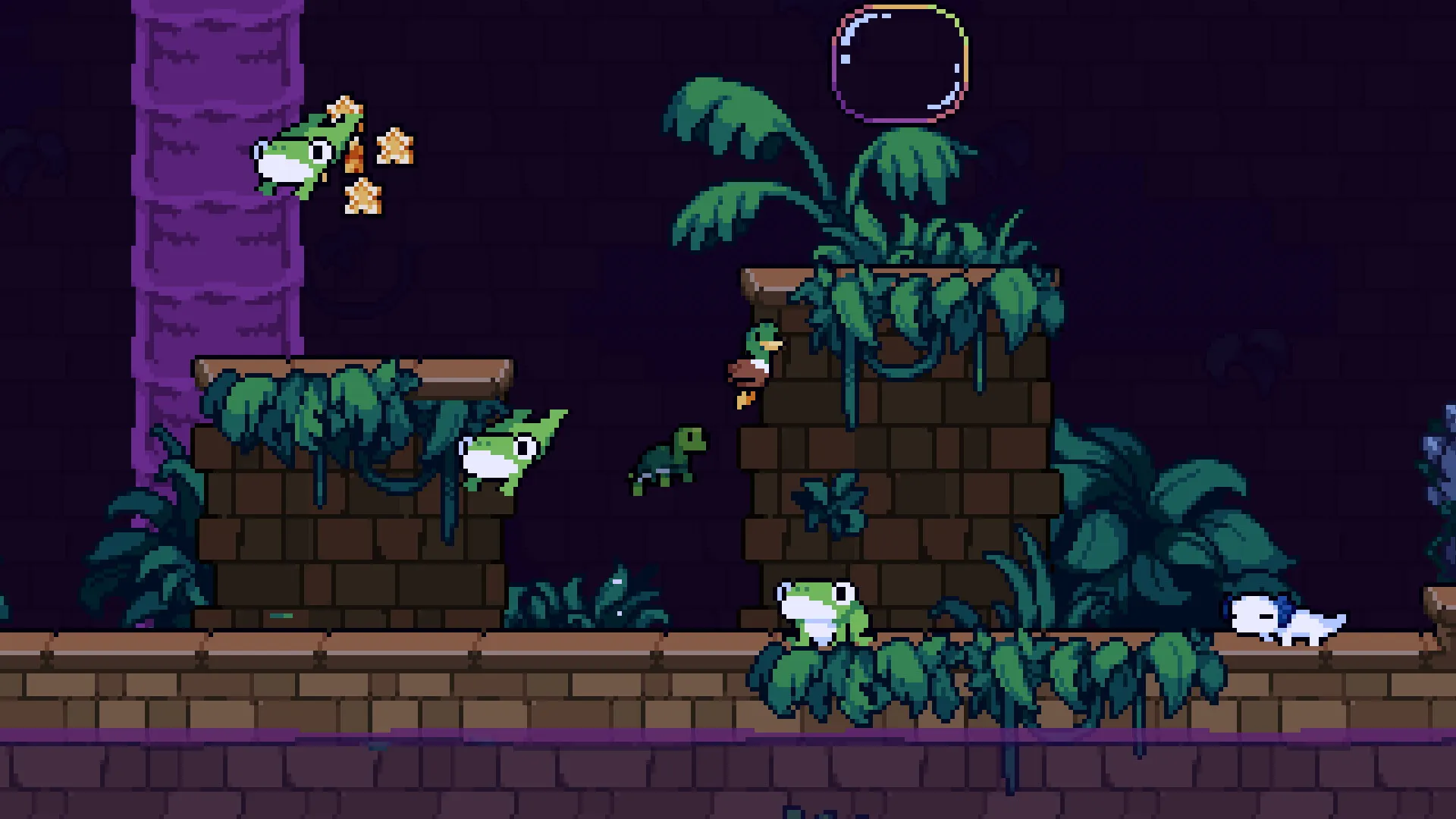
Beyond the main route, the game layers in a substantial collectibility system that rewards curiosity. Collectibles sit in spots that encourage players to inspect each stage thoroughly. Tracking down the C-O-M-E-T letters creates an optional challenge that mirrors the K-O-N-G letters in Donkey Kong Country. Gathering every Cloud Coin opens a final challenge zone reminiscent of the Special World in Super Mario World.
Moon and Star Coins act as currency. Players spend them at Lamp’s Shade, a shop run by a friendly moth. The store sells action figures of in-game characters that can be unboxed and animated, vinyl soundtrack records, and even small arcade games. These non-essential interactive extras show the level of care invested in the project and give the game a distinct personality while extending replay value.
The Problematic Difficulty Curve
Windswept starts with a gentle and inviting difficulty curve, so the first half of the campaign feels warm and cozy in the same way as the platformers it honors. That friendly introduction makes the abrupt difficulty spike around the 60 percent mark feel especially harsh. Later levels suddenly expect constant use of chained movement options and a high degree of precision.
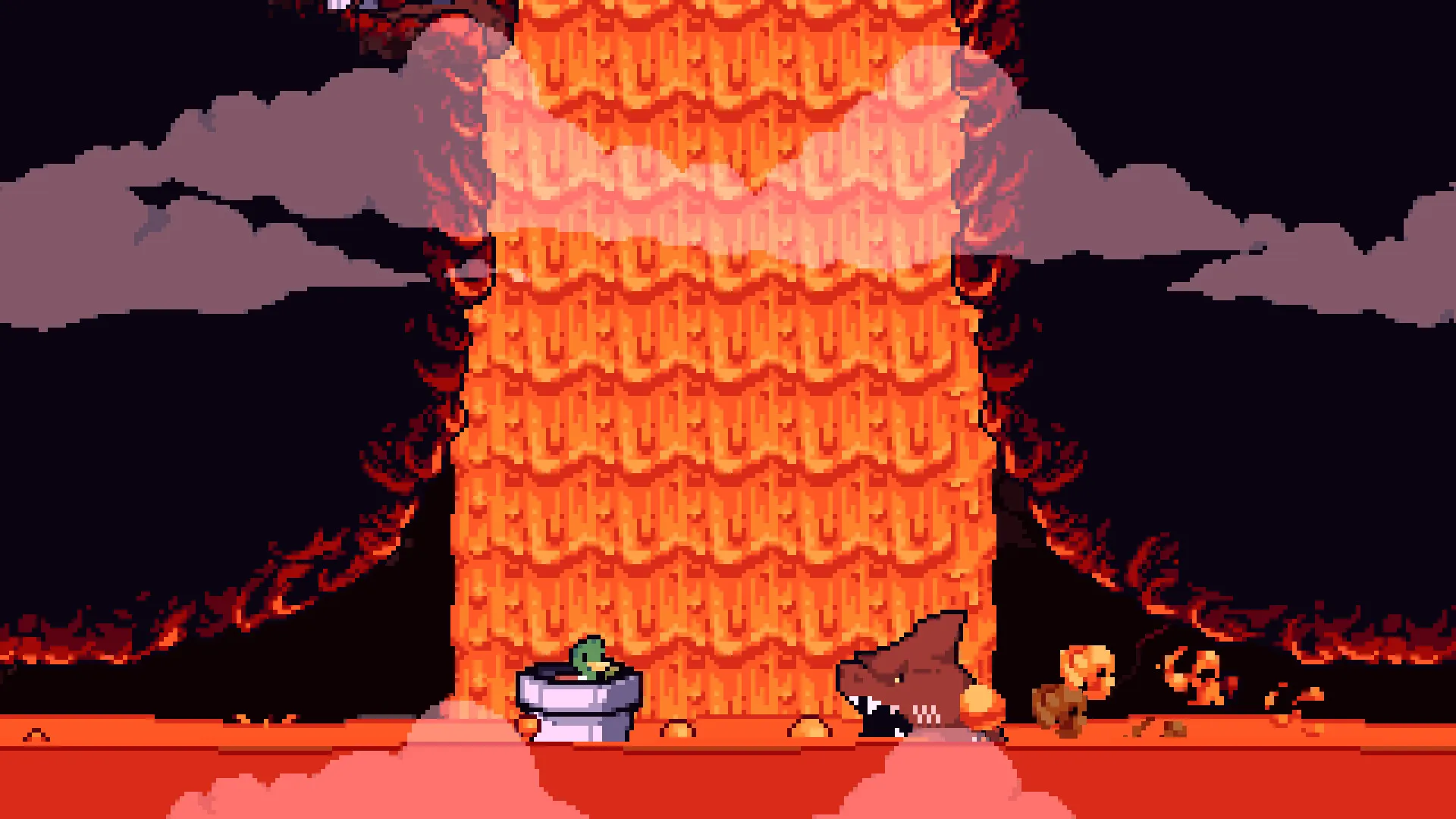
The experience shifts from relaxed progression to rigorous mastery of high-level techniques that previously felt optional. This steep climb in required skill will frustrate many players who enjoyed the earlier, softer pacing, particularly because the game stops offering clear reminders about those high-level moves. The level of precision the late stages demand appeals to speedrunning and optimization-minded players and carries a real risk of pushing away a broader audience.
The developers counter this spike with a detailed Assists menu. Players can turn on features such as invincibility, the power to spawn extra checkpoints, or the option to skip levels that feel too punishing. The same menu also lets players raise the stakes by disabling checkpoints or adjusting character damage.
These tools keep the campaign reachable for anyone who wants to see the story through to the end. Heavy reliance on assists can make success feel less satisfying than conquering the demanding platforming unaided. This late-game difficulty issue stands as the main flaw, holding back an otherwise near-perfect retro homage from a clean finish.
The Review
Windswept
Verdict: Windswept is a beautiful, charming tribute to the 16-bit platformer era, excelling with fluid dual-character mechanics, stellar presentation, and deep collectibility. The design suffers from an extreme, jarring difficulty spike in the later stages. This shift risks frustrating many players, making the well-implemented Assist Mode a necessary compromise. It is a near-classic that offers excellent, rewarding gameplay for those who crave and conquer its intense challenge.
PROS
- Gorgeous 16-bit pixel art and design
- Stellar retro-style, 40-track soundtrack
- Fluid, deep dual-character platforming
- Extensive collectibles and charming bonus content
- Thoughtful, robust Assist Mode for accessibility
CONS
- Jarring, steep difficulty spike in the second half
- Late game demands extreme, punishing precision
- Victory can feel less earned when using Assists
- Some mount stages (puppy) feel slightly imprecise