


















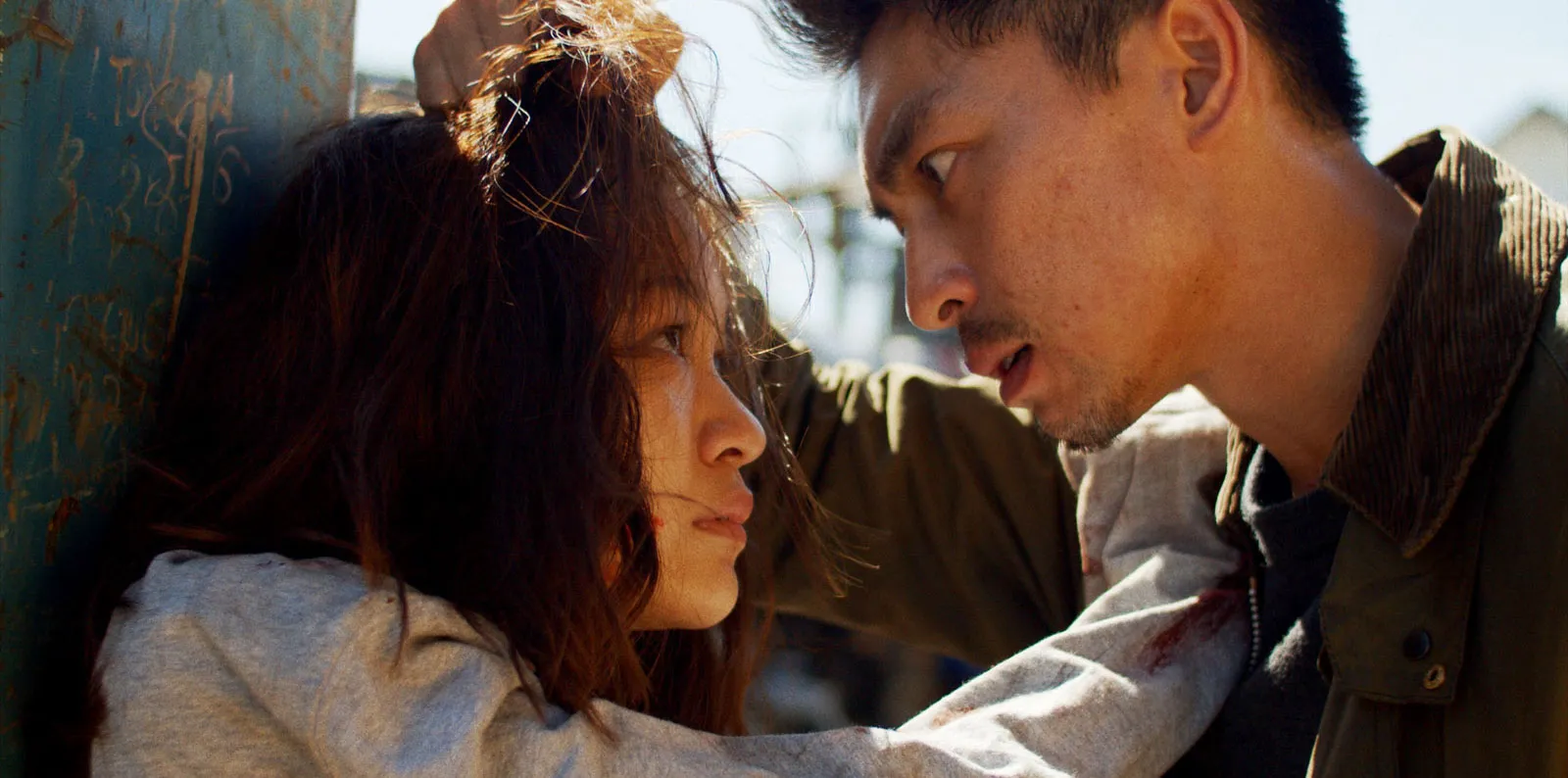

Hiroshi Shôji’s Tatsumi returns to the director’s study of low-level Yakuza life and opens with a gritty, realistic crime world shaped by revenge. The film quickly sketches the titular figure, played by Yuya Endo, as a quiet professional inside this criminal economy.
By day Tatsumi works as a fisherman; on the side he functions as a corpse cleaner and body disposer for rival Yakuza gangs, carrying out this grim labor with clinical precision. His routine fractures when his ex-girlfriend Kyoko is savagely killed by the psychotic brothers Ryuji and Takeshi after a dispute over stolen drugs.
That violence immediately pulls Kyoko’s younger sister Aoi (Kokoro Morita) into the story, a fiery, defiant teenage mechanic who swears revenge. Tatsumi agrees to shield her and support her desperate pursuit. Their alliance forms the volatile emotional core of the film, connecting two damaged people in a repeating cycle of street violence that speaks across cultures through grief and rage.
Grime and Gridlock: Visual Storytelling in the Underworld
Tatsumi rejects the glamorous image of organized crime that often appears in cinematic traditions and presents a grounded view of a world steeped in poverty, desperation and blood. For these characters, criminal work functions as daily routine with brutal consequences, presented without spectacle. Shuhei Yamamoto’s cinematography patiently constructs this heavy atmosphere.
The settings include dockyards, car wreckers and industrial pits that supply a grimy, realistic backdrop. The visual storytelling uses sodium vapor light and strong saturation inside tight urban spaces, building a dirty, grungy look that reflects the characters’ sense of hopelessness.
The film adopts a different visual language for Tatsumi’s body disposal jobs, with harsh natural sunlight and more precise, steady camera movement. This distinction stresses his quiet, unusual professionalism inside chaos. The action feels filthy, thrilling and brutal, with no softening of impact. Jarring handheld close-ups convey the raw savagery and emotional pain of the violence, so each confrontation feels earned and tangible.
The pacing runs slower than many crime films, which helps tension and atmosphere accumulate, yet the middle stretches sometimes settle into a languid rhythm. The film’s harsh aesthetics track a fading sense of humanity and position Tatsumi as a figure of dwindling honor among petty thugs, a local archetype that viewers from different cultures can read through familiar crime-movie codes.
The Symbiosis of Rage and Pragmatism
The emotional charge of the film rests on the relationship between its two leads. Tatsumi initially appears quiet, withdrawn and nearly numb, a man whose rage becomes chilling once it finally breaks through his façade. He embodies a wish to step away from violence, yet he is continually pulled back by a deep loyalty or code. His characterization echoes the archetype of the ronin in classic Japanese cinema, a masterless, honorable warrior held in one place and no longer free to wander.
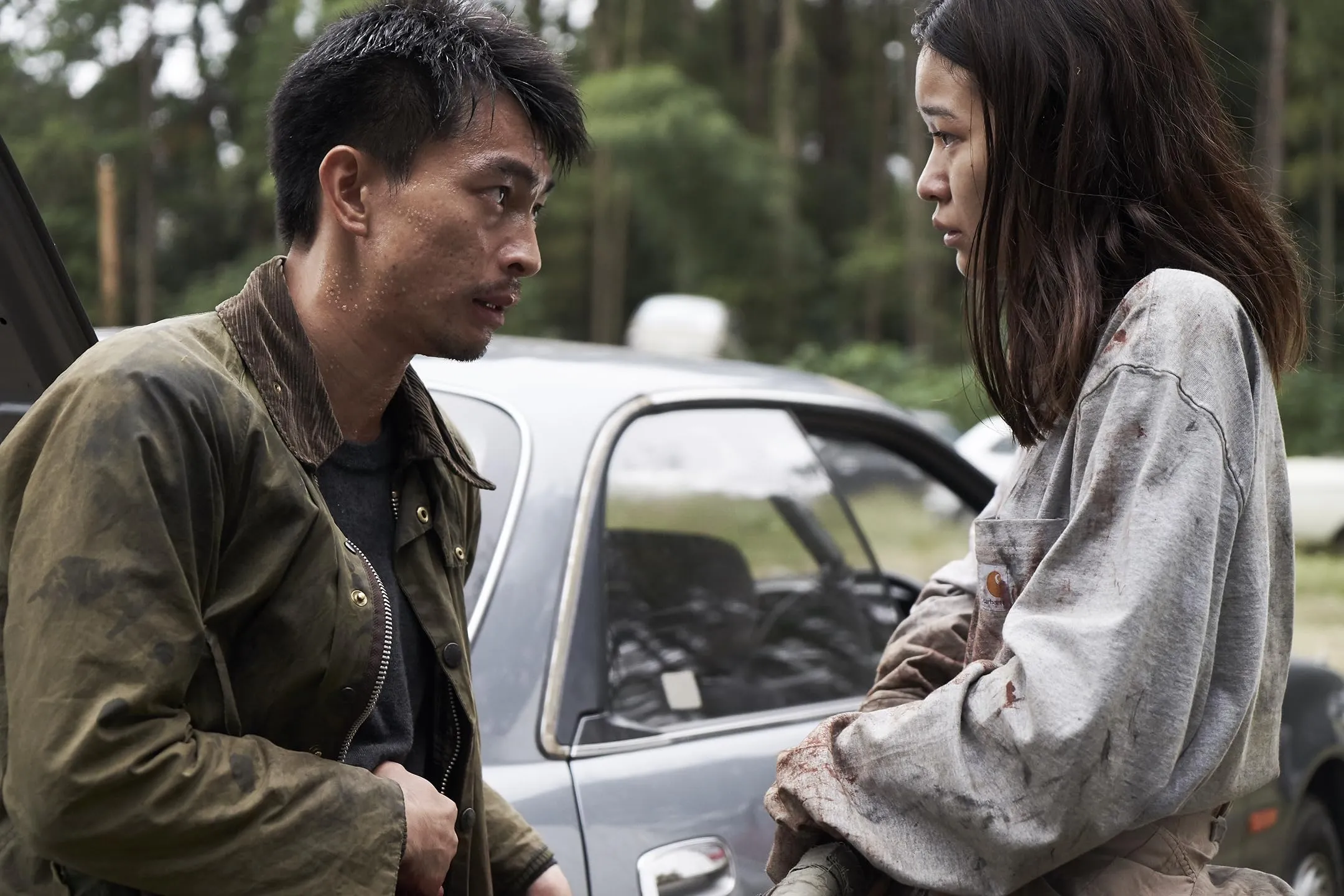
Aoi functions as emotional anchor and engine, a burst of defiance, raw energy and grief. As the genuine outsider, her reactions intensify the impact of the violence, and her arc follows a fierce commitment to retribution. The bond between Tatsumi and Aoi creates a powerful symbiosis. Tatsumi’s cool pragmatism offsets Aoi’s raw, emotional aggression, which produces an unlikely but sincere connection.
Their exchanges reshape both characters in small ways and allow a thin shaft of hope to pierce their bleak environment. The performances reinforce this structure. Yuya Endo’s quiet control gives Tatsumi an internal weight, while Kokoro Morita’s work as Aoi stands out as the acting highlight, carrying the story’s heavy emotional load through shifting notes of grief, defiance and resolve. The frightening, unstable presence of the brothers Ryuji and Takeshi maintains constant pressure on this fragile alliance.
The Geopolitical Context of Revenge
Tatsumi draws on familiar crime-genre elements such as gang rivalry, drug theft and murder to tell a character-focused, emotionally tragic story. Revenge provides the main thematic throughline and forces the audience to consider if violence ever offers a real solution. The film operates inside a highly regional, tradition-bound low-level Yakuza structure, yet the narrative reaches viewers worldwide through a focus on grief and retribution as shared emotional language.
Emotion guides nearly every choice in this world, even when characters insist it leads only to failure. The screenplay works with deliberate efficiency, offering strong character depth without unnecessary exposition. The quiet, intimate scene in which Aoi speaks about Kyoko’s necklace gives vital nuance to both sisters beyond the immediate violence of the plot.
The story uses its running time with precision and arrives at a powerful ending that marks the film’s narrative high point. The final stretch leaves space for the audience to sit in the emotional aftermath. Tatsumi emerges as an effective thriller that shows how Japanese genre conventions can be reframed to explore universal themes of survival, loss and the search for redemption within a clash between tradition and a desperate modernity.
The Japanese crime drama Tatsumi, directed and written by Hiroshi Shôji, premiered at the 36th Tokyo International Film Festival in October 2023 and has been screened at other international festivals, including Fantasia in 2024. The film, which runs for 1 hour and 49 minutes, centers on a Yakuza underling who makes his living disposing of bodies and gets drawn into a war after helping a young woman seek revenge for her sister’s murder. As of late 2025, details regarding a broad theatrical release outside of Japan or its availability on specific streaming platforms are not widely announced, as it began its life on the festival circuit.
Credits
Title: Tatsumi
Release date: October 28, 2023 (Tokyo International Film Festival premiere); 2024 (Scheduled Japanese theatrical release)
Running time: 1 hour 49 minutes (109 minutes)
Director: Hiroshi Shôji
Writers: Hiroshi Shôji
Producers and Executive Producers: Hiroshi Shôji, Noboru Suzuki
Cast: Yûya Endô, Kokoro Morita, Gorô Satô, Takenori Gotô, Tomoyuki Kuramoto, Ryô Matsumoto, Ryûhei Watabe, Nanami Kameda, Tomomitsu Adachi, Kisetsu Fujiwara
Director of Photography (Cinematographer): Shûhei Yamamoto
Editors: Tatsuma Furukawa, Hiroshi Shôji
Composer: Yuji Iwamoto, Rina Okade
The Review
Tatsumi
Tatsumi is a fiercely grounded crime drama that succeeds by substituting genre spectacle for raw, emotional realism. It offers a powerful counter-narrative to romanticized Yakuza films, anchored by the magnetic, volatile relationship between the two main characters. While the deliberate pacing can occasionally lag, the film's unflinching visual style and Kokoro Morita's standout performance create a compelling, tragic, and ultimately hopeful vision of survival in a brutal underworld.
PROS
- Gritty, unflinching realism of the low-level Yakuza world.
- Outstanding performance by Kokoro Morita (Aoi).
- Strong thematic core centered on grief, revenge, and reluctant redemption.
- Excellent chemistry and character development between Tatsumi and Aoi.
- Terrific final sequence that lands a quiet, emotional impact.
CONS
- Pacing is slower than typical and can feel repetitive/languishing in the middle.
- Orange-dominated lighting style (sodium vapor) may become visually tiring over the long run.
- Some minor instances of far-fetched narrative points or continuity slips.