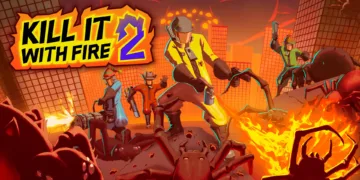




























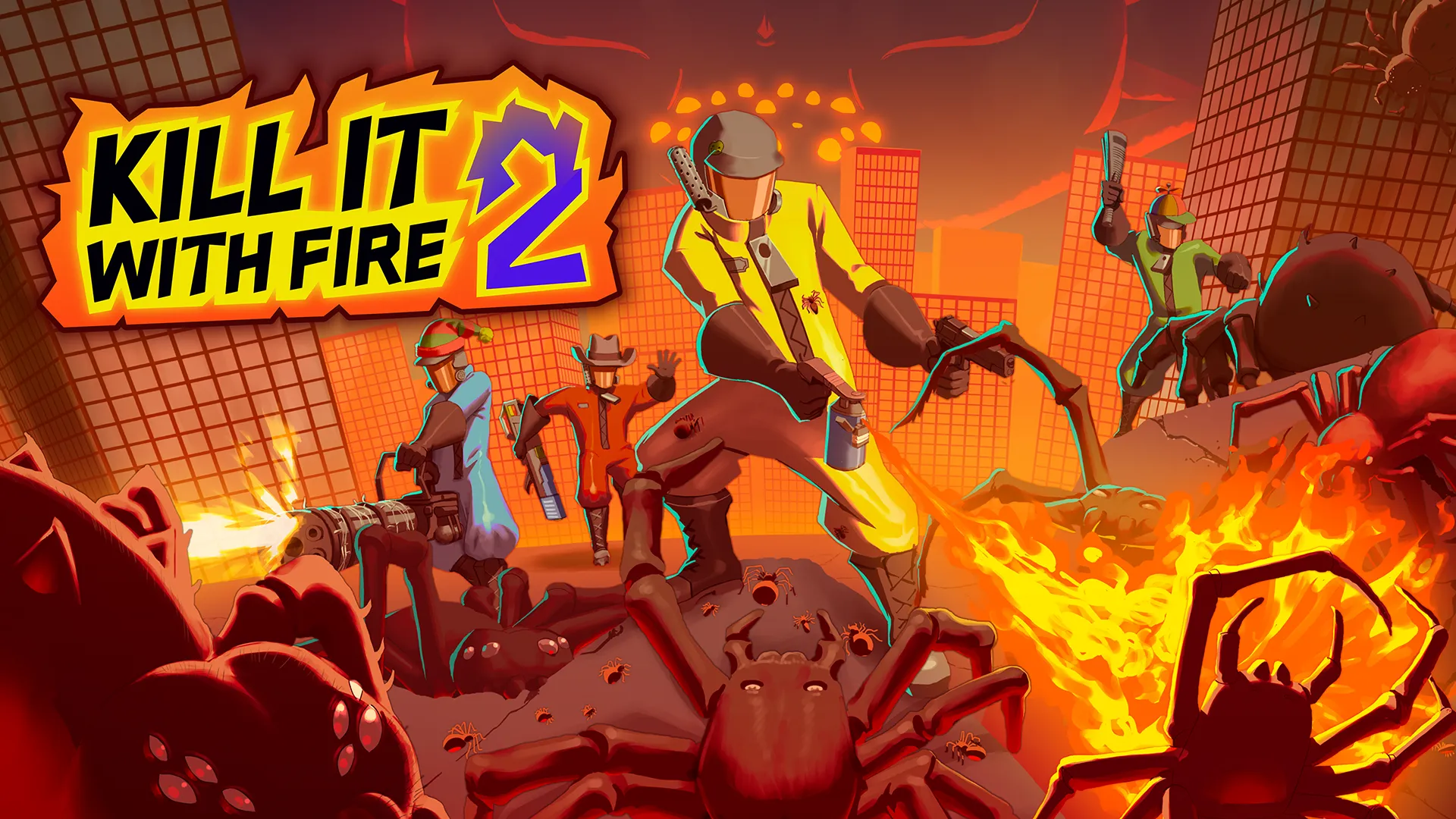

The central conceit of Kill It With Fire 2 frames pest control as an examination of primal fear combined with the power fantasy of unlimited tools. The game turns the familiar unease around spiders into an immediate, explosive, and distinctly therapeutic spectacle. This follow-up expands the first game’s suburban chaos into something presented as a cosmic assignment.
The player takes on large-scale arachnid extermination across multiple dimensions with an absurdly oversized arsenal. Hairspray, lighters, advanced laser cannons, and miniature functional tanks all feed into a core loop that swings between justified panic and satisfying release. The multi-dimensional sci-fi structure keeps the frantic energy of the original house-bound game and channels it into a distinctly comedic power fantasy.
The Dynamics of Engineered Chaos
Kill It With Fire 2 builds its mechanical core on the interaction between a responsive physics simulation and an object-tracking system. Unlike most first-person shooters, success depends on how aggressively the player tears apart each space, while precision aim plays a secondary role. A handheld device projects a directional red dot toward the nearest spider, and the creatures are expert at hiding, so The Extermination Process revolves around stripping every room down piece by piece.
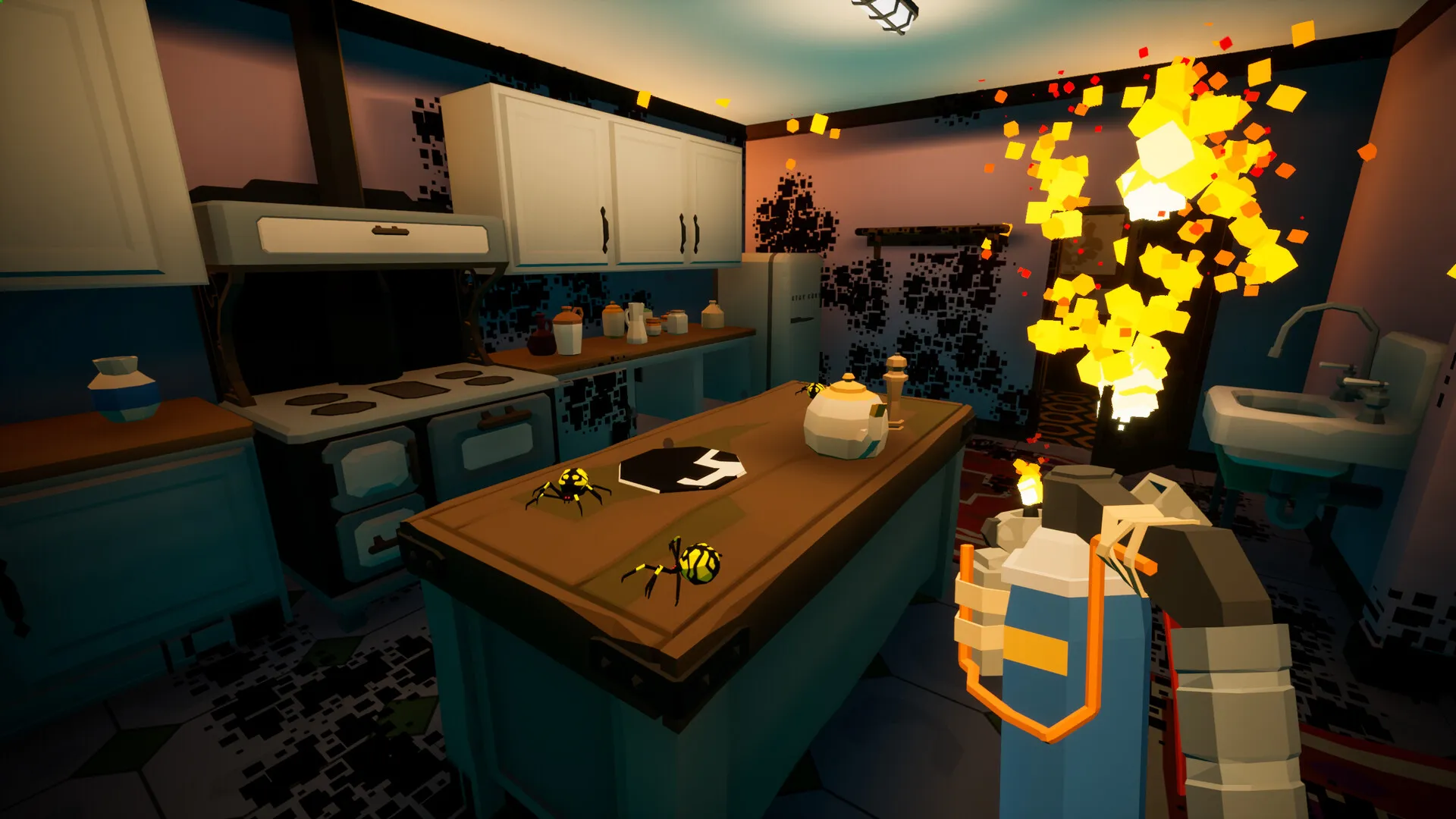
The Physics Engine defines that experience. Nearly every household item or dimensional prop can be lifted, thrown, or shattered. Destruction functions as the primary method of detection and engagement, far beyond simple cosmetic spectacle. Exposing a spider usually means turning a tidy area into instant debris. This environmental feedback loop becomes a key source of pleasure, since players decide exactly how to dismantle each setting.
The Weapons and Arsenal progression keeps that chaos climbing. Early encounters rely on simple tools such as a clipboard or aerosol can, then the loadout grows into heavy equipment tuned for high-impact results. The arms race follows the evolution of the spiders. They behave as active threats, shooting webs, disguising themselves as everyday objects, and sometimes exploding on contact.
This range of enemy behavior pushes players to keep experimenting with their tools, shifting from fire-based zone control like the flamethrower to focused options such as the nailgun, depending on enemy type and location. Weapon Usage and Ammunition tie directly into the destruction focus, since refills sit inside breakable objects, which keeps players smashing items to stay supplied. Wrenches, Upgrades, and Blueprints deepen this loop by feeding a layer of persistent character growth that mirrors systems from light action RPGs.
Multiverse as Narrative Design
The campaign structure leans hard on its dimensional premise to build a layered narrative frame that shapes player agency. The Hub World, the spaceship HSF Vindicator, anchors that structure. This location functions as a true character base where players process collected resources and upgrade equipment. Darwin, the ship’s AI, sets the goal for each dimensional jump by asking for data chips that can repair the vessel. The setup delivers a clear, tongue-in-cheek story spine for the rising chaos.
Dimensional Travel and Variety carry most of the campaign’s interest. Each new world acts as both a visual shift and a mechanical reset for the player’s role and objectives.
The clearest expression of this approach appears in The Spider City. Scale flips completely, and the player becomes a gigantic figure that recalls kaiju stories. The setting, a miniature metropolis filled with terrified arachnids, hands the player near God-level destructive power. That shift rewires the emotional frame, as the player moves from nervous exterminator to agent of wide, indifferent demolition. Objectives in this dimension match that scale, with tasks such as smashing billboards or throwing cars into the ocean to raise the kill count.
The Hardware Store offers a different focus built around spatial puzzles and environmental hazards. Sections of this map ask the player to move carefully across high shelves, with stretches that mimic a “the floor is lava” layout where a fall into the rising mist leads directly into overwhelming spider swarms. The environment functions both as weapon and obstacle.
The Wild West dimension shifts genre by turning a stage into a wave-based defense challenge. The player defends a saloon from trains that unload giant spiders, and weaponized cacti serve as a key defensive tool. The scenario has a playful concept, yet the mission’s mechanical execution suffers from weak enemy resistance, so the time required feels large compared with the level of challenge on offer.
This illustrates how a clever narrative frame can lose force when the gameplay fails to match its promise. Across all these worlds, the variety of spiders, from web-shooters to those in tiny cowboy hats, reinforces the game’s dedication to visual comedy.
Collaborative and Competitive Extermination
Multiplayer support becomes a major factor in how well Kill It With Fire 2 works, since it turns a potentially solitary loop into a shared, chaotic adventure. The Cooperative Campaign magnifies the core appeal. Shared stress and joint destruction heighten the comedy, and the chaos spreads across the entire playspace.
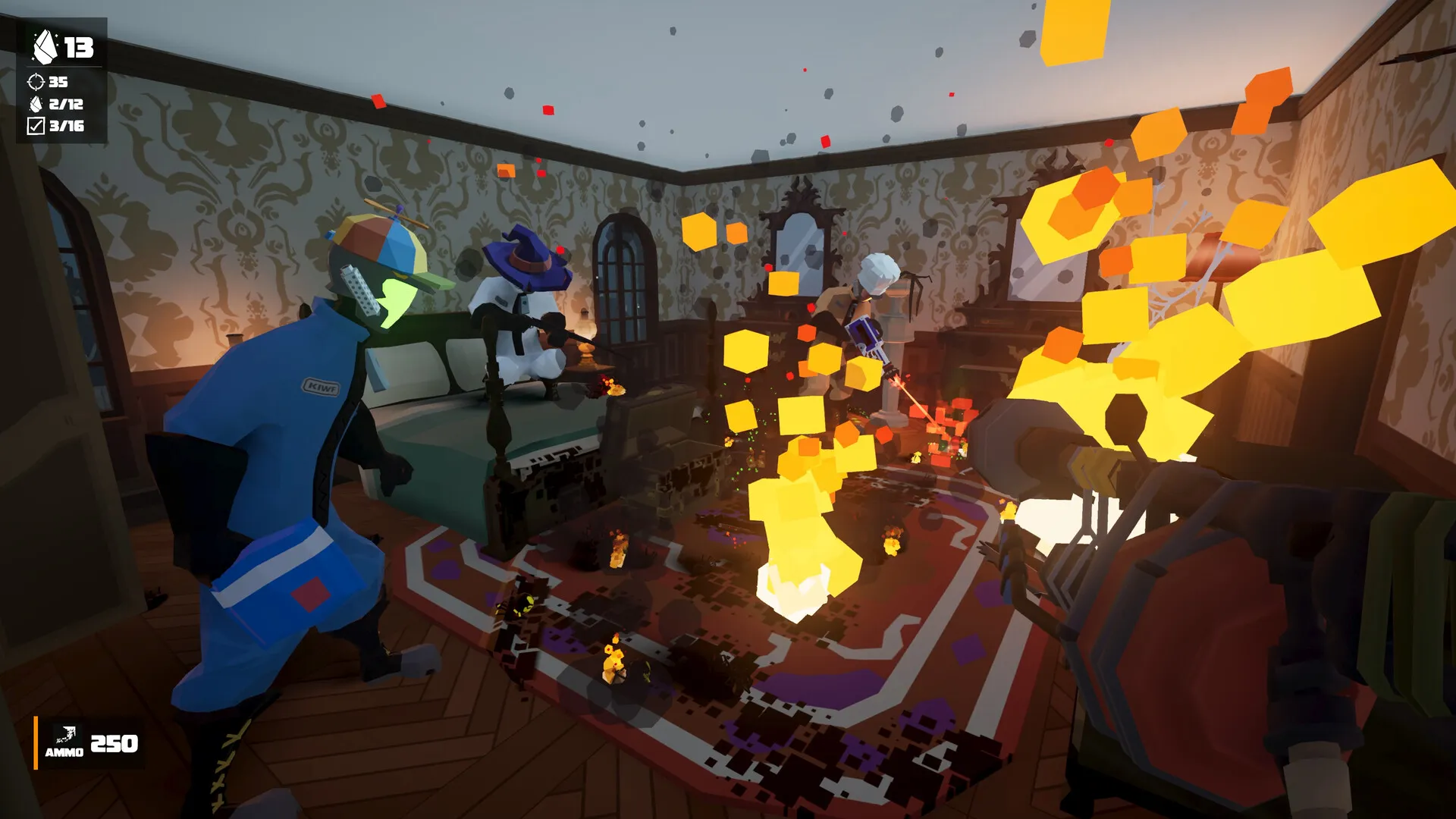
When a partner spots a spider, the usual team reaction favors overwhelming force, for example torching an entire room just to feel safe. That collective overreaction feels deeply satisfying, and co-op play noticeably reduces the campaign’s mechanical difficulty.
Extermination Mode adds an asymmetrical player-versus-player option. This mode splits the lobby into Hunters (Exterminators) and Spiders. Hunters carry their full arsenal and tracking tools to locate the small, agile player-controlled spiders. Spiders lean on their size advantage for elaborate hiding, object manipulation, and web placement that slows opponents.
The mechanical loop feels like a compact, focused version of hide-and-seek. The Spider role can drift into tedium in small lobbies, since the most effective approach often turns into passive hiding, with little room for energetic confrontation. The competitive mode increases Replay Value and works best with a large, committed group, which creates strong tension on the Hunter side.
A Study in Sensory Feedback
The game’s technical and aesthetic choices line up carefully with its exaggerated comedic action. Visual Style and Graphics lean into a stylized, cartoonish, low-poly look carried forward from the original. That approach supports large-scale environmental destruction and bold effects.
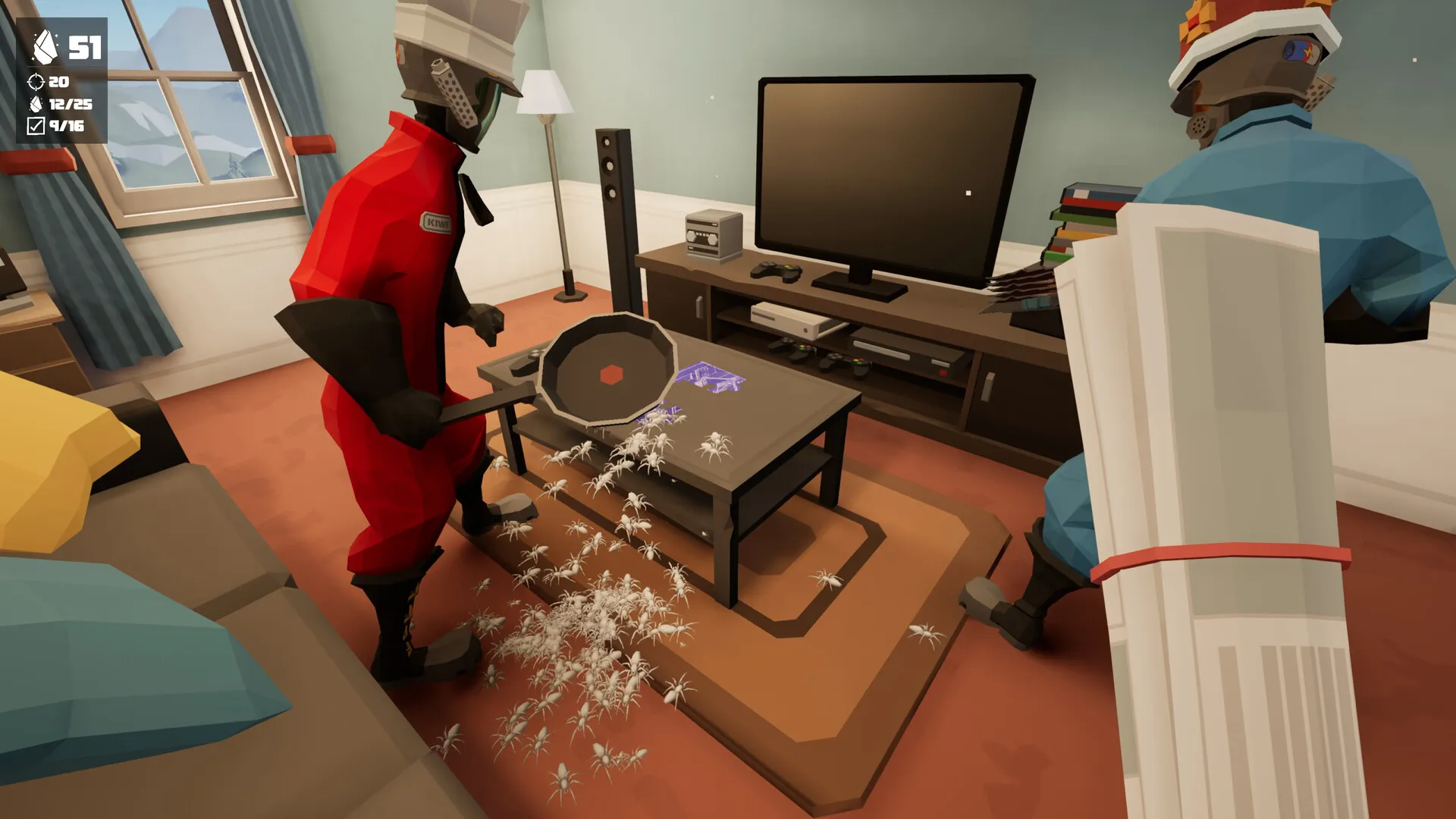
Explosions and fire read with strong clarity and punch, which gives player actions a heavy sense of impact. Environmental layouts also display careful detail and a steady commitment to humor, including external nods such as a carpet pattern in one stage that recalls the look of The Shining.
Audio and Sound Design play a central role in the game’s psychological effect. The soundtrack and effects work with clear intent. Small, rapid skittering noises from nearby spiders aim to raise anxiety. Loud, destructive weapon sounds such as the whoosh of a flamethrower or the blast of a rocket deliver immediate release. That cycle of tension followed by sonic payoff drives much of the game’s therapeutic appeal.
Music tracks shift with each dimensional setting, with tense sci-fi cues in the hub and fast Western rhythms in the desert worlds. Audio sits inside the core emotional loop in a very deliberate way. The heavy mix of visual chaos and physical interaction demands a stable foundation, and Performance and Optimization hold up, with smooth frame rates and short load times even during the most demanding physics calculations.
System Friction and User Experience
Mechanical creativity comes with several points of system friction that interrupt player flow. Core character controls feel limited. Movement and Platforming Issues stem from an imprecise jump and constrained character momentum. Areas that demand precision in movement or platforming can feel disproportionately frustrating, since the movement model does not support that style of challenge. Collision detection with small objects can cause the character to snag or fail to register inputs, which breaks the sense of chaotic control.
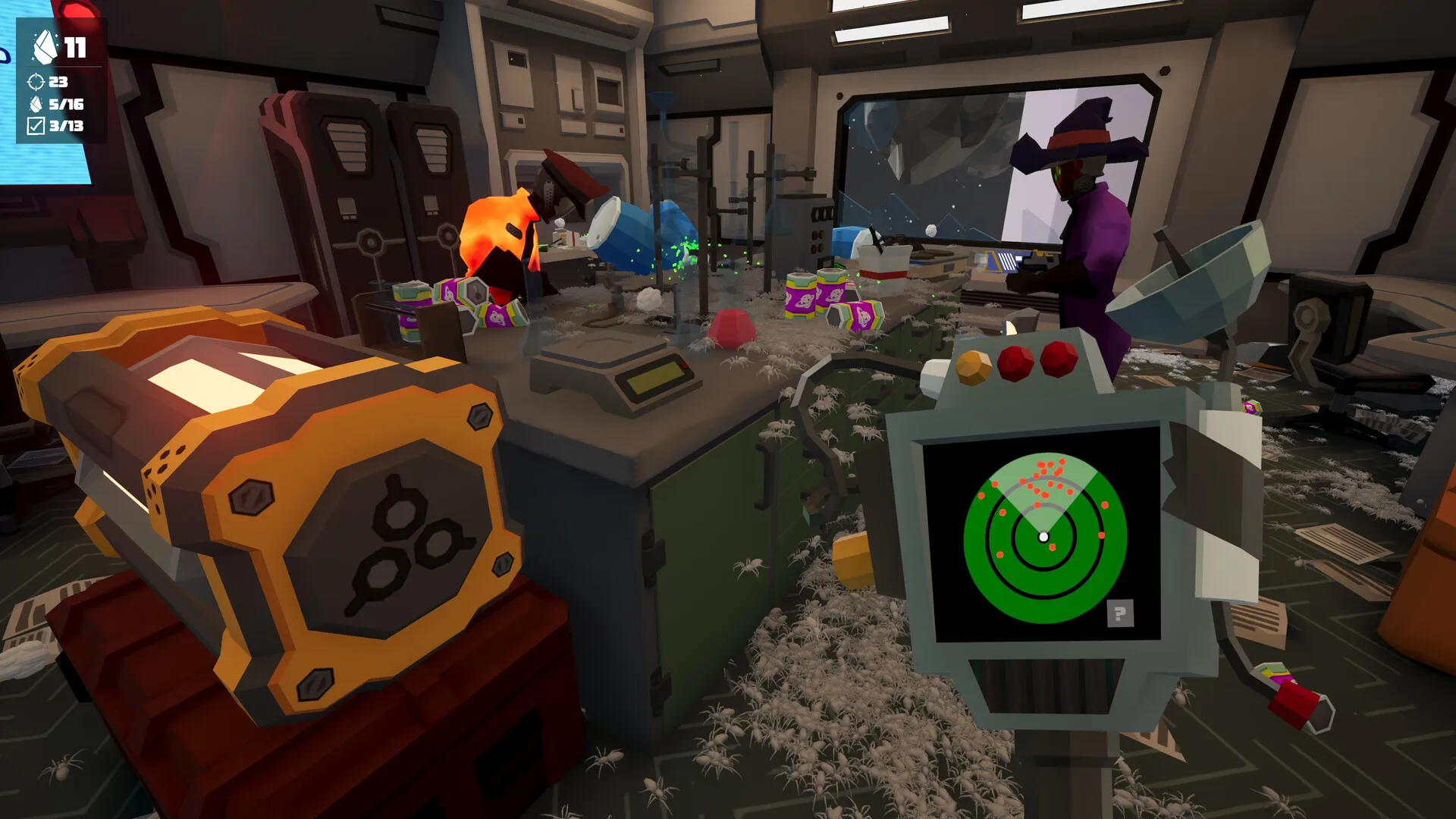
User Interface and Control Issues stand out most clearly in the lack of a proper weapon wheel. Players must cycle through a rapidly expanding arsenal of over a dozen items with sequential button presses, which cuts into the pace of combat. In hectic moments this layout feels punishingly slow. The need to line up a tiny aiming reticle for specific interactions adds a layer of pixel hunting that clashes with the game’s focus on broad, messy destruction.
Progression Tedium remains an issue even with varied level designs. Constantly gathering Compound X to open new areas can feel repetitive. The campaign structure starts to resemble a resource-intensive simulator, and the demand for dozens of secondary missions to move forward can feel like a strict checklist, especially during long sessions. This approach risks tiring players out before they see the most distinctive dimensions.
Synthesis of Chaos and Comedy
Kill It With Fire 2 takes a simple, joke-like premise and turns it into a surprisingly large-scale, fully realized experience. The design reworks the core mechanical loop, the gratifying application of extreme force to a tiny problem, by folding in physics, a broad arsenal, and a wide range of dimensional rules.
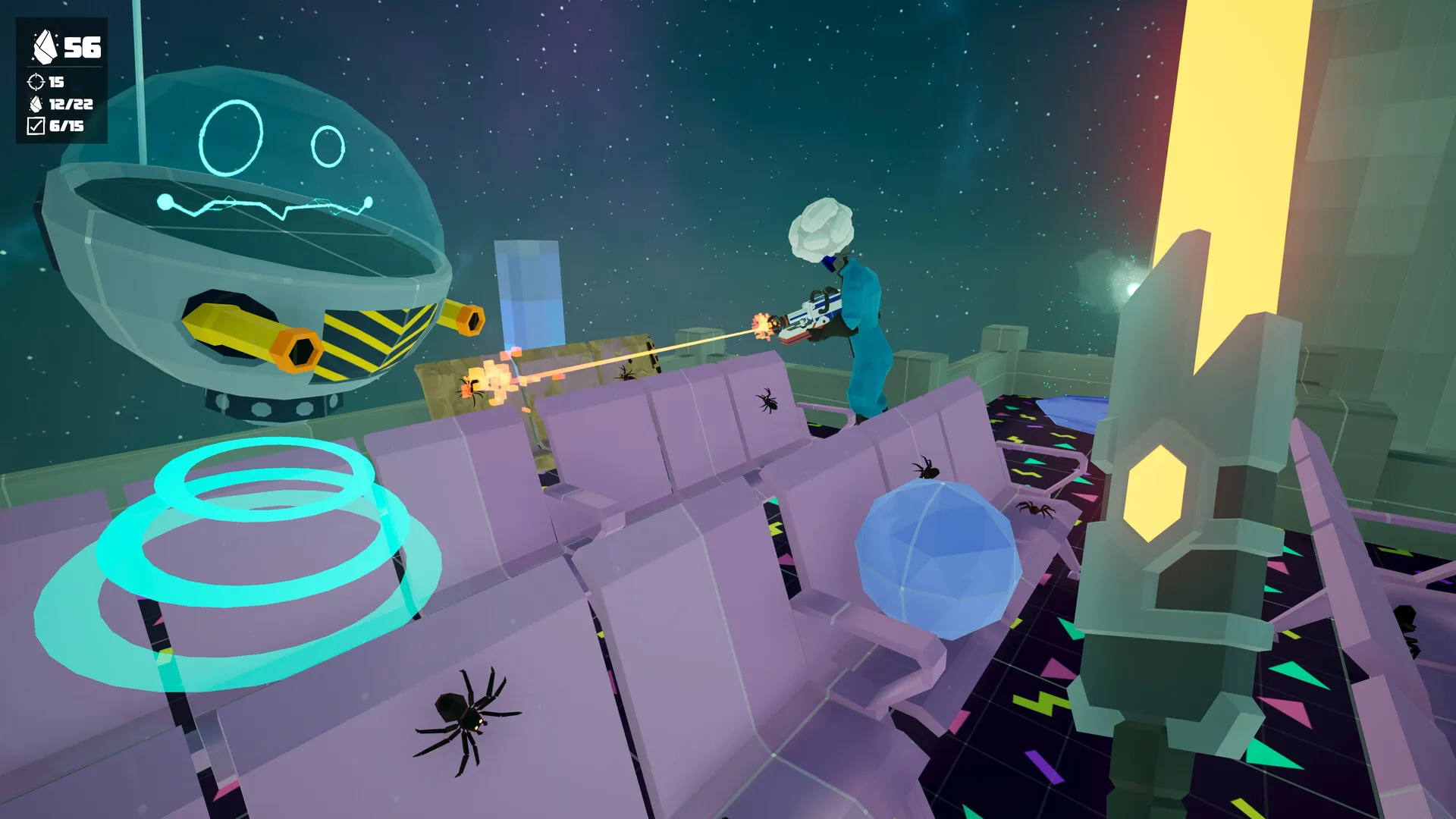
The game builds a strong mix of tension and comedy, driven by aggressive sound design and an unapologetically exaggerated premise. Player choice inside that destructive framework becomes a central strength, since players decide exactly how to tear apart each environment to reach their goals.
Control limitations and a sometimes tiring progression model create rough edges, yet the game still delivers a deeply satisfying co-op playground. The result feels like a project that understands its own appeal and delivers a world-wrecking adventure that clearly outgrows its origins.
The Review
Kill It With Fire! 2
Kill It With Fire 2 brilliantly expands its chaotic premise, transforming a simple extermination task into a varied, high-energy, multi-dimensional sandbox. Its strengths lie in the deeply satisfying physics-driven destruction, the absurd arsenal, and the heightened fun of the cooperative campaign. While the game's control scheme is hindered by the lack of a weapon wheel and certain objectives can feel overly procedural, the core loop of manic panic and explosive catharsis remains consistently engaging. It is a fantastic sequel that delivers spectacle and laughter.
PROS
- Encourages and rewards massive environmental destruction.
- Each dimension offers unique mechanics and thematic shifts (Kaiju, Wild West).
- Multiplayer amplifies the comedic chaos and sense of accomplishment.
- Provides diverse, creative tools for extermination.
- Uses audio cues to generate anxiety and immediate catharsis.
CONS
- Lack of a weapon wheel severely interrupts action flow.
- Collecting Compound X and completing numerous checklists can feel like a grind.
- Limited jump precision makes platforming sections unnecessarily frustrating.
- Occasional unresponsive spiders and camera issues.
- Spider role can become tedious in small lobbies.