

























![Kingdom Hearts Collection [I-III] Review](https://gazettely.com/wp-content/uploads/2026/10/Kingdom-Hearts-Collection-I-III-1-360x180.webp "Kingdom Hearts Collection [I-III] Review: KHII Holds Steady as Newer Entries Fluctuate 37")



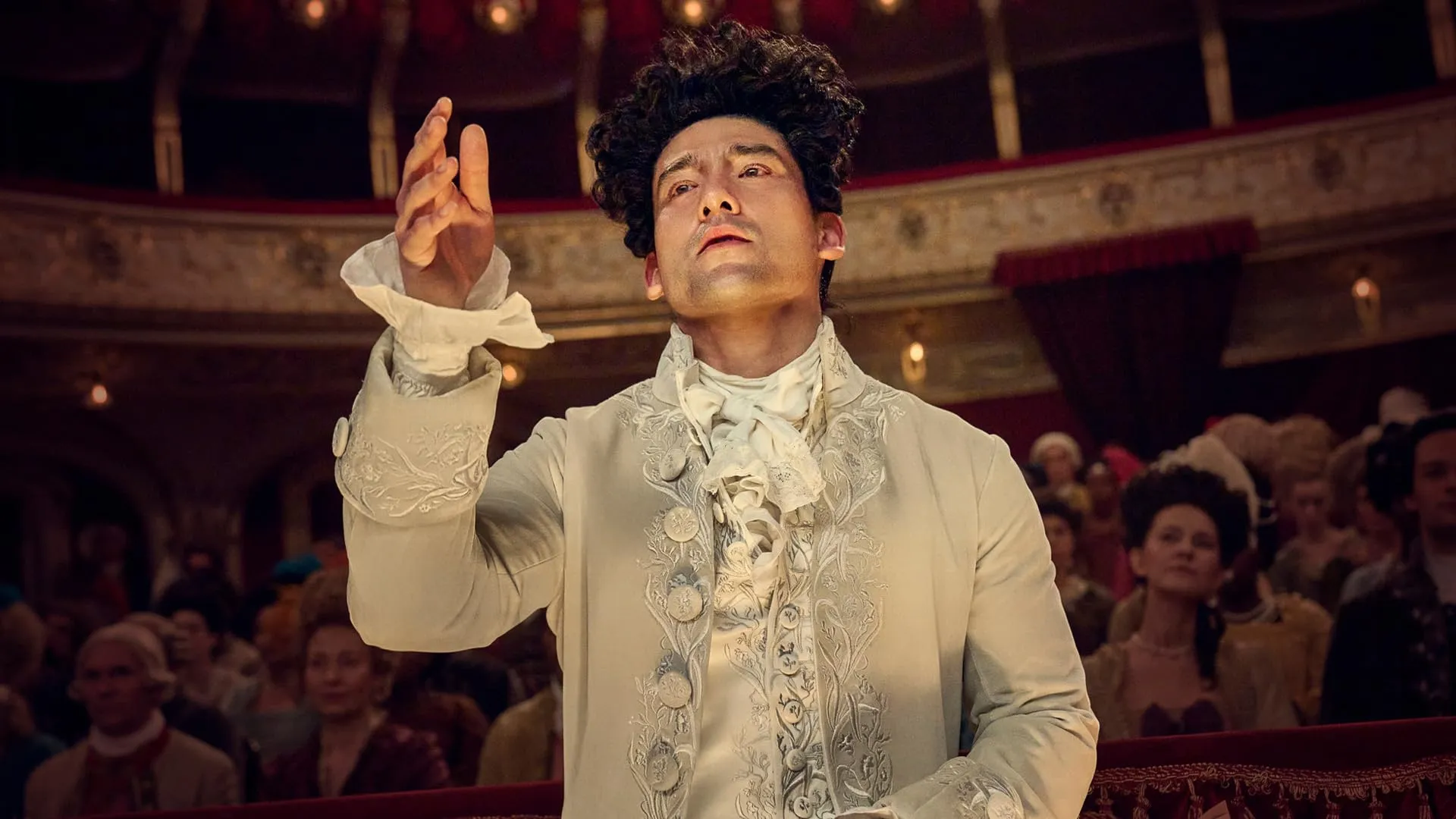

The cobblestones of Vienna in 1781 refuse the clean gleam of a preserved exhibit. They sit slick with bile and wine. This city receives Wolfgang Amadeus Mozart through street stench, with palace perfume kept at a distance. The production wipes off the powder and leaves the raw skin of history exposed.
Damp walls breathe. Appetites flare. The young composer’s entrance reads like an act of disruption inflicted on a culture that confuses stalled custom with safety. He arrives as a reckless force, tumbling into the Austrian court like a living insult aimed at the manners of the people who run it.
Antonio Salieri stands in the story as the custodian of that weakening order. He carries status bought at a grim price, a man who bartered his soul for a comfortable chair among the competent and the dull. His life splinters on contact with a talent that feels like a divine joke with teeth. The series stages its account as a conversation between an older Salieri and Mozart’s widow, Constanze.
That confessional shape trades clerical distance for personal grief. The rivalry stops feeling like public legend and starts behaving like a private haunting. Vienna, framed as the capital of music, turns predatory. Brilliance operates like a blade, cutting every hand that reaches for it.
The Sacred Fool of Camden
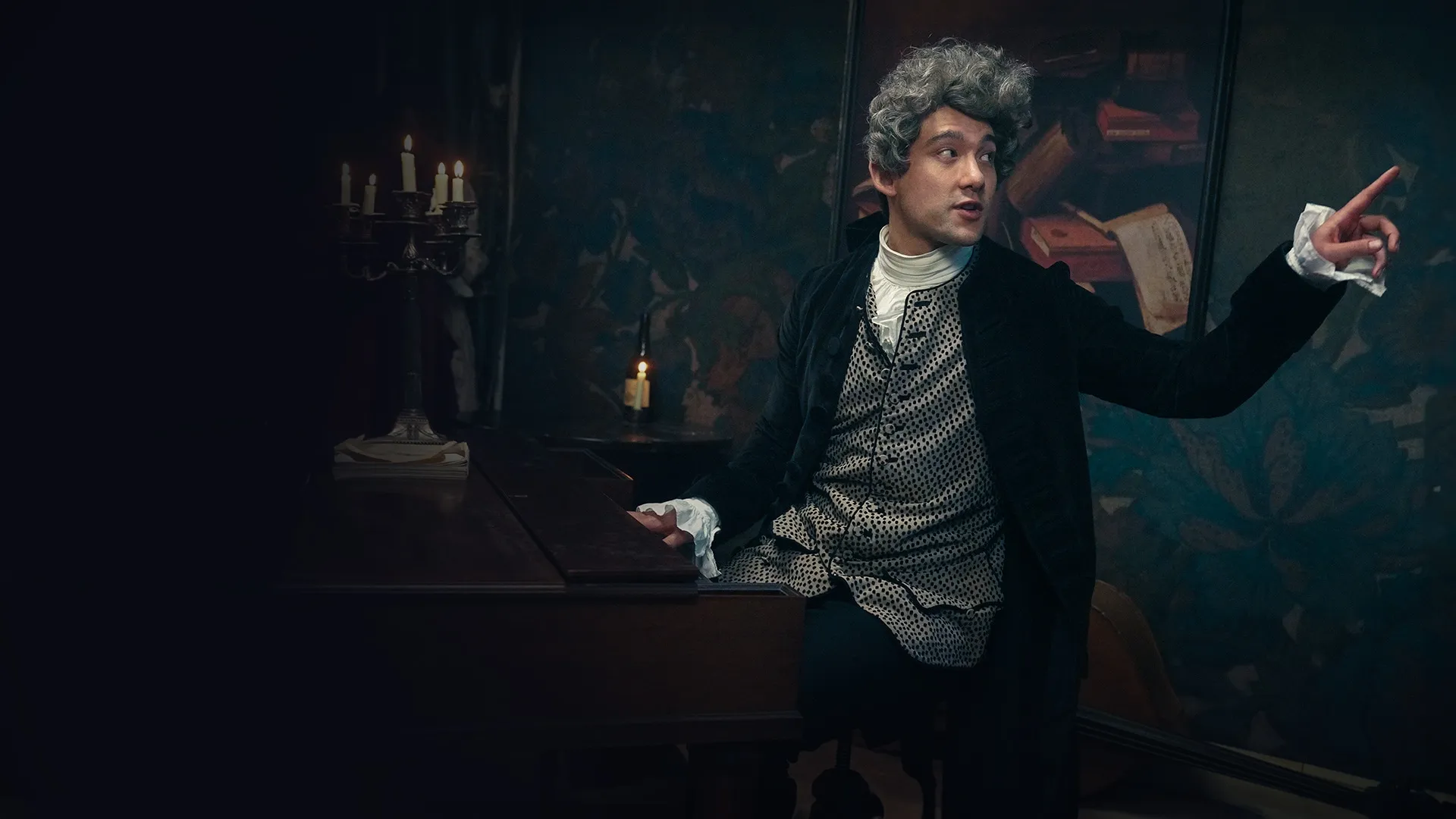
Will Sharpe’s Mozart looks as if he wandered in from a modern stage somewhere in North London. He carries the messy charge of a contemporary indie musician, restless and bright in a room that prefers stillness. He drifts through 18th-century ballrooms with a carefree charisma that skirts pathology. This Mozart treats social rules as material for ridicule. Vienna’s hierarchy becomes a set of cues he refuses to obey.
Sharpe makes the role bodily, sometimes undignified in a way that feels deliberate. The series shows him arriving while vomiting in public. It lets him pitch down stairs in a drunken haze. It places him at solemn gatherings that he turns into unruly parties. These slapstick collisions function as character evidence. Genius weighs on him, and his body cannot carry it with grace. The laughter catches in the throat because the comedy keeps pointing back to a man split between instinct and gift.
The musical sequences land with a startling sense of the real. Sharpe plays the instruments himself, and that technical candor changes the temperature of the scenes. Improvisations feel risky. Piano duels carry the violence of sport. When he dismantles rivals in front of the Emperor, he does it with a wink and a shrug that turns virtuosity into casual cruelty. This Mozart reads as a vulnerable child, a broken soul with a self-destructive streak that keeps circling back to the same wound.
Leopold Mozart’s shadow follows him. It hangs over his choices and his breath, a parental presence that never relaxes its grip. His everyday life collapses into unpaid debts and missed appointments, a calendar full of failures that gather speed. His scores, by contrast, move with geometric certainty. The script presses on that friction through its language, using crude insults and base humor to anchor celestial talent in a sweating, vulgar body. He speaks in filth while his mind reaches for light, and the gap between the two becomes the series’ chief ache.
The Theology of the Second Best
Paul Bettany gives Salieri a predatory stillness, wolfish and controlled. Envy tightens his face into something pinched and cold. The mask slips in small moments, and what shows underneath is the pain of limitation, naked and humiliating. Salieri believes himself appointed. He has spent a lifetime in prayer and study, expecting God to speak through his pen as reward for devotion.
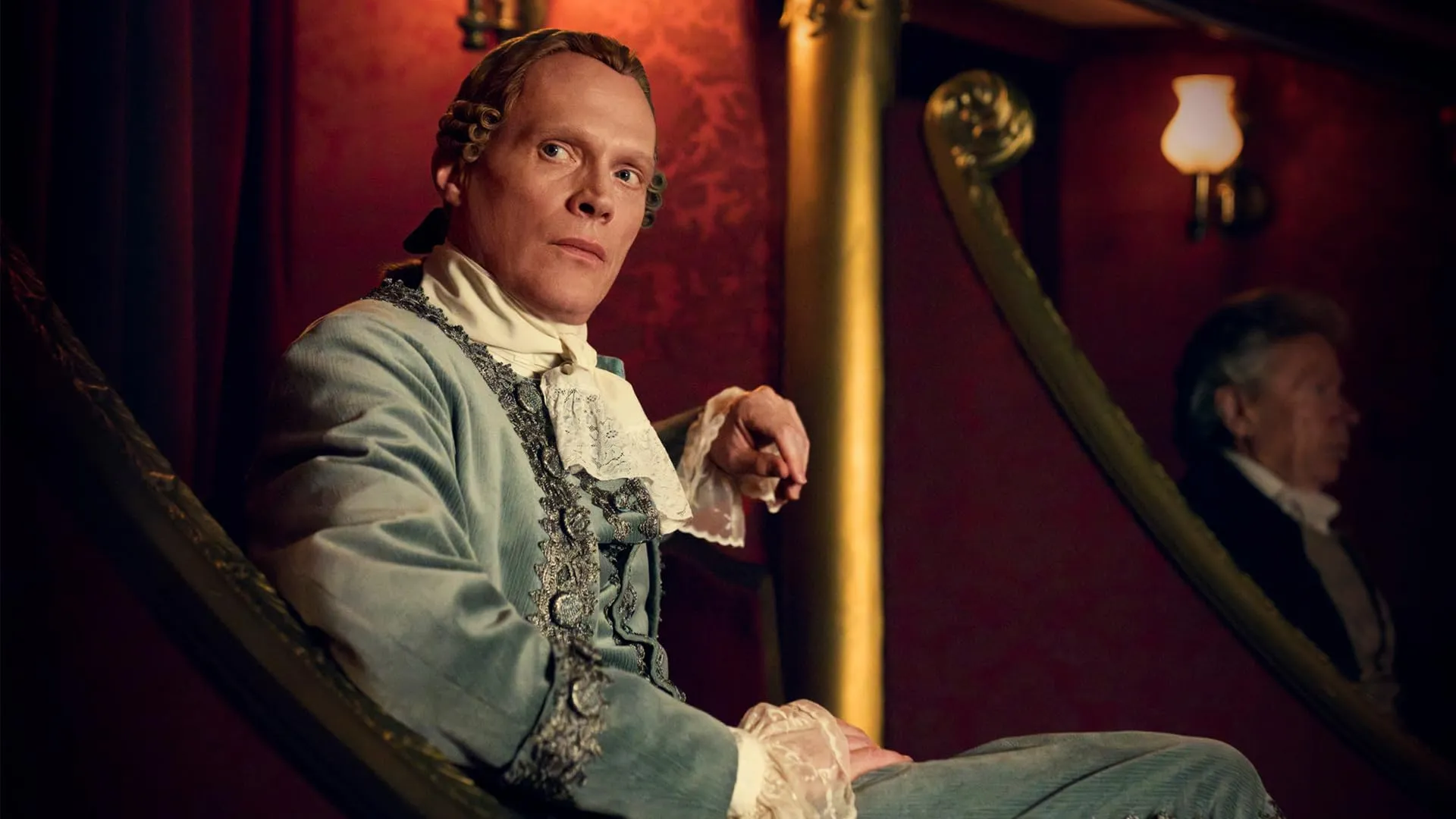
Mozart’s appearance hits him like cosmic betrayal. The boy is framed as a vulgarian, a drunkard, a lecher, and yet God chooses to sing through him. That idea poisons Salieri from the inside. He sits at the harpsichord in a cold stupor, staring at blank paper while Mozart spills masterpieces with effortless speed. The series turns this into a theological crisis: what kind of universe hands its brightest music to someone so undisciplined, so indecent, so careless with himself? Salieri’s faith does not collapse into atheism here. It curdles into accusation.
From that recognition, he becomes an antagonist with teeth. The story charts a shift from possible mentor to concealed enemy, and the motive carries a chilling clarity. He wants to destroy Mozart as an act of retaliation aimed at the Creator who refused him. The conflict stops being merely social. It becomes a war conducted against the heavens, fought through patronage, manipulation, and poison-soft whispers.
Salieri’s most terrible gift is understanding. He is the lone figure in the Emperor’s circle who truly grasps Mozart’s greatness. That knowledge behaves like a curse, forcing him to measure the distance between his own competence and the boy’s transcendence every time he hears a phrase of music. The series darkens the resentment further, pushing it into the sordid. Salieri attempts to manipulate Constanze. He considers bedding her as a way to corrupt Mozart’s domestic life, dragging what looks sacred into mud where he feels more at home. The act reads as spiritual vengeance, lust used as a weapon against beauty.
The Widow and the Ghost
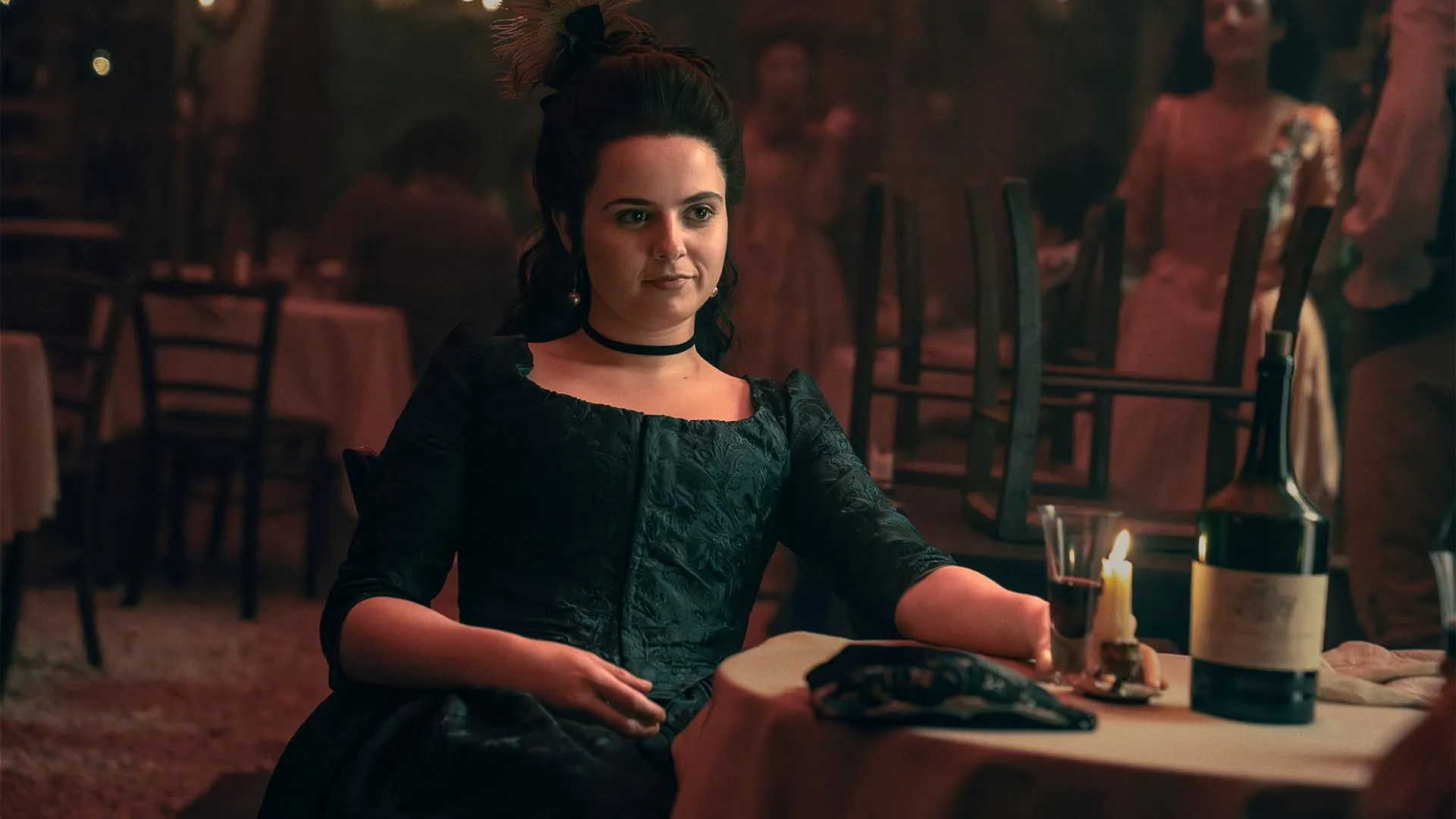
Gabrielle Creevy gives Constanze Mozart a grounded force that the series needs. She holds the household together when it threatens to tip into the abyss. This portrayal grants her agency with weight. She is a singer with a sharp mind, able to meet her husband as an equal spirit. She manages the fallout from his social disasters, cleaning up behind genius with the calm of someone used to chaos.
Placing her perspective at the front adds heavy realism. The elderly Salieri confesses to her, and the scene refuses the soft cushion of religious absolution. There is no priestly gatekeeper, no ritual to turn guilt into something neat. Salieri has to face a human witness. He speaks to the woman who buried the genius he helped kill. The confession becomes less about forgiveness than exposure. What does remorse look like when it has nowhere to hide? What can repentance purchase when the dead stay dead?
Rory Kinnear plays Emperor Joseph II with hollow, pleasant vanity. He bankrolls art without a real ear for it. He can be charmed by Mozart with ease, and his critiques carry a famous shallowness. He can look at a masterpiece and claim it contains too many notes. The line lands like a small cruelty, the kind delivered by a bored man with power who never notices the damage he causes.
That court becomes a character in its own right, a machine that rewards mediocrity with safety. Salieri thrives there through usefulness and obsequiousness, rising inside a system built to fear true innovation. Leopold’s ghost lingers through the series, a spectral demand for perfection that presses his son toward an early grave. The family trauma becomes the bars of Mozart’s cage, locking him inside a life he keeps trying to laugh his way out of.
The Texture of a Vicious Age
The production’s visual identity is sordid and rich, a feast served on dirty plates. Joe Barton writes with a ribald focus, keeping the 18th century visceral. Sweat beads on performers’ brows. Grime sits under the fingernails of the elite. Bodies intrude on every scene, insisting that high art rises from flesh, waste, hunger, and breath. The series leans hard into bodily functions, and that insistence keeps the story anchored in a world that refuses cleanliness.
There is a contemporary cast to many of the younger actors. They move with the ease of the digital age, carrying themselves with a casual self-possession that can clash with gold silks and heavy velvets. The friction feels intentional. These people are played as living bodies rather than distant icons, and that choice pulls the period setting closer, then lets it sting.
The musical set pieces serve as the episodes’ emotional peaks. The creation of The Marriage of Figaro arrives with electric tension, showing the labor required to force beauty into a hostile environment. The five-episode structure runs on frenetic energy, and the middle passages can grow heavy with plot. The show finds its footing again by returning to its darker obsessions: jealousy as devotion twisted, genius as an affliction, faith as a wound that refuses to close.
The costumes remain opulent, with dusky pinks and deep golds filling the frame. That beauty masks a story that stays lively and vicious, pleasure paired with rot. The production plays like a sensory banquet, marrying sublime sounds to ugly truths about the human soul. It watches the wreckage left behind when a star sinks into swamp water, and it leaves you sitting with the same unanswered ache that haunts Salieri: what kind of world makes holiness sound like music and then hands the music to someone determined to destroy himself?
The limited series premiered on Sky Atlantic and the streaming service NOW on December 21, 2025. This five-part drama reimagines the intense rivalry between the young prodigy Wolfgang Amadeus Mozart and the established court composer Antonio Salieri in 18th-century Vienna. Viewers in the United Kingdom can access all episodes through Sky and the NOW Entertainment Membership. International audiences can find the series through various platforms handled by NBCUniversal Global TV Distribution.
Full Credits
Title: Amadeus
Distributor: Sky Atlantic, NOW, NBCUniversal Global TV Distribution
Release date: December 21, 2025
Rating: 15
Running time: 60 minutes per episode
Director: Julian Farino, Alice Seabright
Writers: Joe Barton
Producers and Executive Producers: Paul Gilbert, Megan Spanjian, Michael Jackson, Stephen Wright, Julian Farino, Alice Seabright, Joe Barton, Will Sharpe, Paul Bettany, John Griffin
Cast: Will Sharpe, Paul Bettany, Gabrielle Creevy, Rory Kinnear, Lucy Cohu, Jonathan Aris, Enyi Okoronkwo, Jessica Alexander, Hugh Sachs, Paul Bazely, Rupert Vansittart, Anastasia Martin, Nancy Farino, Olivia-Mai Barrett, Viola Prettejohn, Jyuddah James
Director of Photography (Cinematographer): Kate McCullough
Editors: Hannah McGreevy
Composer: Benjamin Holder, Wolfgang Amadeus Mozart
The Review
Amadeus
This adaptation of the rivalry between Mozart and Salieri is a jagged, visceral exploration of the distance between the divine and the mediocre. It replaces the distant polish of the past with a sweating, vulgar reality that feels painfully modern. While the contemporary tone occasionally clashes with the period setting, the central performances elevate the drama into a haunting study of envy and spiritual isolation. It is a work that finds beauty in the gutter.
PROS
- Paul Bettany delivers a chilling, internal performance as a man haunted by his own limits.
- Will Sharpe brings a credible, physical energy to the musical sequences by performing them himself.
- The writing avoids dry historical tropes, opting for a dark and ribald atmosphere.
- Constanze is given a deeper, more active role that grounds the domestic tragedy.
CONS
- The modern appearance and mannerisms of the younger cast sometimes break the historical immersion.
- A slight narrative lag occurs in the middle episodes before the final reckoning.
- The use of crude humor may alienate viewers seeking a more traditional period drama.







