





























Alexander Murphy’s documentary feature Goodbye Sisters builds itself on a premise of hard economic necessity: the hunt for the fungal parasite Ophiocordyceps sinensis, or yarsagumba. Two sisters, Jamuna (21) and Anmuna, move from their urban routines in Kathmandu back to the remote village of Maikot in the Himalayas. The trip functions as a deeply transactional pilgrimage.
Their objective sounds simple yet feels enormous: locate and harvest the rare, mummified caterpillar that has become a high-value medicine, reportedly priced above gold, to fund Jamuna’s planned emigration and studies in Japan.
The venture operates as a family strategy as much as a personal dream, a calculated risk directed at lifting every member of the household. The film adopts a quiet, observational tone that gives it the texture of an indie drama and ties the demands of the mountainous terrain to the concentrated drive of the people moving through it.
Kinship and the Quiet Radicals
Murphy uses what might be called “The Anthropologist’s Gaze,” a style that stays patient, observational, and deliberately undemonstrative. The camera maintains a light presence that lets authenticity surface without didactic nudges. This commitment to patience becomes a structural principle.
The film grants seemingly unmediated access to the core sisterhood, a relationship that registers as physically close and emotionally dense. Jamuna, calm and self-possessed, stands as both protector of Anmuna and quiet agent of change. Their exchanges, recorded in shared domestic spaces or during solitary walks, form the film’s philosophical engine.
A small sequence in the city, where the sisters shop for gifts and Jamuna bargains for cashmere scarves and sweets, turns into a pocket study in early capitalist skill. The scene underlines her early capitalist acumen with almost comical precision.
The return to Maikot widens the frame to the family network and makes visible the split paths of womanhood in this community. Two other sisters appear, already tied to marriage and to the stillness of village routines. Jamuna’s insistence on pursuing education overseas marks her as a kind of gentle radical against the weight of tradition.
That resolve sits beside the shared memory of abuse during a previous attempt at schooling, a painful experience that reveals the severe personal price attached to her self-belief. Her impending departure, conceived as a long-term family investment, carries a palpable sadness, an emotional wrenching of kin that the film treats with steady attention.
Altitude and the Price of Scarcity
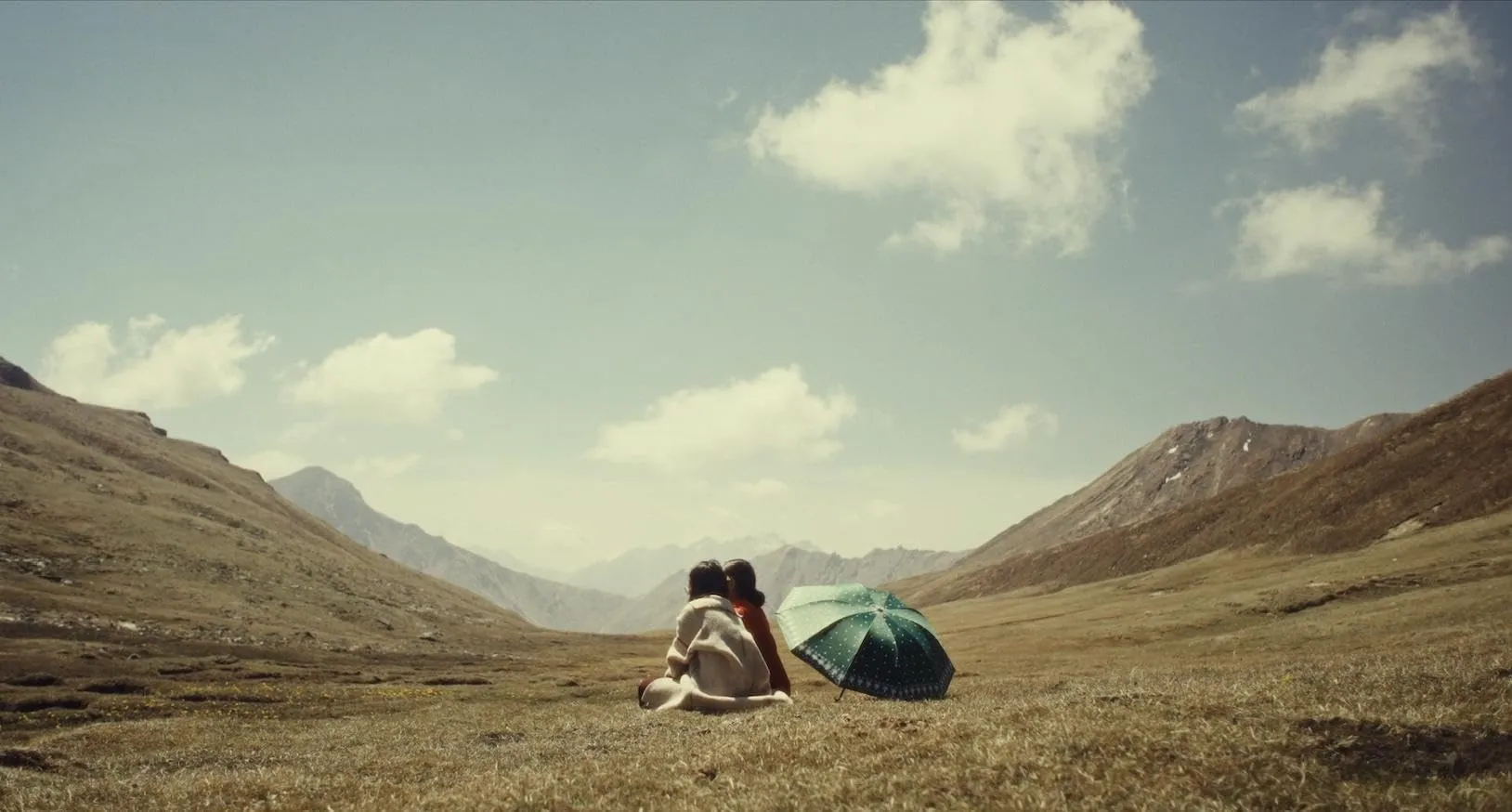
The film’s visual approach relies on what could be called a scale-contrast ratio, in which the vast Himalayan landscape reduces the human figures to small, fragile presences. Wide views of mountains and rolling clouds function as thematic claims about the indifference of nature to human struggle.
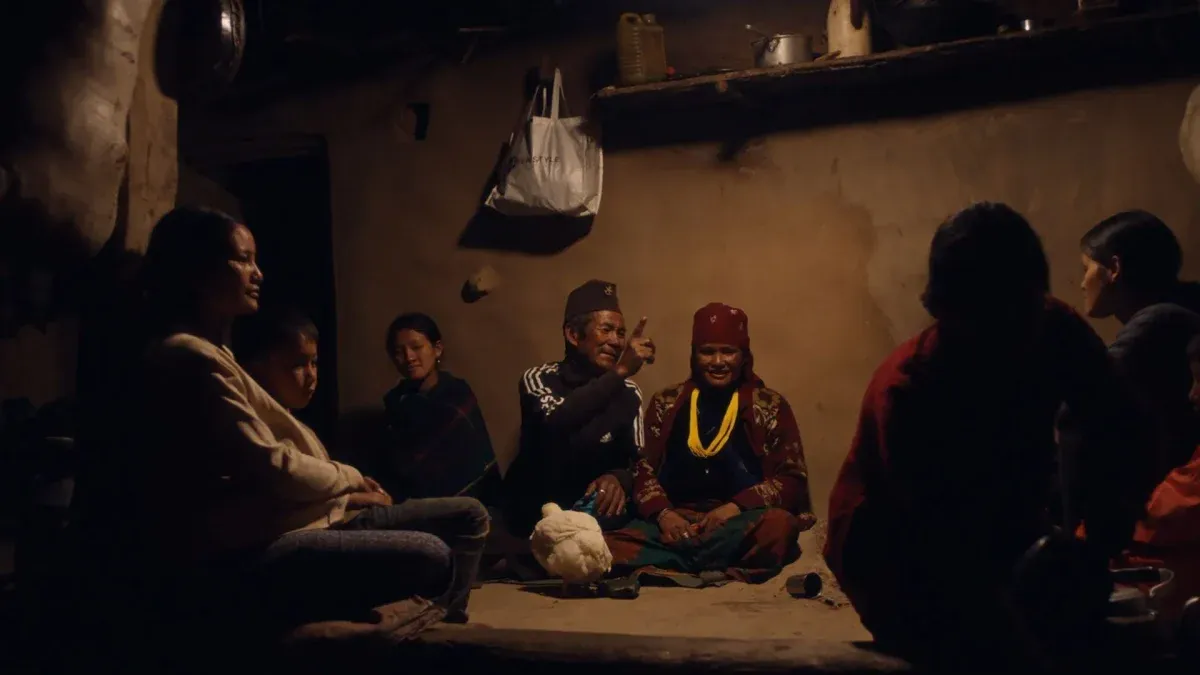
The physical difficulty of travel, from two buses to an extended, rain-soaked walk, underlines the effort required for even modest movement through this terrain. The world appears harsh and beautiful at once, a kind of sublime precarity that shapes every decision.
The search for yarsagumba works as a study in micro-economics. The prized caterpillar fungus, which only grows around 5,000 metres above sea level, triggers a seasonal rush that brings a provisional, colourful community into existence. The high-altitude camp feels like a temporary fiesta of games and gatherings, a social formation born from extreme scarcity.
Yet this sense of seasonal plenty sits under the persistent threat of physical danger. The film presents these facts with an unassuming air. The steep climbs required to reach this commodity, valued in comparison to gold, play as direct metaphors for the social and economic climbs faced by women who seek to move beyond their assigned positions in rural Nepal.
The Quiet Modernity of Form
Murphy’s direction feels both considered and modern, shaped by a clear loyalty to his subjects. The visual and tonal design rests on a carefully maintained quiet. That stillness yields moments of sharp emotional intensity. Editor Manon Falise shapes the rhythm, orchestrating a movement between close domestic scenes and sweeping, sometimes imposing landscape images with a sense of measured grace. The film recognises the narrative force of silence. One moment stays especially striking: the mother’s response to the news of Japan, when tears arrive before language and the scene becomes an almost wordless emotional shock.
Sound design deepens the atmosphere. The score’s use of humming supplies an eerie mystery to the mountain environment. The film’s deliberate pacing and sustained quiet may not appeal to every viewer (this is far from a “cinema of immediate gratification”), yet that formal patience mirrors the slow, generational endurance of the women on screen. The visual language, leaning into natural colouring, suggests that this documentary mode can reach the kind of visual poignancy often associated with contemplative narrative cinema.
Goodbye Sisters is an engrossing documentary that follows two sisters, Jamuna and Anmuna, as they travel from Kathmandu back to their remote Himalayan village in Nepal. The purpose of their arduous journey is to harvest yarsagumba, a highly prized caterpillar-fungus, which 21-year-old Jamuna hopes to sell to finance her education in Japan. The film, a French-Nepalese co-production directed by Alexander Murphy, had its premiere at the Tallinn Black Nights Film Festival in 2025 and is scheduled for theatrical release in France on February 18, 2026. As of today, December 1, 2025, details regarding its broad theatrical release or streaming availability in other territories are pending.
Full Credits
Title: Goodbye Sisters
Distributor: Alpha Violet (International Sales), Dulac Distribution (French Distribution), Goodseed Productions (Production Company)
Release date: The film premiered at the Tallinn Black Nights Film Festival in 2025. Its confirmed French release date is February 18, 2026.
Running time: 90 minutes (1 hour 30 minutes)
Director: Alexander Murphy
Writers: Alexander Murphy, Jean-Baptiste Plard
Producers and Executive Producers: Cosme Bongrain, Anup Poudel (Producers)
Cast: Jamuna Budha Magar, Anmuna Budha Magar, Anjali Budha Magar, Lachhin Maya Budha Magar
Director of Photography (Cinematographer): Vadim Alsayed
Editors: Manon Falise
Composer: Maxence Dussère, GILDAA
The Review
Goodbye Sisters
Goodbye Sisters is a visually magnificent and deeply felt documentary that operates with the emotional texture of high-calibre drama. It explores the micro-economics of survival and the fierce, quiet resolve of women navigating systems built against them. The film’s formal patience is its greatest asset, allowing the audience to witness an enduring sisterly bond and a family's complex sacrifices. It is a powerful, understated portrayal of ambition that earns its emotional resonance through careful observation rather than manufactured sentiment.
PROS
- Features spectacular, large-scale Himalayan cinematography.
- Deeply effective portrayal of the sisterly bond and family dynamics.
- Alexander Murphy's patient, light-touch style avoids sensationalism.
- Excellent sound design (especially the use of humming) and balanced editing.
- Explores female ambition, economic desperation, and generational sacrifice.
CONS
- The slow, observational style may test the patience of some viewers.
- Some scenes feel overly intentional or highly composed, potentially dampening the raw observational quality.
- The film's themes and social commentary are heavily implied, demanding close attention from the audience.