













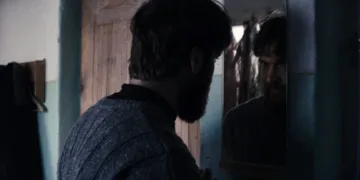
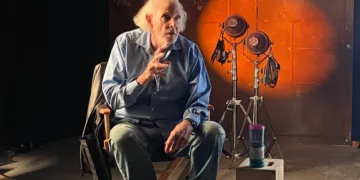












There is a special kind of nostalgic satisfaction that hits me whenever a filmmaker leans into a clear visual idea and treats a limited budget as a creative constraint. Gregory Lamberson’s Frenzy Moon lives firmly in that space. The film steps away from the polished, weightless digital horror that dominates current horror and reaches for something rougher, closer to the creature features that defined 1980s horror.
From the start, it sets out its terms: six college graduates head to a remote cabin for a quiet weekend, a setup that feels baked into horror’s shared memory. The trip along a fog-soaked mountain road leads two of them to strike an injured stranger in a ghillie suit.
Their choice to carry this unconscious man into the cabin flips the film into motion, pulling human danger into an already unstable supernatural situation. Frenzy Moon aims for an old-school siege piece that prizes practical effects and thick atmosphere over sprawling mythologies or glossy lore.
Plot Dynamics: Siege and Suspense
Frenzy Moon runs on a tight narrative chassis, built for tension and forward movement. Lamberson opens with short, sharp pre-credit flashes of werewolf carnage that immediately establish the scale of the threat before the main cast even shares the frame. That structural choice locks in a key understanding for the audience: the monsters exist, they are lethal, and the question shifts from possibility to timing and strategy.
Once the graduates settle into the cabin, the story picks up speed and locks the characters into a contained space where pressure can steadily climb. The retreat turns into a provisional fortress, and the sense of isolation presses in from the surrounding woods.
Jennifer’s (Alyssa Grace Adams) necessary walk to the outhouse becomes the film’s standout stretch of sustained suspense. Trapped in the cramped wooden box, she faces a huge, animalistic presence outside, heard before it is glimpsed. The careful use of sound and tight framing inside that tiny space creates a knot of anxiety that outpaces many of the broader action beats that follow. That sequence carries a kind of dread that lingers.
The arrival of Gavin, the hunter, sharply reshapes the story’s energy. His presence shifts the threat from something purely outside the cabin walls to something unstable within them. From that point, Frenzy Moon leans into its siege structure. The students must guard against the ravenous creatures circling the cabin while the temperature of mistrust inside keeps rising. That friction gives the film a useful angle on panic and betrayal, and it mirrors familiar contemporary fears about how quickly people turn on each other when pressure mounts.
Creature Design and Commitment to Practical Effects
The strongest element in Frenzy Moon lies in its steady devotion to practical creature work. The werewolves come to life through suit performances, hand puppets, and flashes of rod puppetry, each rooted in physical construction. This choice reads as a clear statement of intent for independent horror, a preference for messy, immediate textures over the hollow feel that low-budget CGI often creates.
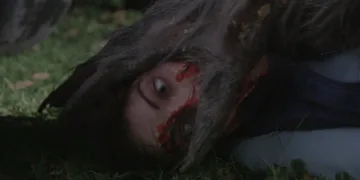
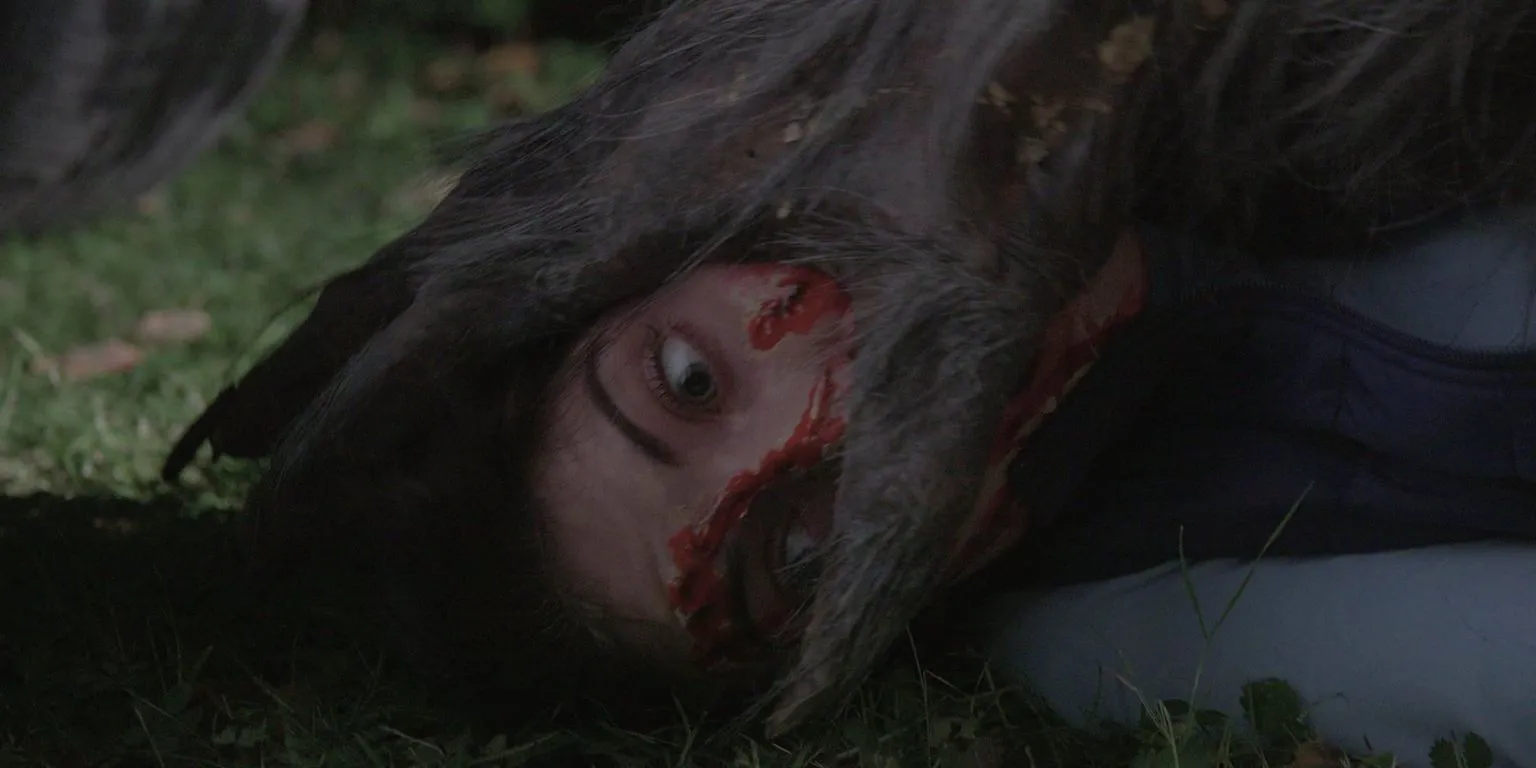
The limitations of the practical work are visible, especially in close-up, and the film never hides them. That roughness becomes part of the appeal. The monsters carry weight and texture; they occupy space in a way that gives their appearances a kind of physical credibility that digital work at this scale rarely reaches. The attacks feel concrete. The movie commits to the aftermath with gore that stays wet and grisly, from torn faces and mangled limbs to generous sprays of blood. The focus on body horror feels deliberate and aggressive, a reminder of the primal violence that drives the story.
The film’s staging of the werewolves builds fear with a sense of variety. Different designs and angles suggest a pack rather than a single creature, which pushes the characters into confusion and keeps them off balance. The script also discards familiar werewolf rules tied to silver bullets and precise full-moon timing. The beasts can strike whenever the story positions them nearby, which keeps them present as a constant, unpredictable threat. Frenzy Moon carves out its identity through this unapologetic embrace of tangible, grimy monster-making.
The Ensemble and Siege Mentality
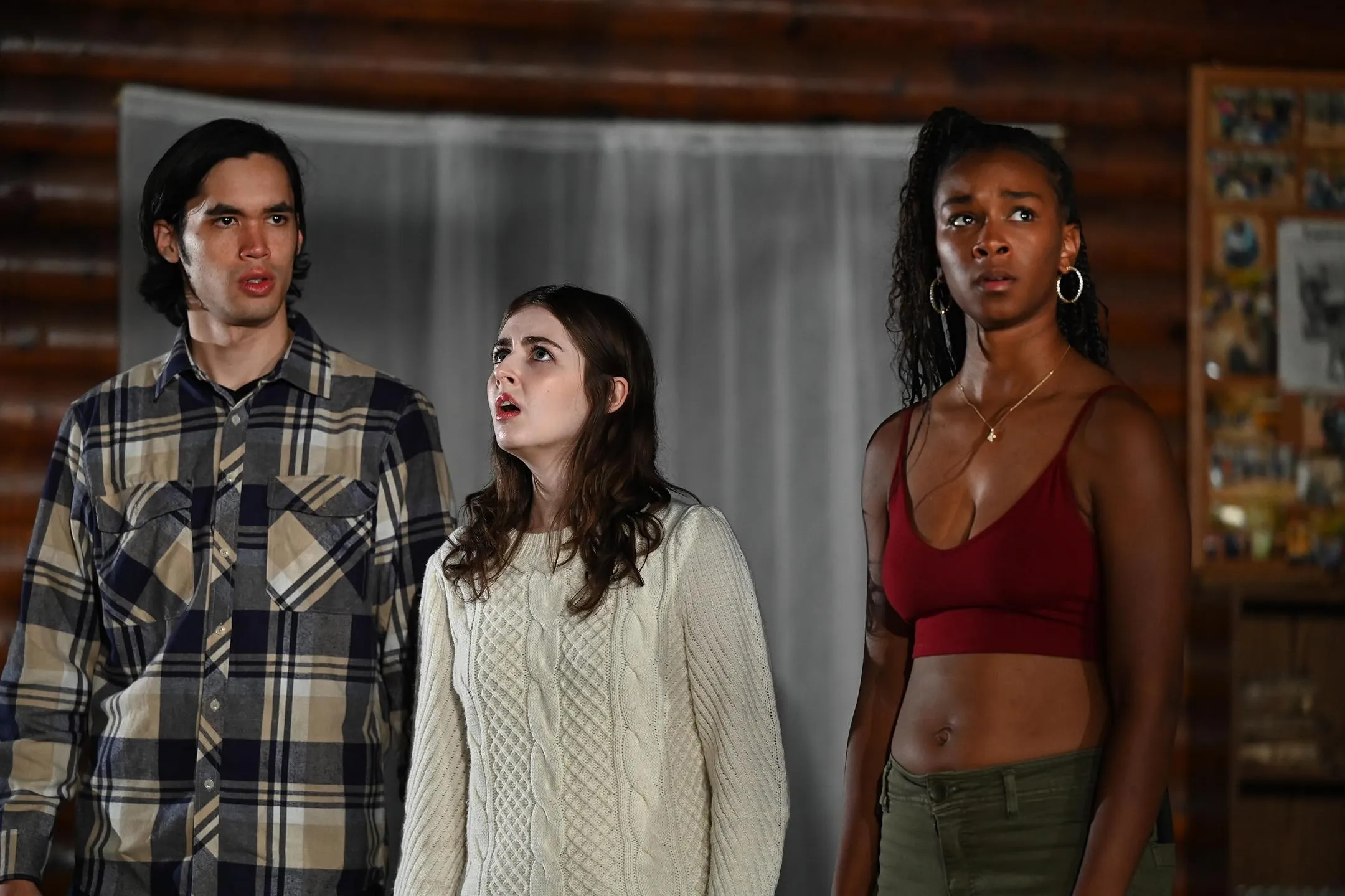
Any siege story depends on how people behave under pressure, and Frenzy Moon taps into that idea. The ensemble cast plays the mounting panic straight, and the pace keeps the focus on incident, so detailed backstory for every student stays in the background. Their disputes and fractures echo contemporary worries about how quickly trust can evaporate once a group feels cornered.
Aaron Krygier’s turn as Gavin, the wolf hunter, anchors that internal conflict. He plays the role with flinty conviction and a firm sense of authority. As the worn-down stranger, he carries a presence that sells the strange profession he claims, and the performance shifts the film’s center of gravity toward the arguments inside the cabin. Gavin stands as a necessary, unsettling figure whose certainty shakes the more sheltered students.
Within the group, Alyssa Grace Adams’s Jennifer tracks an effective emotional path, moving from early unease to full, justified panic after the outhouse encounter. Kayla Malika’s Makayla fills the slot of the tough resistor, pushing back against both the encroaching monsters and the splintering morale inside the cabin.
The film leans on the arguments between the students, including the rivalry between Makayla and Sheila and Dante’s failed attempts to step into a leadership role, to thicken the threat that already waits outside the walls. The collapse of friendships and alliances under that stress feels like its own horror element. Their suspicion of the man who insists he can save them reflects a larger climate of skepticism toward expertise and authority.
Technical Craft and Genre Affection
Frenzy Moon’s craft work regularly stretches past the visible limits of its budget. The score by Armand John Petri stands out in particular. It moves with a dark, pulsing quality and clearly nods to the synthesizer-heavy sound that defined early John Carpenter films, which gives the siege setup a fitting musical spine. That connection will ring familiar for anyone who associates horror with echoing synth lines and ominous motifs.
On the visual side, the cinematography keeps the film active. The camera finds effective angles and uses lighting to turn the night shoots into a space of nervous anticipation, where shadows and obscured shapes do much of the work. Limited visibility becomes an ally, stretching out the tension as characters strain to read what lurks beyond their flashlights and windows. The editing rhythm supports this, cutting cleanly between bursts of creature action and tighter, more anxious beats inside the cabin.
Frenzy Moon remains a flawed yet earnest piece of creature cinema. The ambition of the production sometimes pulls against the financial limits, and certain moments feel stretched thin, but the energy behind the project stays clear. The movie cares about its werewolves, its siege framework, and its place in the long line of scrappy creature features, and that affection gives its rough edges a likable charge.
Frenzy Moon is an independent werewolf horror film centered on a group of six college students and a mysterious hunter who must defend themselves against a pack of ferocious werewolves during a terrifying night in a remote cabin. Written and directed by veteran indie filmmaker Gregory Lamberson, the movie premiered at film festivals in late 2025 and saw its digital release on November 11, 2025. As of today, December 1, 2025, the movie is available to watch on various VOD and digital platforms, including Amazon Video, Apple TV, Google Play, and Fandango At Home.
Full Credits
Title: Frenzy Moon
Distributor: Uncork’d Entertainment, Dark Star Pictures
Release date: November 11, 2025 (VOD/Digital)
Running time: 1 hour 20 minutes (80 minutes)
Director: Gregory Lamberson
Writers: Gregory Lamberson
Producers and Executive Producers: Gregory Lamberson, Tamar Lamberson, Chris Cosgrave, Keith Lukowski, David Tripet, Roy Frumkes
Cast: Alyssa Grace Adams, Aaron Krygier, Kayla Malika, Gabrielle Nunzio, Harold Octavius Jacob, Steven Maiseke, Jacob Applegate, Chad Ridgely, KateLynn E. Newberry
Director of Photography (Cinematographer): Chris Cosgrave
Editors: Joseph Fusco, Aaron Krygier
Composer: Armand John Petri
The Review
Frenzy Moon
Frenzy Moon is a spirited, low-budget homage that wins on commitment and atmosphere. While its technical limitations show in the creature work and uneven character development, the film’s dedication to tangible, practical effects and its tight siege dynamic create genuine, visceral horror. The memorable score and the intense outhouse scene showcase the director's clear affection for the genre. This is a messy, essential watch for fans who appreciate ambition over polish in independent monster cinema.
PROS
- Strong dedication to practical, tactile monster effects (suits and puppetry).
- Effective and intense practical gore effects.
- Excellent use of the cabin setting and the standout outhouse sequence for suspense.
- Ominous, John Carpenter-esque musical score is a highlight.
- Successful pivot to internal suspicion and paranoia, driven by the hunter character.
CONS
- Creature effects show rough edges and technical limitations in close-ups.
- Fast pacing leads to uneven group dynamics and sometimes thin character development.
- Overall ambition occasionally stretches the low budget too far.