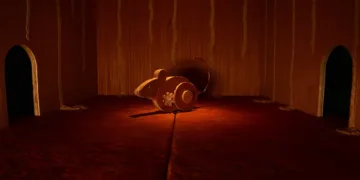































The first impression of Éalú is one of striking physical presence. Every surface appears to carry the weight of its construction, since this puzzle experience is built with glue, wire and light, not with code. Éalú, whose title translates to “escape” in Irish, is a point-and-click adventure from Beyond the Bark in which the player guides a small, mechanized clockwork mouse through an ever-shifting wooden maze. The game’s identity rests on its production process.
This project functions as true stop-motion work, a kind of interactive sculpture. Every scene, movement and flicker of light comes from photography of physical, handcrafted sets and puppets. Creator Ivan Fisher-Owen constructed and animated these pieces in a garden shed in Ireland. This production method separates the game from titles that simulate stop-motion through digital tools. The mouse on screen is not a digital sprite; it is a puppet animated in situ across over 70 distinct physical environments.
The depth of this approach emerges in the scale of the material: 512 separate animation clips were required to bring the clockwork hero to life. The analog technique creates a palpable, tactile quality. The image shows real wood grain, specks of dust and tiny imperfections in hand-made craft, which give the atmosphere an eerie, almost dreamlike presence. The deliberate, rhythmic cadence of the animation supports this singular mood.
The Precision of Perilous Puzzles
The mechanical experience of Éalú builds on familiar point-and-click principles such as exploration, pattern recognition and decision-making. Players interact with the world by clicking to move the clockwork mouse and investigate hidden systems, enigmatic objects or switches. This form of interaction, which recalls seminal games such as Myst, asks for a specific kind of engagement that hinges on careful attention.
Cautious observation anchors the design. The environment reacts harshly to reckless play because restricted space and constant threat reward patience. With a high consequence for error, every decision feels significant. Traps arrive without warning and impose absolute failure; a wall can drop suddenly and crush the tiny hero, or a concealed kitchen knife can slice out from the wood. After this kind of definitive failure, the mouse returns to its feather-down nest home base. The puzzle state resets, while a tally counter records the mouse’s deaths as a stark reminder of previous mistakes.
The puzzles do not depend on abstract logic grids. They grow out of the setting and ask players to interpret the maze’s visual language. Clues in color, texture and geometry help distinguish safe passages from destructive illusions. One early example involves careful rotation of two halves of a broken heart shape with switches that move each segment by mismatched increments. The mouse’s response to inputs can feel slow, a natural consequence of the video-based, frame-by-frame presentation, yet this minor latency fits the slow, measured pace that the gameplay structure encourages.
Unspoken Meanings in the Maze
The apparent story of a mechanical rodent seeking escape carries significant metaphorical weight. This psychological element provides the game with much of its impact. Creator Ivan Fisher-Owen drew inspiration from reflection on digital life, especially repetitive, potentially harmful algorithmic loops that shape human behavior. The mouse’s difficult path represents a search for significance and autonomy within an artificial, restrictive system and acts as a mirror for the player’s inner world and experiences.

The narrative relies on wordless storytelling. Visual signals, performance, subtle camera placement and the shifting emotional character of the sets guide the player through the story, similar to the way a silent film encourages multiple readings. At first, the maze appears to communicate directly, with some rooms that feel safe and others that carry an ominous charge. That clarity fades over time. Players find themselves gradually wrong-footed as they proceed. Elements that initially seem confusing or dangerous can later present themselves as enticing objectives and lead players toward goals that end in their own destruction.
This subtle narrative design gains strength from the accompanying sound work by Will Wood. The soundscape relies on ambient noises, mechanical hums, creaks and scrapes. A dense orchestral score does not appear. These sounds support the physical illusion of the wooden world. Small aural cues, such as a faint clink from the mouse’s metal gears or a quiet whisper of movement in a dark area, increase tension and apprehension without overwhelming the player or breaking immersion.
A Compact, Inspiring Achievement
The commitment to true stop-motion moves the game far beyond simple visual novelty. The handcrafted methodology functions as the soul of Éalú and turns a basic puzzle framework into an intimate, textural work of art grounded in human effort. The play duration, estimated between two and five hours, reflects a compact, highly focused design. The game offers an experience aimed at quiet immersion, not at marathon sessions.

The game’s gloomy, intricate imagery and the severe outcomes of its traps sit beside an underlying message of hopeful persistence. The creator expressed a hope that the strange little world communicates an expression of optimism, a belief that a path exists to significance and connection even within digital complexity. Éalú moves against the grain of typical game design.
It gives priority to the feeling of texture, the motion of a real puppet and a wordless visual narrative over dialogue or the pursuit of digital photorealism. This artistic decision separates the game from its contemporaries. By combining analog animation with thoughtful design and sincere emotional depth, Éalú creates a memorable experience that stays with the player well after the screen fades. The game serves as strong evidence that the artistry of physical craft still carries powerful force in the modern digital age.
The Review
Éalú
Éalú is a remarkable artistic achievement that sets a new standard for interactive stop-motion. Its unwavering commitment to physical craft creates an unparalleled atmosphere, successfully transforming a simple escape puzzle into a layered, psychological experience. The game demands patience and detailed observation, rewarding players with genuine emotional depth and a strong sense of place. This compact adventure succeeds completely by prioritizing texture and unique artistic vision over digital norms.
PROS
- Exceptional handcrafted stop-motion visuals
- Unparalleled tactile, cohesive aesthetic
- Layered metaphorical themes
- Immersive, subtle sound design
- Observation-based puzzle structure
CONS
- Occasional control sluggishness
- High consequence of error (instant death)