































The hiring desk is a border checkpoint with better lighting and worse language. Thank You For Your Application takes the document-checking dread of Papers, Please and moves it from a fictional Cold War border into Aeropolis City, a future where employment decides who gets to remain visible, housed, and alive. The cultural shift matters. Passports become resumes. Visas become job offers. National suspicion becomes corporate assessment.
Ice Lemon Tea Studio casts the player as C89, a failed candidate with a monitor for a head who is reassigned as a Junior Interviewer at Aeropolis Lab Corporation. The premise is blunt in the best way: survive the labor system by becoming one of its small instruments. Every rejected application may send someone back to Minato, a poorer city where factories consume workers. Every accepted applicant may cost C89 wages, status, or safety if the company spots a violation.
The influence is impossible to ignore, and the game almost invites the comparison. Papers, Please made paperwork feel like state violence. Thank You For Your Application asks what happens when the same machinery is privatized, rebranded, and placed inside the hiring process.
The Green Folder and the Red Folder
The daily loop begins with Aeropolis Lab issuing fresh hiring criteria. At first, the rules are simple enough to feel like training-room parody. Applicants need a graduation certificate. They must have studied at a local university. Their documents need to match the company’s stated requirements.
Soon the screen becomes a small bureaucratic weather system: resumes, IDs, certificates, stamps, dates, social numbers, mental health scores, internship hours, work history, and name discrepancies all competing for attention.
The player accepts candidates by dragging files into the green folder and rejects them with the red one, usually after marking the specific mismatch. The design works because the rules escalate cleanly. A certificate with the wrong name is easy to miss because the game has already trained the eye to chase larger categories: school, city, score, stamp. Later days turn those checks into a mental flowchart that must be built and applied under time pressure.
This is where Thank You For Your Application feels most secure in its own identity. Its best tension comes from translation. The company writes demands in corporate language, and the player has to turn that language into action before the timer eats the workday.
Mistakes reduce pay, damage performance, raise burnout, and can push C89 toward dismissal. Visual disruptions after poor performance make the documents harder to read, which creates a convincing little loop of workplace panic. Stress does not sit beside the mechanic. It interferes with it.
The Apartment After Work
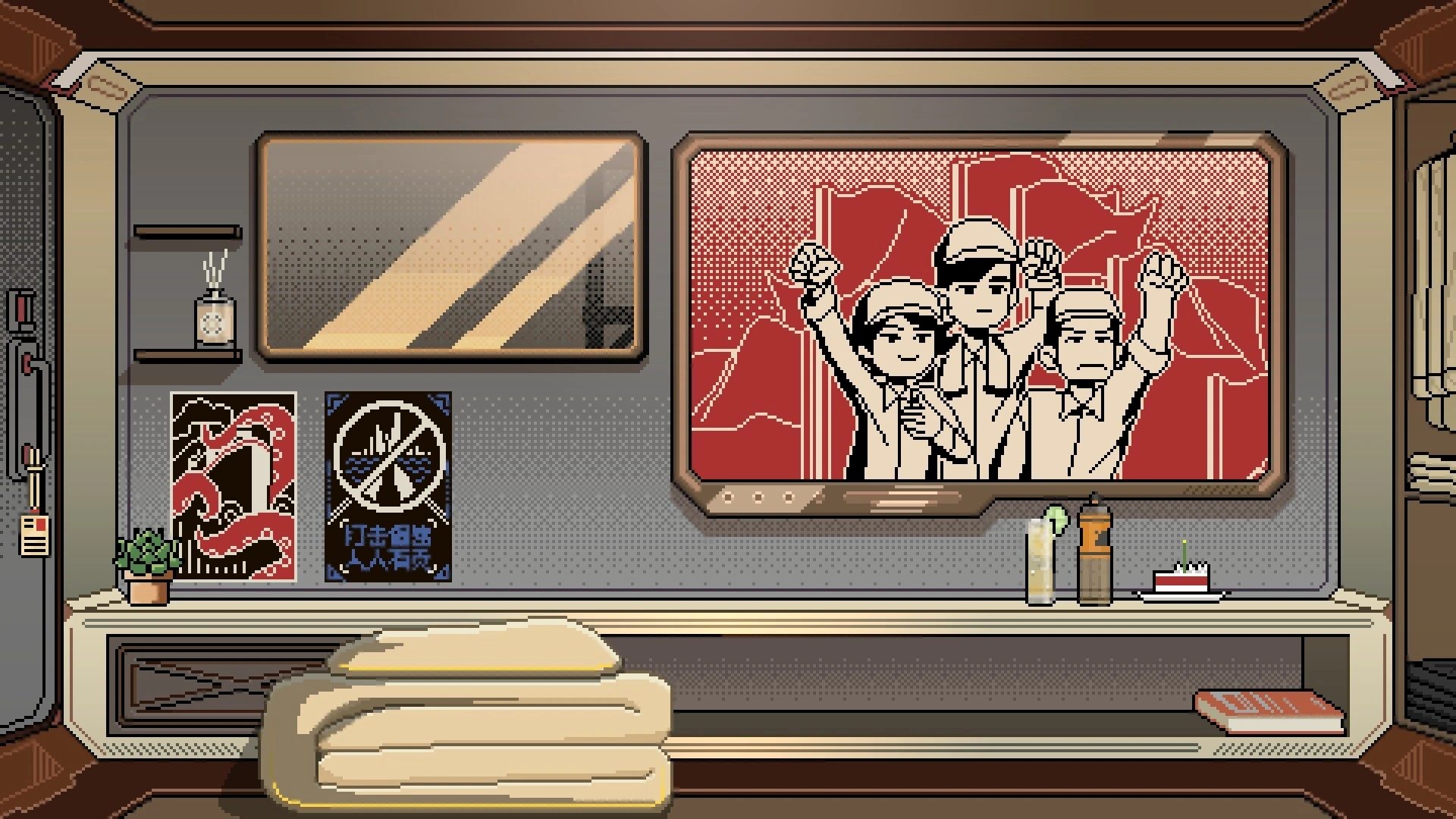
C89’s apartment gives the office routine a second economy. After each shift, the player pays bills, checks messages, reads forums, buys items, manages stress, and sends support to C89’s mother and younger sister in Minato.

The room can be decorated with furnishings that function as buffs, turning domestic life into another branch of resource management. A lamp, a trinket, or a new piece of furniture is never merely cosmetic; it is part of surviving another day under Aeropolis Lab.
This night cycle is the game’s sharpest addition to the Papers, Please model. The border inspector in Lucas Pope’s game was trapped between family survival and state command. C89 is trapped between family survival and the corporate promise that obedience can still be mistaken for stability. That difference gives the satire a contemporary bite. The game understands the modern horror of work as a visa, a health plan, a home, and a moral alibi packed into one contract.
The faction quests push that pressure further. Resistance groups ask C89 to bend the rules, protect candidates, or act against the company’s interests. Some of these quests are easy to fail, sometimes so easy that reloading a save becomes part of the experience. That harshness can fit the world, where one missed signal ruins a life, but it can also feel mechanically brittle. The game wants moral danger; at times it delivers checklist anxiety.
Satire With Repeated Faces
The largest problem is human texture. Aeropolis City sounds severe in emails, news items, and knowledge-base entries. Its world touches on immigration, AI replacing workers, student disillusionment, precarious labor, and the old global story of poor regions feeding rich ones with bodies. Then many applicants arrive as broad jokes: drunk candidates, silly excuses, fake personal details, one-line oddballs who seem oddly casual about exile.
Comedy can sharpen dystopia, especially in games about systems. Here, the tonal swing often softens the very pressure the premise needs. When a candidate pleads for a chance to stay in the city or help a child study, the moment should cut through the office routine.
Too often, the limited character models and repeated dialogue have already trained the player to see applicants as files with faces attached. Rebellion works best when someone across the desk becomes specific. Thank You For Your Application does not make that happen often enough.
The interview premise also feels underused. The game occasionally asks the player to question candidates, but the dialogue tools remain thin. For a work centered on hiring, it spends far less time testing ambition, personality, fear, or deception than it does checking paperwork. There is a smart thematic defense for that, since Aeropolis Lab would naturally reduce people to documentation. Still, a few deeper interview systems could have made the premise feel less borrowed and better suited to its own setting.
Pixel Labor
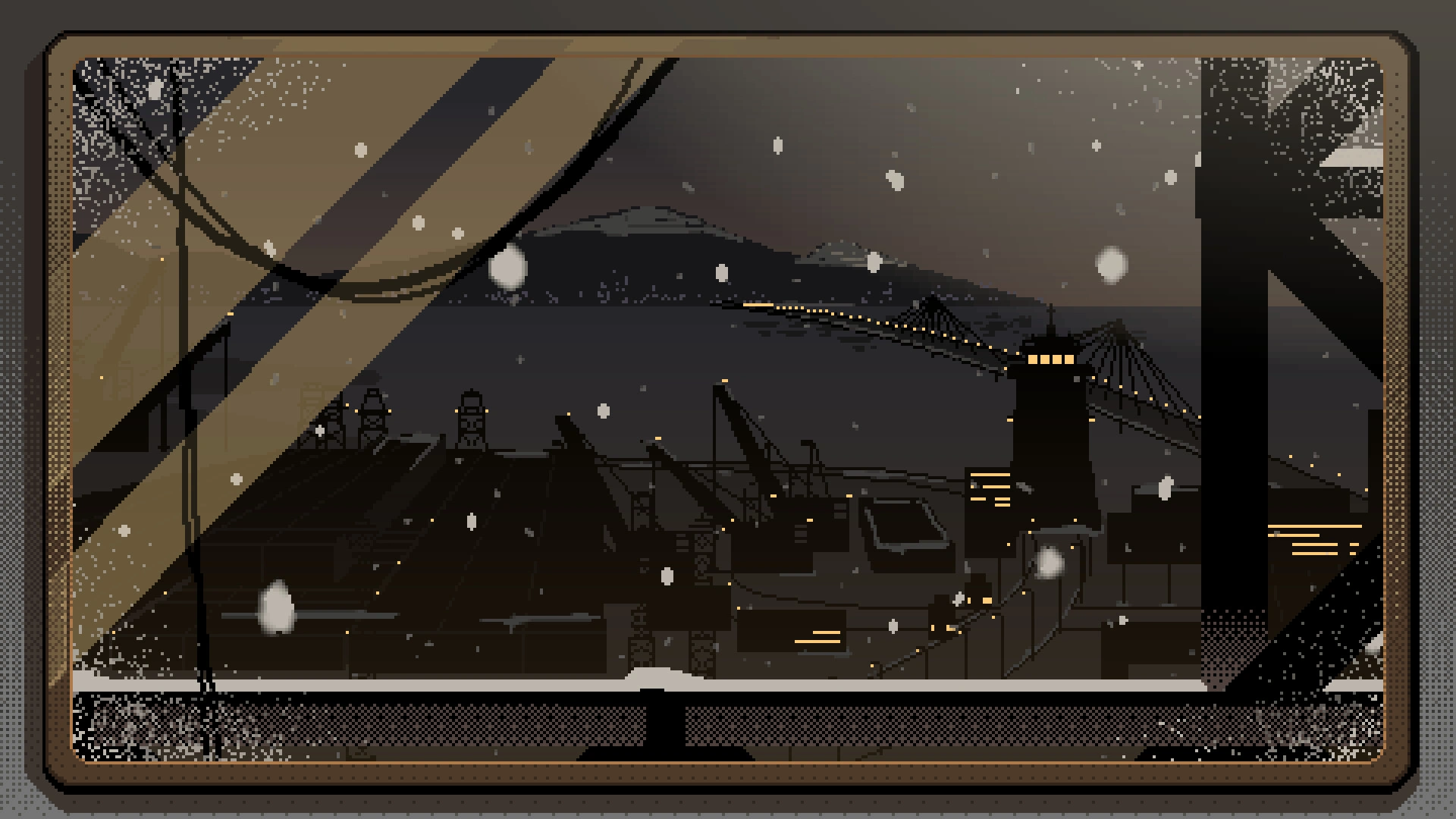
The presentation has a modest, functional charm. The 2D pixel art keeps the office readable, and readability matters when one wrong date can cost the player a day’s wages. The apartment is plain at first, then slowly fills with purchased objects, making survival visible in small domestic increments. The changing weather outside the window gives Aeropolis City a life the office rarely shows.
Music plays the correct role for this type of game. It supports repetition without demanding the foreground, and purchasable tracks add variation during long checking sessions. Late stretches still drag once new rules slow down and the paperwork rhythm loses surprise, but the interface remains clean enough to keep the core loop from collapsing.
Thank You For Your Application travels along a route already mapped by Papers, Please, yet its relocation of bureaucratic cruelty into job-market culture gives it a distinct angle. It is strongest when C89’s red folder feels connected to rent, family, AI labor, and the cold arithmetic of migration. It is weakest when the people behind the documents blur into recycled sprites and gags. The machine is convincing. The humans inside it need sharper outlines.
The Review
Thank You For Your Application
Thank You For Your Application relocates the border-desk anxiety of Papers, Please into the corporate hiring machine, and the shift gives its satire a sharp contemporary sting. Its document checks, apartment bills, family obligations, and AI-era job dread form a strong loop of labor pressure. The weakness sits in its human texture: too many applicants feel like jokes or repeats, so rebellion can feel procedural rather than personal. Still, as a stressed little machine about work devouring dignity, it earns its shift.
PROS
- Strong deduction loop
- Sharp corporate satire
- Effective stress systems
- Family pressure gives weight
- Clean pixel-art interface
CONS
- Too close to Papers, Please
- Repeated candidate sprites
- Uneven comic tone
- Late-game repetition
- Limited interview depth