























![Kingdom Hearts Collection [I-III] Review](https://gazettely.com/wp-content/uploads/2026/10/Kingdom-Hearts-Collection-I-III-1-360x180.webp "Kingdom Hearts Collection [I-III] Review: KHII Holds Steady as Newer Entries Fluctuate 37")



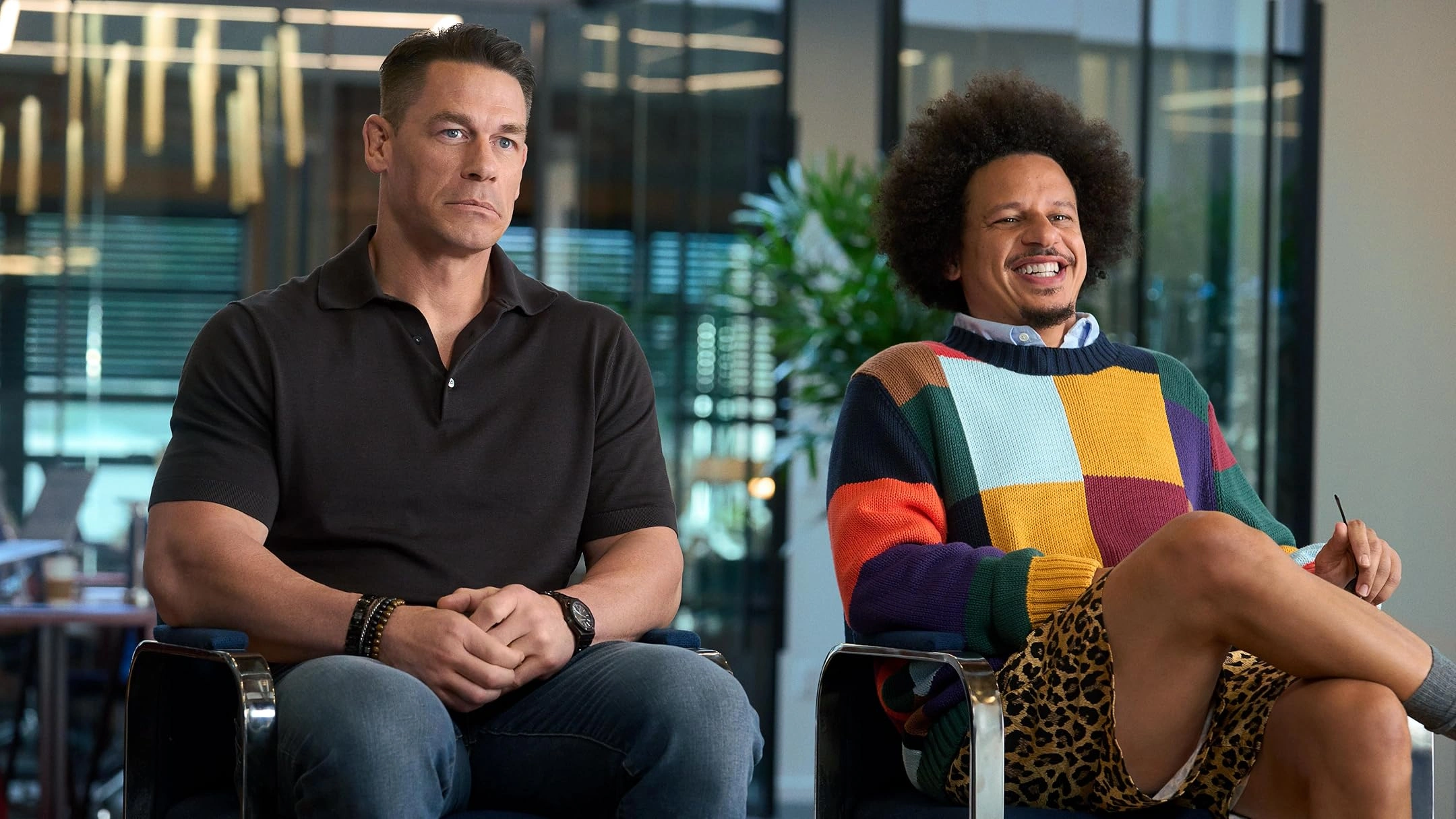

Rudd Landy has the body of a man who could move a refrigerator by apologizing to it, yet Little Brother keeps finding ways to make him look tiny. That is the best joke in Matt Spicer’s Netflix comedy, and John Cena understands exactly how to play it. Rudd is a successful New York real estate broker, a husband, a father, and a man close to landing a spot on the reality series NYC Hustlers. None of that matters once his older brother Josh walks into a room.
Josh, played by Christopher Meloni with the swollen confidence of a man who has confused wealth with oxygen, humiliates Rudd at a charity fundraiser hosted by Rudd’s wife Deirdre. He mentions that he is selling his $16 million mansion without listing it through Rudd, then hijacks the evening by donating far beyond Rudd’s own contribution. It is a clean setup: Rudd is rich enough to be obnoxious, insecure enough to be funny, and wounded enough to need the movie’s chaos.
That chaos arrives through Marcus Pinchel, played by Eric André, Rudd’s former “little brother” from a youth mentorship program. Rudd barely remembers him. Marcus has built an entire emotional mythology around him. After years of email replies secretly written by Rudd’s assistant Mia, Marcus believes his old mentor wants him back in his life. So he escapes from a psychiatric facility, gets hit by a truck, names Rudd as his emergency contact, and enters the Landy home like a medical bill with legs.
The Setup Has Real Snap
The first act works because the script by Jarrad Paul and Andrew Mogel turns each piece of information into a trap. Rudd wants to look polished for NYC Hustlers, so Marcus arrives bruised, needy, and incapable of reading a room.
Rudd wants Deirdre to see him as reasonable, so Deirdre immediately treats Marcus as someone worth saving. Rudd wants his sons to respect him, and the movie quietly shows those boys repeating the same sibling competition that has poisoned Rudd and Josh for decades.
Spicer gets some sharp early laughs from the gap between Marcus’s circumstances and his cheerful survival instincts. He sleeps in his car with an eye mask, because standards matter. He bathes in golf course sprinklers and tells stunned golfers they can play through. His roommate at the facility believes he is married to a rock with googly eyes, and the film lets that exchange be silly without straining for extra explanation.
I like how these scenes turn absurdity into momentum. Good farce needs a sense of horrible logic, and Little Brother has that for a while. Marcus is not in Rudd’s life because the plot waves him there. He is there because Mia answered emails she should have ignored, because Rudd once gave a lonely child a promise he never thought about again, and because Deirdre’s rescue instinct is stronger than her sense of household boundaries.
The charity material gives the movie a sharper bite than expected. Deirdre’s Mattress Miracles fundraiser, with its slogan “Homeless, not Sleepless,” sounds like satire written on a cocktail napkin, then Paris Hilton appears by video call to donate 100,000 mattresses and the joke grows teeth. The film sees the absurdity of private generosity trying to patch public failure. It just does not always know how long to look at it.
Cena’s Slow Burn Meets André’s Human Tornado
Cena’s performance is funniest when Rudd tries to remain professional under conditions that would break a hostage negotiator. During the NYC Hustlers shoot, he orders Marcus to stay inside his Porsche so nothing can go wrong.

Marcus needs to urinate, tries to solve the problem through the car window, and creates exactly the kind of disaster a reality producer would cherish. Cena’s clenched reaction sells the scene because Rudd is not merely embarrassed. He can feel his public identity being rewritten in real time.
That is where the movie understands reality television best. Ego Nwodim and Caleb Hearon, as the show’s producers, do not treat Marcus as a problem. They treat him as a hook. Rudd wants the show to frame him as a titan of New York property. The producers prefer him as a tightly wound brother figure being upstaged by a man who has just turned bodily panic into usable footage. The joke is cruel because it is accurate.
André plays Marcus as a man whose need for affection has no volume control. The performance has all the expected flailing energy: Marcus gets hit by a truck, suffers through physical indignities, tumbles into sexual chaos, and somehow keeps finding women who respond to him like he has unlocked a secret frequency. A scene in which Rudd discovers Marcus having sex in his study with a nurse, her husband present, is staged as a boundary violation so extreme that the movie nearly dares us to side with the uptight guy.
Michelle Monaghan gives Deirdre a warmth that helps the premise move, especially when she insists Marcus stay with them after the hospital call. The problem is that her compassion sometimes turns into script armor. When Marcus’s behavior crosses from eccentric into invasive, Deirdre’s tolerance feels less like character detail and closer to the movie protecting its own setup from common sense.
The Gross-Out Comedy Hits Hard, Then Hits the Same Wall
The best set pieces in Little Brother have the blunt pleasure of watching talented performers commit to very stupid ideas. Marcus giving Deirdre marriage advice about anilingus is ridiculous enough on paper, and the later public road scene with Rudd and Deirdre lands because Cena plays shock as a full-body system failure. A psychedelic sequence in which Rudd nearly kills Josh, forcing Marcus into emergency action, pushes the film into the same zone of panic where its gross-out instincts feel most at home.
This is where the craft matters. Spicer often cuts the joke at the moment Rudd realizes what is happening, rather than after the mess has already peaked. That timing lets Cena’s face become the punchline. André, by comparison, is usually the setup, the detonation, and the debris. Their partnership works because they are playing different rhythms: Cena tightens, André spills.
The issue is repetition. Once the movie has established that Marcus will turn any instruction into catastrophe, it does not always find new shapes for that catastrophe. The Porsche scene has escalation. The study sex scene has shock. Some later gags feel like variations on the same sentence: Rudd wants control, Marcus ruins control, everyone except Rudd moves on alarmingly fast.
The sentimental pivot makes that pattern harder to sustain. Marcus’s past through group homes and unstable care is sad when the movie pauses near it. His attachment to Rudd comes from abandonment, not whim. Once that pain becomes part of the text, Rudd’s cruelty loses some comic safety. A man screaming at Marcus is funny when Marcus is pure disruption. It is less funny when Marcus looks like someone asking, in the only language he has, to be kept.
A Messy Comedy With a Sharper Movie Inside It
The brother idea is stronger than the film’s execution. Rudd and Marcus are both little brothers, just from opposite sides of money. Rudd keeps chasing approval from Josh, who treats him like an underperforming brand extension. Marcus keeps chasing approval from Rudd, who sees him as an old obligation turned current liability. The line “You’ve been wronged by so many people, but you still have so much love to give” works because it applies to both men, one obviously and one in a more emotionally stunted key.
There is a smarter social comedy hiding here too. Marcus’s life shows what happens when a person falls through every available net, then gets treated as disruptive for needing help. Rudd’s world shows what happens when status becomes the only recognized form of safety. Josh can humiliate his brother through a donation. Rudd can turn his insecurity into a real estate persona. Marcus has no equivalent tool. His only currency is affection, and he spends it recklessly.
I kept wanting the movie to spend more time with its best pairings. Cena and André have strong chemistry, yet their scenes together sometimes feel edited down to function. The NYC Hustlers setup could have carried several extra comic situations, especially once the producers realize Marcus makes Rudd easier to sell. The teenage sons could have sharpened the Rudd-Josh mirror instead of hovering near the edge of it. Mia’s email deception could have turned into a cleaner romantic or ethical thread, rather than a subplot that drifts in and out.
Still, Little Brother has enough laugh-out-loud moments to survive its uneven shape. It is funniest when Marcus’s chaos exposes the ridiculousness already present in Rudd’s life: the charity spectacle, the reality-show self-branding, the billionaire brother’s donation flex, the family image polished so hard it cracks at the first touch. The movie wants sweetness to clean up the mess. The mess is where its personality lives.
The American buddy comedy Little Brother celebrated its official world premiere at Manhattan’s historic Paris Theater on June 18, 2026, before launching globally on Netflix for streaming on June 26, 2026. Directed by Matt Spicer and produced under David Bernad’s Middle Child Pictures alongside Ruben Fleischer’s The District, the high-energy feature blends sharp corporate satire with chaotic, physical humor. The plot centers on an orderly, straight-laced real estate agent whose highly organized lifestyle is completely turned upside down when a wildly eccentric, disruptive man from his past childhood “Big Brother-Little Brother” mentorship program suddenly tracks him down and forces his way back into his life.
Where to Watch Little Brother (2026) Online


Full Credits
Title: Little Brother
Distributor: Netflix
Release date: June 18, 2026 (Paris Theater Premiere), June 26, 2026 (Netflix Streaming Release)
Rating: R
Running time: 100 minutes
Director: Matt Spicer
Writers: Jarrad Paul, Andrew Mogel
Producers and Executive Producers: David Bernad, Ruben Fleischer
Cast: John Cena, Eric André, Michelle Monaghan, Christopher Meloni, Ego Nwodim, Sherry Cola, Caleb Hearon, Ben Ahlers
Director of Photography (Cinematographer): Brandon Trost
Editors: Sara Shaw
Composer: Dan Deacon
The Review
Little Brother
Little Brother is messy, rushed, and too willing to let sentiment clean up chaos it barely controls. Still, John Cena’s wounded straight-man routine and Eric André’s disaster-magnet energy give it a real comic charge. The sharpest version of the movie lives in the reality-show scenes, where Rudd’s insecurity becomes content before he can stop it. The sweeter family material lands unevenly, yet the gross-out set pieces hit often enough to make this a flawed, funny couch comedy.
PROS
- Strong Cena and André chemistry
- Funny reality-TV satire
- Several sharp gross-out gags
- Meloni’s smug comic turn
- Smart brotherhood mirror
CONS
- Underused supporting threads
- Uneven tonal shifts
- Repetitive chaos pattern
- Sentiment weakens some jokes
- Deirdre bends to the premise