



















Light behaves like a guilty witness in Avalon Fast’s Camp. It never settles on Emily as innocence or damnation. It catches her in the glare of a college party, then abandons her to the dark of a car where her best friend Charlie dies after taking cocaine from Emily’s glove compartment. Years earlier, Emily hit and killed a child who ran into the road. Neither death is cleanly her fault. The film understands that guilt rarely waits for a court ruling.
Zola Grimmer plays Emily with a stillness that keeps hardening at the edges. In the truth-or-dare scene, she answers a cheap party question about regret by telling the room she once killed a little girl with her car. The performance has no plea for sympathy in it. She gives the confession like a fact that has already outlived judgment. The awkward silence afterward does the social sentencing. Everyone wants honesty until it arrives with blood on its shoes.
Fast skips the police and forensic machinery after Charlie’s overdose, which could have made the story sturdier in ordinary dramatic terms. The omission is also a statement of method. Camp is not interested in the record. It is interested in the stain.
A Camp Built on Two Churches
Emily’s father sends her to work at a mountain camp for troubled children, a therapeutic idea so odd it almost becomes comic. His logic is simple: broken people might help other broken people. The film’s logic is darker: a person already drowning in moral injury has been handed responsibility for children and told to call it healing.
The camp’s official face belongs to Dan and Jo, whose Christian sincerity gives the place its polite architecture. Dan, played by Austyn Van de Kamp, carries his faith with a softness that makes him an easy target. Jo’s warmth suggests a path of forgiveness through obedience, prayer, and order. Neither seems equipped for the shadow government forming beneath the dining hall.
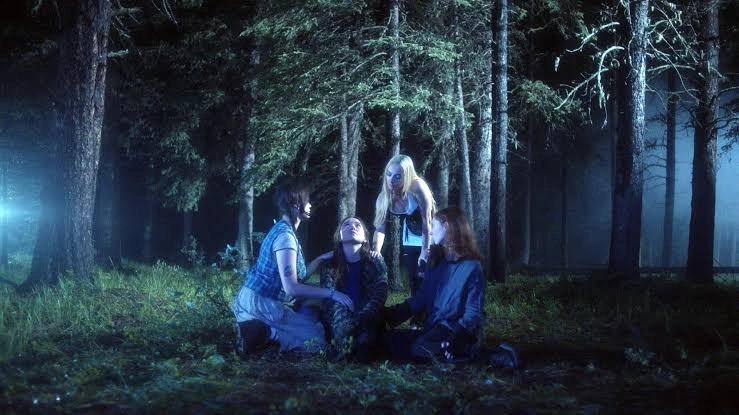
That hidden order is run by the young women who have turned the camp into a coven with bunk beds. Clara leads with magnetic calm. Rosie greets Emily as another gorgeous misfit, turning instant intimacy into a recruitment tool. Nev treats appetite as theology. Hope gives the group its inward drift. Their attic games have the low ceiling and cramped framing of a confession booth, except no one is seeking absolution. They are seeking voltage.
Marcus would usually look for the noir in an alley or a hotel corridor. Here it is in a summer camp attic, where every secret makes the room smaller.
Coven Grammar
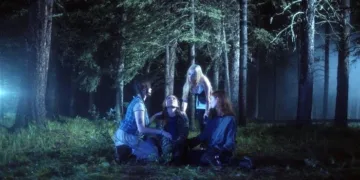
The film’s most disturbing idea is not that the girls practice witchcraft. It is that their freedom copies the cruelty of the order they reject. Fast stages their rituals with candles, black lipstick, wine bottles, forest smoke, and bodies arranged in ceremonial poses. The images have the softness of a music video and the moral temperature of a crime scene.
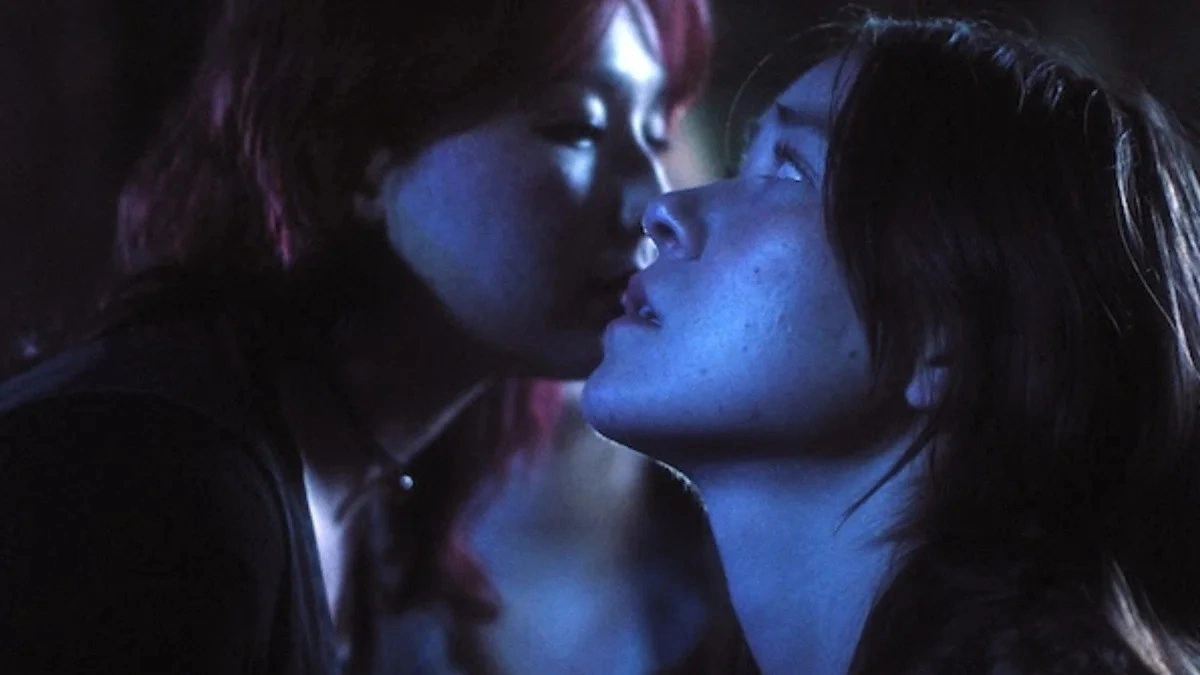
Dan’s violation through Nev’s wish is the key fracture. The moment is not played as simple revenge against Christian purity. It is uglier than that. Dan stumbles through the camp afterward, confused and spiritually injured, while the girls gain a taste of power. The film refuses to let empowerment remain clean once it requires a victim. Good. Clean power is usually propaganda.
Emily’s relationship with Eden, the brooding young camper assigned to her care, gives the film a sharper ethical edge. Eden should be Emily’s chance to do the job she came to do. Instead, the girl becomes a neglected mirror, one damaged child watching an adult become absorbed into a new system of desire and harm. The name Eden is hardly subtle, but subtlety would be false modesty in a film this fond of moons, rituals, sin, and sacrifice.
The final act pushes Christian imagery through a cracked occult lens. Sacrifice returns, stripped of institutional language and dressed in gorgeous woodland kitsch. Sparks fly. Bodies glow. The scene is beautiful enough to make the viewer suspicious of beauty itself.
Smoke, Gels, and Moral Weather
Cinematographer Eily Sprungman gives Camp its strongest argument. The normal world has a crisp surface early on, then the forest begins to smear it. Colored light clings to fog. Windows frame night skies that feel painted from Emily’s subconscious. Daylight loses neutrality and starts looking consecrated. The camera does not announce the supernatural; it lets the texture of the image rot into it.
Fast’s use of animation could have felt ornamental. Instead, the hand-drawn sparks, stars, and flourishes act like visual leakage from the girls’ inner lives. Magic enters the frame as a breach in realism, small at first, then increasingly accepted by the film’s grammar. Max Robin’s spare synth and guitar score deepens that breach, turning empty space into pressure. The sound does not chase scares. It hums around the characters like bad electricity.
The Lynchian gestures are plain: strange phone calls, the eerie train ride, lost time, dream awakenings that may not be dreams. Some of these fragments feel sharper than others. The campers are thinly drawn, and the film sometimes stuffs the woods with so much symbolic furniture that the path disappears. Cain, Eden, God, witches, guilt, drugs, virginity, sacrifice. A smaller film is hiding inside this one with a knife between its teeth.
Still, the excess has personality. Camp is working out its morality through haze, candlelight, and bodies caught at the edge of transformation. Its finest images understand what its script occasionally strains to say: healing can become another form of violence when it asks someone else to bleed for your peace.
The independent Canadian supernatural horror-drama Camp made its celebrated festival debut at Fantastic Fest in September 2025 before securing its limited commercial theatrical release via Dark Sky Films on June 26, 2026. The atmospheric film is currently screening across select boutique theaters and regional indie cinemas, with a premium digital and video-on-demand rollout planned for later in the year. The melancholy plot follows a guilt-ridden young woman who attempts to escape a deeply traumatic past by working as a counselor at a remote summer camp for troubled youth, only to find her fragile path toward self-forgiveness disrupted by a sinister voice and dark forces whispering to her from deep within the surrounding wilderness.
Where to Watch Camp (2025) Online


Full Credits
Title: Camp
Distributor: Dark Sky Films
Release date: September 21, 2025 (Fantastic Fest World Premiere), June 26, 2026 (United States Theatrical Release)
Running time: 111 minutes
Director: Avalon Fast
Writers: Avalon Fast
Producers and Executive Producers: Camp Productions, Filmoption International, Marginal Mediaworks
Cast: Zola Grimmer, Alice Wordsworth, Cherry Moore, Lea Rose Sebastianis, Ella Reece, Austyn Van De Kamp, Sophie Bawks-Smith, Izza Jarvis, Aidan Laudersmith, Michael Tan
Director of Photography (Cinematographer): Avalon Fast
Editors: Avalon Fast
The Review
Camp
Camp is strongest when its morality is visible in texture: fog around the cabins, candlelit ritual circles, daylight turned sickly and sacred. Avalon Fast’s film can overfill its own woods with symbols, but Emily’s guilt, Clara’s coven, and Dan’s violation give the dream logic a sharp ethical bite. It is less frightening than contaminated, a woodland trance where healing and harm share the same frame.
PROS
- Hypnotic forest imagery
- Strong moral ambiguity
- Zola Grimmer’s haunted stillness
- Ritual scenes with real charge
- Handmade visual imagination
CONS
- Overstuffed symbolism
- Vague camper subplot
- Uneven narrative clarity
- Some underdrawn supporting roles