




























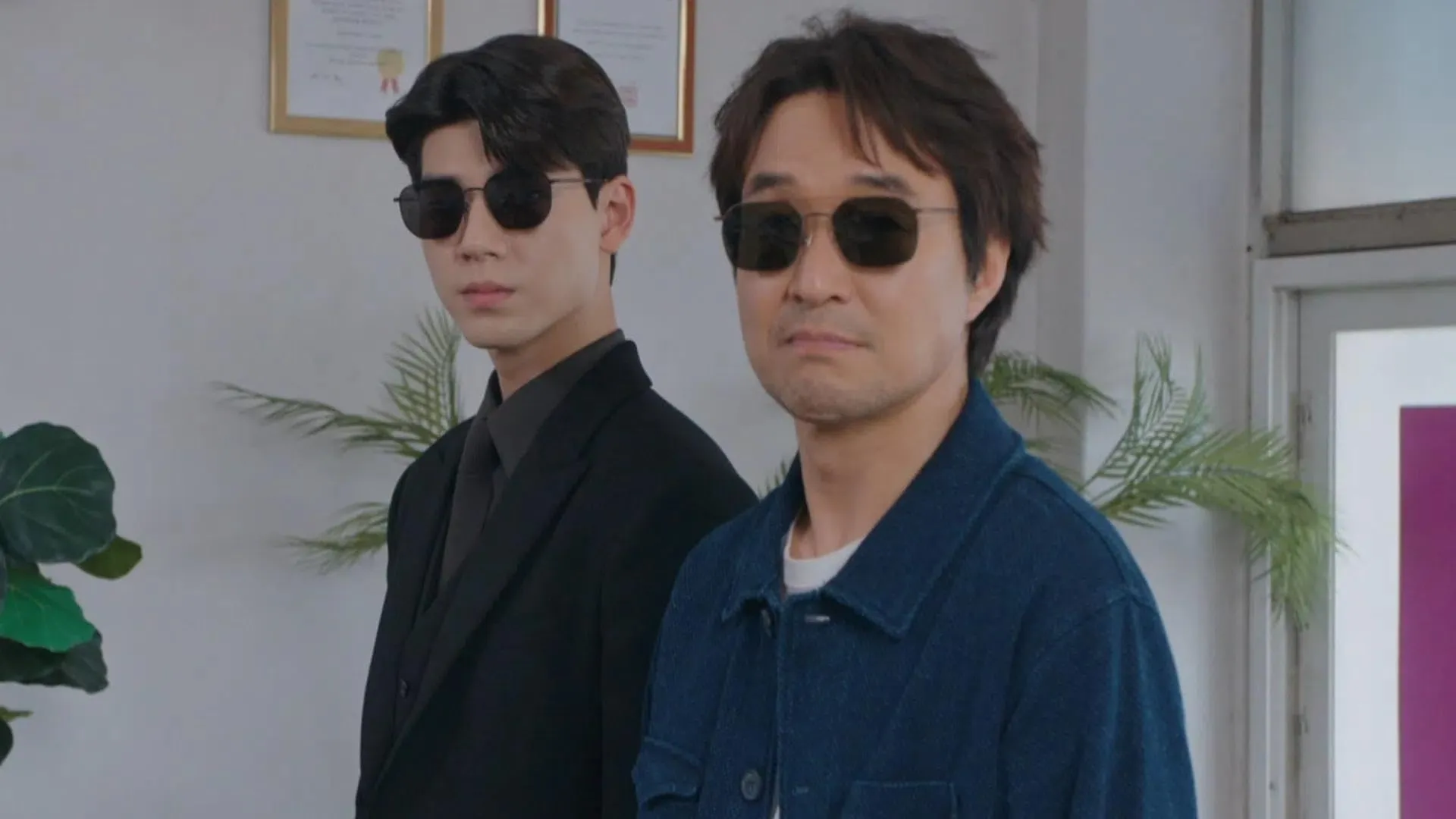

Shin’s Project opens with a delightfully odd image: a world-class negotiator swapping a briefcase for a deep fryer. Mr. Shin once worked at the highest levels of international conflict resolution. These days, his nights revolve around seasoning wings and running a local fried chicken shop. The calm stretches until Cho Philip shows up at his door.
Philip is a brilliant law school graduate who has recently landed a judgeship. That polished path veers hard when his mentor, Judge Kim Sang-geun, hands him a bizarre assignment: go work at Shin’s chicken shop. Philip steps into the Conflict Mediation Task Force, a clandestine team that settles disputes before they ever reach a courtroom. The crew includes Si-on, a street-smart delivery worker with sharp instincts, and Kim Soo-dong, a former hacker who brings the technical muscle. Philip pictured sterile hallways and clean rules. He gets grease-stained aprons and mediation cases that refuse to behave. His stunned adjustment fuels a lot of the early comedy, especially as he tries to translate legal theory into the messy rhythm of Shin’s day-to-day. In this corner of town, a fried chicken business card can double as a badge.
The Found Family Behind the Counter
Han Suk-kyu gives Master Shin a quiet authority that never asks permission. He plays him with a gruff exterior and a deep reservoir of vulnerability tucked under the no-nonsense posture. Shin’s leadership turns on instinct, and his methods swing wide of the standard legal playbook. Results matter, and he treats procedure like a suggestion.
Philip starts from a very different place. Early on, he clings to established rules and treats the law as a flawless instrument of protection. Working with Shin forces a tougher education. Philip begins to recognize how often the system fails the very people it claims to serve, and that recognition changes how he carries himself within the task force.
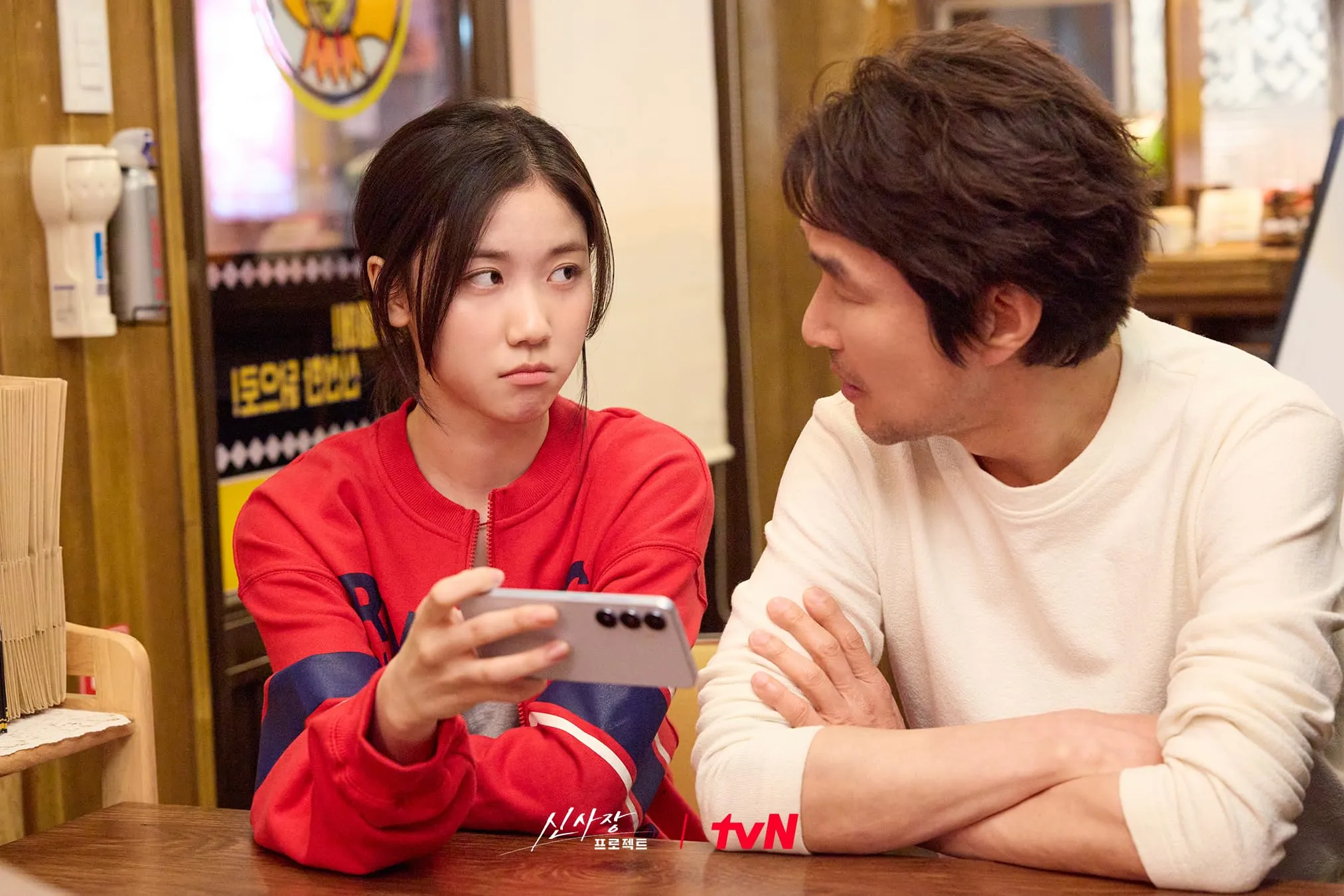
Si-on plugs the gaps in a way no textbook can. She has lived on the streets, and she reads the neighborhood’s social networks with the ease of someone who has needed them to survive. That knowledge becomes essential local intelligence, and it also keeps Shin and Philip from floating off into theory. The friction between Philip and Si-on grows into real partnership as they learn to respect what the other brings to the table.
Over time, the trio plus Soo-dong settles into something close to family. They lean on one another for emotional steadiness and professional wins, building trust through shared meals and dangerous missions. Philip sees the biggest shift. Shin’s rogue tactics stop looking like chaos and start looking like craft, and Philip begins applying that flexibility in his own work. The show frames their bond in simple, sticky details: loyalty, late nights, and the smell of frying oil hanging in the air.
Street Justice and Verbal Traps
Shin’s Project runs like a fast-paced crime drama, with the team identifying and catching criminals as a way to settle disputes. The cases come in a wide variety of flavors. One major storyline puts a group of seafood merchants up against a massive corporation. Another follows a young man pushed into a hostage situation by political failure. The plotting keeps things moving, and the show makes a habit of snapping from tension to relief at just the right moment.
Shin’s approach to negotiation skips polite rituals. He leans on psychological pressure to pull out confessions, building verbal traps that leave opponents boxed in with nowhere to run. Kim Soo-dong’s hacking becomes a recurring engine for the team, supplying unauthorized research that pushes them toward the truth. That repetition also underlines a grim idea running through the series: formal systems leave plenty of room for powerful entities to use the law to exploit the weak. Shin answers with their secrets, turning buried information into leverage.
The tonal balance matters here. Heavy themes land harder because the show knows how to let air back into the room. Philip’s brief turn as an accidental live-stream celebrity functions as a pressure valve, a quick beat of absurdity that loosens the audience’s shoulders before the next conflict tightens the screws again. Action sequences raise the stakes without slowing the pacing. A terrifying moment on train tracks and a bike chase through tight alleyways hit with real urgency.
Craft elements do a lot of work to keep that momentum sharp. The cinematography catches the gritty reality of the urban neighborhood, and the editing keeps the story sprinting forward without losing clarity. Sound design punches up each confrontation with sharp audio cues that amplify stress at key moments. Each case carries moral weight that clings, with stakes that feel personal for the characters caught in the fallout. The writing avoids easy answers and stays focused on the human cost of corruption. The message is blunt: justice takes a fight, and this team fights dirty because the world around them already does.
The Legacy of a Chocolate Milk Carton
The final stretch shifts attention to Shin’s painful history. Years ago, his son Jun died during a botched negotiation, and Shin was saving another child at the time. The loss leaves him carrying crushing guilt, and it explains why he disappeared from the work he once dominated.
That past has a face: Lee Heo-jun, a master manipulator responsible for Jun’s death. Detective Choi Chul is tied to the same wound, living for years with his own sense of failure. The show threads in a quiet symbol that keeps returning with steady insistence. Shin buys a carton of chocolate milk every day as a ritual for Jun. The moment he finally drinks it signals movement toward healing, small in action and huge in meaning.
The task force comes together to trap Lee Heo-jun, combining their skills to expose his crimes to the world. The resolution offers a fresh start without pretending scars vanish. Philip returns to the judiciary carrying a new understanding of his job, shaped by people rather than pure doctrine. Si-on leaves the chicken shop for the police force, taking what she learned with her into a new uniform. The group still reads as family, supporting one another even as their lives shift.
Shin’s Project is a 2025 South Korean television series that premiered on September 15, 2025. It aired on the cable network tvN and is available for streaming on platforms like Viu and Apple TV in various regions. This 12-episode series blends mystery and black comedy to tell the story of a legendary former negotiator who hides his identity as a fried chicken shop owner while resolving neighborhood disputes with his sharp wit.
Full Credits
Title: Shin’s Project
Distributor: tvN, Viu, Apple TV
Release date: September 15, 2025
Rating: TV-14
Running time: 60 minutes
Director: Shin Kyung-soo
Writers: Ban Ki-ri
Producers and Executive Producers: Studio Dragon, doFRAME, Studio Anseillen
Cast: Han Suk-kyu, Bae Hyun-sung, Lee Re, Kim Sung-oh, Woo Mi-hwa, Kim Sang-ho, Jung Eun-pyo, Woo Hyun, Jo Hyun-sik, Lee Ji-ha
Composer: Movie Closer, Kim Jun-seok
The Review
Shin’s Project
Shin’s Project succeeds by grounding its high-stakes negotiation thrills in a gritty, grease-stained reality. While the plot occasionally leans on convenient legal shortcuts and genre tropes, the central trio brings a sincere emotional weight that balances the show’s more eccentric moments. It is a refreshing take on the legal drama that prioritizes human connection over sterile courtroom procedure. Despite a few pacing lulls in the middle act, the series delivers a satisfying exploration of justice, grief, and the families we choose for ourselves.
PROS
- Han Suk-kyu provides a masterclass in portraying restrained grief and razor-sharp competence.
- The chicken shop serves as a unique, grounded hub that contrasts beautifully with corporate boardrooms.
- The "found family" dynamic feels earned and provides the show's strongest narrative anchor.
- Creative set pieces, like the railway track confrontation, keep the stakes feeling immediate and dangerous.
CONS
- Certain resolutions rely on improbable coincidences or highly convenient hacking.
- The transition from episodic cases to the main mystery creates a slight mid-season slowdown.
- Secondary characters and certain romantic subplots occasionally feel like filler rather than essential growth.