












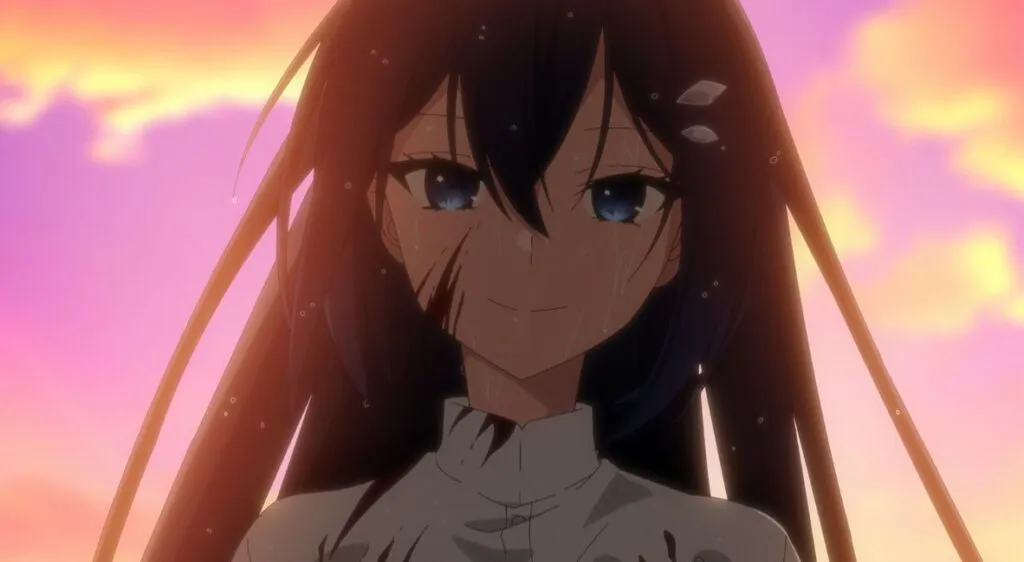

A stagnant heat settles over the seaside town in This Monster Wants to Eat Me, creating a setting where the bright summer sun feels like a spotlight on a crime scene. Hinako Yaotose lives within this glaring light while existing in a state of total shadow. She remains the sole survivor of a family tragedy that claimed her parents and brother. Her life now consists of a repetitive cycle of school and isolation.
The ocean waves represent both a graveyard and a beckoning sanctuary. The series steps away from the cheerful tone expected of high school stories to present a world where the supernatural reads as a blunt extension of internal despair. The arrival of Shiori, a girl with eyes like the cold sea, offers Hinako a terrifying kind of hope.
Shiori is a mermaid who saves Hinako from a lesser monster, then marks her as a future meal. That setup forms a dark contract between a girl who longs for an ending and a creature driven by hunger. The narrative refuses comfort, staying with the reality of a character who has already checked out of her own life.
The Visual Grammar of Psychological Vacancy
Hinako Yaotose functions as a ghost in her own skin. Her emotional vacancy defines the early chapters, and she acts as a silent vessel for the heavy grief of her past. The production uses specific visual choices to mirror her depression. Scenes often look like they are filmed through a dense, watery lens, creating a muffled atmosphere where other people’s voices feel distant and unimportant.
The heavy use of internal narration reinforces her separation from society. She thinks in a voice she never uses with her peers, and that private monologue forms a barrier between her and any possibility of help. In a story that keeps pointing to empty spaces, the most painful absence is the one inside her.
Reina Ueda provides a vocal performance built on restraint and a lack of affect. Her flat tone suggests a person who has exhausted her capacity for feeling. The choice is deliberate, and it makes the slightest shifts in her voice carry weight. When Shiori promises to eventually kill her, a faint sense of relief enters Hinako’s speech. That subtle change highlights the severity of her mental state with chilling clarity.
The sea remains a constant symbol, never far from Hinako’s gaze or the show’s framing. Hinako views the water as the only place where she can find her lost family. Her long-sleeved clothing in the summer heat points toward a history of physical trauma or self-inflicted marks. She hides her body the way she hides her thoughts, and the series treats that concealment as part of a wider pattern of suffering kept quiet until it curdles into something permanent.
Predators, Consumption, and the Subversion of the Romantic
Shiori enters the story as a figure that disrupts the romantic expectations typical of supernatural fiction. She occupies the role of a transfer student while maintaining her identity as a predator. The relationship she builds with Hinako is defined by a “me and my monster” dynamic that offers no soft landing. Shiori protects Hinako from other yokai, yet this protection carries the logic of possession.
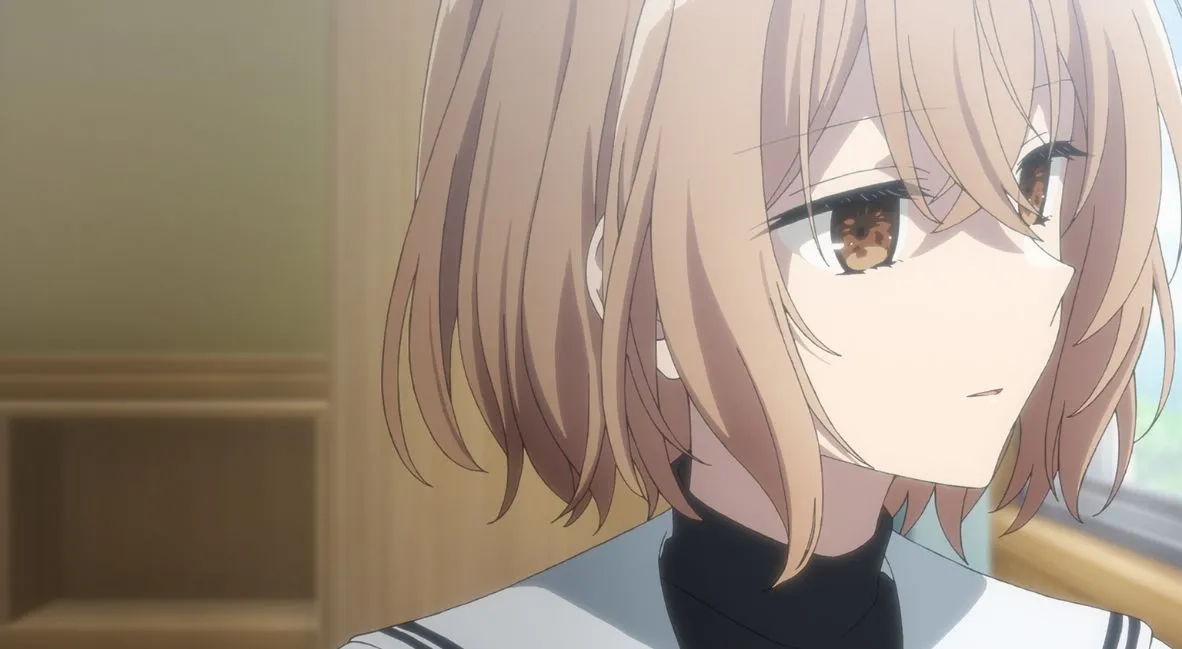
She views Hinako as livestock that needs time to reach its peak flavor. The power imbalance is stark and openly acknowledged. Shiori controls the timing of Hinako’s death. She speaks like a connoisseur, calling the girl “delicious” while waiting for her to become “tender.” It’s a grim joke on the genre’s habit of dressing danger up as romance, and the show commits to the ugliness of what that framing can hide.
The series deliberately rejects the beautiful, helpful mermaid ideal. Shiori is animalistic and violent. Her true form features scales and sharp claws that prioritize lethality over aesthetics. This mermaid feels like a creature of deep ocean cold, indifferent, and built for survival at someone else’s expense. The theme of consumption becomes a dark substitute for intimacy.
For Hinako, the idea of being eaten becomes a form of total acceptance. She believes that consumption can give her suffering purpose. Their connection is parasitic by design. Shiori gains a future feast. Hinako gains direction through her impending destruction. The series asks the viewer to sit with that bargain and question what “care” means when it is filtered through ownership, appetite, and a girl’s desire to disappear.
Social Voids and the Performance of Normalcy
Miko stands as the primary counterpoint to the heavy gloom of the main duo. Her personality is energetic and loud. She represents the “normal” life that Hinako can no longer access, and her presence turns everyday social behavior into something you can almost hear creaking under pressure. There is an underlying mystery to Miko that suggests she understands more than she reveals. Her name and her use of prayer beads hint at a background in shrine work or exorcism.
She may be monitoring Hinako for reasons beyond simple friendship. Her jealousy of Shiori’s presence feels territorial. She wants Hinako within the bounds of human society, while Shiori pulls her toward the supernatural. That push and pull reads like a struggle over who gets to define Hinako’s future, and it doubles as a commentary on how quickly vulnerable people become objects in other people’s narratives.
The world around these characters feels intentionally empty. Hinako’s aunt is a distant figure who exists only through text messages, and the lack of a visible guardian emphasizes Hinako’s vulnerability. She has no safety net. The introduction of other creatures like the iso-onna establishes the town as a hunting ground for monsters. These entities are a physical reality in this world, and the series uses them to externalize what isolation already does to a person.
The upcoming festival serves as a narrative anchor. It marks the anniversary of the accident that destroyed Hinako’s family, suggesting a link between the town’s folklore and her personal tragedy. The series portrays a society where individuals are left to manage their own demons in silence, and the supernatural becomes a literal manifestation of what happens to people pushed to the margins of community care.
The Aesthetics of Stagnation and Sound
The technical execution focuses on building an atmosphere of lingering dread, and sound design becomes the most effective tool in sustaining it. Keiji Inai’s score uses simple piano and string arrangements to evoke a feeling of permanent sadness. The pieces avoid high drama, settling into a quiet, persistent ache.
The music does not chase catharsis; it sits beside Hinako’s stillness and makes that stillness feel heavy. Environmental sound grounds the fantasy in sensory reality. The constant buzzing of cicadas makes the summer heat feel oppressive. The rhythmic sound of the ocean acts as a reminder of the threat beneath the waves, and it keeps returning like a thought Hinako cannot stop rehearsing.
Studio Lings uses a slow, lurching pace that matches Hinako’s lack of energy. The visual style relies on stagnant shots and frame-blending to create a dreamlike state, making the town feel trapped in a loop of memory. Color places Hinako’s internal darkness against the bright blues of the seaside, turning the setting into a kind of exposure that she cannot escape.
Floral symbolism, particularly white lilies, gestures toward genre history while suggesting a loss of innocence. The director avoids excessive gore during the horror scenes, keeping the camera on the characters’ reactions. That choice prioritizes psychological impact over cheap thrills, and it keeps the true horror where the series has placed it from the start: in a protagonist’s desire to give up.
This Monster Wants to Eat Me premiered on October 2, 2025, as part of the Fall 2025 anime season. The series is available for streaming internationally on Crunchyroll, where episodes are released weekly following their broadcast on Tokyo MX in Japan. Centering on a girl haunted by the loss of her family and a mermaid who intends to consume her, the show has gained attention for its somber tone and psychological depth.
Full Credits
Title: This Monster Wants to Eat Me (Watashi wo Tabetai, Hitodenashi)
Distributor: Tokyo MX, Crunchyroll
Release date: October 2, 2025
Rating: TV-MA
Running time: 23 minutes
Director: Yusuke Suzuki, Naoyuki Kazuya (Chief Director)
Writers: Mitsutaka Hirota, Sai Naekawa (Original Story)
Producers and Executive Producers: Infinite, Toei Video, Kadokawa
Cast: Reina Ueda, Yui Ishikawa, Fairouz Ai
Composer: Keiji Inai
The Review
This Monster Wants to Eat Me
This Monster Wants to Eat Me is a haunting exploration of the gravity of grief. It uses the supernatural as a mirror for internal collapse. While the production quality is occasionally modest, the atmospheric sound design and Reina Ueda’s hollow, chilling performance elevate the material. The show avoids easy answers regarding mental health, opting instead for a dark, parasitic bond that feels both tragic and inevitable. It is a slow, lurching, and deeply uncomfortable watch that succeeds by leaning into its own morbidity.
PROS
- Exceptional voice acting by Reina Ueda and Yui Ishikawa
- Evocative and oppressive sound design
- Unique subversion of traditional mermaid folklore
- Direct and unflinching portrayal of suicidal ideation
CONS
- Visually modest production with limited animation detail
- Extremely slow pacing may deter some viewers
- Minimal traditional horror action or gore
- Narrative relies heavily on internal monologues