























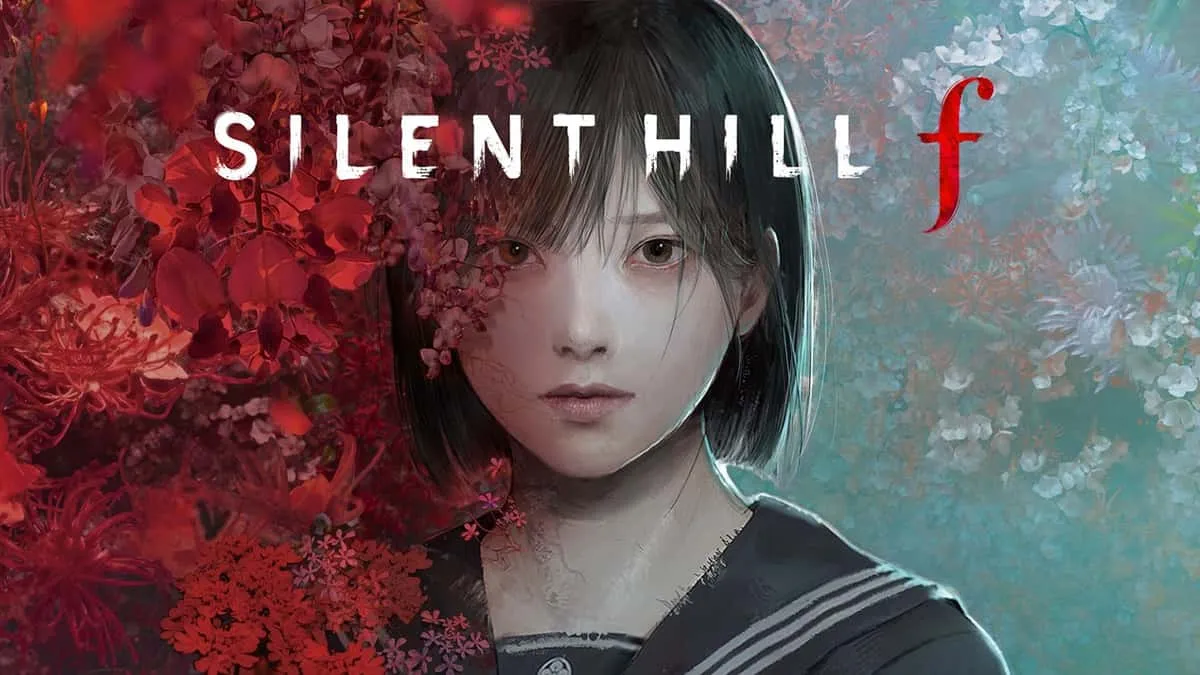

Silent Hill f marks a pivotal moment for the horror franchise, trading the rust-stained streets of American small towns for the humid foothills of 1960s Japan. Developed by Neobards Entertainment, this mainline entry takes considerable risks by centering the experience around Hinako Shimizu, a high school student grappling with family trauma in the fictional village of Ebisugaoka.
The game abandons the series’ traditional gunplay entirely, opting instead for melee-focused combat that emphasizes resource management and tactical thinking. This psychological horror experience weaves themes of gender discrimination, family abuse, and personal agency into a narrative structure that demands multiple playthroughs to fully comprehend. With five different endings and substantial New Game Plus content, Silent Hill f positions itself as both a respectful evolution of the franchise and a bold statement about the future direction of survival horror storytelling.
Worlds Apart: Setting the Stage for Horror
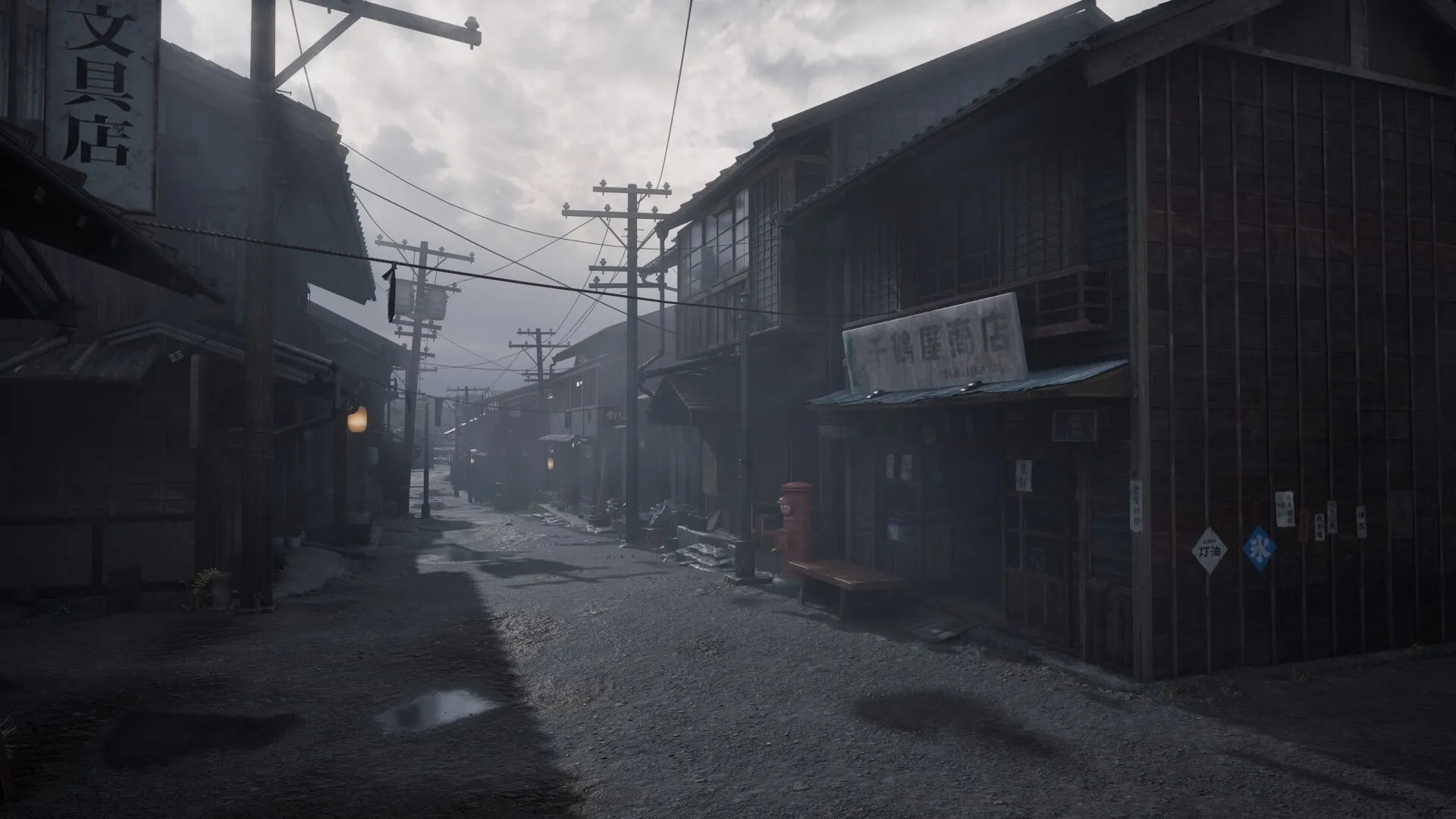
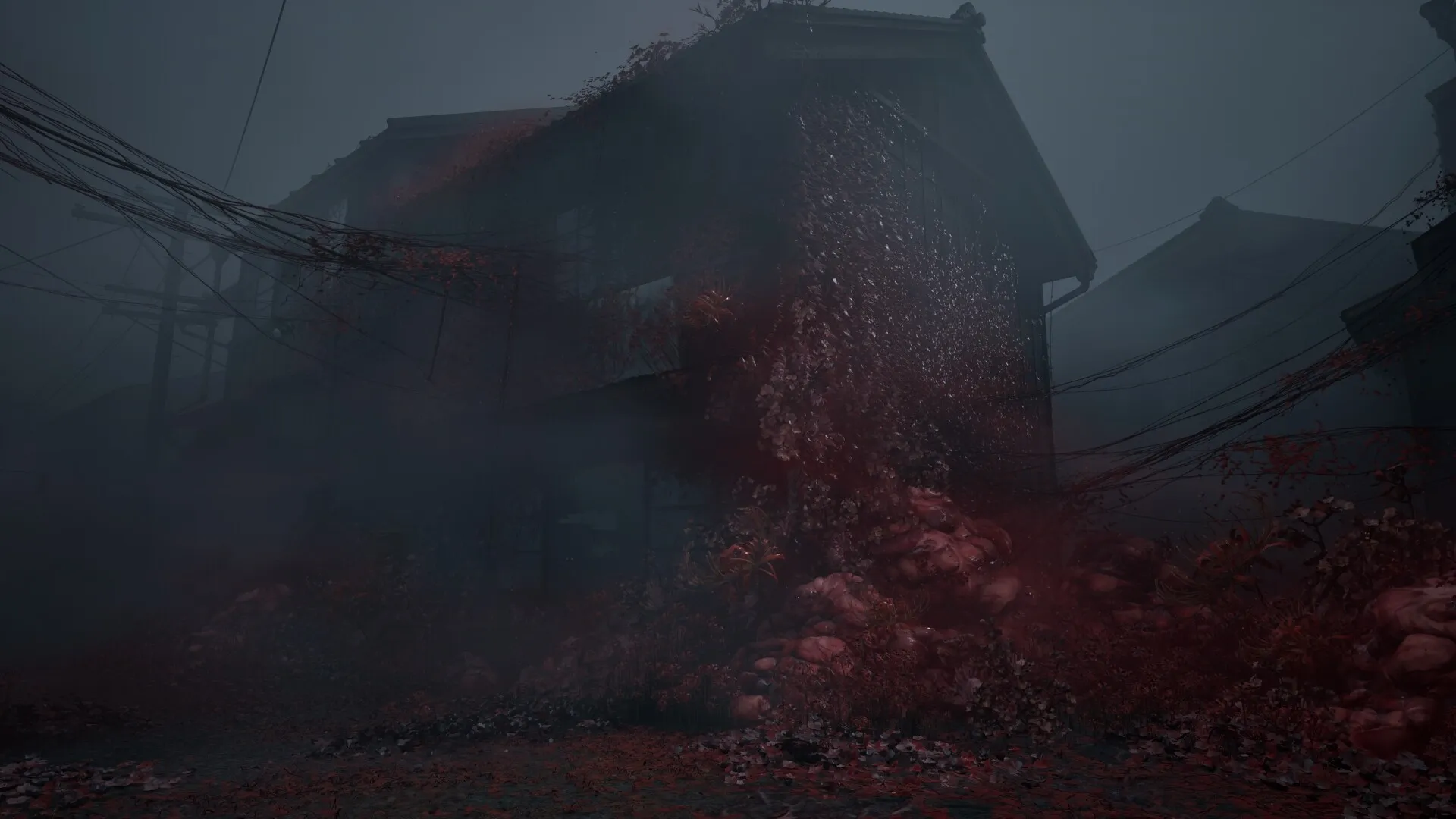
Ebisugaoka feels lived-in rather than designed, a testament to the development team’s commitment to cultural authenticity. The village sprawls across muddy rice fields and narrow alleyways, punctuated by traditional wooden homes that creak under the weight of supernatural dread.
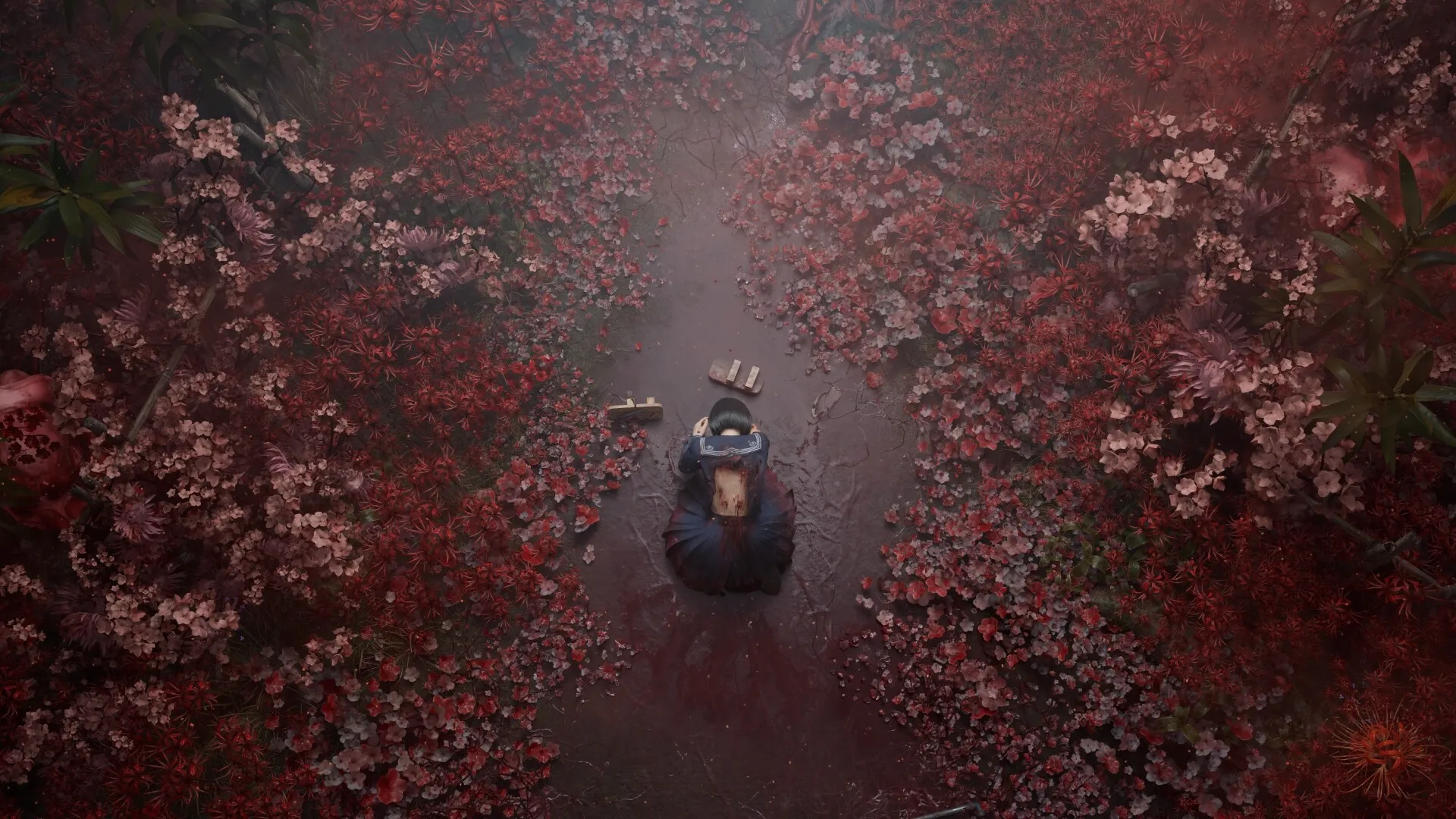
Small details ground the experience in its 1960s setting: ramune bottles scattered across convenience store shelves, handwritten letters tucked away in desk drawers, and the persistent humidity that seems to cling to every surface. The transition from normalcy to nightmare happens gradually, with blood-red spider lilies and writhing tendrils slowly consuming familiar spaces.
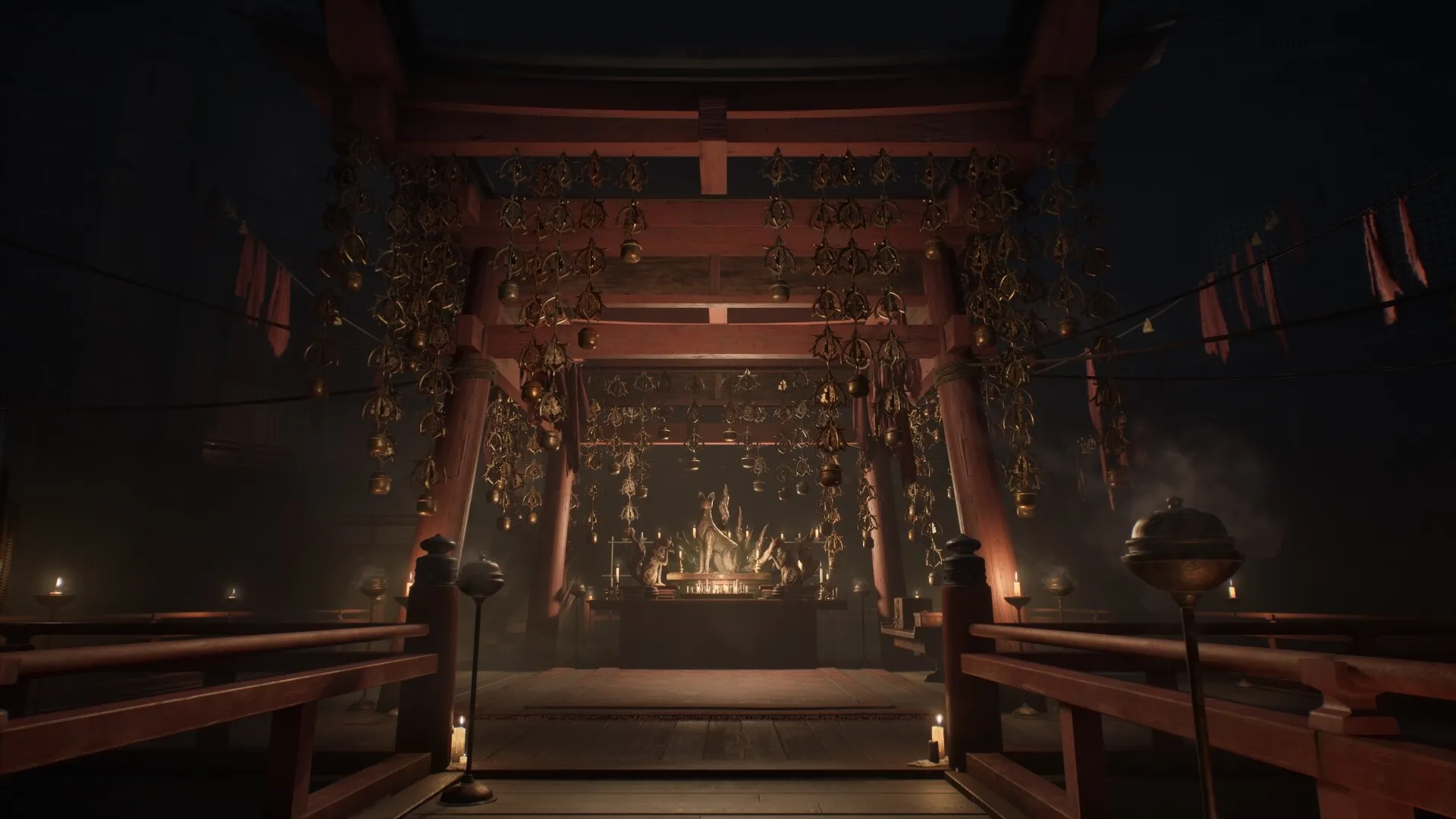
The spirit realm provides a striking counterpoint to the earthbound village. Torii gates and paper lanterns frame otherworldly temple complexes where traditional reverence meets cosmic horror. These sequences, guided by the enigmatic Fox Mask character, serve as both refuge and trial ground for Hinako’s growing supernatural abilities. The visual language here draws heavily from Shinto spirituality while subverting its peaceful associations, creating spaces that feel simultaneously sacred and profane.
Akira Yamaoka’s return brings both familiarity and innovation to the franchise’s audio landscape. His signature industrial soundscapes blend seamlessly with traditional Japanese instrumentation, creating compositions that honor both the series’ legacy and its new cultural setting. The haunting koto melodies that drift through Ebisugaoka’s streets carry emotional weight that transcends language barriers, while the guttural industrial rhythms of the spirit realm maintain the psychological unease that defines Silent Hill’s audio identity.
Also Read






Ambient sound design deserves particular praise for its restraint. The subtle creaking of wooden structures, distant temple bells, and the wet squelch of rotting vegetation create an atmosphere where silence becomes as terrifying as any monster’s roar.
Character-Driven Horror: Hinako’s Journey Through Trauma
Hinako Shimizu represents a departure from Silent Hill’s traditionally passive protagonists. Where previous characters often stumbled into their nightmares by circumstance, Hinako actively rebels against the constraints of her 1960s patriarchal society.
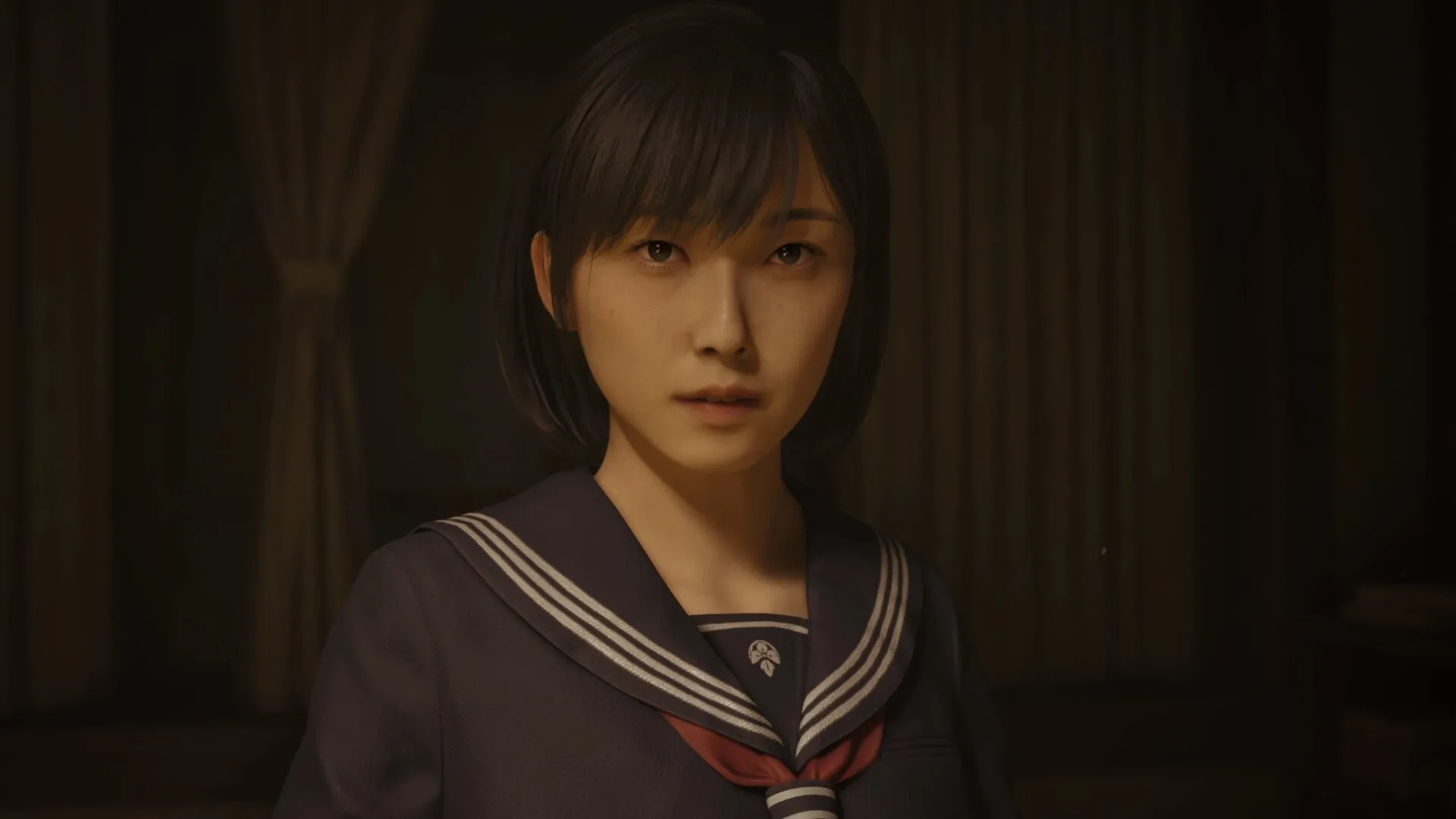
Her family dynamics form the emotional core of the experience: an abusive, alcoholic father who demands traditional obedience, a mother whose passivity enables continued harm, and an older sister whose marriage represents both escape and abandonment. These relationships aren’t merely backstory; they manifest directly through the game’s supernatural elements, creating a psychological landscape where personal trauma takes physical form.
The protagonist’s evolution across multiple playthroughs becomes increasingly complex. Initial encounters with her friends Sakuko, Rinko, and Shu appear straightforward, but subsequent runs reveal layers of manipulation, jealousy, and teenage cruelty that complicate simple victim-and-abuser narratives. Hinako’s growth from reactive teenager to active agent of her own destiny feels earned rather than imposed, with each supernatural trial serving as metaphor for real-world challenges facing young women in restrictive societies.
The multiple-ending structure serves the story rather than padding content. Each playthrough peels back different layers of deception and self-delusion, revealing how unreliable narrators can emerge from trauma rather than malice. The first ending functions almost as prologue, establishing baseline assumptions about characters and events that later runs systematically deconstruct. This approach demands engagement from players willing to question their initial impressions and invest time in uncovering deeper truths.
The game’s exploration of gender roles in 1960s Japan provides cultural specificity that grounds its horror in recognizable social dynamics. Hinako’s resistance to becoming a “proper” young woman resonates beyond its historical setting, while the supernatural elements amplify themes of agency, identity, and the cost of rebellion. The writing handles these sensitive topics with nuance, avoiding both exploitation and oversimplification in favor of complex character portraits that acknowledge multiple perspectives on difficult situations.
Combat Systems: Promise and Frustration
The transition to exclusively melee combat creates a different rhythm than previous Silent Hill entries. Armed with breakable weapons like crowbars and baseball bats, players must balance aggressive offense with careful resource management. The stamina system adds tactical depth, forcing players to consider when to attack, when to retreat, and when to avoid encounters entirely. Light and heavy attacks can be combined with dodge rolls and focus-powered special moves, creating a combat vocabulary that feels more active than the series’ traditional gun-and-run approach.
The three-meter system (health, stamina, sanity) creates interesting decision points during encounters. Sanity depletion makes Hinako vulnerable to psychological attacks, while stamina management becomes critical during extended fights. The focus ability adds another layer, allowing charged attacks and easier counters at the cost of mental stability. These interlocking systems work well in theory, creating scenarios where tactical thinking matters as much as reflexes.
Despite its conceptual strength, the combat system suffers from significant execution problems. Hit detection frequently fails when weapons collide with environmental geometry, leading to missed attacks despite clear visual contact with enemies. The stamina system, while adding strategic depth, often creates frustrating scenarios where Hinako becomes unresponsive mid-combat, leaving players helplessly watching as enemies land free hits. Animation delays between attacks feel inconsistent, breaking the flow of combat encounters and making timing-based strategies unreliable.
The risk-versus-reward balance tilts heavily toward avoidance. Unlike RPGs where enemy encounters provide experience or valuable loot, Silent Hill f offers no meaningful rewards for combat engagement. Weapons break, health depletes, and consumables get spent without corresponding gains. This design choice makes narrative sense—Hinako is a high school student, not a trained fighter—but creates gameplay scenarios where players logically avoid the game’s primary interactive element.
The otherworldly sequences attempt to address some combat limitations by providing indestructible weapons and supernatural abilities. The soul-siphoning mechanic allows temporary invulnerability states that make Hinako feel genuinely powerful, creating interesting contrast with her earthbound vulnerability. Boss encounters in these sections provide the game’s strongest combat experiences, featuring visually striking opponents with clear attack patterns and meaningful tactical considerations.
However, this power progression creates its own problems. The supernatural abilities make combat encounters trivial rather than engaging, shifting the player from vulnerable survivor to overpowered destroyer. While thematically appropriate for Hinako’s character arc, it undermines the survival horror atmosphere that drives the series’ appeal.
Puzzles as Storytelling Devices
Silent Hill f’s puzzles succeed where its combat falters, creating challenges that feel integrated with both setting and narrative. The calendar-based time travel sequences stand out as particularly clever, requiring players to piece together family history while manipulating temporal mechanics. These aren’t arbitrary obstacles blocking progress; they’re interactive storytelling devices that reveal character relationships and plot developments through mechanical engagement.
The integration of Japanese folklore and cultural knowledge adds authenticity while creating learning opportunities for international players. Puzzles involving kudzu plants, traditional seasonal celebrations, and Shinto ritual practices encourage research and cultural exploration. The difficulty scaling accommodates different player preferences without compromising the intended challenge level, and the hardest puzzles genuinely require careful observation and logical thinking to solve.
The village layout encourages thorough exploration through environmental storytelling rather than arbitrary collectible hunting. Hidden documents and personal letters flesh out character backgrounds and village history, while secret areas often contain story-relevant revelations rather than simple gameplay rewards. The backtracking feels purposeful, as previously inaccessible areas often become available after story developments that provide new context for familiar locations.
New Game Plus content adds substantial value to repeat exploration. Additional areas, extended cutscenes, and alternative story documents create genuinely different experiences across multiple playthroughs. The treasure hunt spanning multiple runs provides long-term goals that encourage careful observation and community engagement as players share discoveries and theories.
Technical Achievement and Visual Design
The visual design successfully captures both the mundane beauty and supernatural horror of rural Japan. Character models show impressive detail in facial animations and clothing textures, while environmental assets create convincing representations of 1960s architecture and technology. The fog implementation serves both atmospheric and technical purposes, creating effective horror ambiance while managing system resources during complex scenes.
Monster design draws inspiration from Japanese folklore while maintaining the body horror aesthetic that defines Silent Hill’s creature design. The scarecrow enemies modeled on Hinako’s classmates create particularly unsettling encounters, while the grotesque maternity-themed monsters explore themes of feminine horror with disturbing effectiveness. Boss encounters showcase the game’s visual capabilities through elaborate set pieces that feel both spectacular and narratively meaningful.
The technical performance remains stable throughout most encounters, with frame rate drops occurring primarily during complex multi-enemy encounters in confined spaces. Load times between areas feel reasonable, and the save system provides adequate checkpoints without undermining challenge progression. The inventory management interface could benefit from streamlining, particularly given the limited carrying capacity that makes item selection critical to survival strategies.
UI design generally serves gameplay well, with clear meter displays for health, stamina, and sanity that provide necessary information without cluttering the screen. The journal system effectively organizes collected documents and story fragments, making it easier to track narrative developments across multiple playthroughs.
Value Through Repetition
The five-ending system transforms what could have been simple replay value into essential narrative structure. Each conclusion reveals different aspects of Hinako’s relationships and personal growth, with the true scope of the story only emerging through multiple playthroughs. This isn’t padding designed to extend playtime; it’s fundamental to understanding the complete narrative arc.
The New Game Plus benefits extend beyond simple story variations. Carried-over upgrades and the faith system create mechanical incentives for replay, while new content areas and boss encounters provide fresh challenges. The ability to skip previously viewed cutscenes respects player time while maintaining the option to revisit important story beats with new context from subsequent playthroughs.
Silent Hill f succeeds as both franchise entry and standalone experience. The cultural shift to Japan provides fresh perspectives on familiar themes while maintaining the psychological horror elements that define the series. The emphasis on character agency and active protagonist development suggests promising directions for future entries, even as the combat system implementation indicates areas needing refinement.
For players seeking psychological horror with narrative depth, Silent Hill f delivers a compelling experience despite its mechanical frustrations. The 20-hour commitment required for full story completion represents significant value for players willing to engage with its multi-layered narrative structure. However, those expecting refined action-horror gameplay may find the combat system’s limitations outweigh its atmospheric successes. Silent Hill f earns respect for its ambitious storytelling and cultural authenticity, even as it struggles to fully realize its mechanical ambitions.
The Review
Silent Hill f
Silent Hill f demonstrates ambitious storytelling and cultural authenticity that elevates the franchise into new territory. The multi-layered narrative structure and compelling protagonist create genuinely engaging psychological horror, while the Japanese setting adds fresh perspective to familiar themes. However, significant combat system flaws and frustrating mechanics prevent it from reaching its full potential. Despite these limitations, the game succeeds as both a worthy Silent Hill entry and a bold creative statement.
PROS
- Compelling multi-layered narrative requiring multiple playthroughs
- Authentic Japanese cultural setting with rich atmospheric detail
- Complex protagonist with meaningful character development
- Clever puzzles integrated with storytelling
- Excellent audio design blending traditional and industrial elements
- Substantial New Game Plus content with genuine replay value
CONS
- Frustrating combat with poor hit detection and stamina issues
- No rewards for enemy encounters creating avoidance gameplay
- Inconsistent animation delays and unresponsive controls
- Limited inventory system with cumbersome item management
- Combat becomes either too difficult or too easy depending on realm