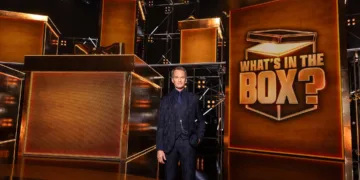






























Netflix steps into the ring with What’s in the Box?, a high-stakes game show that tries to weld general knowledge to social maneuvering. Season 1 runs six episodes, and each one clocks in at a hefty 45 minutes. Neil Patrick Harris serves as the smooth master of ceremonies, steering eight pairs of contestants through a mix of brainwork and strategy. The hook is simple: figure out what’s hidden inside a set of mystery boxes.
The stress comes after that, because keeping the prize turns into its own sport. Rival teams can take what you’ve won through planned thefts, and the show invites them to do it with a smile. Visually, the production splits play between the Center Circle, where the action happens, and a digital Grid that handles the big reveals. The whole thing feels maximalist, piling mystery on top of quiz-show basics and asking the format to carry a lot of weight across a full season.
The Architecture of a Modern Gift Exchange
Getting to the finish line means learning a rulebook thick enough to qualify as light cardio. Each round starts with a “closest to the pin” challenge. Pairs guess a precise figure, like a historical date or a retail price, and that earns access to the Center Circle.
Once a team gets the floor, the game pivots into an ordering phase where contestants rank four items by a category like popularity or age. That segment plays like a tug-of-war between hard information and gut instinct about how people think. Correct work there leads to turns on the Grid, a board with thirteen hidden numbers. The hunt is for three specific keywords that reveal the prize.
Those numbers come with tripwires. Zonks sit in the Grid as decoy words that end a turn on contact. Wildcards stir the pot by forcing teams to swap positions with opponents, turning progress into a moving target. The design pushes the show into “white elephant gift exchange” territory, where the prize is valuable and the social math around it is louder than the trivia.
Teams can lock arms in alliances, then pivot into unapologetic theft the second a high-value item hits the table. Winning the early trivia feels like the admission ticket; the real contest starts once players have something worth stealing. The series aims to update the classic survey-style format by pouring strategic uncertainty into every corner of the board.
The Ringmaster and the Bitcoin Bounty
Neil Patrick Harris supplies the spark the format needs. He handles the dense scripting with ease, and his reactions to contestant blowups land with sharp timing. That steady presence matters when the pressure spikes and the room starts acting like it’s been sealed in a snow globe full of money.

The craft side slips at points, mainly in the audio. Careful listeners can catch moments of re-recorded dialogue that sit awkwardly against the live set sound. That kind of patchwork pulls the air out of the stakes, because the show is selling immediacy and the mix occasionally signals cleanup.
The pacing creates its own friction. Forty-five minutes per episode leaves the structure feeling stretched, and the rhythm can drift into waiting mode. It can take twenty minutes before the first box opens, which is a long time to circle the runway before the plane leaves the ground. Suspense gets priority over speed, and the result is a slower crawl that asks a lot of the viewer’s patience.
The prizes do real damage to the idea of “just for fun,” since the winnings can shift someone’s financial future. The season caps things with a Superbox reveal that swings hard. The winners receive $300,000 worth of Bitcoin, a modern jolt that fits the show’s tech-facing vibe. That same choice comes with visible hesitation in the champions’ eyes, since volatility hangs over the moment like an uninvited guest at the celebration.
A Static Social Experiment
The season keeps the same eight pairs for all six episodes, and that decision creates an odd stillness. Some couples sit for hours, slowly fading into the scenery until they start to resemble paid background performers. The production tries to keep those sidelines alive by using surveillance cameras to listen in on the waiting contestants.
The payoff comes through candid chatter: catty remarks, whispered plans, and little flashes of annoyance from people stuck watching the game pass them by. It’s a sleek, modern trick that adds voyeurism to a familiar competition template.
Sabotage exists in the design, yet the mood stays surprisingly polite. Contestants keep things cordial even after a theft, and the series never fully tips into the cutthroat energy that powers many reality dramas. The show keeps tossing in curve balls and rule changes to fight staleness, and the constant tinkering can turn the strategy into homework.
Viewers end up tracking alliances while learning fresh mechanics at the same time, and that can pull focus away from the simple pleasure of the mystery box itself. The program spends so much time adjusting its engine that the race sometimes struggles to hit top speed. Do audiences really want to spend six hours waiting to learn if the next box holds a treasure, or a digital gamble?
What’s in the Box? is a high-stakes competition series that premiered on Netflix on December 17, 2025. Hosted by the multi-talented Neil Patrick Harris, the show challenges pairs of contestants to use their wits and strategy to uncover life-changing prizes hidden inside oversized mystery boxes. Across six episodes, the series blends trivia with social maneuvers and shifting alliances, creating an unpredictable game-show environment. You can stream the entire first season exclusively on Netflix.
Full Credits
Title: What’s in the Box?
Distributor: Netflix
Release date: December 17, 2025
Rating: TV-PG
Running time: 45 minutes
Director: Toby Baker, Phil Heyes
Writers: James Fox, Dom Waugh
Producers and Executive Producers: James Fox, Dom Waugh, Wes Kauble, Leanne Witcoop
Cast: Neil Patrick Harris
Director of Photography (Cinematographer): Tom Dymond
Editors: Richard Elson, Mark Wybourn
Composer: Marc Sylvan
The Review
What’s in the Box?
What’s in the Box? offers an uneven mix of high-stakes tension and structural bloat. While the mystery of the rewards and Neil Patrick Harris’s infectious energy provide initial pull, the repetitive gameplay and sluggish pacing hinder the excitement. The social strategy feels muted, often overshadowed by a complex rulebook that prioritizes mechanics over genuine human drama. It functions as a flashy distraction for the holiday season, yet it lacks the streamlined precision found in the genre’s most iconic entries. The final crypto-themed payout serves as a fittingly modern but polarizing end to a show that struggles to define its own identity.
PROS
- Neil Patrick Harris brings theatrical charm and sharp improvisational timing.
- High-value, life-changing prizes create genuine stakes for the contestants.
- The use of surveillance cameras adds an interesting layer of candid social commentary.
- The "Grid" mechanic provides a fun, tactile way to reveal the mystery contents.
CONS
- 45-minute episodes feel excessively long and occasionally tedious.
- Heavy use of ADR creates a jarring and inorganic audio experience.
- The static cast prevents the show from feeling fresh or dynamic across the season.
- Overcomplicated rules and shifting mechanics can lead to viewer exhaustion.