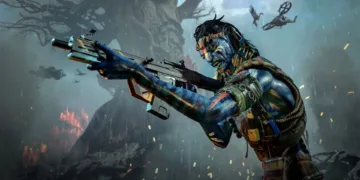



























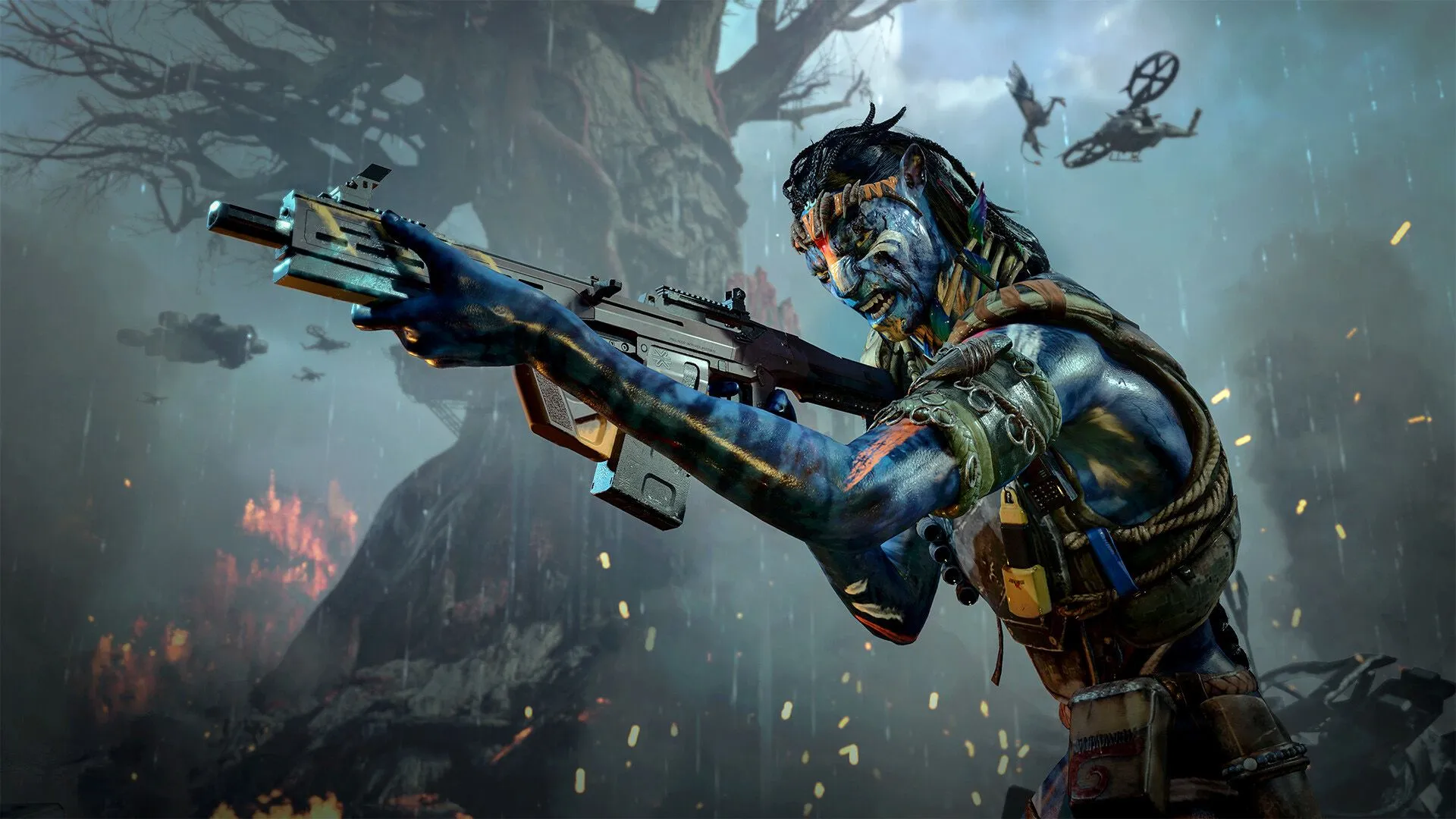

From the Ashes reshapes the Avatar gaming experience by stepping away from the base game’s customizable protagonist and putting a defined character in the lead. Set in 2170, the story continues about six months after the events of Secrets of the Spires, then picks up roughly two weeks after the cinematic ending of Fire and Ash. Players take on the role of So’lek, a battle-hardened warrior known to fans as the original campaign’s stoic mentor.
Your previous character shifts into a supporting role as a non-playable ally, giving the expansion room to build a tighter, character-driven arc around a veteran mercenary who survived the legendary Battle of the Flying Mountains. The main conflict comes from a dangerous alliance between the RDA military and the Mangkwan, a pyromaniac Na’vi clan.
The opening moves with urgency, offering a quick recap before dropping you into a region torn apart by scorched-earth tactics. Large stretches of once-familiar forest burn under an advancing wall of fire, and So’lek’s objective becomes immediate: act fast enough to keep his home from sliding into total devastation.
The Desolation of The Ravines
The expansion’s visual identity breaks hard from the neon-soaked jungles that defined earlier stretches. The Kinglor Forest now reads in grey ash and charred timber, with greenery surviving in scattered remnants. That shift creates an atmosphere of loss that you feel while moving through the space, and the few intact pockets of plant life start to carry real weight because they look fragile against soot and fresh burn lines.
The Ravines anchors this chapter as the defining subregion, and it changes how you move through Pandora. Thick smoke and intense heat make Ikran flight unsafe here, so traversal leans on travel by foot or via direhorses. It’s a grounded approach that echoes traditional open-world design that prioritizes terrain traversal and route choices over aerial shortcuts.
That design choice pays off in how the environment responds to your progress. As objectives get cleared, fires fade and nature begins to reclaim soot-covered soil, so your momentum shows up in the landscape rather than staying locked to quest text. The technical execution stays strong through all that destruction, with improved interior lighting and denser undergrowth in zones that avoided the worst of the blaze. The game also maintains a minimal HUD, leaning on Na’vi senses to locate hidden resources and identify enemy patrols drifting through the smoke, which keeps attention on sound, silhouette, and motion instead of bright interface markers.
Redefining the Na’vi Warrior
From the Ashes adjusts its core systems to match So’lek’s aggressive nature, and the biggest change hits immediately through the third-person perspective. That camera view lets you read the fluidity of Na’vi movement while giving melee combat room to look and feel brutal.
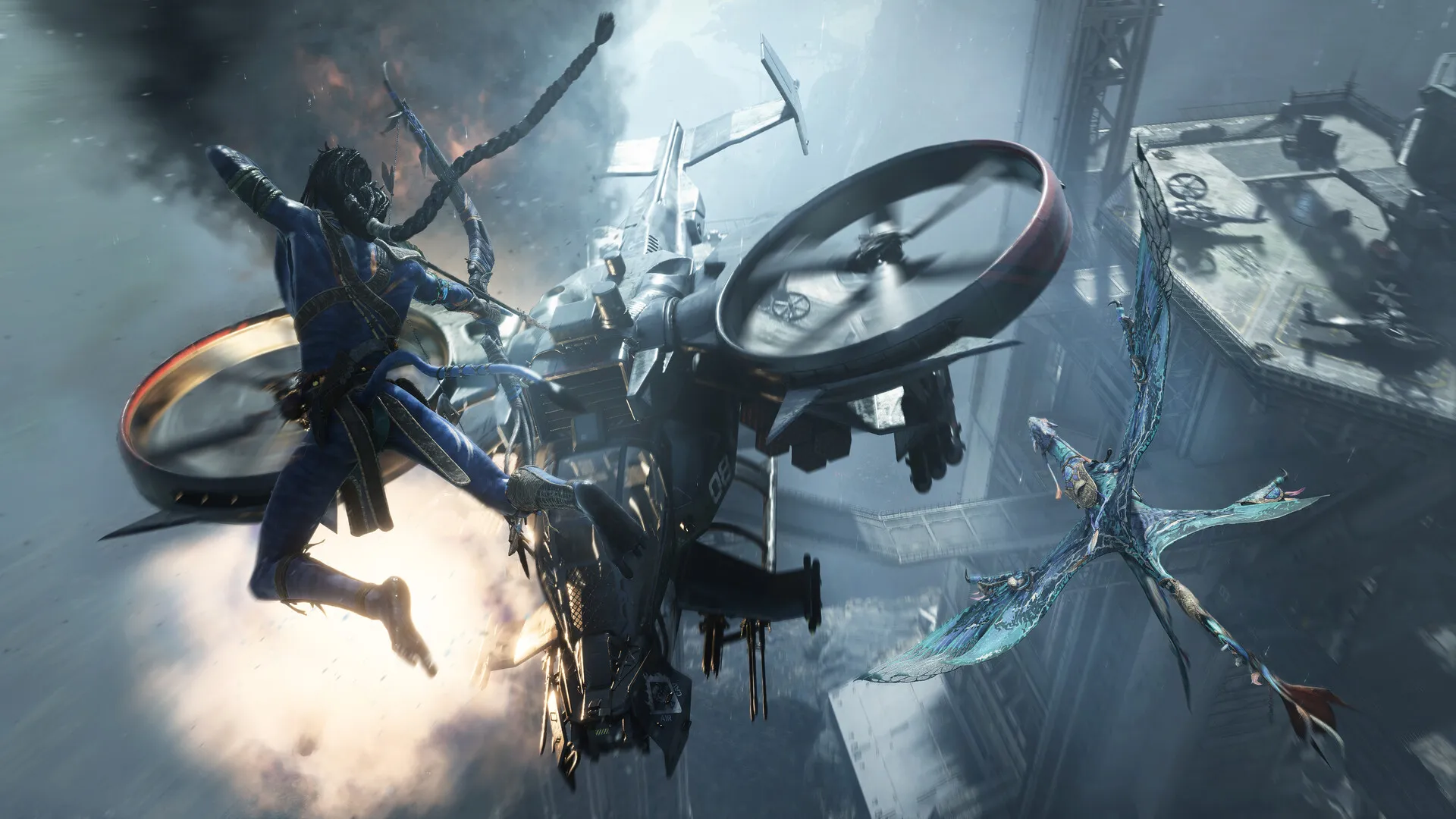
It also supports the expansion’s push toward a more direct combat identity, especially once you start chaining movement into close-range pressure without the constant friction that slowed the base game. Several fiddly mechanics have been stripped back to keep momentum steady, and progression follows that same philosophy: crafting runs as a streamlined process, and the leveling system is simplified.
The reworked toolset reinforces the same direction. The electrified knife takes over the kind of utility work previously tied to the SID hacking device, and it becomes a multipurpose answer for punching through door panels and landing swift takedowns on massive Amp suits. Warrior Sense then defines the combat loop’s biggest power spike: a temporary fury mode that turns So’lek into a tank capable of dealing massive damage while shrugging off hits.
The explosive bow pushes the tempo further by turning every arrow into a cluster bomb, which steers encounters toward fast, loud destruction. The result plays like a kinetic brawler that rewards players who want to dive headfirst into the fray from the back of an Ikran, with less emphasis on the quieter infiltration rhythms that shaped the franchise’s earlier stealth-heavy identity.
Clashing Clans and Strategic Warfare
Combat variety rises sharply once the Mangkwan Clan becomes a consistent threat. Fighting other Na’vi brings a challenge that had been missing, since these opponents share So’lek’s agility and environmental awareness. Encounters stop feeling like a one-way power fantasy, because the enemy can move, react, and use the space in ways that mirror your own strengths.
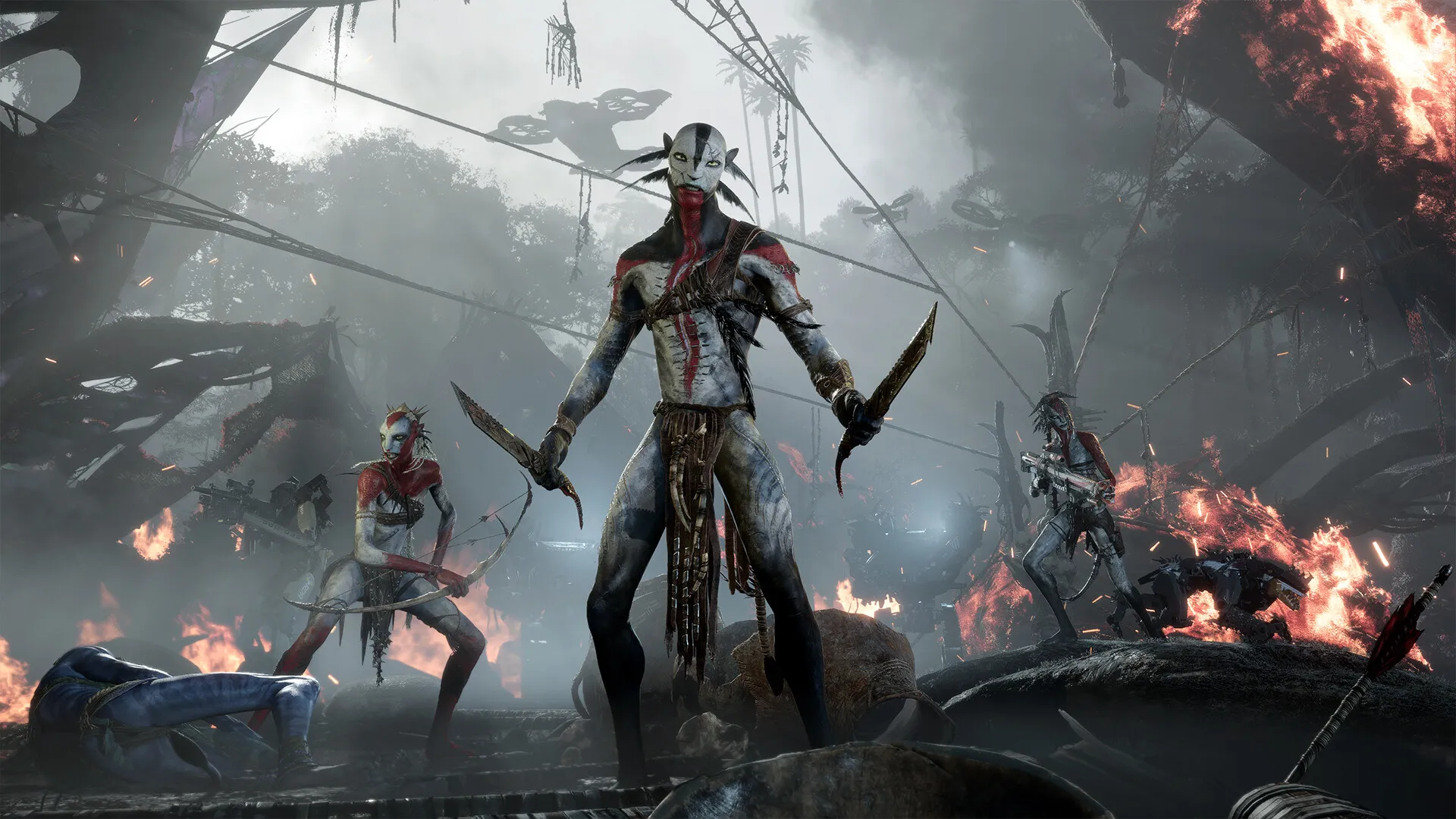
On the RDA side, the escalation comes through mechanical Hellhounds and Amp suits equipped with grenade launchers, which keeps fights from settling into a single comfortable pattern. You’re pushed into constant tactical shifts, reading spacing and timing while deciding when to commit and when to reposition.
That variety sits inside a mission structure built around a clear loop: dismantle support outposts, weaken heavily fortified main bases, then push toward the next major objective. The progression culminates in three cinematic boss encounters against Ash clan leaders, and each one asks for a distinct strategy rather than a repeated solution.
Exploration stays relevant inside that forward drive. Players hunt for Zyekoma fruits to extend the health bar, and they search for Sarentu hostages hidden within the chaos. The pacing stays lean across a dense 10 to 20-hour experience, avoiding the filler task cadence common to many large-scale open-world games while keeping So’lek’s vengeful defense as the main narrative priority through the full playtime.
The Review
Avatar: Frontiers of Pandora - From the Ashes
From the Ashes is a refined, aggressive evolution of the original experience. By focusing on the seasoned warrior So’lek and introducing a third-person perspective, the game sheds the slower, repetitive mechanics of the base game. The charred transformation of the Kinglor Forest provides a somber, high-stakes backdrop that makes every battle feel meaningful. While some bugs occasionally break the immersion, the streamlined progression and intense Na’vi-on-Na’vi combat create a satisfying, high-speed loop. It is a dense, cinematic expansion that successfully justifies a return to the world of Pandora.
PROS
- Fast-paced, aggressive combat systems.
- Effective third-person perspective for better visibility.
- The Ravines offer a unique, grounded exploration challenge.
- Compelling, dark narrative centered on a veteran lead.
- Memorable boss fights against the Ash clan.
CONS
- Minor graphical glitches and enemy AI oddities.
- Removal of co-op mode.
- Stealth can feel inconsistent compared to direct combat.