






















From the reef’s cerulean hush, the Sully family is yanked into open air and scattered by a gigantic, fire-breathing galleon, a floating furnace that announces a new phase of violence. Avatar: Fire and Ash, the third cinematic chapter in James Cameron’s science-fiction saga, swaps the prior film’s tranquil blue for imagery ruled by rage, scorch, and collapse.
Running well past three hours, it resumes almost immediately after the aquatic victory over the RDA, when relief curdles into the grim accounting that follows any battle. The conflict remains painfully direct: the Sullys keep fighting to stay alive against the colonizing Resources Development Administration, with Colonel Quaritch pressing forward as their relentless pursuer. The story also widens the battlefield by introducing a dangerous new Na’vi faction, leaving the familiar heroes caught in clashes on multiple unstable fronts.
Even the title carries its own charge. “Fire and Ash” suggests hatred that burns until it consumes its bearer, then leaves the residue, the cost, and the emptiness behind. The production’s scale and the script’s breathless momentum promise a grand, visceral experience shaped around ruin, fury, and the bruising aftermath of vengeance.
The Sully Family: A Fortress Under Siege
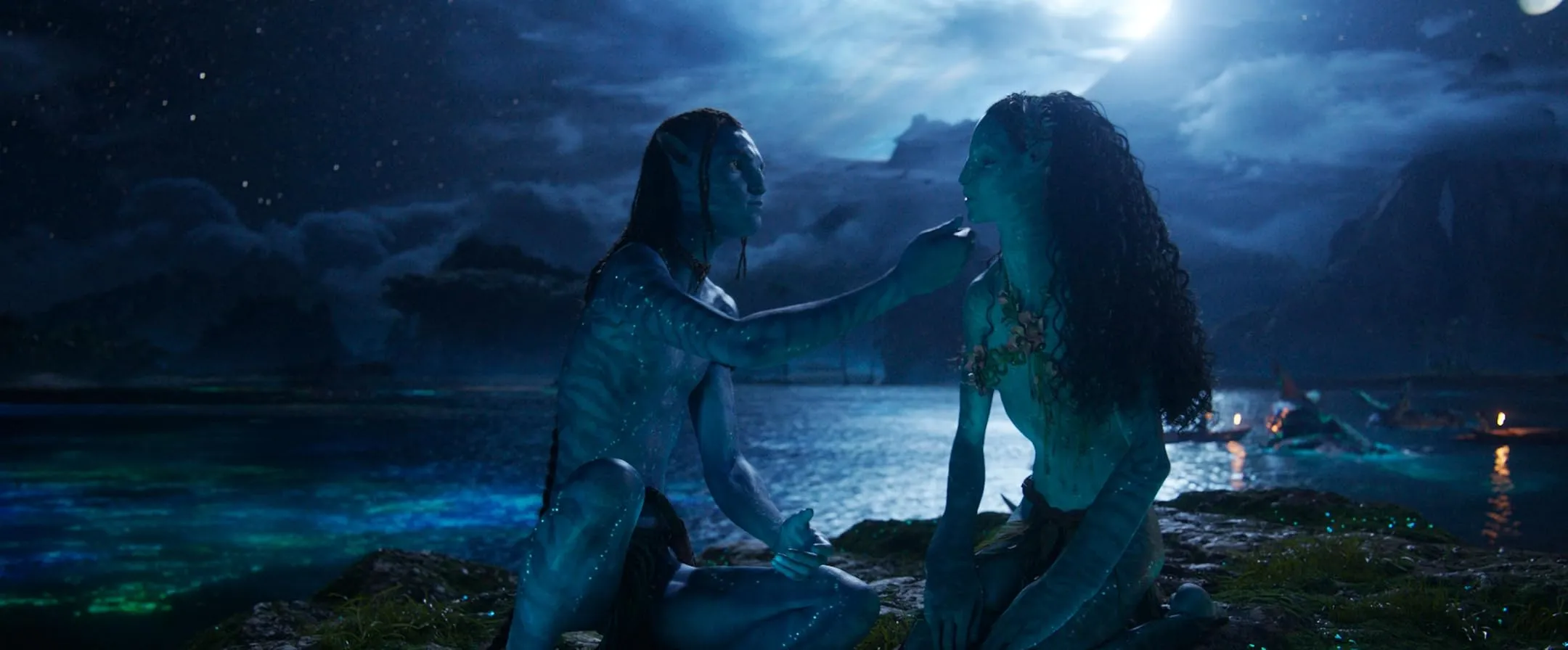
The film’s emotional framework sits inside the Sully household, which now feels splintered by grief and simmering resentment. The narrative moves beyond the rush of triumph and lingers on the psychic toll of war, the way victory can feel like another form of damage. Neytiri, once defined by protective ferocity, lives inside an unyielding grief after the death of her eldest son, Neteyam.
That loss hardens into escalating hatred for humans, the “pink skin” invaders, and it seeps into every interaction. Her anger finds its sharpest target in Spider, the human boy adopted into the family’s orbit. Spider’s devotion to her remaining children does little to soften what he represents to her. His presence functions like a wound that refuses to close, a daily reminder of an enemy that has entered the home and refuses to leave. The result is an increasingly untenable arrangement, one that threatens Spider’s safety and corrodes the family’s ability to live together.
Jake Sully strains to hold the role of patriarch together with something like authority, even as the family’s interior life buckles under pressure. His Marine-bred, mission-first thinking collides with the obligations of husband and father, and the collision leaves scars. Spider’s continued place among them grows into a crisis that risks endangering the Metkayina clan who granted the Sullys sanctuary.
Jake faces a dilemma with the weight of a sacrifice ritual: protect the larger community, or protect the boy his children see as kin. The choice he makes is bitter and painful, framed as necessary protection for the Metkayina, and it tears open a deep rift with his children. They regard Spider as an indispensable brother, not a liability to be moved off the board. That fracture lands as a domestic tragedy staged inside a war film, with duty pressing down on affection until affection starts to crack.
Tension also runs through Jake’s relationship with Lo’ak, and the film presents it as constant, visible, and corrosive. Jake continues to hold Lo’ak partly responsible for the chain of events that led to Neteyam’s death. Lo’ak’s impulsiveness reads to Jake as a hazard in a conflict where survival depends on following orders. The dynamic undermines any sense of trust between them and pushes Lo’ak into isolation and self-blame. The family’s grief becomes a second battlefield, and it feels as lethal as anything the RDA can deploy.
The younger generation carries the heaviest narrative and emotional weight, and the film treats that burden as the engine of its most charged scenes. Spider sits near the center as catalyst and emotional fuse, a figure built from conflict. He lives with the knowledge that Quaritch is his biological father, yet he remains bound by deep loyalty to his adopted Na’vi siblings. His story embodies the question of allegiance and identity, staged through love, inheritance, and betrayal without offering clean answers. Lo’ak, now the eldest surviving son, wrestles with intense survivor’s guilt and hunts for acceptance and purpose.
His search often takes the shape of impulsive actions that echo the conditions that led to his brother’s death, pushing him into situations that test his readiness for leadership. Kiri continues to deepen her mysterious spiritual connection to Eywa, an ability that marks her as apart and strengthens her outsider status. That distance also makes her a vital bridge of empathy for Spider. Tuktirey, the youngest biological daughter, registers as a humanizing barometer for the family’s condition, her presence constantly reminding the audience what all this violence claims to protect.
Even Quaritch, previously framed as a flatter instrument of colonial militarism, receives sharper shading in his Recom body. His pursuit no longer runs on blind vengeance alone. He operates with a more strategic, calculating approach, actively looking to exploit divisions among Na’vi clans. That shift makes him feel more formidable and more intelligent, a threat that adapts rather than repeats itself. His relationship with Spider adds another pressure point: a paternal connection that complicates his menace without softening it.
The bond sits awkwardly against his established villainy, driven by something recognizably human, filtered through a warped sense of control and entitlement. It raises the moral stakes of the conflict, because the war no longer exists only between species and armies. It runs through blood ties, adoption, and the brutal arithmetic of who gets claimed by whom. Grief, resentment, and fractured loyalty inside the family emerge as dangers with the same capacity to destroy as the external war.
New Frontiers of Conflict
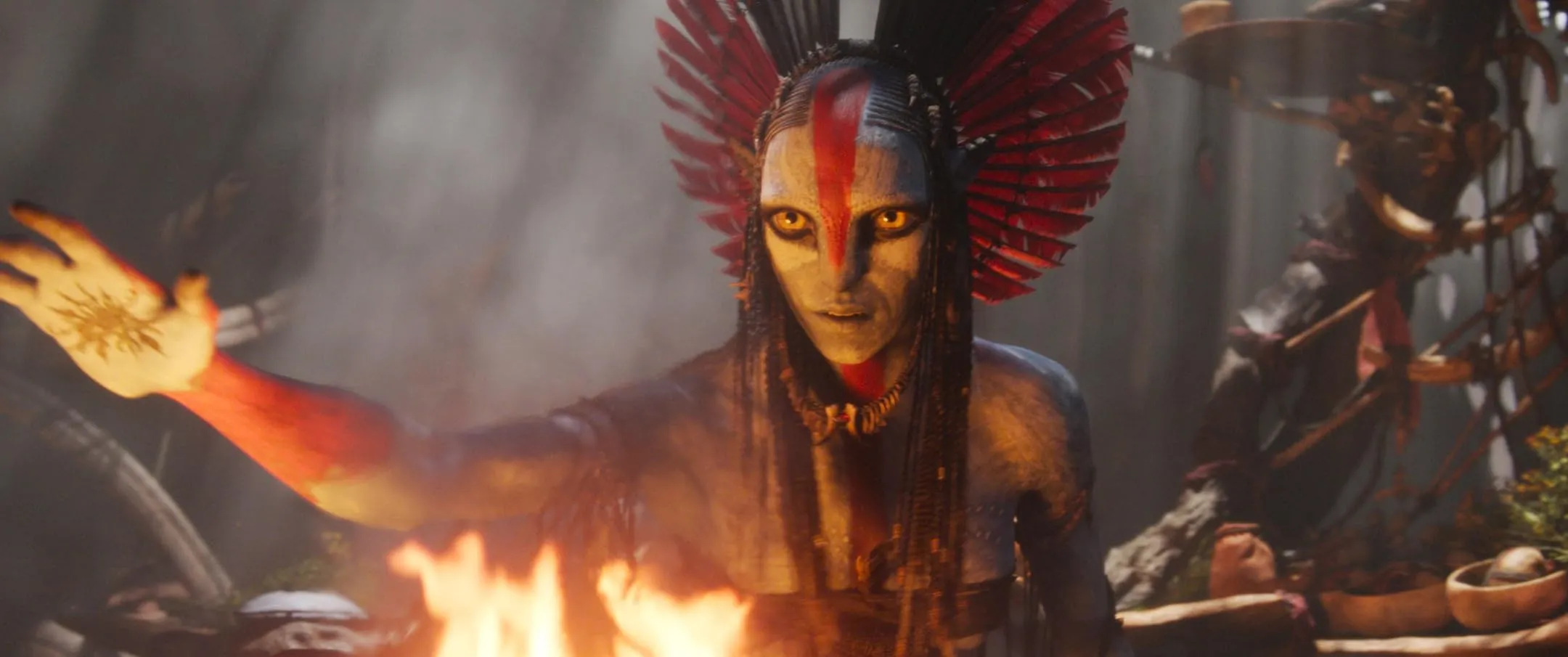
The film expands its moral and geographical range with the arrival of the Mangkwan clan, known as the Ash People. Their presence forms a stark counterpoint to the Na’vi cultures already established. Living within a volatile volcanic environment, the tribe embodies a destructive, primal ideology shaped by catastrophe. Their homeland was ruined by a volcanic event, and the film ties that ruin to a spiritual severing: they renounce Eywa and adopt a philosophy organized around dominance, vengeance, and survival through aggression.
This rejection challenges the Sullys and their allies on cultural and spiritual ground, not simply tactical ground. Fire and ash dominate their environment and their look, giving the film a striking new visual register that turns Pandora into a harsher, angrier planet. The depiction also carries a thorny implication raised inside the narrative’s framing: the Ash People can read as a slide back toward negative indigenous stereotypes, a troubling shadow for a franchise that positions itself against colonial harm.
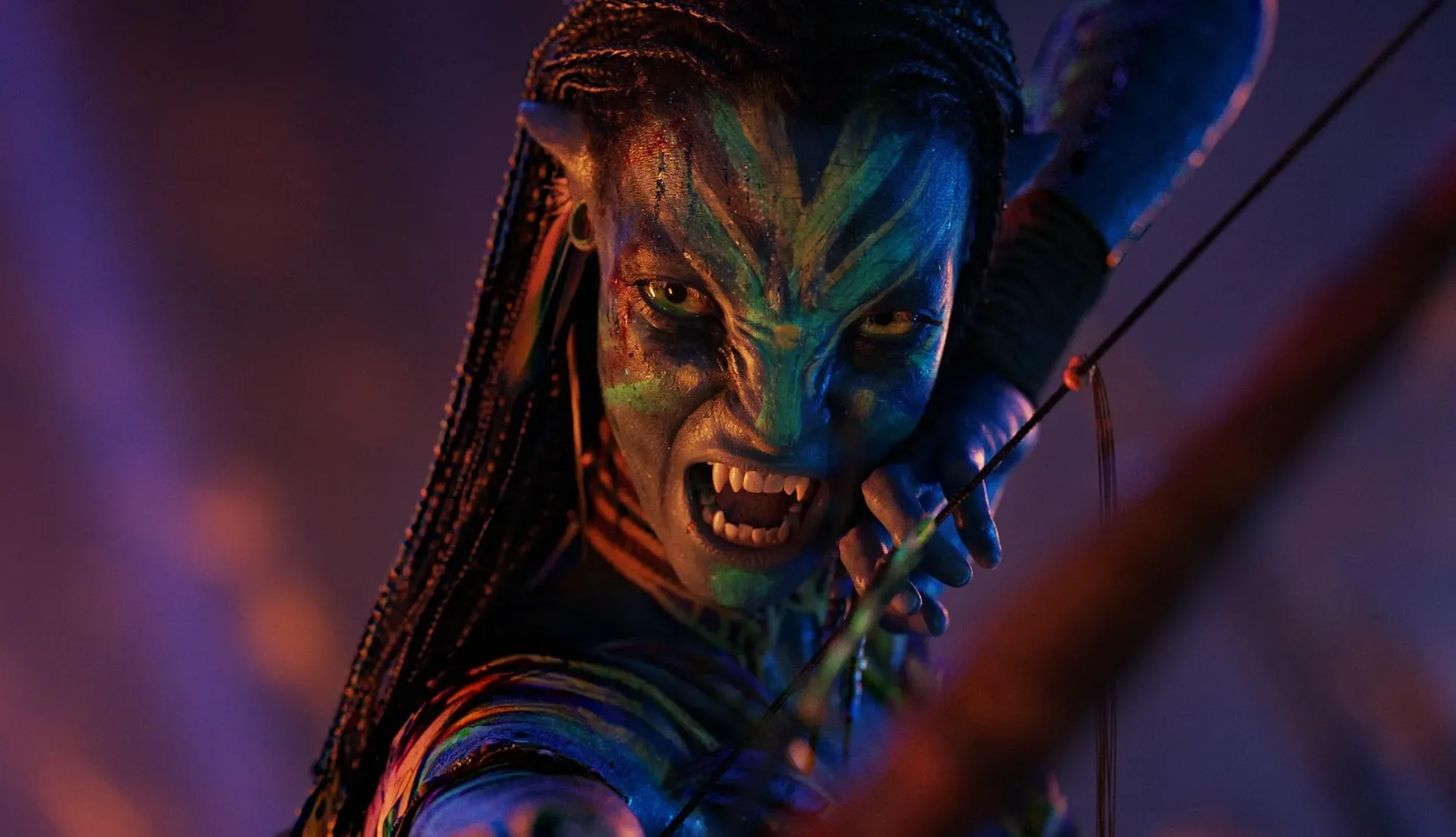
Varang leads this clan, introduced as a fearsome new antagonist who commands immediate attention. She is the bloodthirsty Tsahìk, defined by ruthlessness, malice, and an amoral sense of purpose that treats violence as doctrine. Oona Chaplin’s performance gives Varang a seductive sensuality that masks power rather than diminishing it, and the film uses that quality to sharpen her threat. She enters as a major player with high stakes attached, testing the Na’vi heroes on moral ground as well as physical ground.
The renewed political complexity comes from Varang’s alliance with Quaritch, framed as a “devil’s bargain” with clear historical echoes. The partnership recalls colonial strategies that exploited existing divisions between tribes, supplying arms and support to one faction to weaken another. Quaritch gains access to Na’vi knowledge and fighting strength; Varang gains advanced RDA weaponry. The arrangement carries volatility from its first breath, because Varang follows her own agenda and never reads as a puppet.
That independence creates a twisted dynamic with Quaritch, who finds himself aligned with a culture he seeks to dominate, relying on it while still treating it as an instrument. Their interactions even include hints of a strange personal relationship, adding further instability to a deal already built on hatred and opportunism. The result heightens the stakes on Pandora by showing how internal division can devastate a community as effectively as an invading force. The conflict stops reading as a simple binary of blue versus human and starts to look like a landscape of competing loyalties, weaponized trauma, and alliances forged in the heat of shared rage.
Visionary Craft and Technical Grandeur
The film’s technical execution reinforces Cameron’s reputation as a pioneer of blockbuster spectacle. The evolution of his 3D and high frame rate cinematography continues here, and the presentation treats these tools as integral to the storytelling’s physical impact. The fidelity aims for immersion so complete that the imagery starts to feel like captured reality rather than constructed illusion. The theatrical experience becomes part of the argument, with scale and clarity working as a form of sensory persuasion.
Several sequences stand out for their precision. Underwater movement remains seamless and immersive, capturing even minor breath bubbles with meticulous clarity. The interactions between performance-captured characters and Pandora’s creatures maintain a high bar of realism, including moments involving the Tulkun.
The film also highlights Cameron’s command of the “volume,” opening space for dizzying point-of-view shots and environments rendered with a fullness that suggests a world you can step into. The sensation of soaring on an Ikran or plunging through ocean depths lands with an intensity designed to lock the audience into Pandora’s physics and atmosphere.
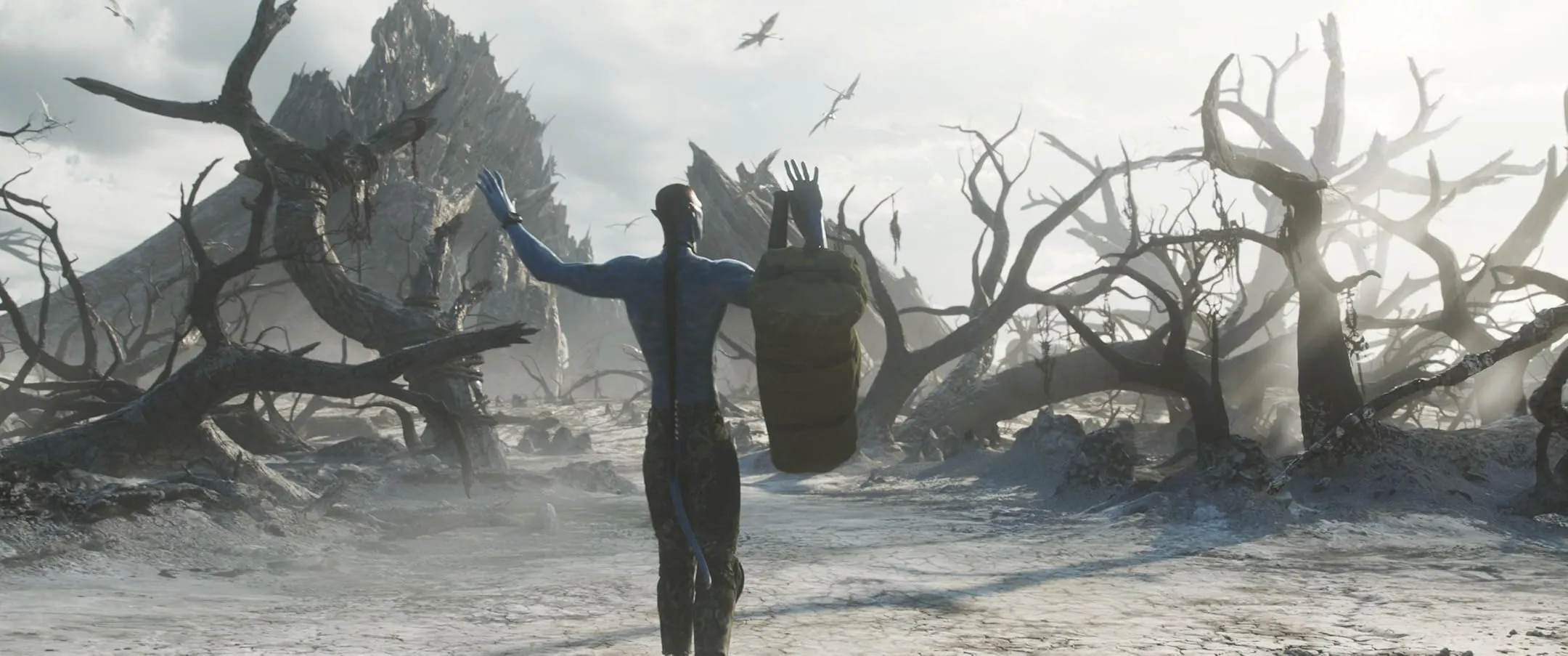
Pandora’s geography expands again through striking new environments that emphasize production design at scale. The Mangkwan volcanic habitat burns on the screen as a harsh counterpoint to lush forests and the serene aquatic beauty of the prior films. Molten rock and drifting ash become visual shorthand for an escalating environmental and spiritual conflict.
On the human side, the expanded RDA city and High Camp underline the frightening size of the colonization effort, presenting functional military installations with dense, tangible detail. The realism holds across land, water, fire, and sky, sustaining a continuous immersive quality that keeps the setting cohesive even as it grows.
Action ramps up with more large-scale land battles than The Way of Water, and the film leans into that shift to keep momentum high across the long runtime. Tulkun seafaring action returns as well, deployed to amplify the emotional weight of key conflicts. The set pieces stay high-stakes and physically intense while keeping visual clarity intact, a crucial part of their effectiveness. Cameron’s approach favors relentless pacing. The runtime, stretching beyond three hours, is packed with critical events, spectacle, and dense exposition. The film shows little interest in quiet stretches, and it demands sustained attention from the opening frame through the final credits.
Pacing and Narrative Recurrence
The film’s ambition and length also reveal recurrent weaknesses tied to structure. The script assumes fully committed fandom and offers no introductory primer. It plunges directly into aftermath and expects familiarity with established lore, a sprawling character roster, and the specific events of the previous battle. That approach asks for steady concentration because the exposition arrives fast and heavy, including major new revelations that reframe the franchise’s overarching mythos. Miss a few minutes and vital turns can slip away.
Structural repetition emerges as a persistent point of friction. The film risks becoming a narrative echo chamber, with stretches that read as padding and plot beats that feel familiar from The Way of Water. The family separation returns as a familiar mechanism, the architecture of the final battle feels recognizable, and Quaritch’s redemption and identity arc appears stalled.
This conservatism slows the emotional progression for several key characters. Their arcs move with a deliberate restraint that reads as a franchise management strategy, keeping character development from accelerating too quickly while future installments remain on the horizon. Over the long runtime, that restraint becomes palpable.
The climax makes the pattern clearest. The finale delivers striking visuals, yet it follows a structure that feels immediately recognizable: a massive battle followed by a dramatic one-on-one confrontation between hero and villain. The familiarity can drain tension, because the route begins to feel charted in advance. The film also adopts a policy of “measured carnage.” Lead characters repeatedly survive conflicts whose scope and intensity suggest a much higher toll.
The survival pattern reflects a long-term plan to preserve the main ensemble for future installments, and that calculated protection can blunt the sense of peril. The action still hits with force, yet the outcomes can feel strategically arranged rather than arising organically from the chaos the film depicts. What remains is a sustained push and pull between cinematic escalation and a reliance on formula, a tension that runs through the film like heat trapped beneath ash.
Avatar: Fire and Ash is an epic science fiction film that serves as the third installment in James Cameron’s groundbreaking Avatar franchise. It continues the story of Jake Sully and Neytiri as they navigate the devastating aftermath of the war with the Resources Development Administration (RDA) and confront new threats, including the volcanic Mangkwan clan. The film had its world premiere in December 2025 and is scheduled for wide theatrical release on December 19, 2025. Given its distributor, 20th Century Studios (now part of Disney), it will eventually be available for streaming on Disney+ after its exclusive theatrical run. The movie carries a rating of PG-13 and features an expansive runtime, committing to Cameron’s vision of an immense, immersive cinematic experience.
Full Credits
Title: Avatar: Fire and Ash
Distributor: 20th Century Studios
Release date: December 19, 2025
Rating: PG-13
Running time: 197 minutes (3 hours and 17 minutes)
Director: James Cameron
Writers: James Cameron, Rick Jaffa, Amanda Silver (Screenplay), James Cameron, Rick Jaffa, Amanda Silver, Josh Friedman, Shane Salerno (Story)
Producers and Executive Producers: James Cameron, Jon Landau (Producers), Richard Baneham (Executive Producer)
Cast: Sam Worthington, Zoe Saldaña, Sigourney Weaver, Stephen Lang, Kate Winslet, Britain Dalton, Jack Champion, Oona Chaplin, Cliff Curtis, Jemaine Clement, Edie Falco, Giovanni Ribisi, Joel David Moore
Director of Photography (Cinematographer): Russell Carpenter
Editors: Stephen E. Rivkin, David Brenner, Nicolas de Toth, John Refoua, Jason Gaudio, James Cameron
Composer: Simon Franglen
The Review
Avatar: Fire and Ash
Avatar: Fire and Ash is a technical marvel that provides a visual feast of staggering realism and grandeur, further cementing Cameron’s unmatched command over spectacle. The film is emotionally grounded by compelling internal family drama, particularly Neytiri’s grief and Quaritch’s strategic evolution. While the introduction of Varang and the Ash People adds fascinating new depth to the political and thematic landscape, the overall narrative occasionally falters under its own weight, relying on familiar plot beats and structural repetition. It is a stunning, intense chapter, yet one that sometimes feels beholden to setting up future installments rather than fully resolving its own.
PROS
- Sets a new benchmark for 3D, HFR (High Frame Rate), and motion-capture realism.
- The Ash People and Varang introduce compelling moral complexity and political allegory.
- Neytiri’s grief and the Spider/Quaritch dynamic provide a strong emotional anchor.
- Maintains high-stakes momentum over its long runtime across land, sea, and air.
CONS
- Recycles key structural beats and action sequences from The Way of Water.
- Major character arcs are seemingly slow-walked or protected for future sequels.
- The film assumes extensive audience knowledge, packing in difficult-to-follow lore.
- Some established characters are marginalized by the focus on others.