














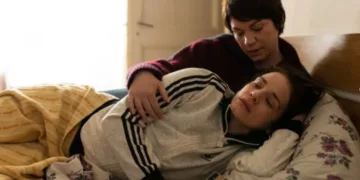
















The premiere of Fox’s Best Medicine offers a telling image: Louisa sits in the hush of a Maine evening, letting the warmth settle in, and delivers a line that doubles as a mission statement: “When I lived in New York, everybody living in their little boxes with their little salads, that’s no way to live.” Fox’s Best Medicine takes that small, pointed complaint and builds its entire mood around it, recasting the long-running British hit Doc Martin as an American story about escape, friction, and the strange comfort of being known too well.
The series follows Dr. Martin Best, a brilliant Boston surgeon with a razor-sharp mind and a famously rough manner, as he abandons the high-stakes operating room for general practice in the coastal village of Port Wenn. His intelligence reads as undeniable, his social instincts as almost nonexistent. That mismatch becomes the show’s engine: a man built for clinical precision placed in a town governed by chatty proximity, public opinion, and the everyday demands of neighborly life. His move carries another complication, a paralyzing phobia of blood, which turns his expertise into something precarious and occasionally humiliating. It is an uneasy premise with a gentle pulse.
Martin returns to the place where he spent summers with his aunt Sarah and finds a community where privacy barely exists as a concept. People hover, questions arrive uninvited, and personal business becomes communal currency. The writing keeps placing his literal professionalism up against a village that treats relationships as the true infrastructure of daily living.
The series plays like a cozy escape, a pocket of television built from manageable problems and the promise of mutual care. Episodes pair medical cases with a gradual softening in the protagonist, a slow thaw that happens in glances, silences, and reluctant acts of service. Martin pushes back against constant intrusion. Port Wenn absorbs him anyway, filing down the sharp edges through routine contact and stubborn affection.
The Precision of Prickliness: Josh Charles as Dr. Best
Dr. Martin Best operates by logic, speaks with blunt honesty, and carries himself like a man bracing for impact. He walks Port Wenn’s sunlit streets with stiff posture and a fixed frown, a physical portrait of emotional distance held in place by habit. His past as a top-tier Boston surgeon informs his standards in the exam room: medicine registers as problems to solve quickly, neatly, and correctly, with little patience for the unruly human material attached to symptoms. That cold efficiency creates separation from locals who expect warmth, reassurance, and the small courtesies that pass for care in a tight community.
His fear of blood becomes the show’s sharpest twist on professional authority. Watching a doctor of such stature collapse in the face of the very substance tied to his career carries a clean comedic irony. The phobia also does real narrative work. It punctures the aura of arrogance that can cling to Martin’s certainty and gives the audience a clear route into sympathy. Competence remains intact, yet it lives alongside involuntary fragility, so every moment of success carries effort and risk instead of inevitability.
Also Read






Josh Charles plays Martin with careful control. The performance refuses cartoon exaggeration and leans on precise physical choices that hint at internal strain. Small gestures do the speaking: a flutter of fingers near a bunch of bananas, a faint adjustment in vocal rhythm that suggests tension tightening, then loosening.
The characterization allows loneliness to show through the gruff surface, without sanding the gruffness away. Charles keeps a dormant warmth under the doctor’s prickliness, and the result feels like a stray cat at the doorstep, wary of touch, still circling the light. The work also signals range in a role that asks for restraint, timing, and a steady grip on a comedy-drama tone.
The Social Fabric of Port Wenn: Ensemble Dynamics
The series depends on the people orbiting Martin, because Port Wenn itself functions as a kind of pressure chamber. Abigail Spencer plays Louisa Glasson with grounded calm, the necessary counterweight to Martin’s abrasiveness. She carries quiet steadiness and a sense of self that does not bend into submission. Her presence challenges Martin’s rigid view of life and work, and she manages that challenge without surrendering dignity.

Their chemistry is built from awkward pauses and carefully chosen disagreements, the kind that imply two people learning each other’s rhythm in real time. The connection grows slowly and feels earned because the show keeps it tethered to discomfort and patience instead of grand declarations. Louisa becomes a reflective surface for Martin, pressing him to face the limits of a life run entirely on analysis.
Annie Potts brings a briny, irreverent spirit to Aunt Sarah, a lobster fisherwoman who has known Martin since childhood and speaks to him with a familiarity no one else gets to claim. She cuts through his defenses with ease, and that ease matters. Her presence ties his abrupt relocation to family history, keeping the move from feeling like a gimmick and grounding it in something personal without turning sentimental. Sarah provides comic relief, yet she also functions as the steady hand that nudges Martin toward belonging, acting as the main catalyst for his slow integration into town life.
The wider community leans into eccentricity, with figures like Sheriff Mark and Martin’s assistant, Elaine. Josh Segarra plays Mark with an eager, puppy-dog enthusiasm that sparks clean comedic sparks against Martin’s cynicism. Elaine carries the modern world into this seaside bubble, frequently preoccupied with her digital persona even as patients sit nearby waiting for attention. Together, these characters keep the fish-out-of-water premise active. Their quirks generate friction that prevents the series from sliding into syrupy comfort, and they keep the humor rooted in recognizable human habits: impatience, vanity, nosiness, and the impulse to perform goodness for an audience.
A Fairy Tale in Maine: The Idealized Landscape
Port Wenn is framed as a visual and social refuge. The coastline looks postcard-perfect, the light seems permanently golden, and the salt air feels close enough to taste. The setting stays free of modern political strife and systemic social bias, creating a world where conflicts remain small and oddly charming. The biggest disputes revolve around things like rehoming a pet pig or canceling a monthly baked bean supper. That choice of stakes matters. It lets the show operate as a contemporary fairy tale, a space designed for retreat from real-world anxiety.
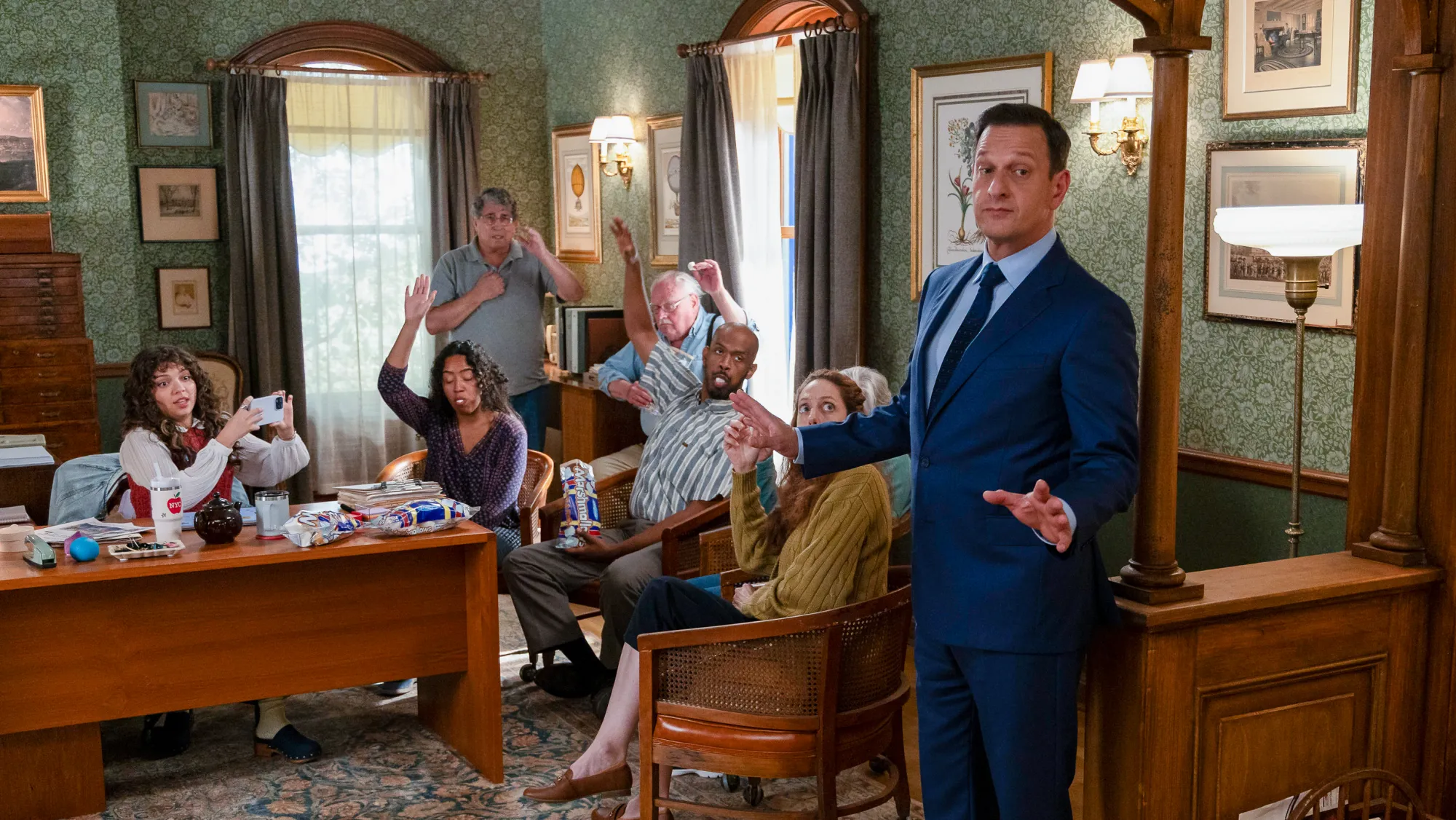
Community rituals become the narrative’s supports. The recurring baked bean dinners signal a social safety net that can feel suffocating and comforting in the same breath. Martin treats these gatherings as irrational distractions. The town treats them as necessary maintenance, the everyday work of staying connected.
Port Wenn keeps its stakes intentionally low. The scripts keep homelessness and severe social decay outside the frame, and the citizens move through life unshadowed by the harsher pressures of modern economics. That insulation gives them room to focus on the interpersonal health of their neighbors, for better and worse.
Louisa’s “little boxes” line hangs over this landscape as a quiet thesis. City life, as the show sketches it, protects privacy through isolation. Port Wenn refuses isolation and replaces it with constant visibility. Urban anonymity offers freedom and distance. Rural closeness offers warmth and scrutiny. The series argues for the value of being seen in full, even with all the irritations that come with it, and it builds toward the belief that a man as difficult as Martin Best can still find a home in a place that insists on keeping the door open.
The Rhythm of Healing: Structure and Tone
The storytelling settles into a dependable procedural pattern, with each episode organized around a medical mystery. Cases range from food poisoning tied to a town event to curious hormonal imbalances among locals. The ailments serve as narrative keys: each diagnosis opens a small window into a patient’s private life and the town’s social hierarchy. Medicine becomes the tool Martin uses to interact with the world, and the show uses that tool to reveal character, routine, and tension in bite-sized pieces.

The humor stays restrained and character-driven. Laughs tend to come from silence, from badly timed honesty, from Martin saying the thing polite people swallow and then watching the room freeze around him. The dialogue is built on the recurring clash between his temperament and the village’s expectations of care. It asks viewers to watch faces, read pauses, and track subtext, which makes the comedy land with a sharper edge. The writing resists the simple cadence of a traditional sitcom and keeps a more observational style, letting awkwardness do the heavy lifting.
A steady emotional current runs under that restraint. The series slowly reveals Martin’s tragic history, and that history adds weight to his present-day behavior without forcing melodrama. The pacing stays deliberate, giving scenes time to breathe and allowing conversations to unfold with a calm that many hour-long dramas refuse.
The tone carries a comfort-food feeling, built from routine, familiarity, and the idea that healing happens in increments. Best Medicine works as a midseason procedural by keeping its world gentle and its character study patient, watching a community repair a broken man through proximity, persistence, and the daily insistence that he belongs.
Best Medicine is scheduled to make its debut with a special advance series premiere on Fox tomorrow, Sunday, January 4, 2026, immediately following the NFL doubleheader. This new one-hour comedy-drama is a U.S. reimagining of the long-running British series Doc Martin and features Josh Charles as a top-tier Boston surgeon who relocates to the quaint, eccentric village of Port Wenn, Maine. Following its Sunday preview, the series will move to its regular time slot on Tuesday, January 6, 2026, at 8:00 p.m. ET. For those who miss the broadcast, episodes will be available to stream the following day on Hulu and Hulu On Disney+.
Full Credits
Title: Best Medicine
Distributor: Fox, Fox Network
Release date: January 4, 2026
Rating: TV-PG
Running time: 60 minutes
Director: Jamie Babbit, Jay Karas
Writers: Liz Tuccillo, Dominic Minghella
Producers and Executive Producers: Ben Silverman, Rodney Ferrell, Howard T. Owens, Liz Tuccillo, Mark Crowdy, Philippa Braithwaite, Jay Karas, Tyson Bidner, Josh Charles, Billy Redner, Tony Glazer, Summer Crockett Moore
Cast: Josh Charles, Abigail Spencer, Josh Segarra, Annie Potts, Cree Cicchino, Didi Conn, Clea Lewis, Stephen Spinella, Jason Veasey, John DiMaggio
Director of Photography (Cinematographer): Wesley Cardino, John Inwood
Editors: Sheri Bylander
Composer: Jeff Cardoni
The Review
Best Medicine
Best Medicine succeeds as a gentle, restorative piece of television that prioritizes character growth over high-octane drama. While it occasionally leans too heavily on its idealized setting, the show manages to find a sincere emotional core through the grounded performances of Josh Charles and Abigail Spencer. It offers a rare, quiet space in the modern television landscape for viewers seeking a sense of community and intellectual wit. Although the stakes remain low, the interpersonal rewards are high, making it a reliable and thoughtful comfort watch for the midseason.
PROS
- Josh Charles offers a nuanced, physically precise portrayal of a socially hindered genius.
- Port Wenn is a beautifully realized sanctuary that enhances the show's escapist appeal.
- The wit is intelligent and character-driven, relying on subtext rather than easy punchlines.
- The dynamic between Spencer and Charles provides a grounded, slow-burn romantic tension.
CONS
- The consistently low stakes may feel repetitive for viewers accustomed to high-pressure medical dramas.
- The complete absence of social or economic strife can occasionally border on the implausible.
- The weekly "medical mystery" format occasionally feels predictable.
- Talented actors like Annie Potts sometimes feel sidelined by the procedural elements.