
























![Kingdom Hearts Collection [I-III] Review](https://gazettely.com/wp-content/uploads/2026/10/Kingdom-Hearts-Collection-I-III-1-360x180.webp "Kingdom Hearts Collection [I-III] Review: KHII Holds Steady as Newer Entries Fluctuate 37")



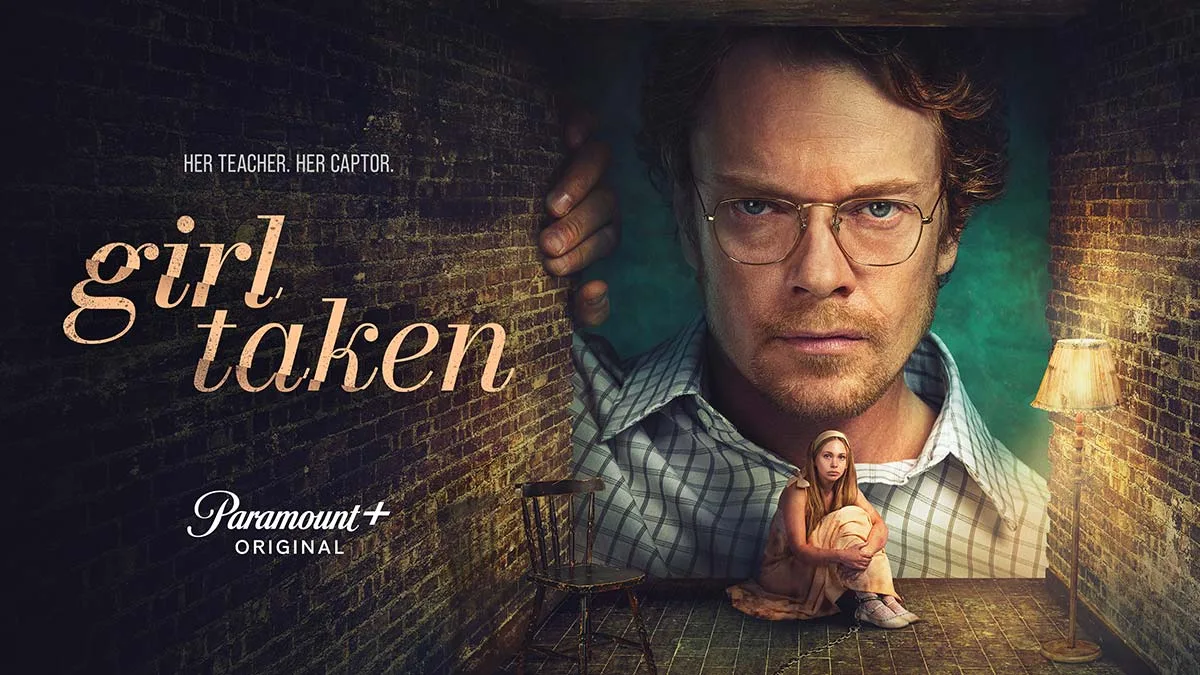

Girl Taken is a six-part British thriller series on Paramount+. It adapts the novel Baby Doll by Hollie Overton and opens in the rural town of Hollowell. The plot focuses on twin sisters Lily and Abby Riser, portrayed by real-life sisters Tallulah and Delphi Evans, whose teenage relationship mixes affection with friction. Their lives shift on the final day of school. Abby plans to go to university. Lily leans toward rebellion. After a misunderstanding at a party, Lily walks home alone.
Rick Hansen, an English teacher played by Alfie Allen, first appears as a helpful presence who offers Lily a ride. He abducts her and keeps her in a remote cottage basement for five years. The series moves beyond the initial crime to trace the long-term effects on the Riser family. Eve, the twins’ mother, copes with the ongoing absence. The town slowly moves forward. The narrative follows the years of Lily’s imprisonment and her later attempt to reclaim life. The production examines predatory behavior and the difficult path toward survival.
Temporal Shifts and the Anti-Procedural
The series turns away from a conventional crime procedural by giving weight to the passage of time and its effect on trauma. Many missing-person narratives concentrate on the frantic first forty-eight hours. This show takes a different route. By the end of episode two five years have elapsed. That leap enforces a distance between the inciting incident and any tidy resolution.
The plot escapes the repetitive rhythms of police work and locates tension in what happens to people across years, not in the hoarded details of forensics. The primary strain of drama comes from the lived effects of trauma rather than from procedural momentum.
A clear two-act design separates the immediate fracture of a family from the harder work of reintegration. The first act records the initial rupture. The second act tracks the psychological aftereffects once the physical threat has ended. This arrangement foregrounds emotional consequence and the permanence of change that follows certain crimes.
Flashbacks supply necessary context while largely refusing to make suffering a spectacle. Those shorter windows into captivity explain Lily’s present state without becoming voyeuristic. The audience knows Rick is responsible from the start, which removes the mystery element. The series then shifts attention to the challenges of securing legal accountability and asks if peace is possible when the perpetrator still exists within the community. That structural choice ties into a rising approach on streaming platforms that privileges the emotional reality of survivors over the mechanics of detection.
Masculine Deception and the Reality of Loss
Alfie Allen constructs a chilling portrait of ordinary cruelty. His Rick Hansen reads as a conventional local figure: a teacher, a husband, a neighbor who appears willing to help. Allen resists melodrama and plays Rick with an unnerving calm. That restraint exposes how predators use commonplace decency as camouflage. The performance speaks to contemporary conversations about how domestic threats can be difficult to detect.
Tallulah and Delphi Evans give the Riser twins an earthy realism. Their off-screen relationship informs the texture of sibling friction and care on screen. Abby carries survivor guilt in a heavy, private way; she believes she contributed to her sister’s disappearance. Lily, after years of captivity, is physically and mentally altered. The series records her struggle to reclaim a sense of self in a world that continued in her absence.
Jill Halfpenny’s Eve Riser registers a steady functional decay. Her turn toward alcohol is quiet and accumulative. That portrayal avoids theatrical excess and shows the exhaustion of a parent who has grieved a living child for half a decade. Halfpenny gives bitterness clear cause.
Levi Brown’s Wes stands in for the collateral damage of absence. His relationship with Abby during Lily’s missing years creates moral complications that are hard to untangle. He represents the life Lily did not get to live. His presence forces the sisters to face the ways grief altered loyalties. Together the cast sketches a family system eroded from within.
The Invisible Mechanics of Domestic Abuse
The series lays bare the subtler instruments of control inside Rick’s domestic life. His marriage to Zoe reads as slow isolation. He does not rely on physical restraints. He instead wears down autonomy through persistent psychological pressure. That pattern mirrors the grooming he attempts with Abby and suggests a predatory disposition that persists over time rather than erupting suddenly.
Rick’s fiction about writing a novel gives him plausible cover for a split life. The false narrative of normalcy becomes a tool for disappearance. His position as a professional supplies social credibility that deflects suspicion. The story uses this to show how institutional trust can be turned into an instrument against vulnerable people.
The show gives sustained attention to tactics of victim blaming. Rick seeks to recast the abduction as something else. He uses the trappings of intelligence to gaslight victims and to confuse authorities. He cultivates an image of misunderstanding that complicates attempts at prosecution. This arc highlights the difficulty of bringing predators to account when they understand social perception.
The series places Lily’s physical confinement and Zoe’s emotional captivity on the same continuum. Both women endure control from the same man. The absence of visible locks does not equate to freedom. That focus tracks a cultural shift in how abuse is recognized, away from lurid caricatures of the monster and toward everyday forms of domination.
Aesthetic Coldness and the Power of Implication
Directors Laura Way and Bindu de Stoppani use the rural landscape to heighten isolation. Hollowell’s forests and long roads are rendered as spaces that look beautiful and indifferent at once. Empty stretches of road and unpeopled fields make disappearance plausible in a single instant. The setting supplies a persistent loneliness that colors each frame.
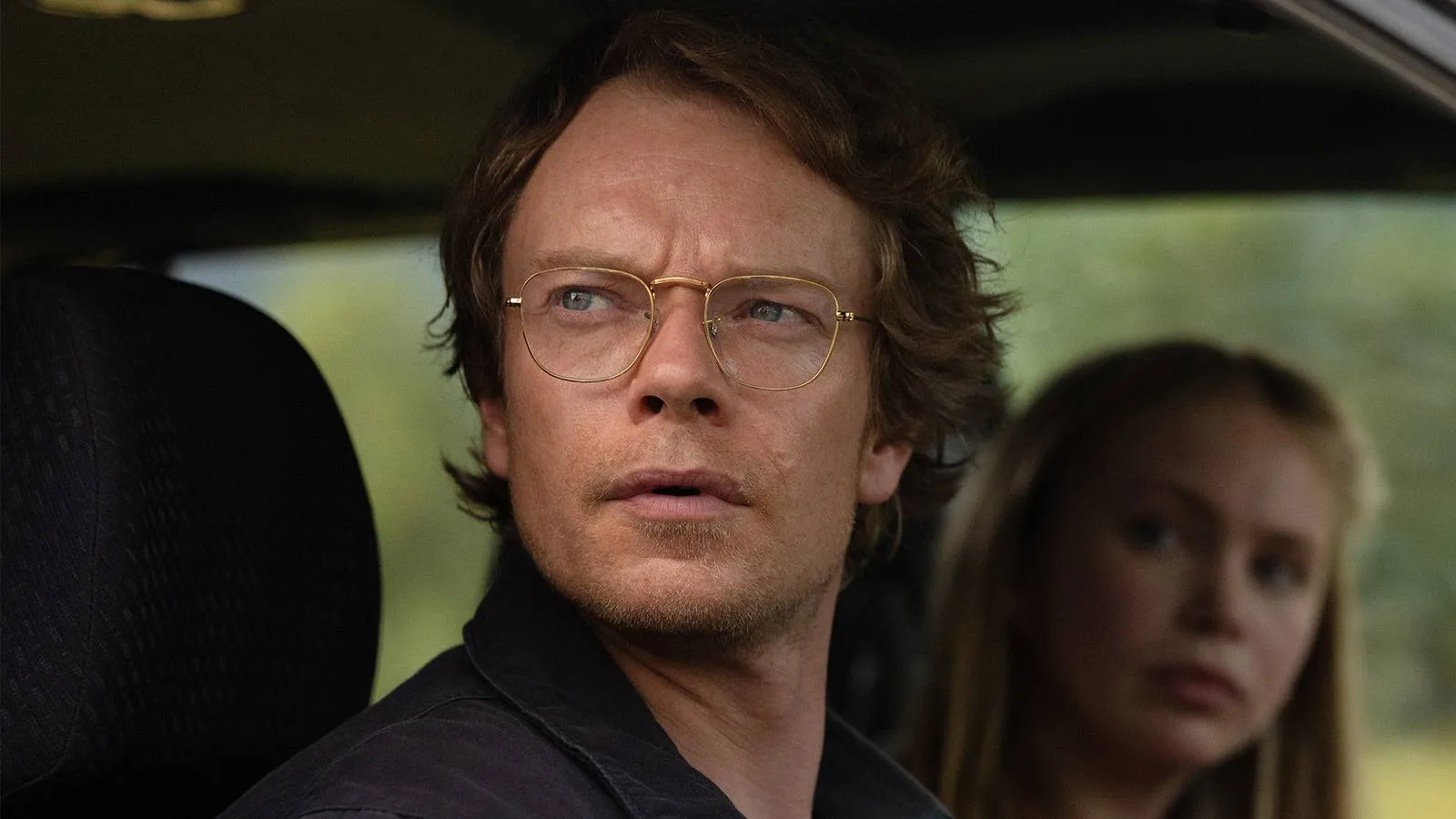
The series opts for minimalist depictions of violence instead of spectacle. The most brutal events occur off-screen or behind closed doors. That choice preserves the seriousness of trauma and obliges viewers to engage with aftermath and memory. The restraint shapes tension so that it accumulates rather than relies on shock.
A muted, cool color scheme reflects the characters’ emotional condition. Shadows stand in for unsaid things. Lighting and tone produce a heavy atmosphere that suits the bleak material. Visual consistency helps the series read as a focused commentary on social damage.
The score includes old-fashioned records from the 1920s. Those musical fragments mark Rick’s fixation on an archaic, controlled past. They set his interiority against the contemporary world beyond him. Sound design underscores his urge to remake others in a personal and distorted image. The audio elements reinforce a sense of a man operating out of time who seeks to impose order on a changing society.
The Fragile Nature of Justice and Healing
The final episodes place personal testimony and legal proof in tension. The trial sequence depicts a legal process that privileges composed witnesses and eloquent presentation. Rick exploits procedural gaps and public perception to his advantage. That depiction gives a clear critique of systemic weakness in the courtroom.
Hollowell’s social response to Lily’s return is mixed. Public sympathy sits beside unease. Residents want the version of Lily that fits their memory. They resist the changes that her absence produced. That pressure to perform recovery can become a secondary harm, since communities often expect a simple resolution where none is possible.
The series refuses tidy closure. Recovery appears messy and ongoing. The family adapts to life with persistent scars. Such honesty offers an alternative to narratives that promise quick triumph and asserts that some harms remain present.
Law enforcement in the story functions as a set of people constrained by limited resources. They are not heroic figures. They operate within a system that is ill-equipped for manipulation on this scale. That grounded depiction adds to the series’ realism and suggests that access to justice often requires endurance rather than theatrical breakthroughs.
The television series Girl Taken arrived on Paramount+ on January 8, 2026. This psychological thriller adapts the book Baby Doll by Hollie Overton. It focuses on the aftermath of a kidnapping in a small English town. Audiences can access all six episodes of the first season on the Paramount+ streaming platform. The story follows the complex emotional recovery of the Riser family as they face the return of a missing daughter while the kidnapper remains a threat.
Full Credits
Title: Girl Taken
Distributor: Paramount+
Release date: January 8, 2026
Rating: TV-MA
Running time: 60 minutes
Director: Laura Way, Bindu de Stoppani
Writers: David Turpin, Suzanne Cowie, Nessa Muthy, Hollie Overton
Producers and Executive Producers: Mick Pantaleo, Mike Benson, Suzi McIntosh, Paul Testar, Sebastian Cardwell, Hollie Overton
Cast: Jill Halfpenny, Alfie Allen, Tallulah Evans, Delphi Evans, Vikash Bhai, Niamh Walsh, Levi Brown, Victoria Ekanoye, Holly Atkins, Kiran Krishnakumar
Director of Photography (Cinematographer): Evan Barry
Editors: Lucy Donaldson, Weronika Kaminska
Composer: Andrew Simon McAllister
The Review
Girl Taken
Girl Taken succeeds by focusing on the endurance of the Riser family. It avoids the typical traps of crime television. The series highlights the chilling reality of quiet manipulation. Alfie Allen delivers a performance that stays with you. The show offers a grounded look at survival. It remains a somber study of how a community recovers from a deep fracture. The production treats trauma with respect. It creates a narrative that feels heavy and honest. This is a solid entry for fans of psychological drama.
PROS
- Strong lead performances from the Evans sisters.
- Restrained and realistic portrayal of villainy.
- Unconventional pacing that emphasizes long-term trauma.
- Atmospheric use of the rural landscape.
CONS
- The visual style feels familiar.
- Supporting characters receive little development.
- The middle episodes slow down significantly.







