

























![Kingdom Hearts Collection [I-III] Review](https://gazettely.com/wp-content/uploads/2026/10/Kingdom-Hearts-Collection-I-III-1-360x180.webp "Kingdom Hearts Collection [I-III] Review: KHII Holds Steady as Newer Entries Fluctuate 37")



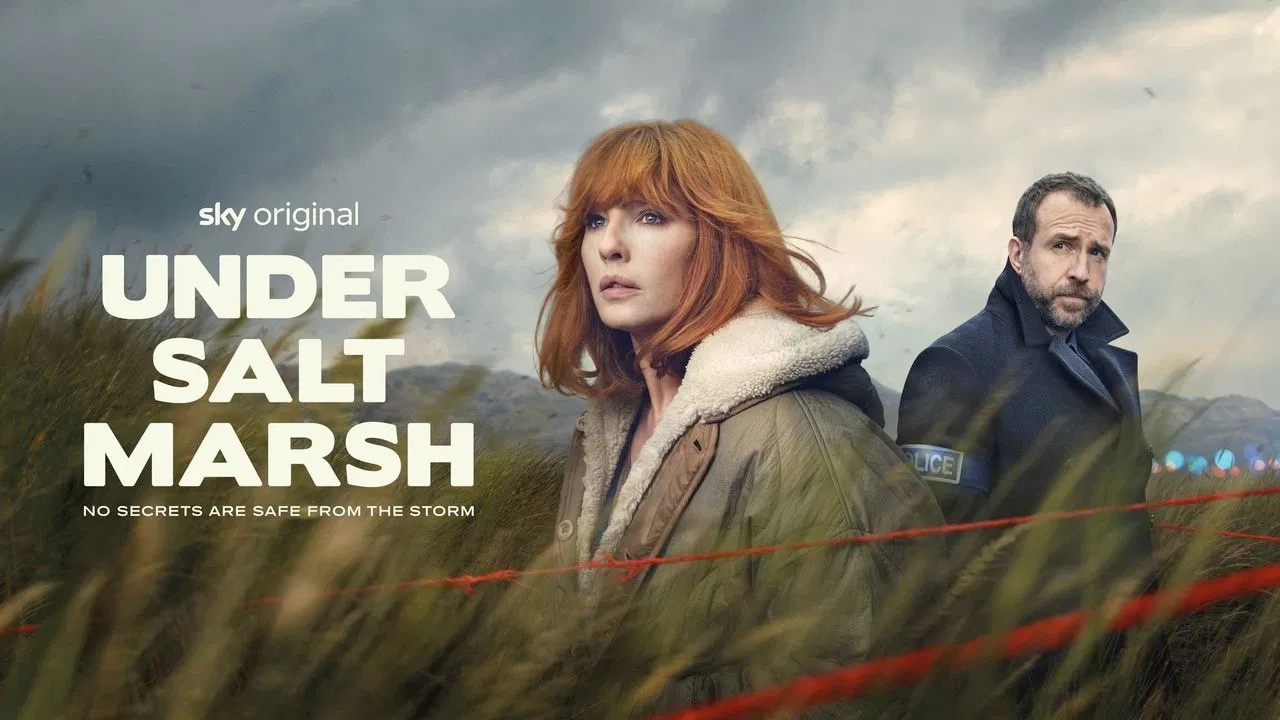

Morfa Halen perches where earth unravels into the Irish Sea. The place reads as liminal, its ground as temporary. Jackie Ellis, once a detective and now a schoolteacher, finds the small, cold body of Cefin among the reeds. The discovery arrives under a bruised purple sky as a storm gathers force. That storm feels like an agent intent on reclaiming the town. The death drags Detective Eric Bull back into Jackie’s orbit.
They carry a jagged shared history formed by the disappearance of Jackie’s niece, Nessa, three years earlier. That loss remains an open wound. The series follows two investigations that intersect: present blood and old ghosts. The salt marshes watch in silence while a community braces against weather and memory. Weather registers as physical weight. The water threatens to erase both proof of a crime and the town itself.
The Visual Weight of a Drowning World
The series composes its visuals in slate and charcoal. Rain functions like a permanent presence. It sluices the coast until the boundary between sky and sea blurs. The name Morfa Halen signals a place of salt and silt, a landscape arrested in slow decline. The camera holds on these views with patient, clinical attention. Frames feel saturated with moisture. Each shot implies a climate where sunlight has become an absent phenomenon.
The approaching storm acts as a relentless temporal pressure. It tightens the search for answers. Evidence behaves as a fragile object here. A rising tide threatens to scrub the land clean of human trace. That environmental menace exposes fractures within the town. Gareth, the researcher, speaks in terms of retreat and reason. Solomon Bevan represents a stubborn insistence on endurance. He qualifies the land as property of those who remain. That dispute unfolds alongside the encroaching water. Town tensions increase as waves push toward doorways.
Isolation shapes the marsh’s architecture. Spider Island sits cut off, an outpost reached only when a road emerges from the tide. That entrapment turns the community inward. The sound design is wind in howl and the measured thud of the sea. These noises emphasize how separate Morfa Halen feels from the wider world. Residents occupy a self-fashioned bubble. They survive on a coast that seems set on vacancy.
Two Souls Bound by Failed Salvation
Jackie Ellis registers as a woman haunted by what she could not preserve. She left police work for a classroom, a withdrawal from darker corridors. Nessa’s disappearance moves beside her like a ghost. Finding Cefin forces Jackie back into exposure to a grief she cannot set aside. Her early pregnancy carries a quiet, urgent need for safety. That need sharpens her actions. She disregards procedural constraints. She acts on instinct. Her behavior reads as belief that law offers a thin veil over chaotic reality.
Eric Bull arrives as a disruptive figure. His Brummie accent marks him as an outsider within the town. He bears the weight of a man who privileges the cold arithmetic of the case. He turns away from emotional wreckage left in his path. Bluntness operates as his armor. He once leveled accusations against Jackie’s family. Now he navigates the silent judgment of a town that remembers his mistakes. Inside, he is composed of hard edges. He questions whether past certainties held true. He seeks a logic that the marsh will not grant.
The space between Jackie and Eric carries the residue of betrayal. Their partnership dissolved with the Nessa investigation. Trust became a casualty. They must now occupy a shared field. They depend on someone they resent. Their exchanges are sharp and brittle. Jackie pursues a shadowed inquiry while Eric conducts the official search. That friction propels the story. They are two damaged people groping for passage through old lies and new blood. The dynamic implies that truth often hides in the small intervals between people who refuse to face one another.
The Geometry of a Double Tragedy
Cefin’s death reads as a puzzle of displaced elements. The boy lay in a freshwater ditch while his lungs held sea water. That contradiction suggests a body moved from one element into another. Timing remains narrow. He vanished between the close of school and the onset of night. Suspicion gathers around those who live at the margins. August Antonov, the farmhand, and Osian, the man steeped in omen-talk, become objects of communal fear.

A curious symbol links Cefin and the missing girl. Both children left drawings of a figure in a protective suit. The figure called the “Bee Man” occupies the space between nightmare and material practice. Kieran Benbow keeps to himself on Spider Island. He minds his hives and avoids neighbors’ eyes. The town fashions him as a convenient monster. A protective suit allows concealment of a face. It points to a perpetrator who could move unseen.
The boy’s discovery opens a closed gate. It forces scrutiny of the quarry and the buried mess under the soil. Industrial chemicals and landfill refuse form a trail. Those traces indicate that Cefin’s final moments occurred amid discarded matter. The blue wellingtons are missing. A handprint in the mud functions as a small, stubborn signature. These fragments scatter across the terrain. Investigating a fresh death becomes a search that looms back toward a vanished girl. The two cases run as threads through the same dark cloth.
The script arranges these details to ask whether coincidence exists in a confined place. It raises the question of whether two tragedies in identical ground can remain separate. Acidic water and landfill link the crime to Morfa Halen’s very soil. The mystery roots itself in the town’s physical reality. Hunting a killer turns into excavating land and memory. Each clue in the marsh becomes a shard of a larger, older sorrow the community has tried to bury.
A Community Anchored in Silence
Solomon Bevan speaks for the older order. He stands on sand and invokes endurance. He treats police as an outside force. He advises that secrets remain inside the circle of local life. His presence reminds viewers that some loyalties outweigh legal process. He embodies a tradition that prizes fidelity over disclosure.
Shell and Danny carry a grief that is raw and exposed. Danny’s collapse in his shop registers the rupture of a man. The revelation of secret paternity adds another edge to the hurt. Learning that Kieran Benbow is the biological father of his son turns Danny’s sorrow into combustible anger. He confronts the beekeeper with a weapon. That moment reveals how fragile family structure has become. The town composes itself of kin tied by blood and separated by silence.
Morfa Halen feels inhabited precisely because of these hidden ties. Dylan Rees meets Jackie in quiet interstices. Those furtive encounters form the town’s pulse. The marsh’s claustrophobia forces secrets toward the surface. Everyone watches. Everyone conceals. The mystery becomes part of local topography. The incoming storm threatens to wash the place away. Residents must ask whether water will offer release or only lay bare the rot they have long masked with salt.
Under Salt Marsh is a gripping six-part British crime thriller that premiered on January 30, 2026. Set in the fictional, atmospheric Welsh coastal town of Morfa Halen, the series follows Jackie Ellis, a former detective turned teacher who discovers the body of a young student just as a catastrophic storm begins to threaten the community. The series is a Sky Original production and is currently available for streaming on Sky Atlantic and the NOW platform. It has been lauded for its “Cymru Noir” aesthetic and the powerful lead performances of Kelly Reilly and Rafe Spall.
Full Credits
Title: Under Salt Marsh
Distributor: Sky Atlantic, NOW
Release date: January 30, 2026
Rating: TV-MA
Running time: 52–55 minutes per episode
Director: Claire Oakley, Mary Nighy
Writers: Claire Oakley, Jonathan Harbottle, Nikita Lalwani
Producers and Executive Producers: Scott James Bassett, Emma Duffy, Elwen Rowlands, Megan Spanjian, Claire Oakley, Kelly Reilly
Cast: Kelly Reilly, Rafe Spall, Jonathan Pryce, Naomi Yang, Harry Lawtey, Dinita Gohil, Brian Gleeson, Kimberley Nixon, Mark Stanley, Dino Fetscher, Lizzie Annis, Rhodri Meilir, Julian Lewis Jones
Director of Photography (Cinematographer): Nick Cooke
Editors: Agnieszka Liggett, Sacha Szwarc
Composer: Isobel Waller-Bridge
The Review
Under Salt Marsh
Under Salt Marsh functions as a cold meditation on how the past refuses to stay buried. It succeeds as a somber exploration of a community drowning in its own history. The atmosphere stays thick. The performances remain grounded. The existential weight of the setting carries the narrative. It provides a slow look into a coastal town facing its end.
PROS
- Stark and immersive Welsh noir aesthetics.
- Haunting use of environmental dread as a ticking clock.
- Powerful, weary performances by Kelly Reilly and Rafe Spall.
- Deeply textured portrayal of small-town grief.
CONS
- The pacing feels slow for a traditional mystery.
- The "mysterious figure" trope follows familiar paths.
- The detective’s accent feels jarring within the setting.







