



















![Kingdom Hearts Collection [I-III] Review](https://gazettely.com/wp-content/uploads/2026/10/Kingdom-Hearts-Collection-I-III-1-360x180.webp "Kingdom Hearts Collection [I-III] Review: KHII Holds Steady as Newer Entries Fluctuate 34")






Cold Storage opens with the 1979 Skylab crash. NASA reported retrieving every fragment. A lethal organism survived reentry and lay dormant for decades. Human error reactivated it inside a decommissioned military base in Kansas. That site now functions as a self-storage warehouse and becomes ground zero for a potential extinction event.
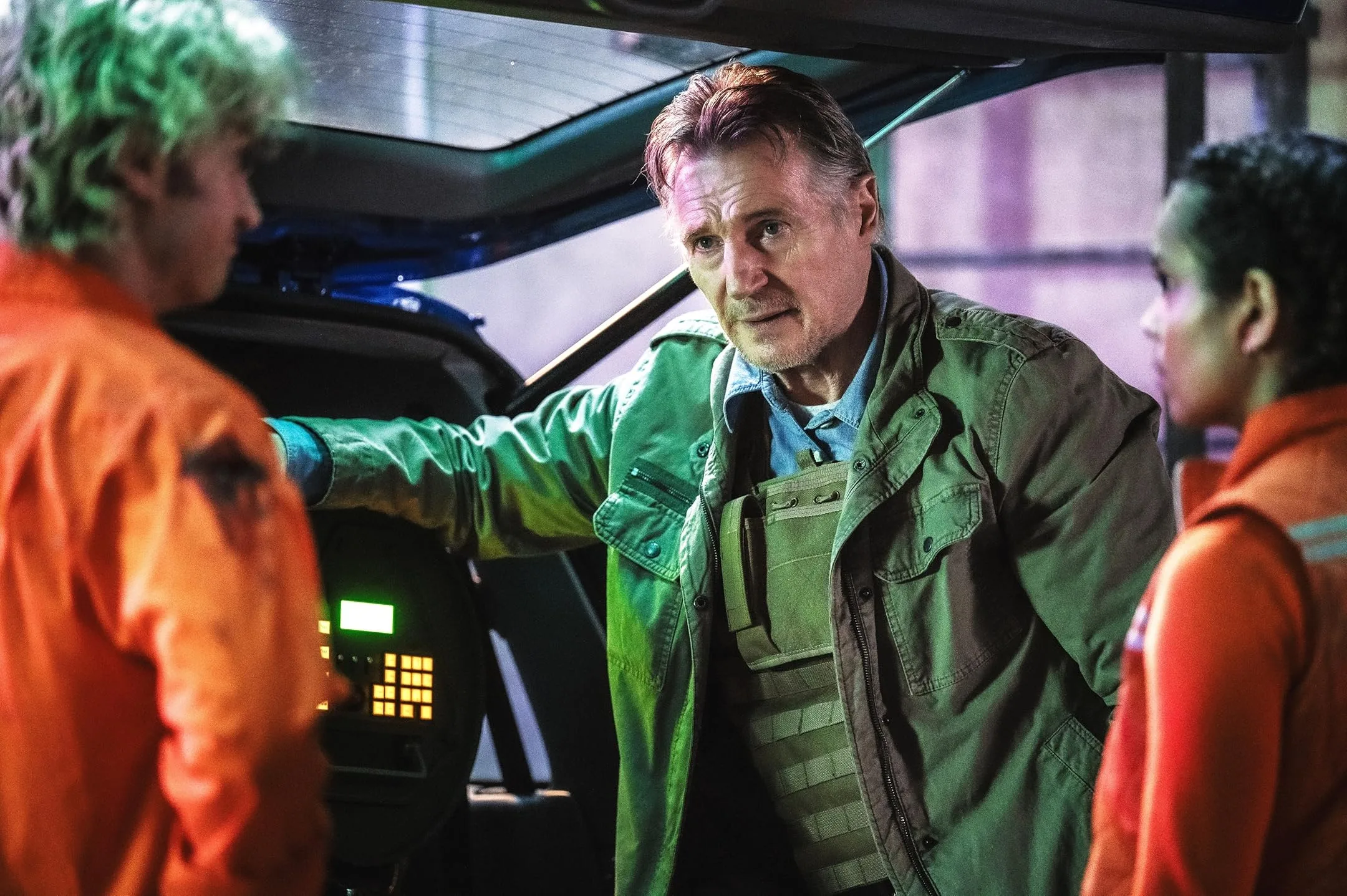
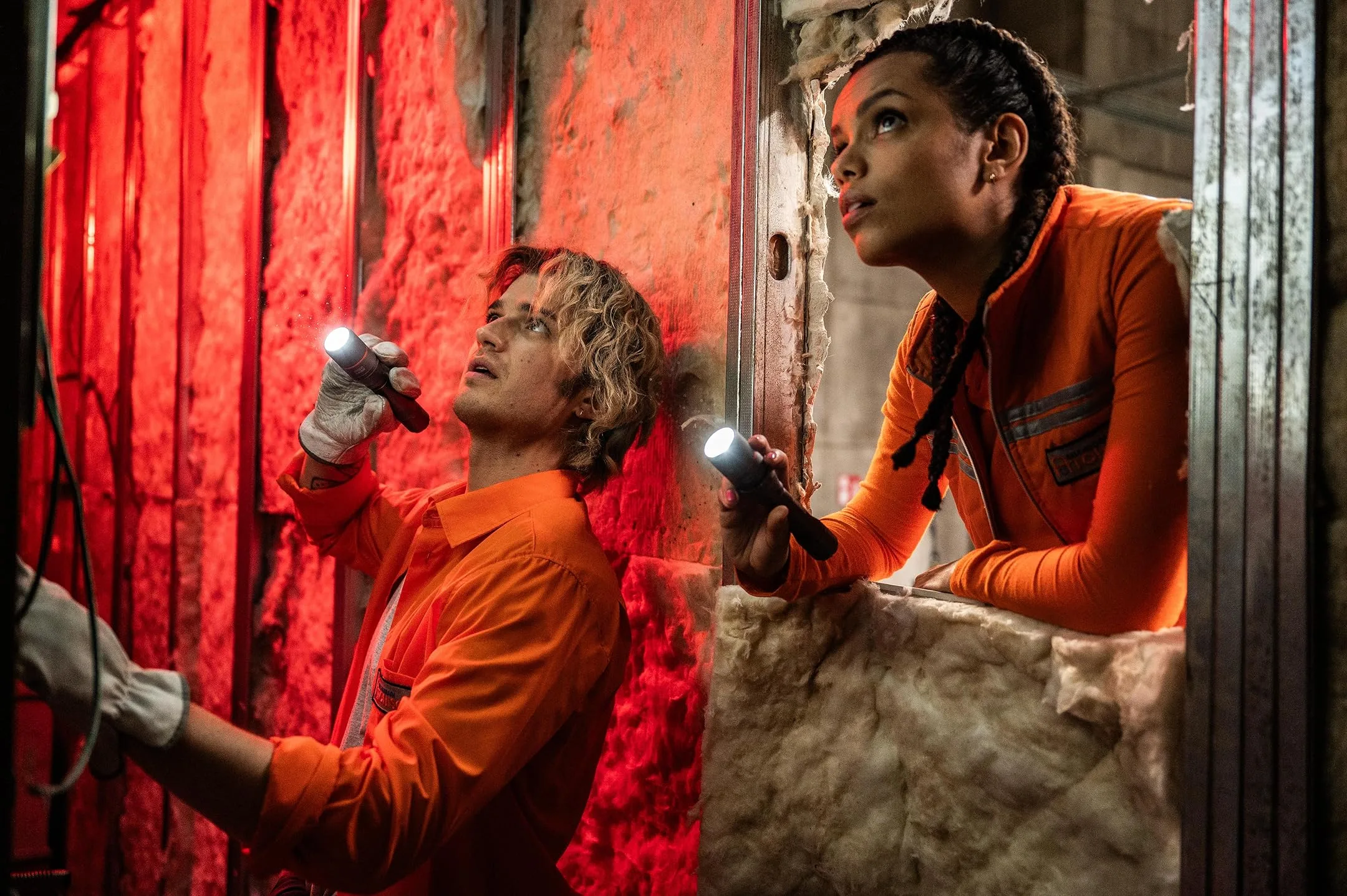
Two night-shift employees, Travis and Naomi, find themselves trapped as an iridescent green mold converts objects and bodies into organic weapons. Jonny Campbell directs the film. David Koepp wrote the screenplay and adapted his own novel, shaping a story that blends body-horror spectacle with moments of dark comedy.
The film moves from a prologue in the Australian Outback into a claustrophobic survival scenario underground in Kansas. The opening Australian sequence establishes the organism’s biological lethality and roots the premise in regional specificity. The narrative then tightens into the industrial geometry of the repurposed facility, a transition that links Cold War-era space anxieties to the present-day reality of forgotten government archives and commercial reuse.
Archetypal Performance and Character Gravity
Casting mixes younger genre performers with seasoned actors from the stage and screen. Joe Keery plays Travis, who goes by the nickname “Teacake.” Keery brings a nervous physicality that distinguishes the role from his work in Stranger Things. Travis is a parolee on the graveyard shift; Keery shapes the character with a slack, sweet surface that yields a growing sense of responsibility as the crisis escalates.
Georgina Campbell portrays Naomi with concentrated intensity and practical survival instincts. Her performance avoids helplessness and presents a character who responds quickly and intelligently to immediate danger. The chemistry between the two grows out of shared curiosity and the monotony of night-shift labor, which makes their shift into improvised containment feel coherent within the film’s internal logic.
Liam Neeson appears as Robert Quinn, a figure who connects the 1970s Australian episode to the contemporary outbreak. Neeson gives Quinn a weary authority that implies long-term knowledge about the fungus and its consequences. His interpretation privileges scientific method and historical burden over swaggering heroics. The casting of Lesley Manville and Vanessa Redgrave supplies moments of polished craft within a generally B-movie frame. Manville plays Quinn’s associate with pragmatic wit that slices through panic.
Redgrave’s turn as a storage customer offers an unexpectedly surreal moment of high-caliber acting. Even smaller turns, such as the Australian locals in the prologue, add texture and a felt sense of place. Rob Collins’s performance as Enos Namatjira is a restrained reference to regional cultural history that grounds the science-fiction narrative in a particular Australian context. Together, the ensemble keeps the film from collapsing into disposable creature fare and gives emotional weight to scenes of grotesque transformation.
Structural Tones and Narrative Play
Cold Storage organizes its tone around a late-night, cult-cinema energy associated with 1980s midnight movies while attending to anxieties that feel contemporary. David Koepp, whose screenwriting credits include Jurassic Park, adapts his novel with a clear sense of suspense and scale. The screenplay balances a high-stakes biological threat with dry, observational humor that highlights the absurdities of the situation. Jonny Campbell brings television-horror experience to the production and maintains a brisk tempo that preserves character beats even as the plot compacts.
The film’s “gonzo” impulses appear in small, specific digressions, such as conversations about the mechanics of thermometers or debates over precise vocabulary. These moments of levity relieve pressure and create tonal elasticity. Satire within the script targets bureaucratic incompetence and the neglect of scientific safeguards.
By staging the central conflict inside a decommissioned military structure repurposed as a storage business, the film draws attention to the way hazardous legacies can be concealed beneath ordinary commerce. Much of the humor arises when characters try to apply self-help logic or corporate protocol to an alien invasion, revealing the mismatch between institutional procedures and biological reality.
Music and cultural reference are integral to the film’s identity. Blue Öyster Cult’s “Don’t Fear the Reaper” and Blondie’s “One Way or Another” return as audible anchors that position the movie alongside cult classics. These selections work as signposts for a certain nostalgic register and help the film claim a place within the lineage of midnight-horror entertainments.
Biological Mechanics and Visual Horror
At the film’s center sits a heterotrophic parasite with a singular, destructive program. The fungus appears as an iridescent green mold that activates with water and adapts to hosts rapidly. Practical make-up and effects, credited to Lou and Dave Elsey, render the infection with tactile specificity. Transformations depict heads and torsos splitting open to release spores in sequences the film terms “moldy grenades.” Close-up work on internal organs and bodily violation makes the fungus feel materially present and physically menacing.
The production balances hands-on prosthetics with digital imagery. Human infections favor physical make-up and gross-out techniques, while infected animals such as deer and cats are presented with CGI. Those digital moments sometimes tilt into a knowingly artificial register that amplifies the film’s performative, pantomime side.
Practical effects anchor grotesque contact sequences, and CGI expands scale where necessary. The storage facility itself functions as a visual player: its maze-like corridors, beeping smoke alarms, and heavy vault doors create a tactile environment that increases claustrophobia. The shift from wide, dusty Outback shots to compressed, industrial interiors maps the organism’s reach from a regional tragedy to an intimate, contained crisis.
Interplay of Narrative and Visual Mechanics
Cold Storage uses visual design to reinforce narrative beats. Wide shots in the Australian prologue convey historical breadth and hint at space-era anxieties. Tighter framing in the storage vaults focuses attention on objects the fungus repurposes. Practical effects make infection feel touchable.
Digital effects expand the threat’s footprint. The film’s decision to depict the fungus as iridescent invests it with a paradoxical beauty that reads as predatory and indifferent. Comparative readings arise naturally from these choices. The film stands alongside cult science-fiction and creature features through its reliance on practical effects and late-night tone.
Its economy of storytelling reflects conventions found in survival-horror games, particularly in the emphasis on small-group resourcefulness and improvised problem solving. The Australian prologue and named regional figures anchor the narrative in a specific cultural frame that the filmmakers then translate into a story with global stakes.
Pacing Constraints and Scaled Stakes
Cold Storage preserves a compact architecture that privileges forward momentum over encyclopedic world-building. The plot breaks into distinct phases. The opening focuses on a slow-burn mystery that grows from an unexplained noise in the warehouse and invests in the Travis–Naomi rapport so viewers can register ordinary routines before the fungus accelerates. The transition into survival mode happens quickly and with intensity, changing the film’s register from workplace comedy to urgent thriller. That structural pivot echoes the organism’s sudden activation.
The film sets an explicit paradox of scale: an extinction-level hazard is addressed through the actions of a few civilians and a retired expert. The absence of a broad military response generates an isolation reminiscent of survival-horror play, and Robert Quinn must contend with a dismissive bureaucracy while coordinating through a lone phone operator named Abigail.
Emphasizing ordinary people protecting larger communities gives the story a populist texture and turns disaster into a concentrated, character-driven contest. The final confrontations move with a speed that reflects frantic containment protocols, and the resolution arrives as a messy, earned set of improvisations rather than a polished cinematic triumph.
Cold Storage operates as a tightly plotted genre piece that links regional specificity to wider anxieties about scientific secrecy and institutional forgetfulness. Its practical effects, tonal shifts, and cast choices create a cross-cultural tension between mythic, historical origins and immediate, claustrophobic survival. The result is a tense and often funny film that foregrounds the physicality of horror and the odd courage of ordinary people caught inside an extraordinary biological event.
Cold Storage is a sci-fi horror-comedy that premiered in late January 2026 before its wide theatrical release on February 13, 2026. Directed by Jonny Campbell and adapted by David Koepp from his own 2019 novel, the film is currently available exclusively in cinemas. Following its theatrical window, it is expected to be available for digital purchase and streaming on platforms associated with StudioCanal and Samuel Goldwyn Films.
Full Credits
Title: Cold Storage
Distributor: StudioCanal, Samuel Goldwyn Films
Release date: February 13, 2026
Rating: R
Running time: 99 minutes
Director: Jonny Campbell
Writers: David Koepp
Producers and Executive Producers: Gavin Polone, David Koepp, Derek Ambrosi, Anna Marsh, Ron Halpern, Shana Eddy-Grouf, Raphaël Benoliel, Aaron Ensweiler
Cast: Liam Neeson, Joe Keery, Georgina Campbell, Sosie Bacon, Lesley Manville, Vanessa Redgrave, Rob Collins, Ellora Torchia
Director of Photography (Cinematographer): Tony Slater-Ling
Editors: Billy Sneddon
Composer: Mathieu Lamboley
The Review
Cold Storage
Cold Storage operates as a sharp, claustrophobic exercise in biological dread. It bridges the gap between Cold War anxieties and modern indifference through its clever use of setting. David Koepp’s script finds a rhythm that respects genre history while moving at a contemporary pace. The performances transform a standard B-movie premise into a character-driven survival story. While digital effects occasionally falter, the practical body horror and dry humor sustain the momentum. It is a lean, effective thriller that prioritizes visceral impact and structural clarity.
PROS
- Exceptional practical makeup effects that enhance the visceral nature of the fungal infection.
- Strong lead chemistry between Joe Keery and Georgina Campbell that grounds the absurdity.
- A witty, self-aware script that balances intellectual satire with genuine suspense.
- Effective environmental storytelling within the repurposed, industrial Kansas setting.
CONS
- Occasional reliance on digital animals that lacks the weight of the practical effects.
- The prestige supporting cast feels somewhat underutilized given their limited screen time.
- A final act that resolves with a speed that may leave some viewers wanting more closure.