

























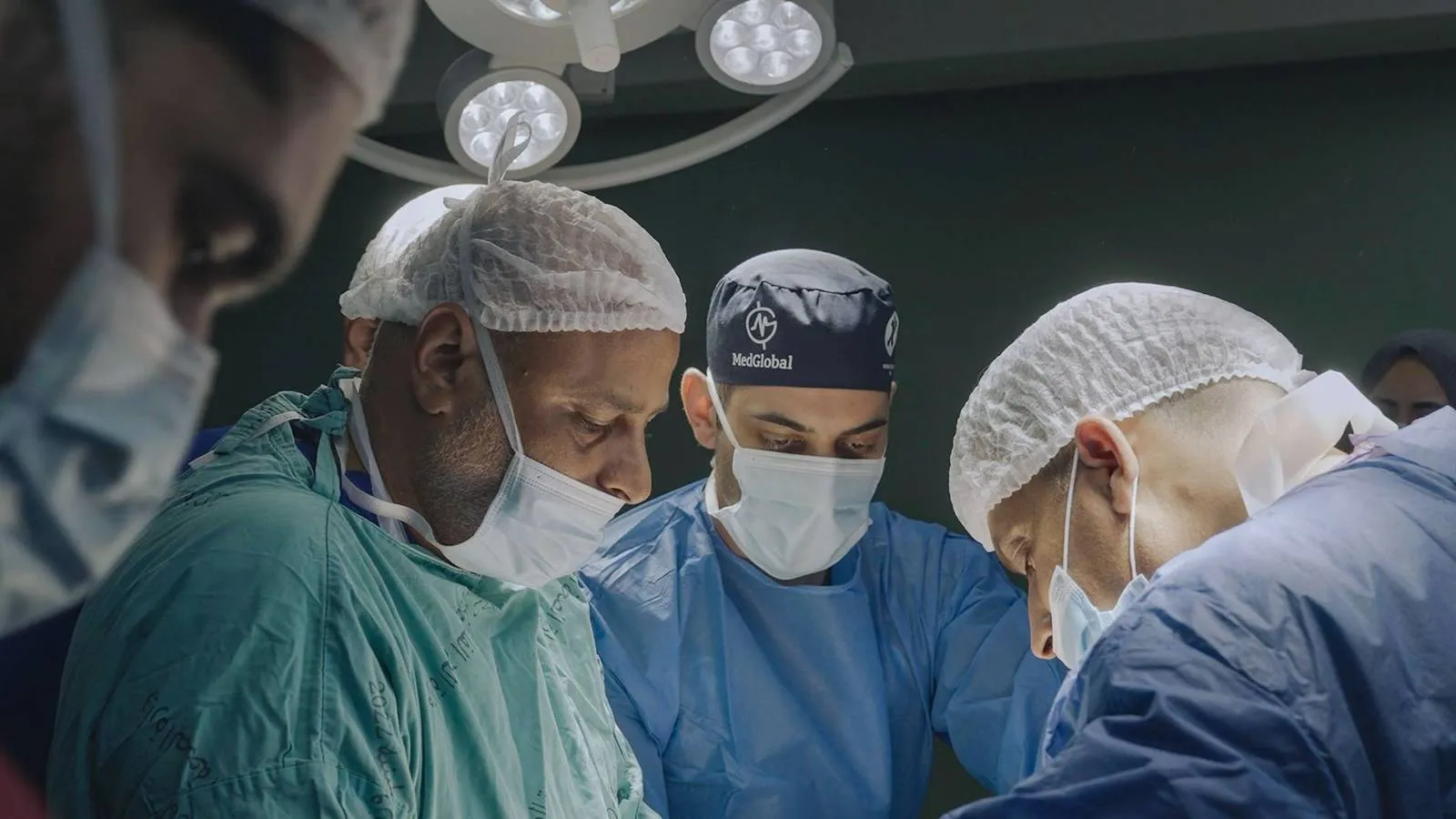

In the documentary American Doctor, director Poh Si Teng frames the Gaza conflict through the daily demands of medicine, placing the Nasser Medical Complex in Khan Yunis at the center of her story. The film functions as a record of medical necessity during wartime, tracking three American physicians as they volunteer in a setting shaped by scarcity and trauma.
Teng uses footage from 2024 and 2025, including the brief pause of the March ceasefire, to shape a narrative about decency tested under sustained pressure. Inside the hospital, the stakes stay immediate. Doctors race against time. Patients arrive in a continuous series of emergencies.
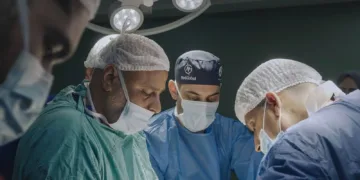
The film turns attention away from abstraction and toward the hard logistics of surgery, triage, and endurance, with surgeons attempting repairs in the wake of repeated destruction. In the sterile, bloodied space of the operating room, Teng builds a humanitarian document that treats healing as a moral duty that persists amid collapse.
A Study in Contrasting Advocacy
The film’s narrative drive comes from the sharply defined identities of its three subjects and the way their differences create a functional structure. Dr. Mark Perlmutter, a Jewish orthopedic surgeon from North Carolina, registers as the film’s bluntest voice. He speaks with southern candor and directs it into fierce criticism of the military operations he encounters. His scenes play like a refusal to participate in polite euphemism, and the documentary uses that refusal as a recurring engine for momentum.
Dr. Feroze Sidhwa carries a quieter presence. A Zoroastrian-American trauma surgeon from California, he approaches the crisis with pragmatism and an evidence-based temperament. The film often positions him as an interpreter of what the camera shows: he analyzes destruction with clinical steadiness, and that steadiness gives his later emotional strain a clear foundation. His arc gains force because the documentary establishes his professional discipline first, then tracks what the work does to him.
Dr. Thaer Ahmad, an emergency physician from Chicago, provides the most personal line of progression. His Palestinian heritage creates bureaucratic friction that shapes the story’s movement. The film shows repeated denials from authorities as his colleagues gain entry to Gaza.
The discrepancy points to inequality in how these American citizens are treated based on ancestry. Ahmad’s attempts to reach patients become a structural refrain, and the delays carry a quiet sense of dejection that the documentary returns to without melodrama. Each physician embodies a different method of processing professional responsibility, and the film binds them through a shared commitment to witness.
The Ethics of the Unfiltered Lens
Teng’s approach to visual realism forms the documentary’s central ethical choice, and the film makes that choice explicit early. A conversation between Teng and Perlmutter addresses how to depict the dead. Teng proposes blurring images of deceased children as a way to preserve dignity. Perlmutter challenges that impulse. He argues that the violence already stripped dignity away and that concealment obscures the truth. The documentary treats this exchange as a thesis statement for the images that follow.
That decision shapes a visceral viewing experience. Cinematographers Ibrahim Al Otla and Christopher Renteria capture amputations and frantic efforts to save young survivors with an unflinching steadiness. The camera holds during footage of the August 2025 “double tap” missile strike on the Nasser complex.
The attack killed twenty people, including medical staff and journalists who rushed in after the first blast. The verité style produces a difficult sense of presence. The documentary stays fixed on gore and forces attention onto the physical consequences of the conflict. The film shifts from observation toward visual testimony, using endurance as a form of argument.
The Weight of the Return
The documentary extends the physicians’ challenges beyond the operating room and into the mechanics of humanitarian work. It includes practical absurdities such as Perlmutter hiding antibiotics in his personal luggage to bypass security checks. The film connects that improvisation to a lack of institutional support from professional medical bodies, and the frustration becomes part of the story’s texture.
When the doctors return to the United States, the narrative pivots to the damage carried home. The film presents a profound emotional strain that makes ordinary life feel foreign. Sidhwa describes the isolation of survivor’s guilt and the strain placed on relationships when the mind remains fixed on a war zone. Teng then follows them to the Hart Senate Office Building in Washington, where requests for policy change meet empty professional courtesy.
The documentary treats that scene with a restrained dryness: the ritual of listening appears intact, and meaningful response never arrives. The inability to influence systems that fund the destruction leaves a lingering powerlessness that the film refuses to soften. Citing more than 1,700 healthcare workers killed in Gaza since late 2023, the documentary ends with urgency grounded in numbers and lived experience. The medical system faces systematic dismantling. The doctors depart. The collapse continues.
American Doctor premiered at the Sundance Film Festival on January 22, 2026, where it emerged as a significant breakout in the U.S. Documentary Competition. This vérité film captures the harrowing experiences of three American physicians volunteering at the Nasser Medical Complex in Gaza during the heightened conflict of 2024 and 2025. Distributed by Watermelon Pictures, the documentary is currently making its rounds on the festival circuit, including screenings at SXSW in March 2026. It is expected to reach wider streaming platforms and select theaters later this year, offering a rare, unfiltered look at the intersection of international medicine and political advocacy.
Full Credits
Title: American Doctor
Distributor: Watermelon Pictures
Release date: January 22, 2026
Running time: 93 minutes
Director: Poh Si Teng
Writers: Poh Si Teng
Producers and Executive Producers: Simon Kilmurry, Hamza Ali, Rasha Mansouri, Hassan Elmasry, Poh Si Teng, Rami Elghandour, Andreas Dalsgaard, Mehdi Hasan, Juan Pablo Raymond, Kiran Alvi, Kirstine Barfod, Reem Haddad
Cast: Dr. Thaer Ahmad, Dr. Feroze Sidhwa, Dr. Mark Perlmutter
Director of Photography (Cinematographer): Ibrahim Al Otla, Christopher Renteria, Arthur Nazaryan, Poh Si Teng, Ramzy Haddad
Editors: Christopher White, Ema Ryan Yamazaki
Composer: Suad Bushnaq, Suvo Sur
The Review
American Doctor
American Doctor succeeds because it refuses to sanitize the medical reality of Gaza. Poh Si Teng avoids political abstraction. She focuses the narrative on the physical labor of healing. The three physicians provide an honest look at the professional and personal costs of modern conflict. This film is a difficult and essential piece of cinema. It reminds us that behind every statistic is a human life and a doctor trying to save it.
PROS
- Unfiltered visual honesty regarding casualties
- Distinct and well-defined physician profiles
- Clear focus on the ethics of medical practice
CONS
- Inconsistent timeline makes chronological tracking difficult
- Excessive media clips distract from the field footage