
























![Kingdom Hearts Collection [I-III] Review](https://gazettely.com/wp-content/uploads/2026/10/Kingdom-Hearts-Collection-I-III-1-360x180.webp "Kingdom Hearts Collection [I-III] Review: KHII Holds Steady as Newer Entries Fluctuate 37")





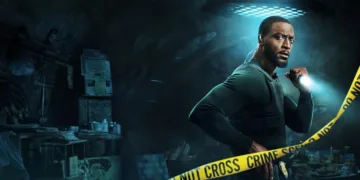
Alex Cross returns with the memory of his wife’s murder no longer bleeding through every breath. The second season of Cross, Prime Video’s adaptation of Alex Cross by James Patterson, finds Aldis Hodge’s forensic psychologist coming out of therapy with a lighter spirit and a sharper sense of duty. Season one ended with Ed Ramsey behind bars and the truth of Maria Cross’s death laid bare.
Now Alex meets a different kind of predator: Luz, played by Jeanine Mason, a vigilante who frees trafficked women and kills corrupt billionaires with surgical control. The case ignites when food production CEO Lance Durand, played by Matthew Lillard, receives three severed fingers as a warning.
Kayla Craig (Alona Tal) and John Sampson (Isaiah Mustafa) join Alex as the investigation spreads across the country, uncovering corporate exploitation, human trafficking, and a bruising question: what takes shape after the system collapses so completely that violence becomes the only dialect of accountability. This season tests the idea of justice beyond the law, and it presses on the uneasy impulse to judge someone who destroys people already skilled at destruction.
Performances: The Paradox of Wellness
There is a strange chemistry between healing and diminishment. Alex Cross has done the work: therapy, grief processed through accepted channels, anger kept from hardening into fixation. The shape of his life should feel restored. Hodge plays that shift with an obvious exhale, a man learning how to stand without the constant pressure of unresolved trauma. Still, the transformation carries a cost. Something vital seems to slip away as the character moves from broken to functional.
Season one’s Alex used pain as a combustible engine. Each case felt like an indirect battle against helplessness. Season two presents a version that reads cleaner and more professionally sealed, and that polish sometimes registers as emotional distance, not mastery. Hodge stays magnetic. His physical presence swings between intimidating authority and an easy warmth that disarms without pleading. When he studies a crime scene with arms folded near the murder board, you can see the instant where thought catches fire and becomes direction.
His profiling finally receives the attention the premise has always promised. The season lets him rebuild events in his head, map motives with unsettling accuracy, and inhabit the psychology of victims and perpetrators. Those passages crackle because they show the work, not a result dropped onto the table. His relationship with Elle, played by Samantha Walkes, provides grounding. The partnership feels built on intellectual parity, with chemistry that reads lived-in and real.
The character arc also bends toward simplification. Television often hesitates to grant Black protagonists the same mess allowed to their white counterparts. Alex begins to feel close to saintly here, his moral compass steady enough to become predictable. The flawed, obsessive figure who once blurred ethical lines in pursuit of truth gives way to someone safer and smoother. The series seems wary of letting him remain as complicated as the people he tracks.
Sampson receives meaningful development, his backstory opened up to reveal depth that earlier episodes only hinted at. Mustafa brings quiet intensity that pairs well with Hodge’s energy, and their friendship takes hits that feel earned. Kayla Craig becomes a standout as her role expands, building genuine chemistry with Alex. Their investigative partnership runs on the easy rhythm of complementary skills.
Lillard plays Lance Durand against expectation, presenting a billionaire whose arrogance hides as much as it displays. The role could have ridden on recognition alone, yet the performance finds nuance in a character suspended between victimhood and culpability. The biggest revelation belongs to Mason’s Luz. She plays a woman whose eyes carry fascination even as she kills, someone capable of ruthless efficiency and real empathy in a single breath. Her military precision in combat scenes sits beside the tenderness she shows to the people she frees. The series gives her interiority and a fully realized psychology that makes her frightening and painfully human.
Morality in the Margins: Structure and Its Discontents
The investigation starts with visceral clarity: severed fingers delivered as both promise and threat. The opening sequence shows Luz rescuing a group of trafficked women, establishing method and mission before the case settles into procedural rhythm. From Durand’s panic, the plot spreads outward into a national web of corporate malfeasance. Underage immigrant workers exploited in detention camps. Women stripped of agency and treated as inventory in service of profit. Systems built to guard capital while people become expendable.

The season circles the same moral territory that haunted Dexter Morgan’s blood-splattered conscience: can murder carry a kind of righteousness when it targets the genuinely monstrous? Does the collapse of institutional justice give moral license to execution outside the courts? Luz kills with intention, each target chosen from people who profit from suffering. The series labels her work morally ambiguous, yet the ambiguity can feel applied from the outside. The men in her sights have committed atrocities. The legal system has failed to contain them. When justice becomes performance, the powerless are left staring at a locked door with no key.
The show wants nuance. It wants a space where vigilante justice can be examined without easy comfort, in a world where billionaires commit crimes and walk away untouched. Then it hesitates. Luz is treated as antagonist while her rage is framed as justified. That produces a tension where the narrative strains against its own themes. Alex must stop her because procedure demands it, because the framework requires pursuit and capture, not because the story persuades you that she deserves to be halted.
Structural problems deepen the philosophical haze. Multiple storylines fight for oxygen: Alex’s investigation, Kayla’s parallel subplot, Sampson’s emotional arc, Durand’s secrets, Luz’s mission and backstory. Cutting between threads bleeds momentum from each strand. Kayla’s solo material aims to give her agency, yet it sits at a slight remove from the central spine. By episode four the pieces begin to align, though the route there asks for patience.
Pacing carries the weight of ambition. Scenes linger past their natural end. Episodes stretch to hold subplots that could be tightened without losing meaning. Payoffs often arrive with less force than the buildup suggests. Season one moved with tactical precision; season two can circle its targets and drift from the reason the viewer stays engaged. Some turns strain credibility, leaning on convenient coincidence, the familiar disease of procedural storytelling.
Season one also built emotional stakes through personal connection. Maria’s murder gave Alex skin in the game, turning every clue into a fight for something irreplaceable. This larger conspiracy trades intimacy for scope. The exchange does not favor the season. The case reaches farther across geography while the emotional grip loosens.
Darkness Visible: Execution and Commentary
The visual language grows bolder. Luz’s combat sequences carry choreographed brutality, her military training visible in each measured movement. The opening rescue sets tone and stakes right away: women freed at gunpoint, violence framed as liberation. The geographic expansion adds visual variety, though some locations blur into generic difference. Production values stay aligned with Prime Video standards: competent, steady, rarely transcendent.
The social commentary presses close to real wounds. Human trafficking is treated with gravity. Immigrant exploitation appears in concrete detail, not empty abstraction. Corporate malfeasance is sketched with enough clarity to echo contemporary headlines. The series presents these issues as systemic failure, not a handful of isolated bad actors. When Luz targets architects of suffering, the show invites a hard self-audit: what do we feel when someone dies whose business model required the destruction of vulnerable lives?
The season’s attention to who receives justice and who receives punishment for seeking it lands with bite. Wealth and power make the legal system look toothless. Luz becomes a figure that emerges after peaceful routes collapse, after patience starts to resemble complicity. The series avoids lecturing while keeping its perspective clear about the inequalities that allow exploitation to thrive.
Tone can wobble. Bobby Trey, played by Johnny Ray Gill, offers comic relief that sometimes slides into cartoon mode, tossing one-liners into scenes that ask for gravity. The show struggles to hold grim material alongside procedural entertainment habits. The result can feel like whiplash: horror placed next to quips that seem imported from a lighter series.
The psychological profiling does get the spotlight it merits. Alex’s mind becomes the most vivid terrain, his reconstruction of events and his ability to inhabit criminal psychology receiving real screen time. Those sequences work because they reveal method and process. They let deduction unfold. The antagonists stay fascinating, continuing the series’ strength in building villains who command attention through sheer awfulness.
The Adaptation Problem: Fidelity to Character Over Plot
Earlier screen versions of Patterson’s detective have stumbled. Morgan Freeman brought an elegant interpretation. Tyler Perry felt miscast. Hodge seems to understand the engine of the character: the friction between intellectual brilliance and emotional vulnerability, the split between physical intimidation and genuine warmth. He plays Cross with swagger that never reads performative, and intelligence that feels lived rather than scripted. The series benefits from prioritizing character truth above literal plot fidelity. The procedural cases can be original as long as the man carrying them feels authentic.

Season two carries the pressures of a follow-up with mixed results. It expands the ensemble in a meaningful way, giving supporting players room to breathe and develop past their early outlines. Sampson’s emotional material adds weight to the friendship with Alex. The world grows outward, showing a universe that holds complexity beyond the protagonist’s immediate orbit.
The season struggles to preserve Alex’s own complexity. People around him deepen while he smooths out. Vulnerability that once made him magnetic is treated like a flaw to erase, not humanity to keep. Health can coexist with contradiction. Therapy can add layers. The series sometimes sands them away.
The scope also lands unevenly. The case covers more ground without gaining the oppressive intensity that made season one’s mystery feel so gripping. The conspiracy sprawls while the atmosphere loses some of its claustrophobic charge. The procedural format still signals longevity, seasons of new cases pushing and shaping the same cast. This installment shows that potential while exposing the formula’s limits.
Home life receives real attention and reads as strength, not obligation. Alex’s parenting scenes feel tender without sliding into sentimentality. The family dynamics register as authentic, relationships that steady him against the darkness of his work. That grounding matters. It reminds the viewer why the job carries weight.
The season also points toward a different third chapter, hinting at directions that could break the pattern. The show’s willingness to follow those hints remains an open question. For now, this season plays as a capable continuation, keeping the series moving while fighting to recapture what made the first run feel urgent.
The second season of “Cross” premiered today, February 11, 2026, marking the return of the brilliant forensic psychologist and D.C. homicide detective Alex Cross to the small screen. Developed by Ben Watkins and based on the iconic characters from James Patterson’s bestselling novels, this season finds Cross entangled in a high-stakes mission to protect a billionaire business titan while being hunted by a ruthless vigilante. The series is available for streaming exclusively on Amazon Prime Video, with the first three episodes dropping simultaneously today and the remaining episodes scheduled for a weekly release through March 18, 2026.
Where to Watch Cross Season 2









Full Credits
Title: Cross
Distributor: Amazon Prime Video
Release date: February 11, 2026
Rating: TV-MA
Running time: 50 minutes
Director: Craig Siebels, Stacey Muhammad, RT Thorne, Tiffany K. Guilien, Ed Ornelas
Writers: Ben Watkins, Sam Ernst, Jim Dunn, J. David Shanks, Aiyana White
Producers and Executive Producers: Ben Watkins, Aldis Hodge, Sam Ernst, Jim Dunn, J. David Shanks, Aiyana White, Craig Siebels, Owen Shiflett, James Patterson, Bill Robinson, Patrick Santa
Cast: Aldis Hodge, Isaiah Mustafa, Alona Tal, Samantha Walkes, Juanita Jennings, Caleb Elijah, Melody Hurd, Johnny Ray Gill, Matthew Lillard, Jeanine Mason, Wes Chatham
Director of Photography (Cinematographer): Brendan Steacy, Jeremy Benning, Maya Bankovic
Editors: Roslyn Kalloo, Jorge Weisz, Steven Lang, Geoff Ashenhurst, Matt Coleshill
Composer: Adrian Younge, Ali Shaheed Muhammad
The Review
Cross Season 2
Cross Season 2 functions as proficient procedural television wrestling with ideas too large for its framework. Jeanine Mason's Luz deserves a story brave enough to fully explore the righteousness of her rage, while Alex Cross deserves the complexity the show now seems afraid to grant him. The pacing stumbles, the structure bloats, yet Hodge's charisma and the season's willingness to examine systemic injustice create moments of genuine power. It entertains while frustrating, a competent sequel that hints at greatness without quite achieving it.
PROS
- Jeanine Mason's chilling, nuanced performance as Luz
- Expanded development for supporting cast (Sampson, Kayla)
- Thoughtful exploration of vigilante justice and corporate exploitation
- Alex's profiling abilities finally showcased properly
- Strong chemistry between Hodge and the ensemble
CONS
- Sluggish pacing, takes four episodes to find momentum
- Alex loses the emotional complexity that defined Season 1
- Multiple subplots dilute focus and slow narrative progression
- Treats morally justified antagonist as villain without conviction
- Tonal inconsistencies between grim themes and comic relief







