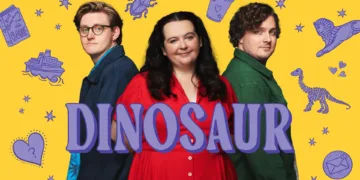






















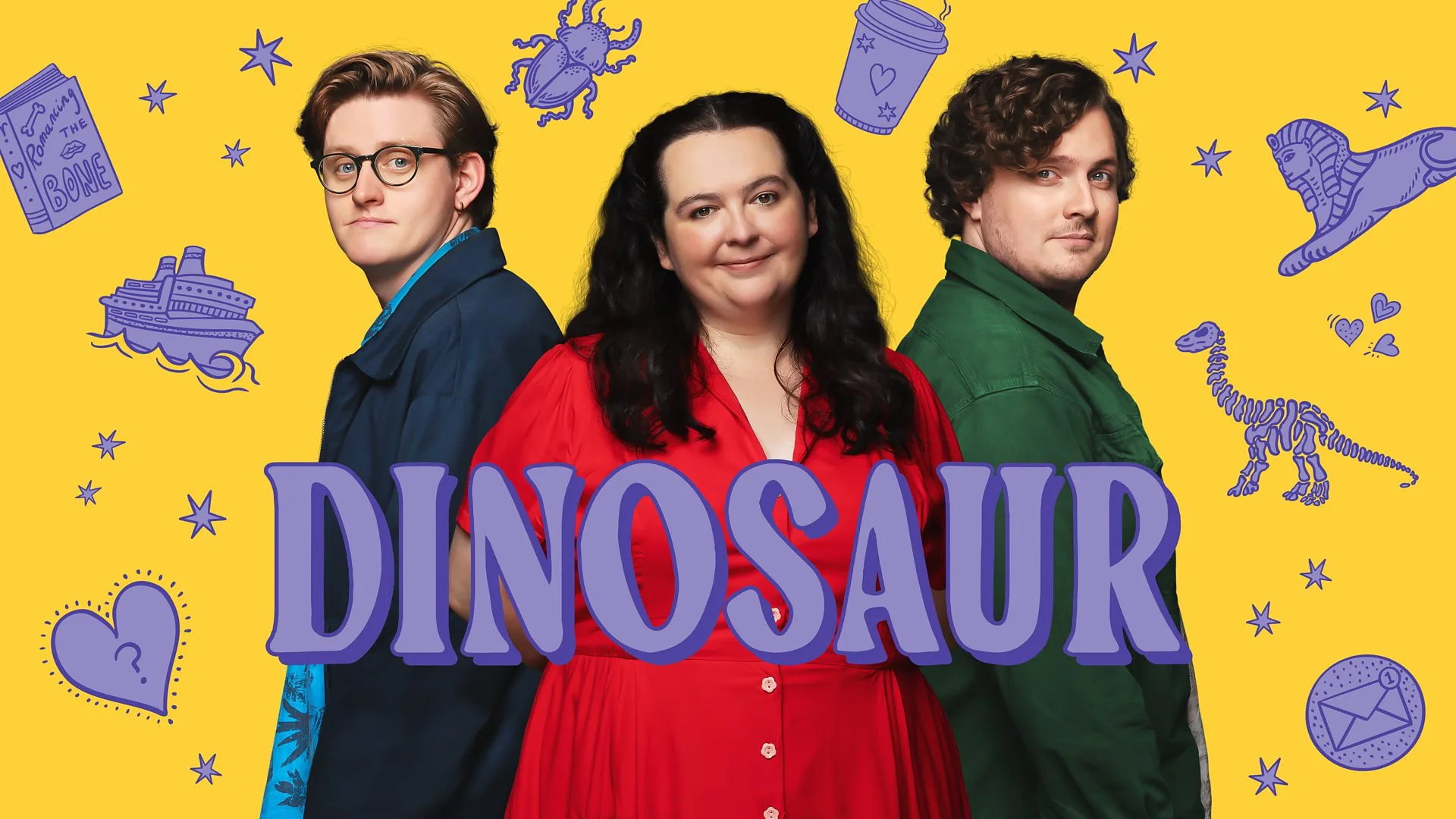

The second season begins on the Isle of Wight, where Nina has spent eight months studying ancient dung beetles. That temporary existence sits far from her familiar Glasgow streets. She becomes preoccupied with the steady patterns of home life. She longs for evenings watching reality television with her sister, Evie. She recalls Lee, whose quiet presence anchored her mornings at the museum gate over shared coffee.
When a contract extension appears, she must weigh a step forward in her career against the comforts she already knows. Her frantic trip to Knutsford to catch Lee ends without an answer. That silence propels her back to Scotland. At Kelvingrove Art Gallery and Museum she finds her former workspace erased.
Social pods and hydration stations occupy the area where her desk once stood. The reconfiguration forces her to carve out a place inside a city that continued on while she was away. The season keeps a steady attention on her particular logic as she adapts. It pairs her fascination with ancient remains with a tangible craving for stability.
The Architecture of Neurodivergence
The bond between Nina and Evie acts as the central emotional anchor. Their exchanges depend on shared physical cues like finger hooks and abrupt shifts into television accents. Those moments convey intimacy that requires no exposition. During an episode of sensory overload, Evie steadies Nina by holding her like a weighted blanket.
The gesture registers as both practical care and deep understanding of Nina’s patterns. The show treats autism as an everyday fact of her life. It frames her reasoning as a coherent way to meet the world. Lee offers a quieter steadiness, a romantic tension grounded in mutual respect. The arrival of Declan, an older colleague with similar traits, mirrors aspects of Nina’s professional self.
Ashley Storrie’s performance lends a convincing specificity to that role. The tuna meltdown at the corner shop stands as a clear example of how small disruptions to routine produce outsized effects. That reaction reads as a logical response within a culture that prizes speed over individual comfort.
A West End Cartography
Glasgow serves as a defined cultural backdrop that avoids cheap grit. The camera favors glossy tenements and tree-lined avenues. This city feels inhabited and familiar. Kelvingrove functions as a refuge for Nina’s work life.
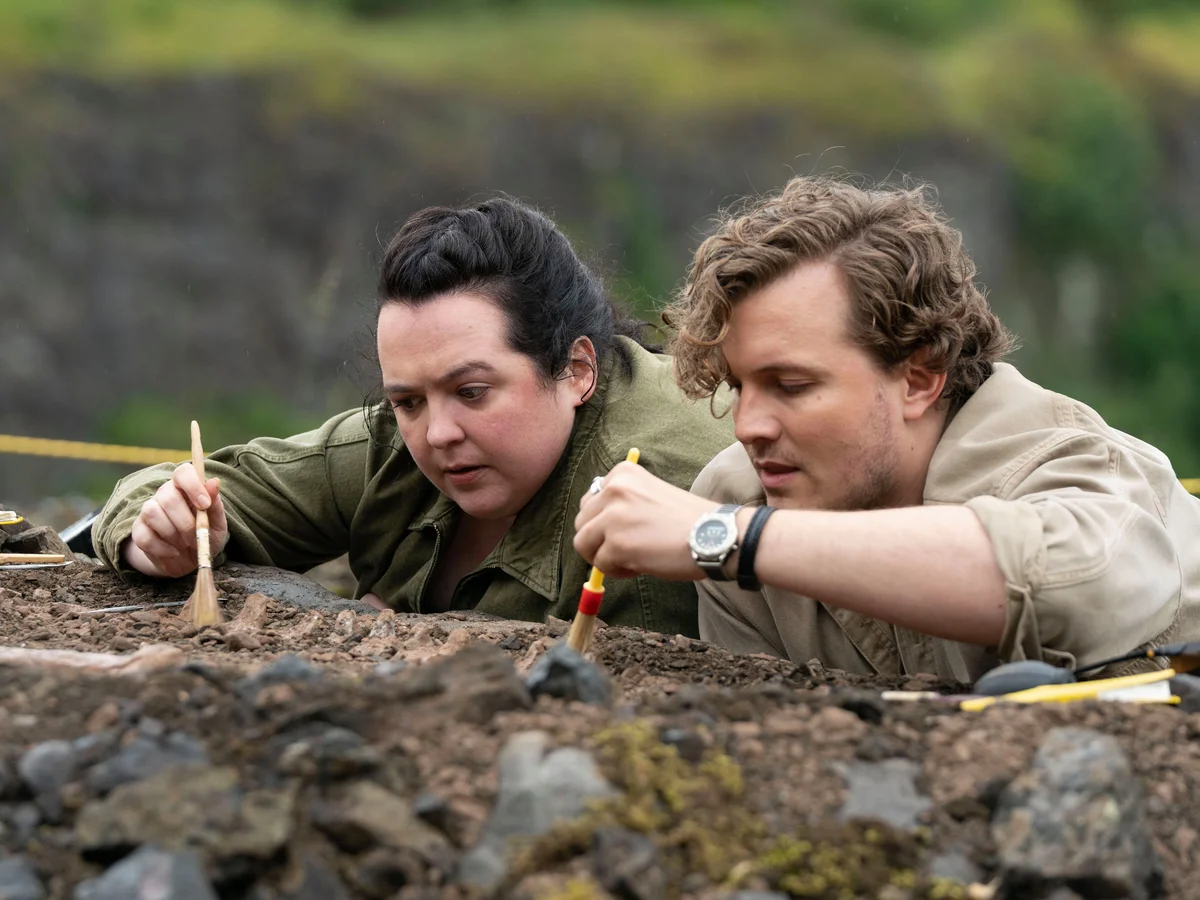
Dialogue slips in regional slang, using words such as boofing and big heids to anchor place without artifice. The parents bring a distinct Glaswegian energy to family scenes, a middle-class oddness that refreshes. The solitude of the Isle of Wight dig highlights how socially dense Nina’s home is.
Her return to the museum lets the series examine public spaces alongside private needs. The portrayal of a bright, quirky Scotland offers a recognizable alternative to common portrayals and shows how urban form maps onto interior life.
Farce, Family, and Fictional Fossils
The comic writing sharpens as it turns toward the supporting cast’s eccentricities. Jokes about Mary Anning and David Attenborough bridge the paleontology context and the plot with sly intelligence. Nina’s fictional piece, Romancing the Bone, opens a window onto her imaginative inner life.
Family subplots supply a sense of kinetic disorder. Bo hides in the family shed as he struggles with anxieties about Amber’s pregnancy. Ranesh generates steady comedy through his fixation on a fruit leather machine and religious cookbooks. The corporate rebrand of Nina’s office becomes an absurd commentary on contemporary work culture.
Replacing a useful desk with a hydration station creates a frustration Nina meets with her characteristic logic. Lee’s open mic set exposes him, his lyrics about authenticity reflecting the season’s themes. The banter moves quickly and stays focused on the small absurdities that shape daily life.
The second season of Dinosaur officially premiered on February 6, 2026. The series is currently available for streaming on BBC iPlayer and airs on BBC Three for viewers in the United Kingdom. For those watching in the United States, the series is available through Hulu. This new chapter follows Nina as she navigates her return to Glasgow after her time on the Isle of Wight, offering a sharp and empathetic look at neurodivergent life amidst the shifting landscape of her home city.
Full Credits
Title: Dinosaur Season 2
Distributor: BBC Three, BBC iPlayer, Hulu
Release date: February 6, 2026
Rating: TV-MA
Running time: 30 minutes
Director: Niamh McKeown
Writers: Matilda Curtis, Ashley Storrie
Producers and Executive Producers: Sarah Hammond, Daniel Walker, Harry Williams, Jack Williams, Matilda Curtis
Cast: Ashley Storrie, Kat Ronney, David Carlyle, Lorn Macdonald, Danny Ashok, Greg Hemphill, Sally Howitt, Sanjeev Kohli
Director of Photography (Cinematographer): Diana Olifirova
Editors: Paulo Pandolpho, Mike Holliday
Composer: Segun Akinola
The Review
Dinosaur Season 2
This season succeeds by grounding its humor in the specific logic of its protagonist. It treats neurodivergence with a casual sincerity that avoids sentimentality. The chemistry between the sisters remains the primary strength. The setting provides a refreshing look at Glasgow. It avoids the common traps of the genre by focusing on small, meaningful shifts in routine. The production feels confident and linguistically rich. It stands as a sharp piece of character-driven comedy.
PROS
- Authentic portrayal of neurodivergent perspective.
- Strong emotional connection between the lead characters.
- Visually bright depiction of the Scottish setting.
- Sharp use of regional dialect.
CONS
- Familiarity of the central romantic plot.
- Slight pacing issues during the initial geographical shift.