



















There is a modern impulse to curate, to shrink the terrifying boundlessness of the world into a manageable, filtered frame. We build our playlists, our social feeds, our entire digital lives as meticulously constructed refuges from chaos. Film Club presents a physical manifestation of this impulse.
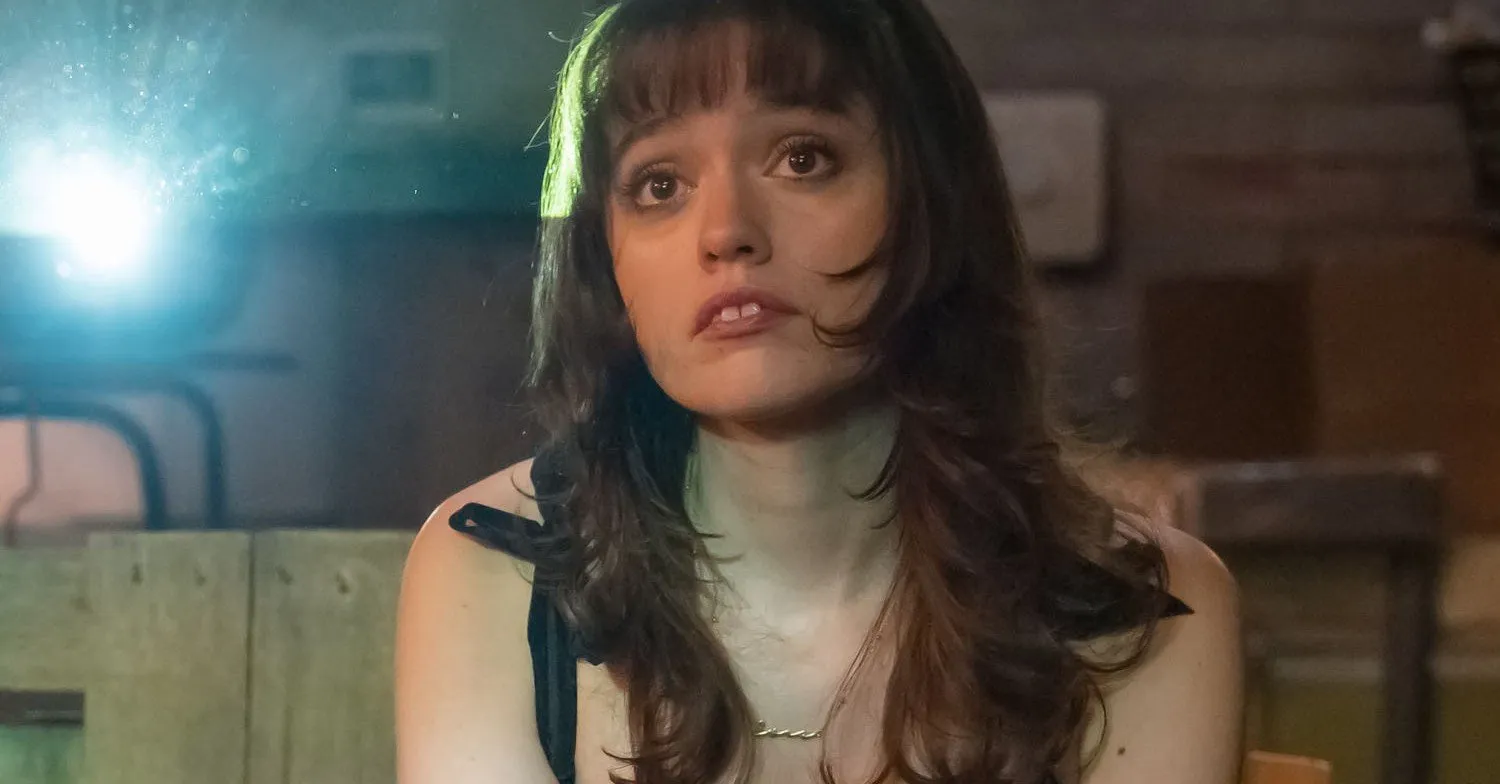
Its protagonist, Evie (Aimee Lou Wood), has taken the act of curation to its logical extreme. Following a psychological fracture, vaguely diagnosed as a “wobble,” her world is not the internet, but the literal square footage of her suburban home. She is a cartographer of a minuscule kingdom, its borders ending abruptly at the driveway.
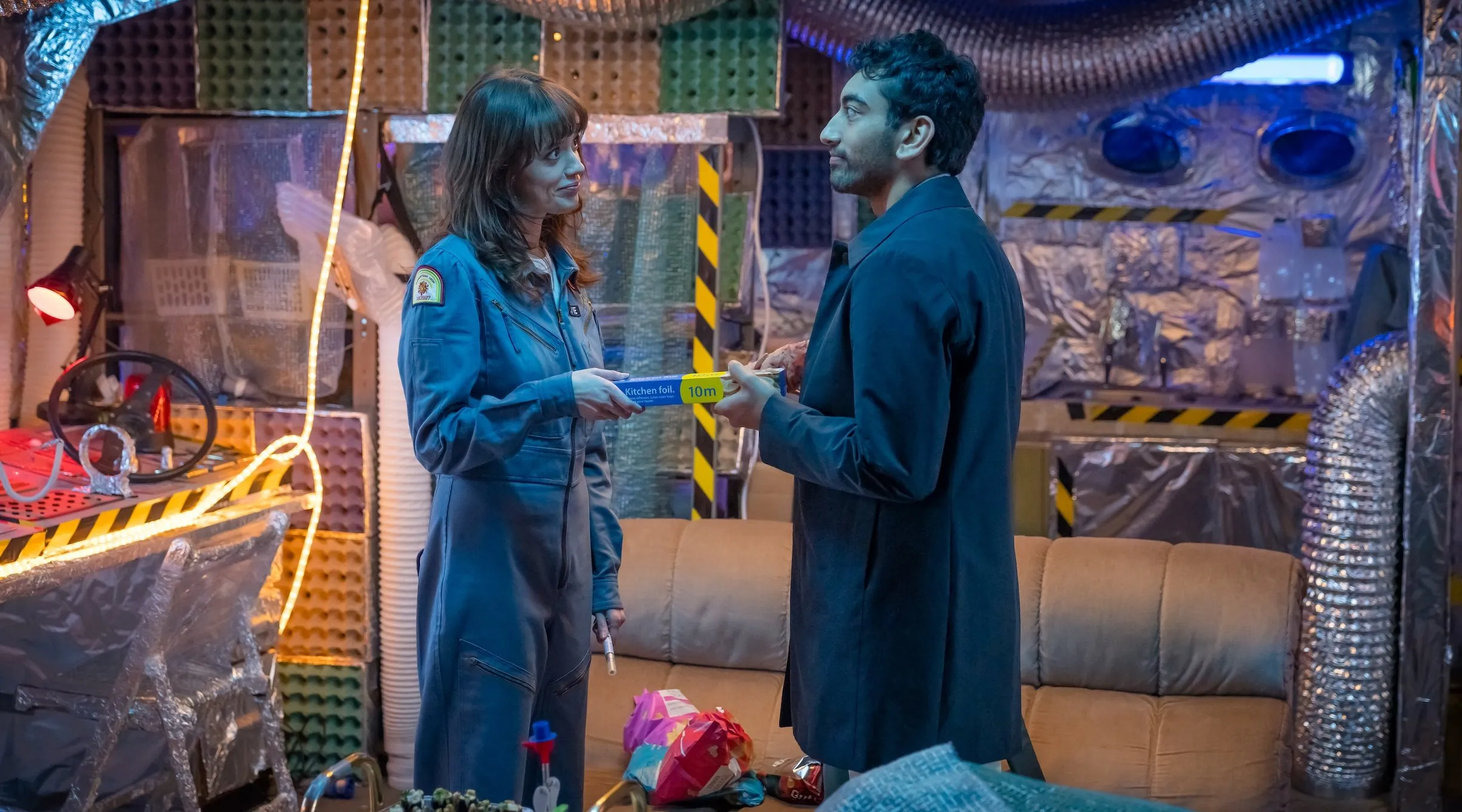
Within this self-imposed quarantine, she practices a form of ritualistic world-building. The weekly film club held in her mother’s garage is more than a hobby; it is a therapeutic act of narrative control. Alongside her best friend Noa (Nabhaan Rizwan), she does not simply watch movies, she reconstructs them, one cardboard set piece at a time. This carefully balanced ecosystem is threatened by the intrusion of an outside variable: Noa gets a job in another city. The news is a catalyst, a crack in the terrarium wall that forces the unexamined air inside to mix with the wild, unpredictable atmosphere of the world beyond the bins.
A Constellation of Anxieties
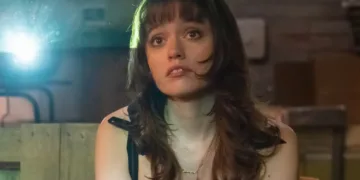
At the center of this small universe, Aimee Lou Wood gives a performance of remarkable texture. She maps Evie’s internal landscape with a quiet precision, turning what could be a passive role into an active study of inertia. Her vulnerability is not a weakness but her primary mode of engagement with the world. Wood’s talent lies in showing the immense effort required for the smallest actions, her physical stillness belying a mind whirring with creative passion and deep-seated frustration.
Her gentle, sometimes maddeningly guileless nature feels less like a character trait and more like a necessary shield, a way to deflect the harshness of a world she has already retreated from. This portrayal elevates Evie from a mere victim of her circumstances into an avatar for a generation grappling with a sense of ambient paralysis.
The series lives or dies on the dynamic between Evie and Noa, a friendship presented with the comfortable, worn-in quality of a favorite jumper. It is a bond built on a shared language of film quotes and private jokes, a self-contained culture for two. This insularity is both its greatest strength and its most significant problem. Nabhaan Rizwan plays Noa with a careful, lawyerly formality that periodically shatters into surprisingly adept character impressions, hinting at a deep well of performative energy he keeps under tight control.
Also Read





He is the steadying influence, the man who brings a semblance of order to their shared fantasy. Their chemistry is that of deeply enmeshed siblings, which makes the romantic tension feel, at times, like a narrative imposition. It is a love story born less from passion and more from a shared fear of what lies outside their comfortable duopoly.
They are orbited by a family unit that feels both authentic and heightened. Suranne Jones as the mother, Suz, is a marvel of weaponized cheerfulness. She is a perpetual motion machine of maternal concern, her high-energy chatter and endless home improvement projects a frantic attempt to outrun the terrifying stillness of her daughter’s condition. It’s a stunning depiction of care as a form of manic performance.
Providing the deadpan counterpoint is Liv Hill as the younger sister, Izzie, whose sharp-tongued observations serve as the show’s Greek chorus, constantly puncturing the bubble of denial the family lives within. And then there is Josh (Adam Long), the boyfriend. He is a symbol of the simple, uncomplicated life. He is kind, he is sunny, he is decent. His narrative function is to be so glaringly, fundamentally wrong for Evie that he highlights the unspoken inevitability of her connection with Noa, making him less a character and more a human plot device.
Cardboard Catharsis
The show’s most distinct aesthetic contribution is its deep appreciation for the tangible, the handmade. The weekly transformations of the garage are small acts of magic, born from craft supplies and a shared imagination. The sight of a spaceship corridor fashioned from tinfoil and tubing for Alien, or a yellow brick road painted on a roll of old carpet for The Wizard of Oz, speaks to a profound human need to create.
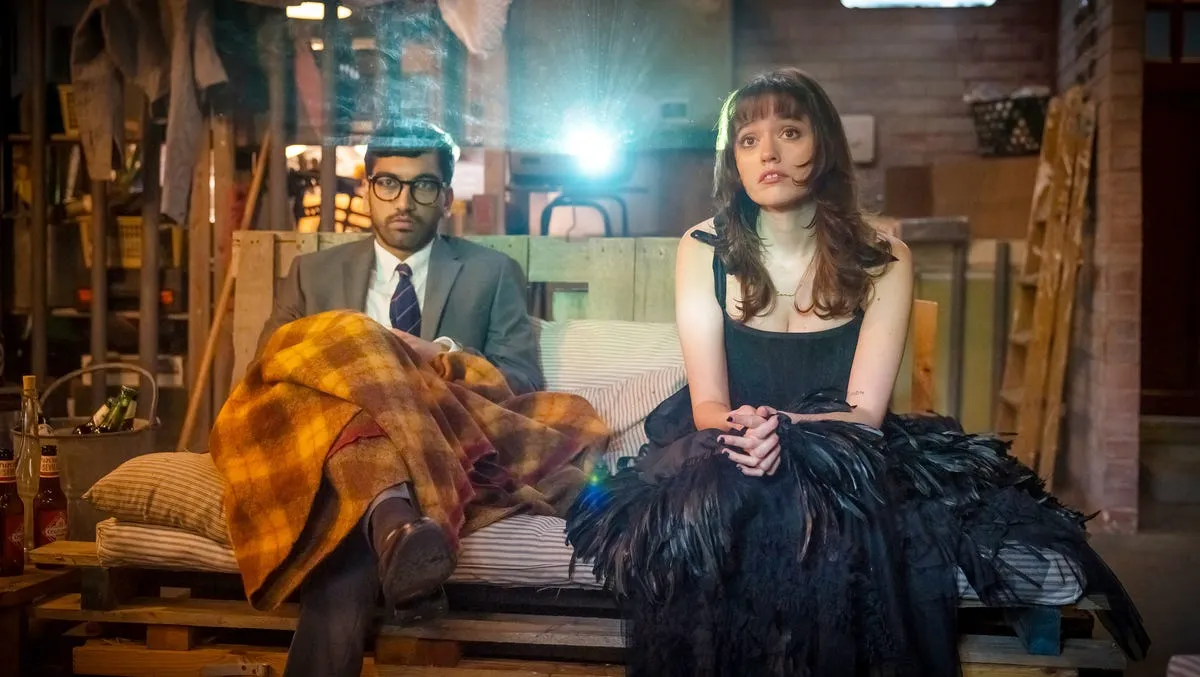
This is not the passive consumption of slickly produced media; it is an active, participatory form of myth-making. For Evie, the act of building these worlds is as important as inhabiting them. It is a way to physically manifest a sense of control, to literally build a new reality when her own has become unbearable. This do-it-yourself ethos feels like a quiet rebellion against a digital world of intangible assets and ephemeral content.
The series attempts to weave these cinematic homages into its very structure, using the film-of-the-week as a thematic key to unlock the episode’s emotional core. The idea is potent: the claustrophobia of the spaceship in Alien should echo Evie’s domestic confinement; the quest for home in The Wizard of Oz should mirror her own search for a way back to herself. The execution of this concept, however, is frustratingly inconsistent.
For every moment of brilliant synthesis, such as a surreal, spacesuit-clad dream sequence, there are long stretches where the chosen film feels like arbitrary set dressing. The structural promise is often abandoned halfway through an episode, leaving the central conceit feeling underdeveloped. The choice of films—all widely known, beloved classics—is also telling. This is not a club for challenging cinematic tastes. It is a retreat into the warm bath of nostalgia, a search for the safety of a story whose ending is already known.
The Quiet Punchline
Categorizing Film Club as a comedy feels like a minor misrepresentation. It exists in that gentle, melancholic space of British television where the humor is atmospheric rather than explicit. The laughs, such as they are, arise from behavioral quirks and the quiet desperation of its characters, not from setup and punchline.
The show prioritizes a tone of sincere, sometimes saccharine, warmth. Its primary goal is to be kind to its characters, a noble aim that unfortunately sands down many of the sharper, more interesting edges. The result is a dramedy where the drama feels muted and the comedy is whispered. It is a show whose defining characteristic is its own gentleness, for good and ill.
This gentle approach extends to its portrayal of mental health. The script’s deliberate vagueness about the source of Evie’s “wobble” is a calculated risk. By refusing to pathologize her condition with a specific diagnosis or traumatic event, the show makes her anxiety a more universal state of being. It becomes a stand-in for a widespread feeling of being overwhelmed, a kind of existential exhaustion.
This makes the character highly relatable, a mirror for anyone who has ever felt the impulse to pull the duvet over their head and wait for the world to go away. Yet this lack of specificity comes at a cost. It lowers the dramatic stakes, making her struggle feel more like a persistent mood than a gripping conflict. The ripple effect of her condition is sketched effectively, showing how her family members are trapped alongside her, their own lives put on hold by her paralysis. They are all serving time in her gentle, quiet prison.
A Pleasant Dead End
The narrative’s primary engine, the will-they-won’t-they romance between Evie and Noa, sputters from a critical lack of friction. The story presents their union not as a possibility to be explored but as a conclusion to be reached. This certainty of outcome deflates any potential for genuine tension. The obstacles that arise feel less like organic developments and more like items being checked off a scriptwriting worksheet.
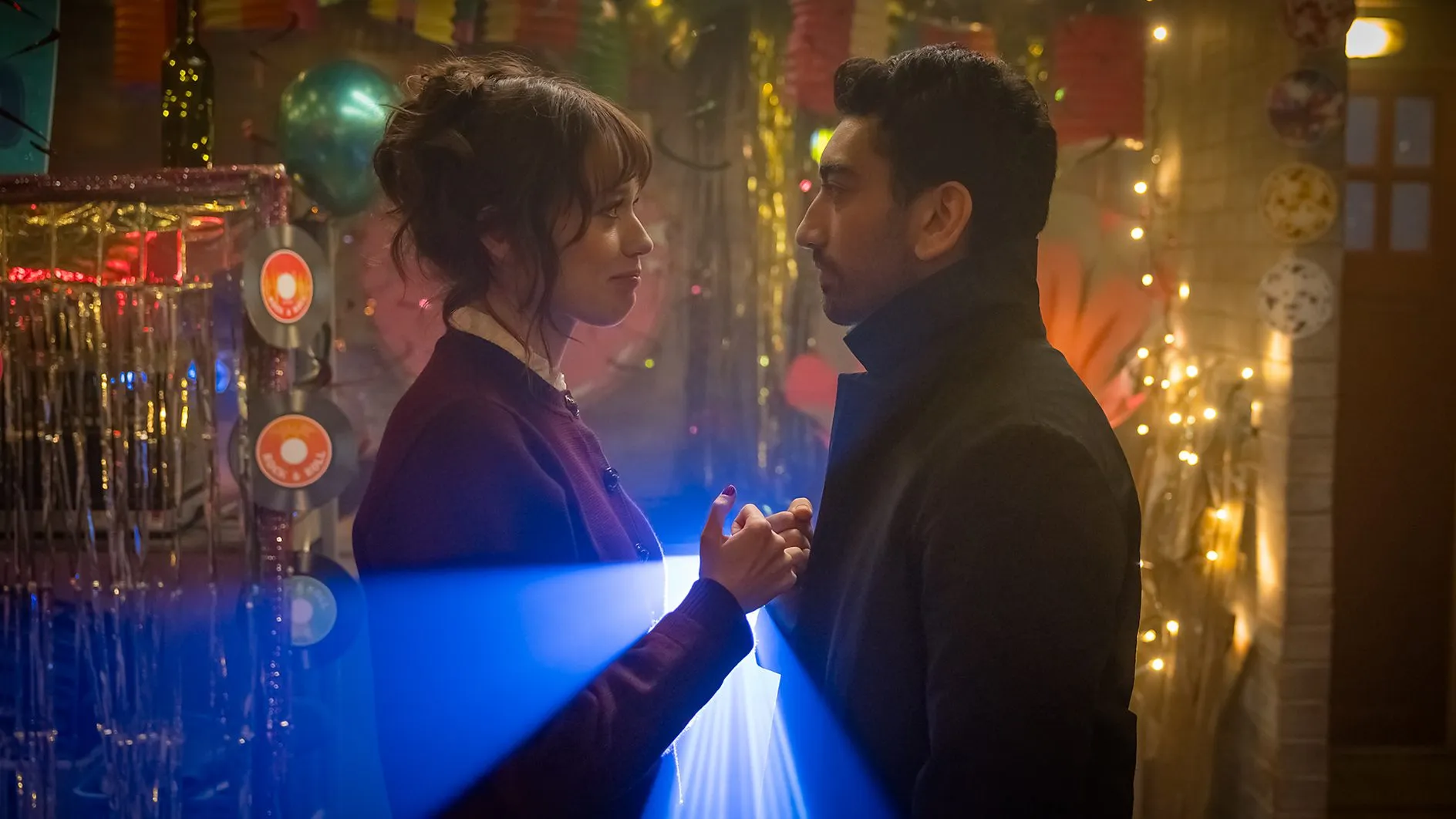
The audience is never in doubt about the destination, which turns the six-episode arc into a slow, meandering journey with no surprising turns. It is a love story built on the foundation of narrative inevitability, a structure that offers comfort but no excitement. This devotion to the safest possible romantic trope feels like a failure of nerve, a retreat into formula at the very moment the show could have explored the more complicated, messy realities of love and friendship.
This lack of narrative daring is reflected in the show’s larger structure. Promising subplots are introduced only to be abandoned, and talented performers are left with little to do on the story’s periphery. The series is so devoted to its central mood of cozy melancholy that it often forgets the basic mechanics of storytelling.
The final impression is that of a show with a huge heart and a brilliant cast that never quite lives up to the promise of its central idea. It is a work of immense charm and sincere good intentions. Film Club successfully creates a world that is warm, kind, and pleasant to inhabit for a few hours. Its celebration of friendship and the restorative power of shared creation is genuinely affecting. Yet it remains a show whose kindness prevents it from being truly insightful, a cozy watch that chooses the comfort of a foregone conclusion over the challenge of a more complicated truth.
Film Club is a six-part romantic comedy-drama series co-created and written by and starring Aimee Lou Wood and Ralph Davis. The show follows Evie (Wood), a young woman suffering from severe agoraphobia who has not left her house in six months following a nervous breakdown. Her only escape is the weekly film club she runs in her mother’s garage with her best friend, Noa (Nabhaan Rizwan). The series explores their intense, cine-literate friendship, Evie’s complex family life with her unconventional mother Suz (Suranne Jones) and sister Izzie (Liv Hill), and the central question of whether Evie will ever confess her unspoken romantic feelings for Noa when he announces life-changing news. The entire first series premiered in the UK on Tuesday, October 7, 2025, and is available to watch on BBC iPlayer and broadcast on BBC Three.
Full Credits
Director: Catherine Morshead
Writers: Aimee Lou Wood, Ralph Davis, Anna Jordan
Producers and Executive Producers: Alison Jackson, Jamie Jackson, Nawfal Faizullah, Aimee Lou Wood, Stella Merz, Byron Archard, Hannah Pescod
Cast: Aimee Lou Wood, Nabhaan Rizwan, Suranne Jones, Adam Long, Liv Hill, Ralph Davis, Owen Cooper, Arian Nik, Fola Evans-Akingbola, Lisa McGrillis, Kai Assi
The Review
Film Club
Film Club is a series of immense charm and warmth, elevated by a superb, vulnerable performance from Aimee Lou Wood and a frantic, brilliant turn by Suranne Jones. Its celebration of friendship and homemade creativity is genuinely endearing. However, the show is ultimately hampered by a predictable, tension-free central romance and an inconsistent commitment to its own clever premise. The result is a pleasant, kind-hearted watch that feels too safe, choosing gentle comfort over the sharper insights its talented cast might have delivered. It is a sweet idea that never quite develops into a memorable story.
PROS
- Aimee Lou Wood's nuanced and compelling central performance.
- A standout supporting role from Suranne Jones as the energetic, anxious mother.
- The visually creative and charming central concept of the homemade film club.
- A sincere and authentic depiction of deep friendship and sibling dynamics.
- A consistently gentle, warm, and kind-hearted tone.
CONS
- The central romantic storyline is predictable and lacks dramatic tension.
- An inconsistent application of the film-of-the-week structural device.
- The comedy is muted, with few sharp or memorable jokes.
- Several subplots and supporting characters feel underdeveloped.
- A narrative that feels dramatically inert and overly safe in its choices.