

















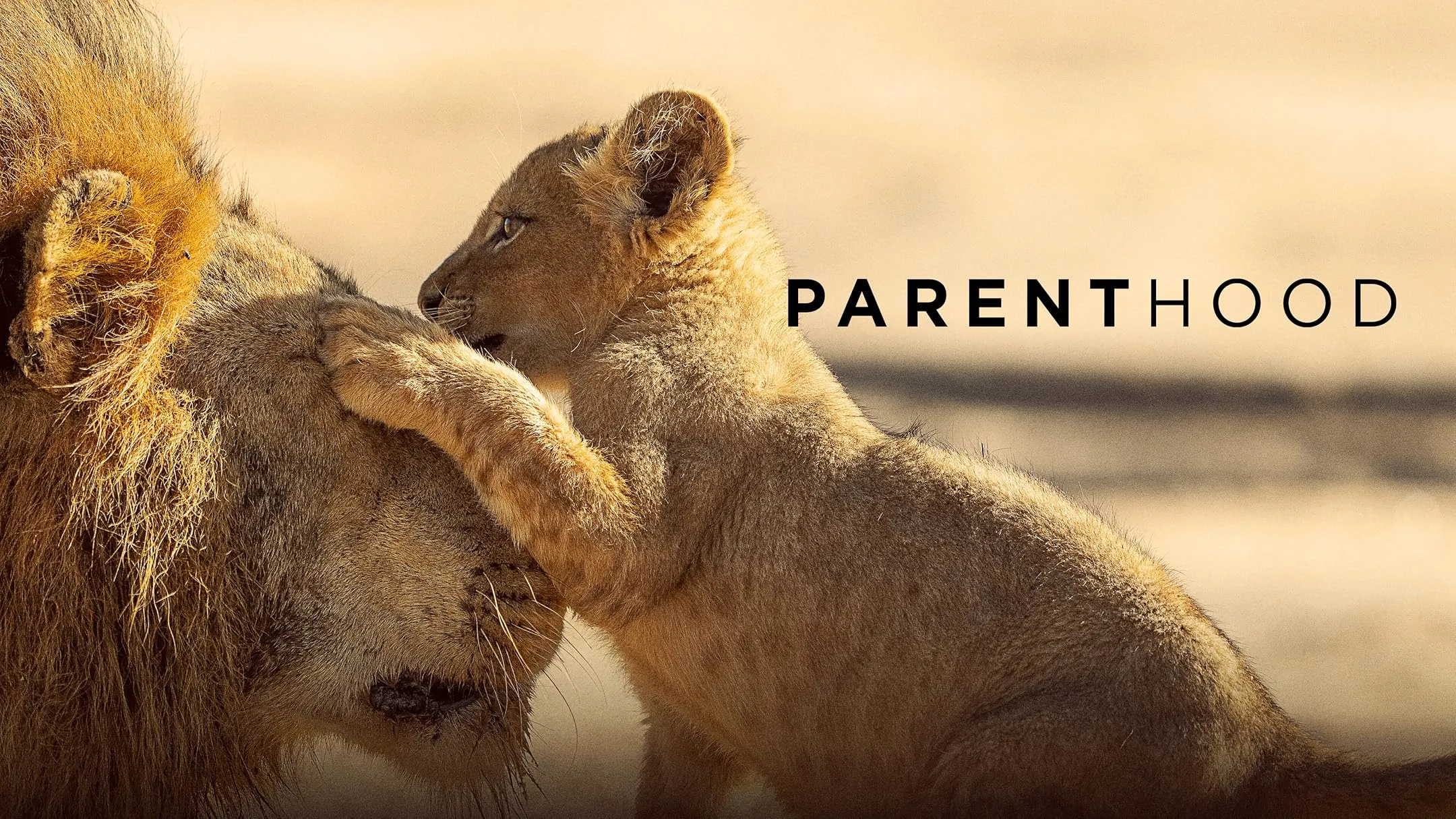

BBC One and Silverback Films present a five-part series that reworks the familiar natural history format. Narrated by Sir David Attenborough, Parenthood shifts attention away from the usual emphasis on fragile newborns and toward the sustained work carried by adults. The scale is striking, with three years of filming across 23 countries and six continents.
The series moves from the dense jungles of Bhutan to the wide plains of Botswana, and its camera work favors behavioral detail over easy sentiment. Attenborough remains central to the design. His sombre, husky narration steadies the high-definition imagery and gives the material an ethical frame. He brings continuity to a field where filmmaking methods keep changing.
The visual language often reaches an extraordinary level, including military-grade infrared cameras that expose the lives of animals active in complete darkness. By concentrating on the exhausting realities of raising young, the series sidesteps familiar genre habits. It emphasizes tactical choices and the physical costs tied to keeping the next generation alive. That perspective shift turns the animals into active protagonists, often worn down, in a story told on a global scale.
The High Cost of Biological Duty
The series regularly enters territory with the tension of a psychological thriller. The Namibia sequences featuring the African social spider offer one of the clearest and most unsettling examples of sacrifice in the wild. We see matriphagy, in which a mother is eaten alive by her brood of thirty spiderlings.
The image of the spiderlings moving in synchronized, rhythmic surges is deeply disturbing, especially once the mother’s body becomes jerky and erratic as she signals readiness for the final act. The scene is presented with a precision that makes the horror feel procedural. Nature can be very efficient, and the series does not soften that point.
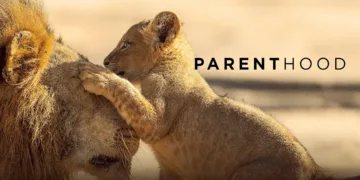
In Botswana, the story moves to collective survival. A lioness dies after being gored during a buffalo hunt, and the pride responds with a shared-parenting system. The orphaned cubs survive through the care of aunts who assume the role left behind. The sequence gives the episode a different kind of drama, one built on social structure and contingency rather than solitary endurance.
Nighttime in Tanzania’s Ruaha National Park creates a separate register of fear. Infrared footage turns a hippo mother and calf into glowing, almost ghostlike figures as a pride of lions tracks them. The imagery is beautiful, then tense, then quietly brutal in its implications. These scenes frame parenting as a chain of risks with no stable margin for error. Attenborough links the behavior to a basic drive to secure the future, even at the cost of the parent’s life. The line lands because the series has already shown the evidence.
Resourcefulness Amidst Modern Fragility
The middle stretch of Parenthood is especially strong in showing how animals solve problems under pressure, including problems created by people. Off Indonesia, a boxer crab carries anemones in her claws and uses them as living weapons to protect her thousand eggs from predators such as the cuttlefish. The sequence has the pleasure of a tactical demonstration. The crab looks like a miniature fighter working with improvised tools, and the series captures that logic with clarity.
In Arizona’s deserts, the burrowing owl is shown in a domestic contest for abandoned tunnels, followed by an exhausting routine of hunting and dodging roadrunners. The editing gives these episodes a sense of repeated labor, which fits the series premise. Parenting here is less a single dramatic event and more a daily campaign of attrition.
The series reaches its sharpest edge in segments that track the collision between old survival patterns and human disruption. The Cape gannet sequence in South Africa works as a direct example. Overfishing pushes adults to travel much farther to find food. Their fledglings are left exposed to seals, which have shifted to hunting birds after fish numbers dropped. The chain of cause and effect is clear, and the storytelling trusts the viewer to connect it.
Another image carries similar force: an octopus tending eggs inside a discarded plastic pipe. The moment is visually striking, then bleak once the setting registers. In Californian kelp forests, the series points to an urchin plague linked to rising ocean temperatures, exposing how vulnerable these nursery habitats have become. These passages move past observation and into argument. The argument is made through structure, imagery, and accumulation rather than speechifying, which gives it weight.
Coexistence and the Human Element
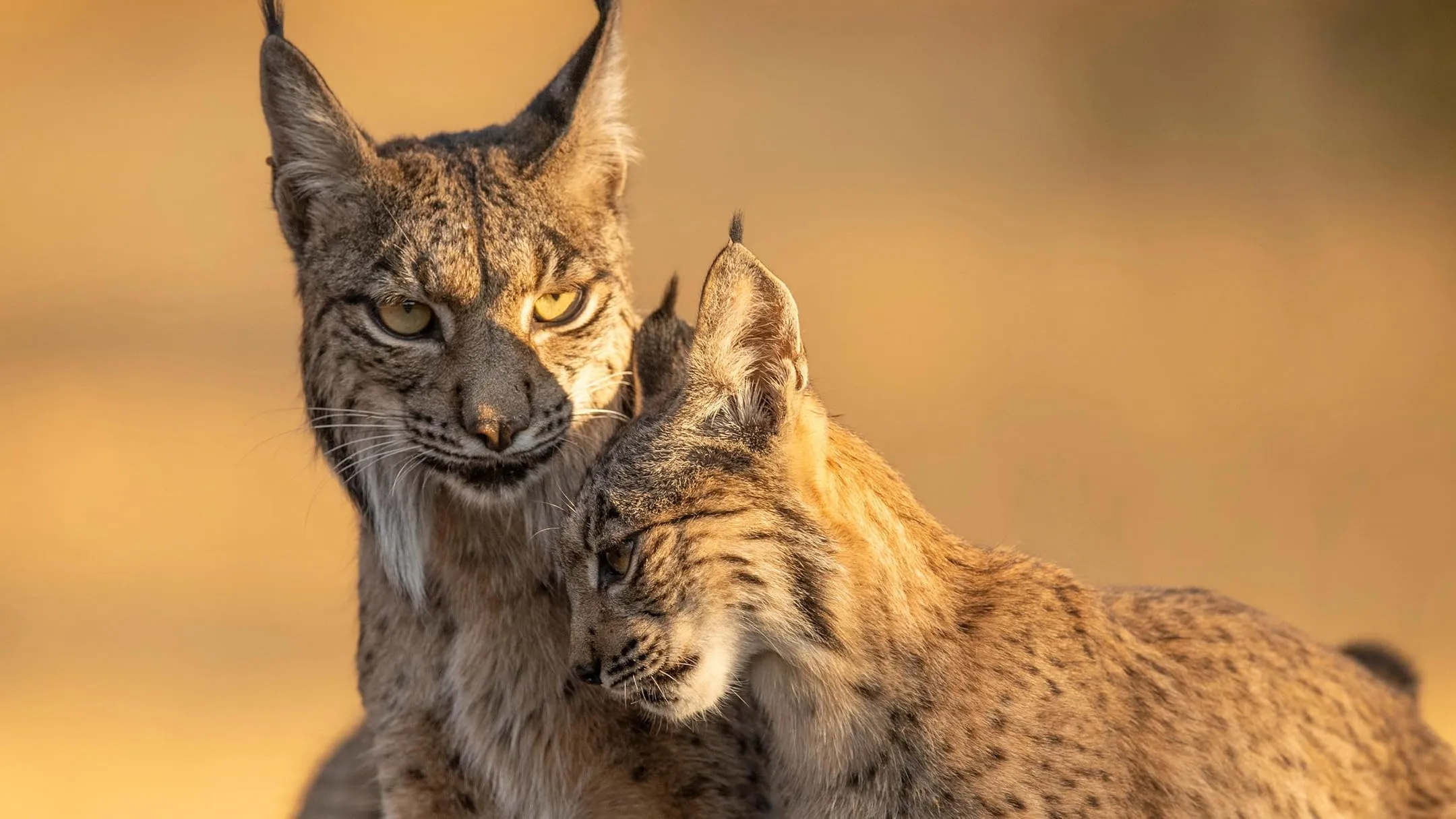
The final section of the series shifts toward cases where human choices create room for recovery. The return of the Iberian lynx in Spain stands as a major conservation success. Three generations of the tufted-eared cats now live in Andalusia after local farmers changed their practices to make space for wildlife. The sequence is visually elegant and almost disarmingly photogenic, yet the storytelling keeps the emphasis on practical adaptation. People adjusted methods. The lynx population responded. Cause and effect again.
Each episode closes with a “Parenthood Diaries” segment, and these short pieces do valuable work for the series. They open the production process and place the polished footage back into real time, effort, and uncertainty. In Gabon, native guides and film crews spend years building trust with Western lowland gorillas to film intimate acts of care. That material anchors the grandeur of the main episodes in patience, repetition, and human commitment. It also broadens the series’ idea of parenting by surrounding animal care with human labor devoted to witnessing it responsibly.
One gorilla tracker describes the work as a form of love, and the series uses that statement as an emotional hinge. The phrase could have felt tidy in a weaker production. Here it works because the preceding footage has earned it.
The natural world presented in Parenthood remains ruthless, and the series never pretends otherwise. Yet the conservation stories and the filming diaries introduce a counterweight grounded in action and endurance. The result is a beautiful diversion with a serious sense of responsibility. The series leaves a clear impression: the law of the jungle is harsh on its own, and human influence can turn that harshness into something far worse.
Parenthood is a landmark British nature documentary series that premiered on BBC One on August 3, 2025. Narrated by the legendary Sir David Attenborough, the five-part series explores the complex and often grueling challenges animals face while raising their young across 23 different countries. Produced by Silverback Films, the show utilized cutting-edge 8K and military-grade infrared technology to capture never-before-seen behaviors, such as the sacrificial matriphagy of the African social spider. Viewers can currently stream the entire series on BBC iPlayer, where it remains a central fixture of the broadcaster’s high-end natural history programming.
Where to Watch Parenthood Online


Full Credits
Title: Parenthood
Distributor: BBC One, BBC iPlayer
Release date: August 3, 2025
Rating: TV-PG
Running time: 60 minutes
Director: Jeff Wilson
Writers: Jeff Wilson, Olly Scholey, Elisabeth Oakham, Hugh Wilson
Producers and Executive Producers: Keith Scholey, Jeff Wilson, Sreya Biswas, Tara Knowles
Cast: David Attenborough
Director of Photography (Cinematographer): Katie Wardle, Peter Cayless, Tom Rowland, Howard Bourne, Philipp Klein, Matthew Polvorosa Kline, Richard Szkiler
Editors: Ellie Bowler, Rory Joseph, Myles Ackerman Smith, Graham Wild, Tom Mercer, Kate Hopkins, Tim Owens, Owen Peters, Olga Reed
Composer: Anne Nikitin
The Review
Parenthood
Parenthood successfully moves the nature documentary genre forward by trading simple sentimentality for a rigorous look at biological duty. While it utilizes familiar tropes like the African savannah, its focus on the exhausting mechanics of child-rearing—from the harrowing sacrifices of social spiders to the tactical brilliance of boxer crabs—provides a fresh, narrative-driven perspective. It is a visually sublime production that effectively balances the awe of the natural world with the sobering reality of human impact.
PROS
- Shifting the focus from the "cuteness" of young animals to the grueling labor of the parents provides a more sophisticated narrative.
- The use of military-grade infrared technology captures nocturnal behaviors with haunting clarity.
- Attenborough’s sombre delivery provides a necessary moral weight to the environmental themes.
- The inclusion of the Iberian lynx recovery offers a rare and welcome glimpse of conservation success.
CONS
- Occasional reliance on classic nature show setups, such as the inevitable savannah hunt.
- Some sequences, particularly the matriphagy of the social spider, may be too visceral for sensitive viewers.