



























Takechiyo lives under the pressure of bloodline, marked as the grandson of Ieyasu Tokugawa. The story focuses on a rivalry with his brother, and that feud opens the door for the Crucible. The Crucible reads as a temporal anomaly with predatory intent, tearing holes across Japanese history.
Takechiyo’s task is simple to grasp and heavy to carry: move through time and repair the damage. The path moves through the Heian Period, the Edo Period, the Bakumatsu Era, and Antiquity. Each stop lands with a sense of historical place while still making room for the supernatural. Spirit stones sit near the core of the lore, framing power as something that corrodes the person holding it.
Major beats arrive through cinematic sequences and stylized animation, used to spell out why the brothers reached this point. The writing keeps motivations clean and legible, which helps the game’s systems carry the weight of drama. You see the Crucible’s footprint in plain terms as yokai spill into battlefields that belong to recorded history.
That pairing of myth and history keeps the backdrop consistent while the player moves through set pieces. The stakes stay personal because the conflict is family-sized, not abstract. Takechiyo functions as the fixer of the timeline, pushing back his brother’s influence to restore stability. It is a practical frame for moving across biomes and eras, and it keeps momentum intact as the player crosses centuries shaped by war.
Kinetic Mastery: The Duality of Steel
The Style Shift system sets the tempo of combat, built around immediate swaps between two combat philosophies. The switch matters because it enables parries against Burst Attacks that cannot be blocked through normal guarding. That rule turns defense into decision-making: timing the shift becomes a proactive tool, not a panic button.
Samurai stance forms the familiar base layer. It leans on Ki Pulse for stamina management, and the low, mid, and high stance triangle still defines spacing, commitment, and risk on every exchange. Arts Proficiency adds another meter to watch. Strikes landed and blocks timed well build it up, and a full gauge triggers a high-damage special attack. It rewards players who keep pressure steady and stay engaged with the rhythm, in a way that will feel recognizable to anyone who has spent time in action RPG combat that values cadence and resource control.
Ninja Stance shifts the ruleset toward speed and mobility. In this mode, stances and Ki Pulses drop out of the equation, and attacks draw less stamina. That opens the door for sustained offense and aerial strings, with mobility doing as much work as raw damage. Ninjutsu tools such as shuriken and poison traps tie directly into this style, and they refill as damage is dealt. The result is a feedback loop that pushes aggression forward without forcing constant menu pauses.
The Living Artifact transformation serves as the big power spike. Filling the Amrita Gauge lets Takechiyo enter a short window of invincibility, during which he can output massive damage safely. It is a classic “turn the tide” mechanic in action RPG terms, and it complements both styles because it rewards players who build gauge through consistent engagement.
Weapon variety supports the long haul. The game includes 14 melee weapon types, each with its own skill tree, which keeps experimentation alive across dozens of hours. Style Shift also encourages expressive routing through fights. A player can anchor exchanges in Samurai stance for parry timing and stability, then swap into Ninja stance to convert an opening into a fast, decisive finish. The appeal sits in how the swap mechanic connects mastery to momentum, making choices feel mechanical and dramatic at the same time.
Vast Horizons: The Open Field
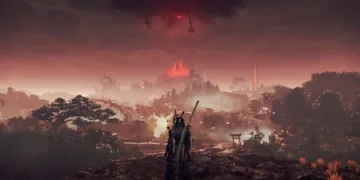
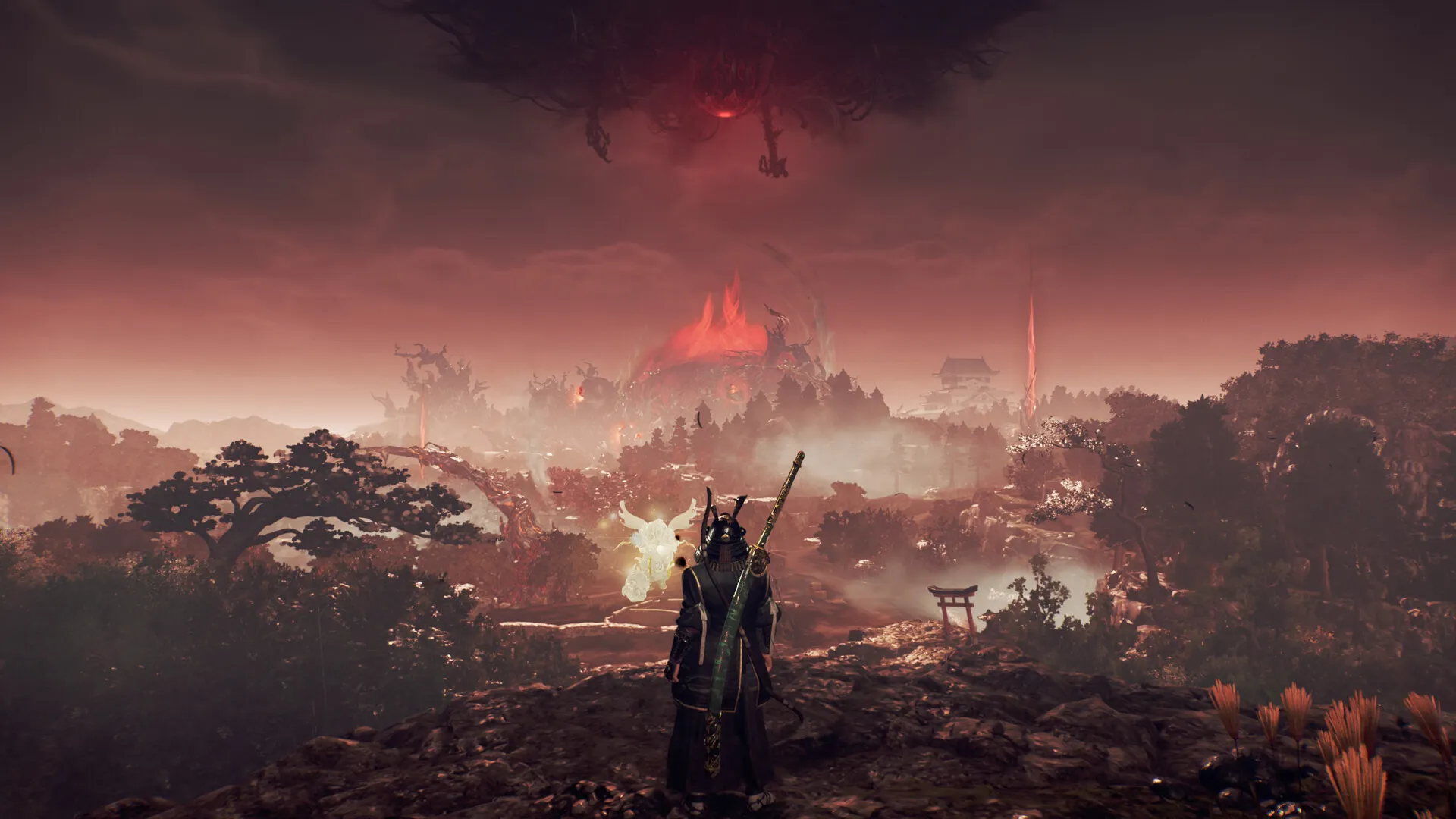
The move to an open field structure replaces the series’ older linear mission format. Four large maps act as separate hub spaces built for exploration. Each biome carries its own visual identity and environmental friction, so traversal and route planning feel distinct across regions.
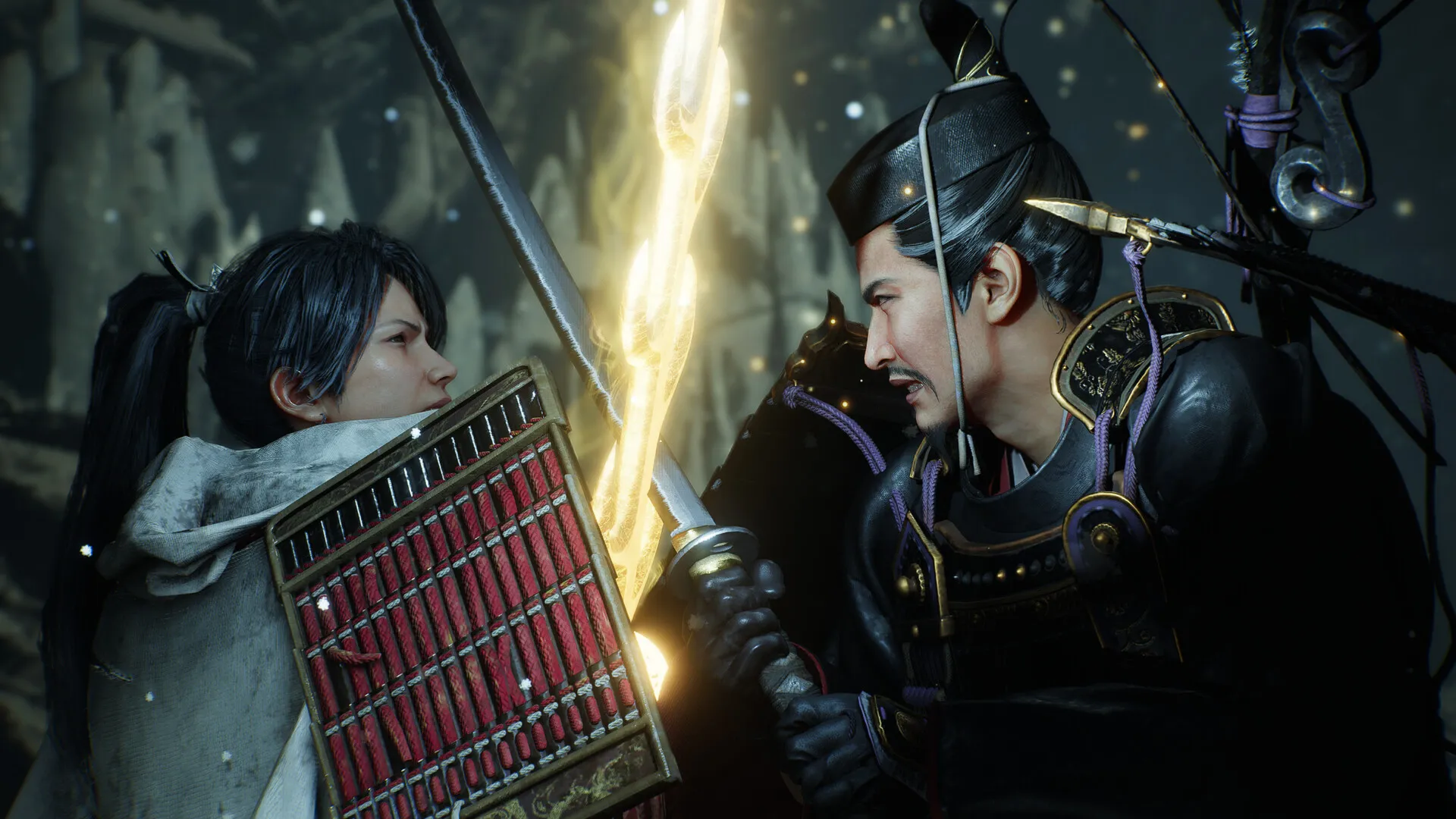
Progression ties into an Exploration Level system. Shrines discovered and enemy bases cleared raise that level, which then grants passive stat bonuses and reveals points of interest. The system quietly trains the player toward full-map engagement, rewarding curiosity with both power and information. It is a structure familiar to open-map RPG design, where clearing space and mapping threats feeds character strength.
Creature and object interactions add texture to that loop. Kodamas and Scampusses hand out small buffs that make detours feel worthwhile. Sudamas allow item trades that can turn spare inventory into rare materials. Jizo Statues offer targeted advantages inside the Crucible’s spaces, giving preparation a concrete payoff. The Chijinko demons add a hunting layer: tracking and sniping these weasel-like targets awards elemental skills, turning observation and patience into build growth.
Guardian Spirits push traversal in a direction that echoes classic exploration games. Certain spirits unlock movement abilities that open ledges and hidden routes that were previously out of reach, adding verticality to what could have been flat hub zones. That design feeds back into Exploration Level progress, since new movement options widen the search pattern and create reasons to revisit earlier areas.
Technical performance on PS5 comes across as polished. Environments read clean and sharp, and the frame rate holds steady even when fights get crowded. The art design sells a world scarred by spirits, and lighting plus particle effects reinforce the supernatural tone without drowning readability. Each region feels like a cohesive space with its own logic, not a stack of disconnected arenas. The scale stays large while remaining easy to read, and objectives can be tackled in the order the player prefers. That freedom supports different play styles and reinforces the feeling of a living field of conflict.
The Logic of War: Systems and Gear
Gear management plays a major role, and the inventory cap of 2,000 items cuts down on forced interruptions. The game throws thousands of gear pieces at the player, each rolling randomized traits that support deep customization. For players who enjoy number tuning and build planning, this is the long-term hook: loot becomes both reward and puzzle.
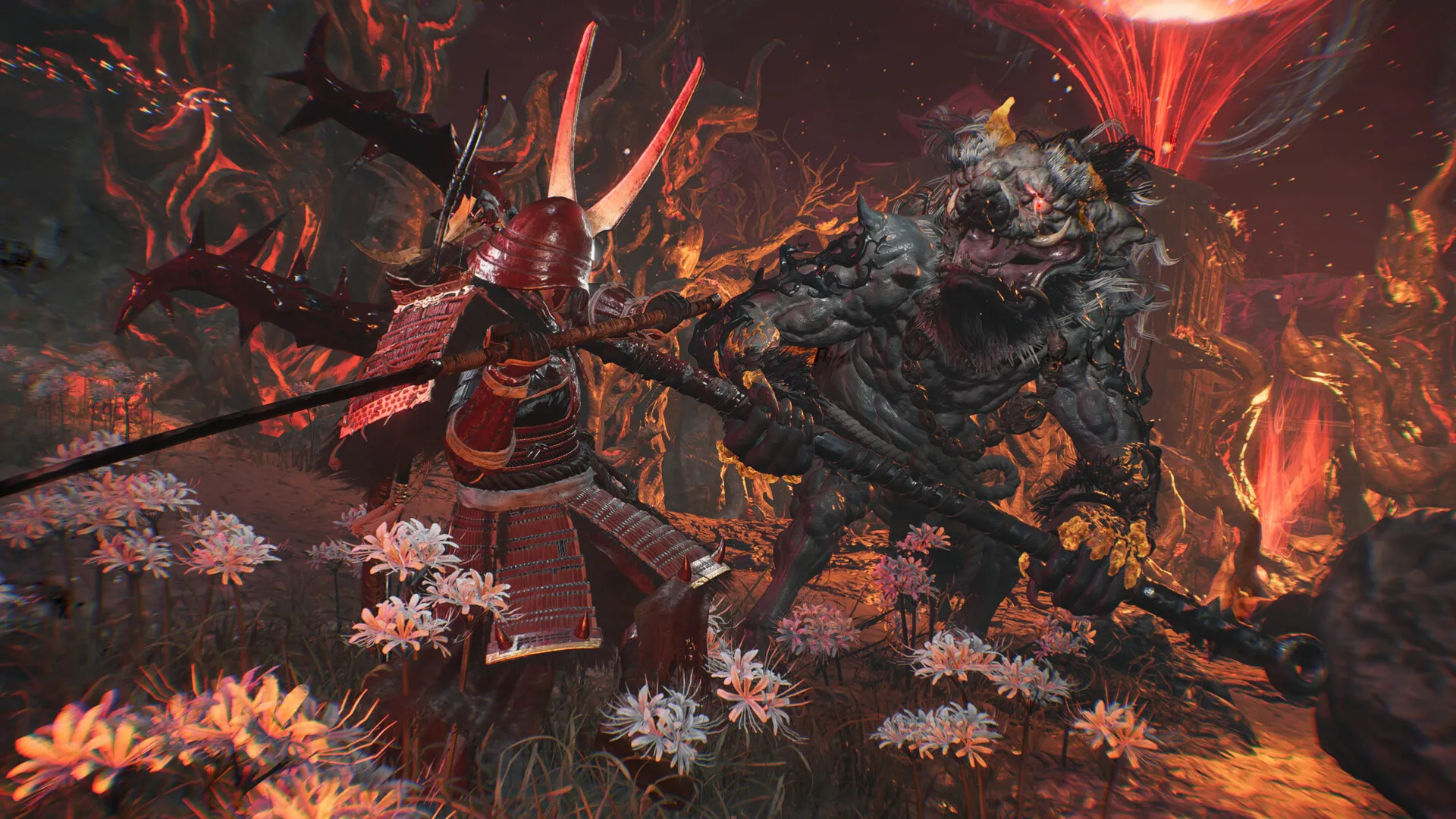
Style Shift expands that build layer by letting two separate setups exist at the same time. One loadout can lean into heavy armor suited to Samurai play, while the second can focus on light gear tuned for Ninja agility. That dual setup makes adaptation quick, since the player can shift style and have stats plus equipment match the moment without a trip back to menus.
The game also includes practical tools for handling loot volume. Auto-equip supports fast upgrades based on weight or set bonuses. Auto-sort and batch-selling keep inventory manageable, and the menu design respects player time by reducing friction in routine cleanup. Progression stays flexible through a free respec option that allows stat resets at any time. It invites experimentation with weapons and skill paths, and it removes the pressure that usually comes with permanent allocation in RPG growth systems.
Crucible Weapons add a sharper decision point. They offer more power than standard gear, tied to Life corruption rules that punish careless use. The player has to weigh strength against safety, and the best use of these weapons comes from understanding the numbers and reading the fight ahead. It is a system that encourages testing and tuning, rewarding players who treat gear like a strategy layer rather than a simple upgrade ladder.
Testing the Blade: Crucibles and Kings
Crucible trials serve as concentrated skill checks that appear between major regions. Each trial brings its own rules and hazards, pushing the player into tighter execution. Dense enemy packs demand full use of the kit, including stance control, Style Shift timing, tools, and transformation windows. Clearing a trial weakens the Crucible’s hold on the area, giving each chapter a clean endpoint that feels earned through play.
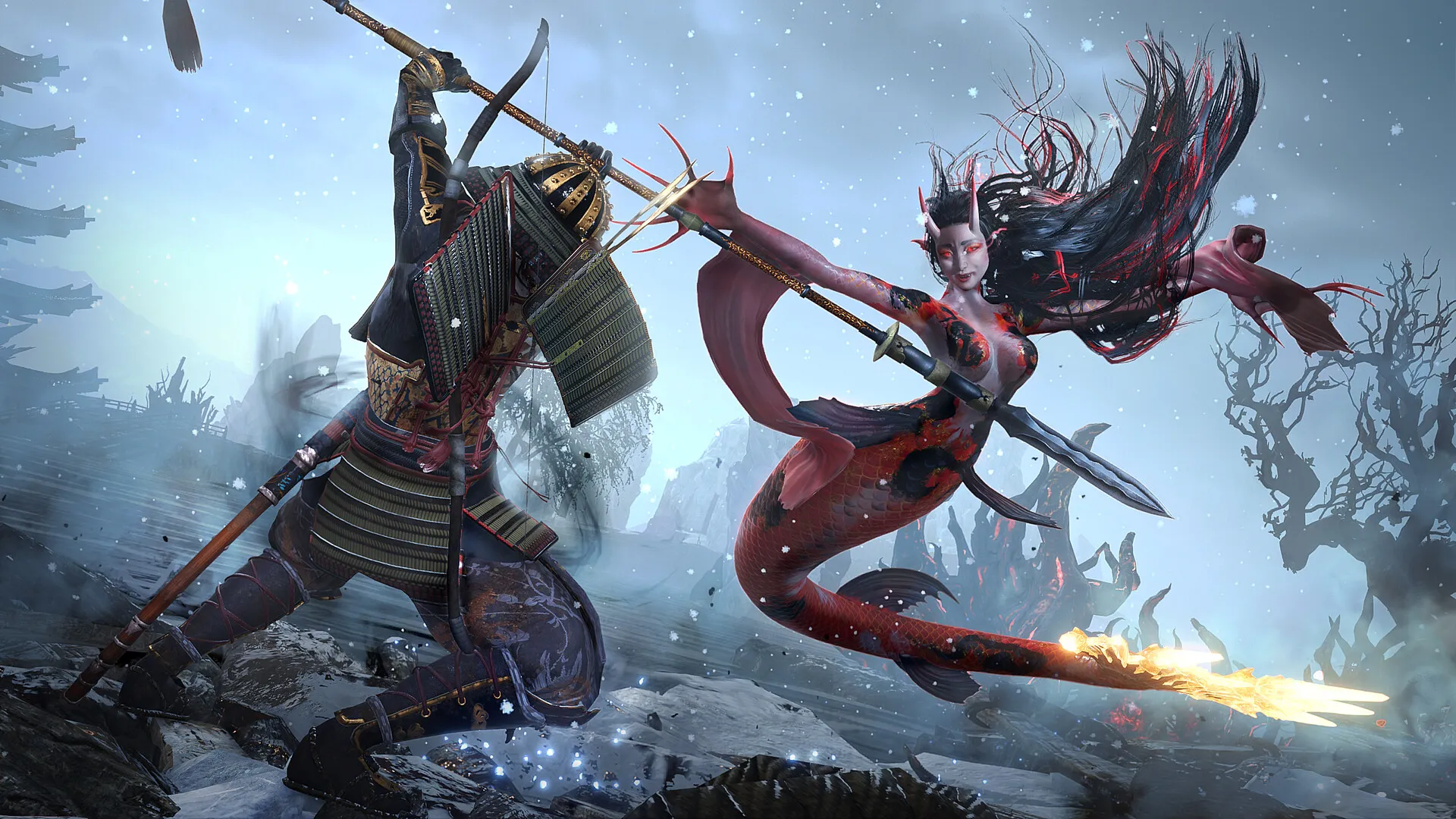
Boss encounters stand out as a design high point. Most bosses run a single-phase structure, which puts attention on pattern recognition and parry timing. That design choice shifts the challenge toward learning and mastery, and victories land with the satisfaction that comes from reading a moveset and responding with precision.
Elite Yokai variants keep regular travel from turning routine. Enemy elements and attack patterns change by region, keeping you alert in spaces that could otherwise become autopilot runs. Secret bosses hide off the main route and provide the steepest tests, with rewards that include unique Soul Cores and powerful gear sets.
For players who want support without flattening the ceiling, Benevolent Graves offer a route to assistance. Ochoko Cups let you summon AI ghosts, which makes tough content more approachable while leaving execution and timing as the real measure of success. Boss designs stay creative and aligned with the mythic tone, and many fights play like distinct mechanical puzzles that ask the player to learn, adapt, and commit.
The Review
Nioh 3
Nioh 3 successfully evolves the series by balancing its dense, traditional systems with fluid new combat styles. The shift to an open-field structure provides a rewarding sense of discovery that matches the intensity of its best-in-class action. While the narrative remains a secondary vehicle for the mechanics, the depth of build-crafting and the refinement of the Style Shift system make it a masterpiece of the genre. It is a polished, challenging, and immensely satisfying experience that sets a new standard for action RPGs.
PROS
- Style Shift adds incredible depth and flow.
- Huge variety in gear and free respecs encourage creativity.
- Larger biomes feel distinct and reward exploration.
- Runs flawlessly on modern hardware with fast loads.
CONS
- The story can feel secondary and occasionally dry.
- The sheer volume of items can be overwhelming at first.
- Some basic enemies appear frequently across different eras.
- Map icons can eventually feel like a checklist.