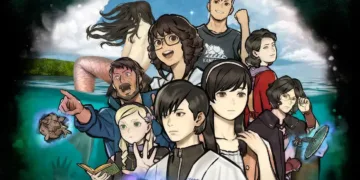























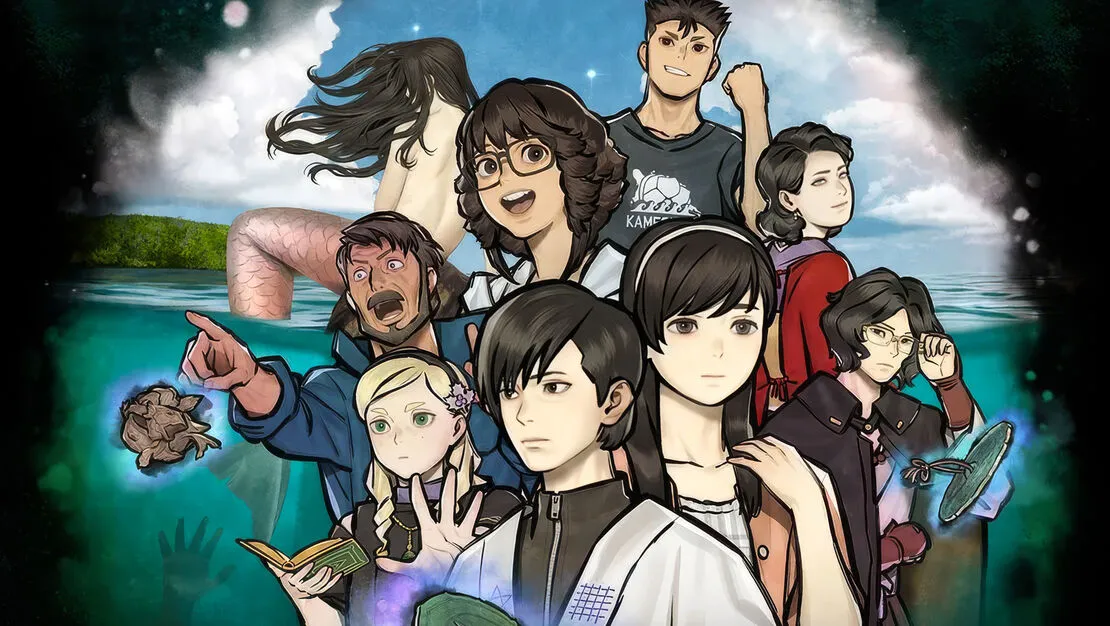

The 1980s Ise-Shima region makes for a vivid setting for a mystery tied to local custom. On this culturally dense peninsula, the small island of Kameshima is shaped by its Ama divers and sea legends. Yuza Minakuchi comes back five years after a deadly storm claimed his parents. He returns to a community already boiling with distrust. Many residents blame his family for the disaster, and that accusation hangs over every early scene. The game establishes a tense, grieving atmosphere long before anything paranormal steps into view.
While diving, Yuza encounters a mermaid, and the story’s everyday footing vanishes in an instant. Soon after, he sees a ghostly version of himself, and that image becomes the spark that pushes the plot forward. These incidents lock the narrative into Japanese folklore and water-spirit mythology.
The plot spreads across multiple tracks, following separate groups like a specialized police division and a western fantasy author named Avi. Their cases begin to overlap as the risk of another supernatural storm grows. The structure echoes classic adventure games where distant lives end up tangled together by the same impossible event.
The Tools of Investigation
Player interaction leans heavily on 360-degree panoramic environments. You can rotate these spaces fully, and the game uses that freedom to generate real unease. The camera movement keeps you thinking about what might be just outside your view, or positioned behind the protagonist. Turning to scan the environment and catching a figure that was not there a moment ago creates a sharp sense of physical exposure. That design choice demands active spatial attention in a way static backdrops rarely manage.
Progress through the mystery depends on constant reference to the Files and Profiles system, a digital encyclopedia that collects information on history, cultures, and individual characters. The game places weight on deduction. It regularly asks for a specific name or location without handing you a menu of choices. You have to read, cross-reference, and confirm details inside the lore to arrive at the right response. The result feels like actual investigative work, where careful observation and note-taking matter.
The diving minigame breaks up the heavier stretches. From a first-person viewpoint, you search the seabed for creatures, aim with the joystick, and click to collect items while monitoring oxygen. Successful runs grant experience for a straightforward RPG progression layer. You can raise stats to extend underwater time or improve swim speed. It forms a calm, repeatable loop that gives your brain a breather after long bouts of text and deduction.
Puzzles often feel tactile because the interface becomes part of the physical problem-solving. A hand mirror works as a tool for checking behind the character during high-stress moments. Point-and-click interactions encourage thorough screen scanning for hidden clues. These mechanics feel grounded in the setting’s practical reality, where small objects and patient scrutiny serve as the player’s best defense against escalating supernatural danger.
Constructing the Narrative Web
A mysterious figure known as the Storyteller controls how the experience unfolds. He speaks directly to the player, acknowledges the game’s structure, and guides you through shifting perspectives. That self-aware framing creates the sense that you are participating in a controlled narrative experiment. The player’s role lands closer to an involved presence inside the machinery of the story, rather than a distant set of eyes watching events play out.
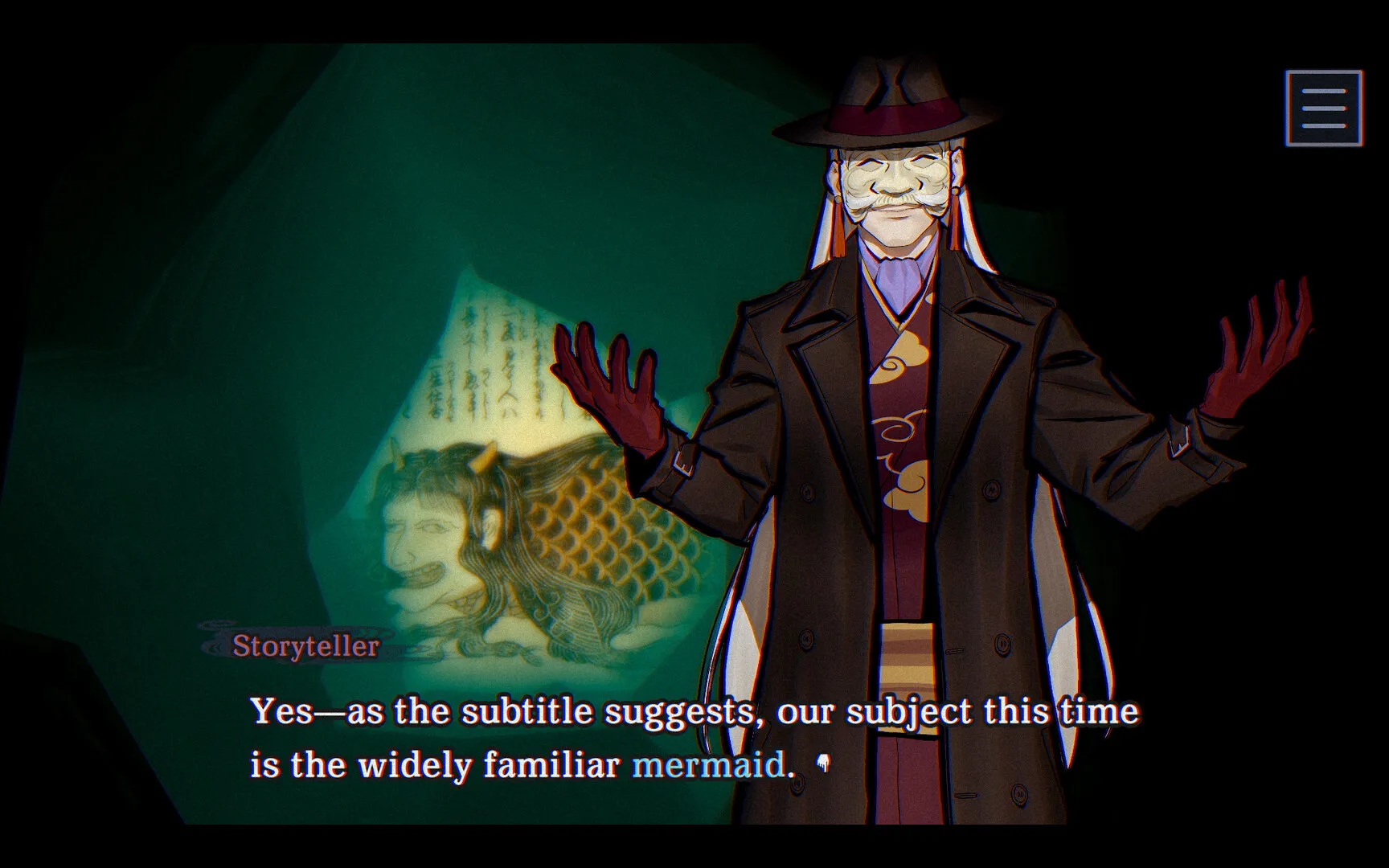
The Story Chart acts as the central hub for progression, laying out a non-linear timeline of events. You can jump between chapters and viewpoints to hunt for missing information. At times a route closes off until you uncover a clue elsewhere in the timeline. That design pushes you to carry details across scenarios and keep track of who learned what, and when. The mystery becomes a large-scale logic problem, with structure and sequencing treated like core gameplay.
Recollections lets players revisit past memories, and those returns can reveal details that slipped by during the first pass. This system connects to the Curse mechanic. Certain characters can kill targets if specific conditions are met, which forces you to pay attention to behavior, timing, and risk signals. A single mistake can end with a protagonist dead. Choices around these threats branch into multiple endings, including bleak outcomes and victorious ones.
Technical features double as puzzle pieces. The game can ask you to interact with menu settings or HUD icons as part of solving the case. That approach turns the software layer into an investigative space and asks the player to treat the interface as evidence. It calls to mind how 999 uses its own format to misdirect and surprise the player, then rewards the ones paying attention to the medium itself.
A Haunting Aesthetic and Emotional Core
The visuals rely on rotoscoped backgrounds to build an eerie atmosphere. Realistic environments sit alongside highly stylized 2D character portraits. That pairing creates an uncanny tone that fits the paranormal subject matter. A retro film-grain effect covers the screen, and the palette leans toward deep, dark shades. The result calls up the mood of a vintage horror film from the same period as the game’s setting.
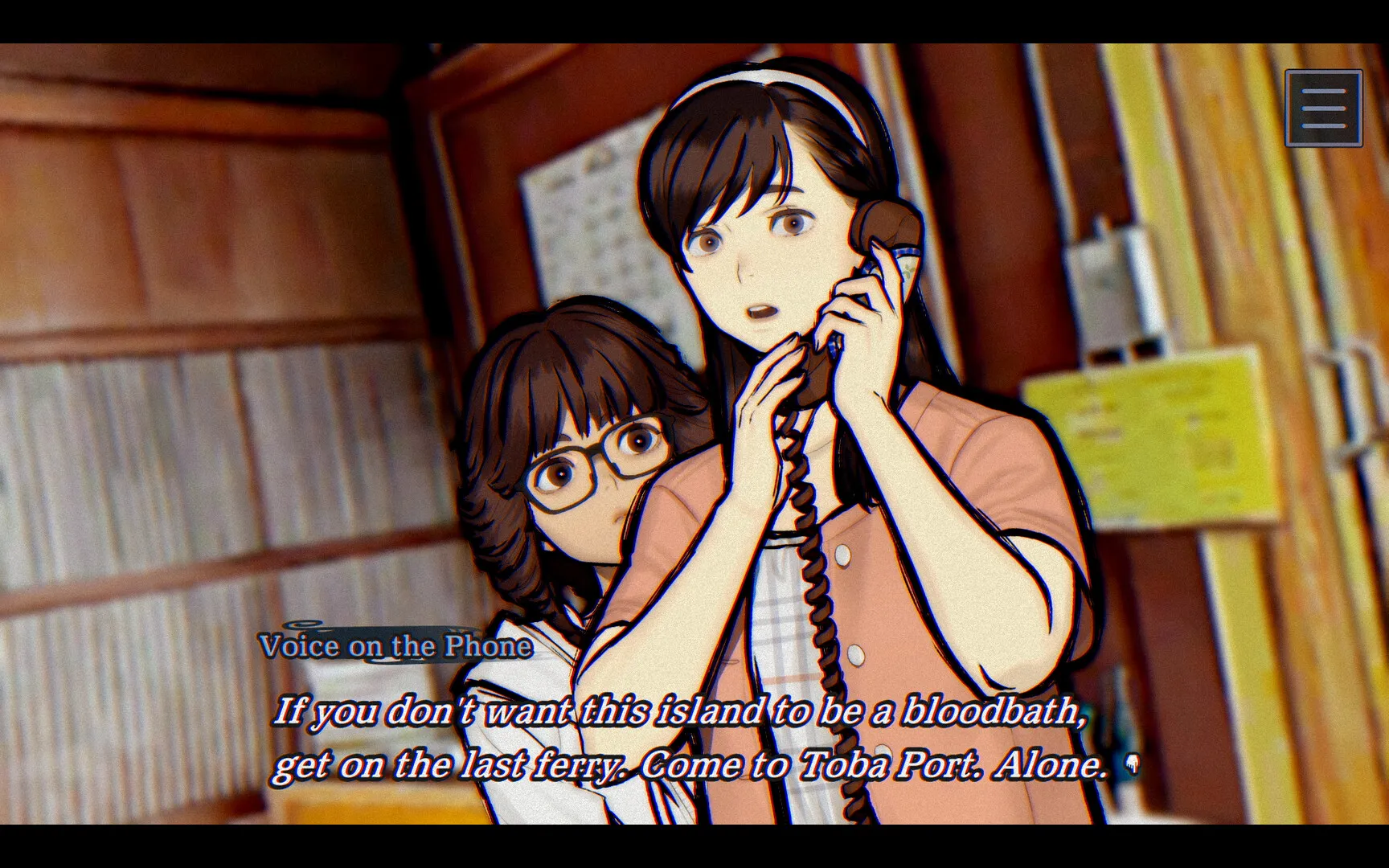
Characters gain energy through exaggerated animation. Facial expressions often go big, and that emphasis helps clarify personality and intent. Avi, the fantasy author, brings a lighter current through his constant chatter about adventure. The portrait work keeps the cast distinct and readable even without full 3D models.
The soundtrack moves between calm seaside themes and creeping dread. Small audio cues do a lot of the suspense work, where a faint sound can mark a sudden shift in the air of a scene. The audio design and the visual presentation reinforce each other, keeping you alert during quiet exploration and tense story beats.
The game leans into psychological suspense. It plays as a paranormal mystery with a strong human focus. The narrative aims for a heartfelt story about the weight of cultural myths and the pull of love, giving emotional grounding to the supernatural events. The pacing stays measured, with early hours devoted to lore and world-building so the stakes feel clear before the plot turns sharper. That patience supports the later escalation, as the mystery thickens and the bonds between characters gain more weight.
The Review
PARANORMASIGHT: The Mermaid's Curse
Paranormasight: The Mermaid's Curse successfully expands a formula that prioritizes psychological depth and meticulous investigation. Its non-linear narrative and meta-puzzles challenge the player to think outside the traditional limits of the genre. While the initial pace is slow, the emotional payoff and the clever use of folklore make it a standout mystery. It remains a polished, creative experience that honors its roots while establishing its own identity.
PROS
- Clever meta-narrative mechanics that engage the player directly.
- Deep, deduction-based puzzles that reward close observation.
- Evocative 1980s atmosphere and retro aesthetic.
- Memorable character writing and expressive animations.
CONS
- Slow early-game pacing can hinder the narrative momentum.
- Lack of modern quality-of-life features in the menu systems.
- Occasional navigational frustrations with the cursor-based interface.