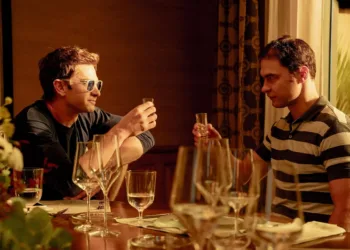





























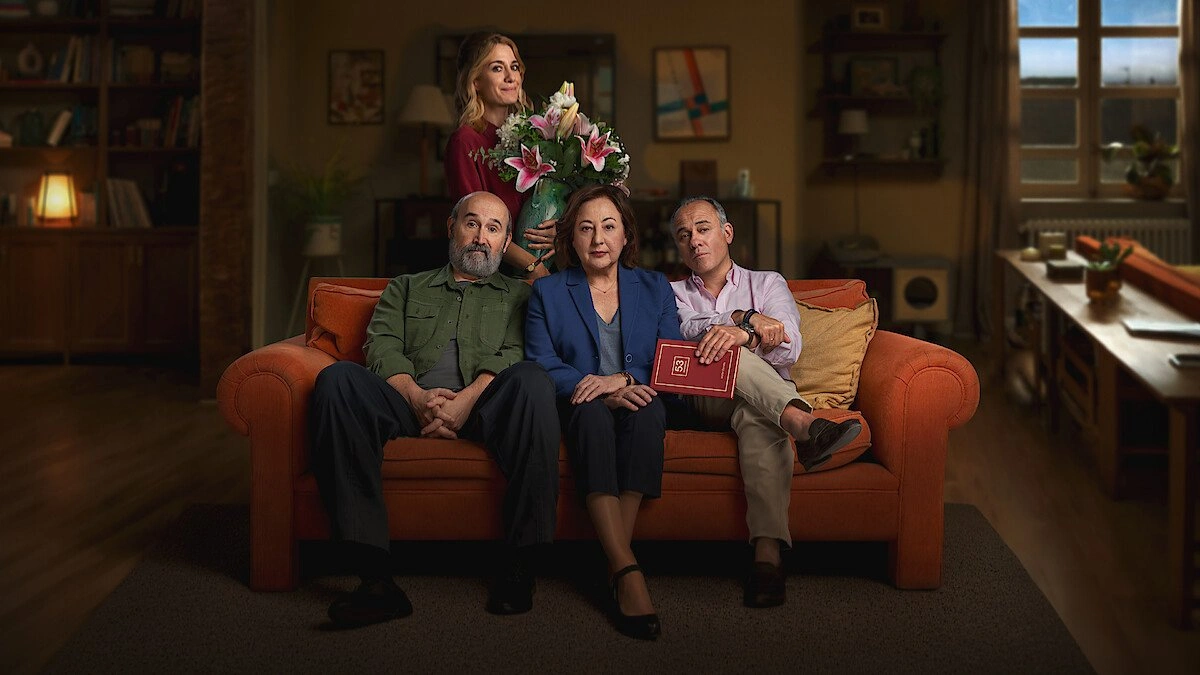

Cesc Gay adapts his stage play for the screen with 53 Sundays, a 78-minute Spanish film now streaming on Netflix. Its drama grows from the close air of domestic life and from a family problem that reaches far past its Mediterranean setting.
Three middle-aged siblings have to decide how to care for their 89-year-old father, whose conduct has grown erratic. That practical question opens into a study of family structure, memory, and duty. Julián, Natalia, and Víctor carry the conflict, with Julián’s wife Carol giving the story a steady point of view.
The film works as a chamber piece, drawing on a European cinematic tradition in which a single setting presses emotions to the surface. As a tragicomedy, it keeps its attention on speech, pauses, and the strain inside ordinary conversation. With almost no external action, Gay turns a request to change a lightbulb into a release point for years of bitterness, buried history, and shared frustration.
A Triangle of Resentment and Redirection
The film’s dramatic engine comes from the friction among the siblings, each shaped by a different mix of pride and unease. Julián is a cynical actor whose present career high point is playing a tomato in a gazpacho commercial.
That detail gives him a comic sting and places him in a state of professional humiliation, which sharpens his resentment toward Víctor. Víctor has married into money and recently published a novel, and that act of authorship disturbs the family order they seem to understand without ever stating it aloud. Natalia, a professor, has taken on the daily labor of care.
She carries the fatigue of the family member who absorbs responsibility because no one else steps forward with equal consistency. Carol stands slightly outside the sibling triangle, and the script uses her to puncture the rituals of their arguments. Her comments, delivered with a directness the others lack, expose how absurd their patterns have become.
Gay’s script ties large emotional wounds to trivial objects. An ugly vase or a dispute about a lightbulb becomes a stand-in for a far harder subject, their father’s mortality. That method gives the film a recognizable emotional logic. Families often speak through detours, circling a painful fact through complaints about furniture, errands, or tone of voice. The screenplay maps that habit with care.
Its three-act movement, shifting from meetings in pairs to a volatile confrontation among all three siblings, charts the breakdown in how they speak and listen. The structure feels almost diagnostic. Each new exchange reveals an old grievance, and each grievance blocks any stable decision about the father who brought them together in the first place.
The Architecture of Theatrical Constraint
Gay keeps the theatrical DNA of the original play in full view. He accepts the formal restrictions and builds the film around them. Confined rooms and a pared-down visual style may feel plain to viewers waiting for a more expansive kind of cinema, yet that restraint gives the material its force.
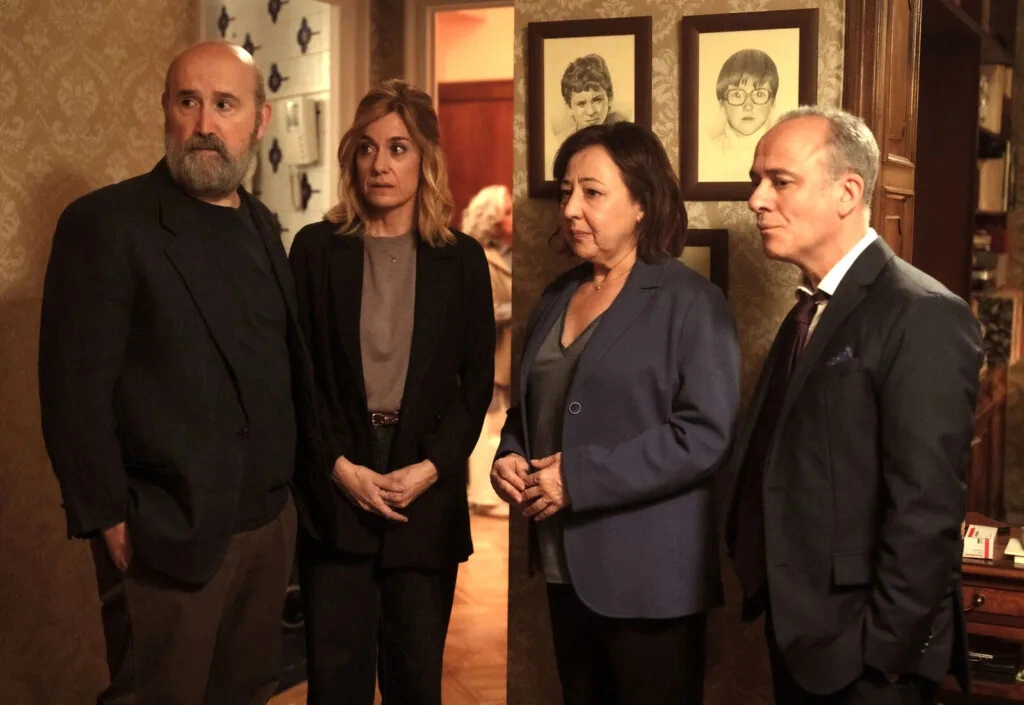
The camera stays close to the actors, narrowing the space around them and heightening the sense that every silence has weight. That choice creates a voyeuristic mood, placing the viewer in the position of someone overhearing private conversations that were never meant for public hearing.
The film’s rhythm comes from language. Long exchanges, hesitant pauses, and carefully timed interruptions shape the pacing. In that sense, the movie has an affinity with narrative-driven games, where progress emerges through conversation and emotional calibration. The movement of a scene depends on how people phrase a thought, dodge a subject, or reopen a grievance.
The verbal sparring becomes its own system of action. Gay finds cinematic value in that system without abandoning the play’s intimacy. The 78-minute runtime also helps. The script is dense, yet the film stays focused on the pressure building inside the room. It keeps returning to the same emotional knot, which suits the siblings’ circular reasoning and prevents the material from wandering away from the crisis at hand.
Universal Absurdity and the Art of Avoidance
One of the film’s sharpest choices is its treatment of character. No one here receives the role of villain. Each person moves through the story with some measure of care and some measure of selfishness. That balance makes their pettiness feel painfully familiar.
The family bureaucracy on display has a local texture, grounded in a Spanish household and in a European tradition of character-centered storytelling, yet its emotional pattern travels easily across cultures. Arguments about obligation, inheritance, status, and parental decline belong to many households, even when the details change from one society to another.
The siblings keep bickering because bickering gives them a workable distraction. Their father’s decline is harder to face than a debate over chores, objects, or etiquette. The film treats avoidance as a social performance and as a form of grief management. A lightbulb becomes easier to discuss than the person sitting in darkness. That image carries the tragicomic tone of the film with unusual precision. It links household routine to emotional blindness and shows how care can be delayed by resentment, vanity, and exhaustion.
By the end, the film lands on an ironic note that fits everything that came before. These family patterns remain in place even as life keeps moving. Resolutions do not fully arrive. What does arrive is a clear view of ties that hold people together and strain them at the same time. 53 Sundays studies those ties with candor, using the scale of a living room drama to speak to fears and habits that travel well beyond its place of origin.
Adapted from the successful stage play by Cesc Gay, 53 Sundays premiered globally on Netflix on March 27, 2026. The film follows three siblings—Julián, Natalia, and Víctor—who convene at a family gathering to decide the future of their 89-year-old father as his behavior becomes increasingly erratic. Shot primarily at the Netflix Production Center in Tres Cantos and throughout central Madrid, this Spanish dramedy offers a biting, witty look at domestic friction and the fragility of family bonds. Given that today is April 22, 2026, the film has been available for streaming for nearly a month and remains one of the prominent recent additions to the platform’s international slate.
Where to watch 53 Sundays (2026) Online


Full Credits
Title: 53 Sundays (53 domingos)
Distributor: Netflix
Release date: March 27, 2026
Rating: TV-MA (A14)
Running time: 78 minutes
Director: Cesc Gay
Writers: Cesc Gay
Producers and Executive Producers: Marta Esteban, Laia Bosch
Cast: Javier Cámara, Carmen Machi, Javier Gutiérrez, Alexandra Jiménez, Ricardo Lacámara
Director of Photography (Cinematographer): Andreu Rebés
Editors: Liana Artigal
Composer: Arnau Bataller
The Review
53 Sundays
The film is a sharp, economical dissection of family friction that prioritizes psychological depth over visual flair. By utilizing a "chamber drama" format, it captures the messy, circular nature of sibling rivalry with uncomfortable accuracy. While its theatrical roots limit its cinematic scale, the exceptional performances and biting dialogue create a resonant portrait of the struggle to balance ego with responsibility. It is a quiet, intelligent study of the ties that bind and occasionally choke.
PROS
- The cast navigates complex emotional shifts with naturalism and wit.
- The script captures the specific, petty cadence of family arguments.
- At 78 minutes, the narrative remains focused and avoids bloat.
- The themes of aging parents and sibling roles transcend cultural lines.
CONS
- The staging feels static and lacks cinematic ambition.
- Viewers seeking a dynamic visual experience may find it bland.
- The "ailing parent" trope is well-trodden territory in modern drama.