




















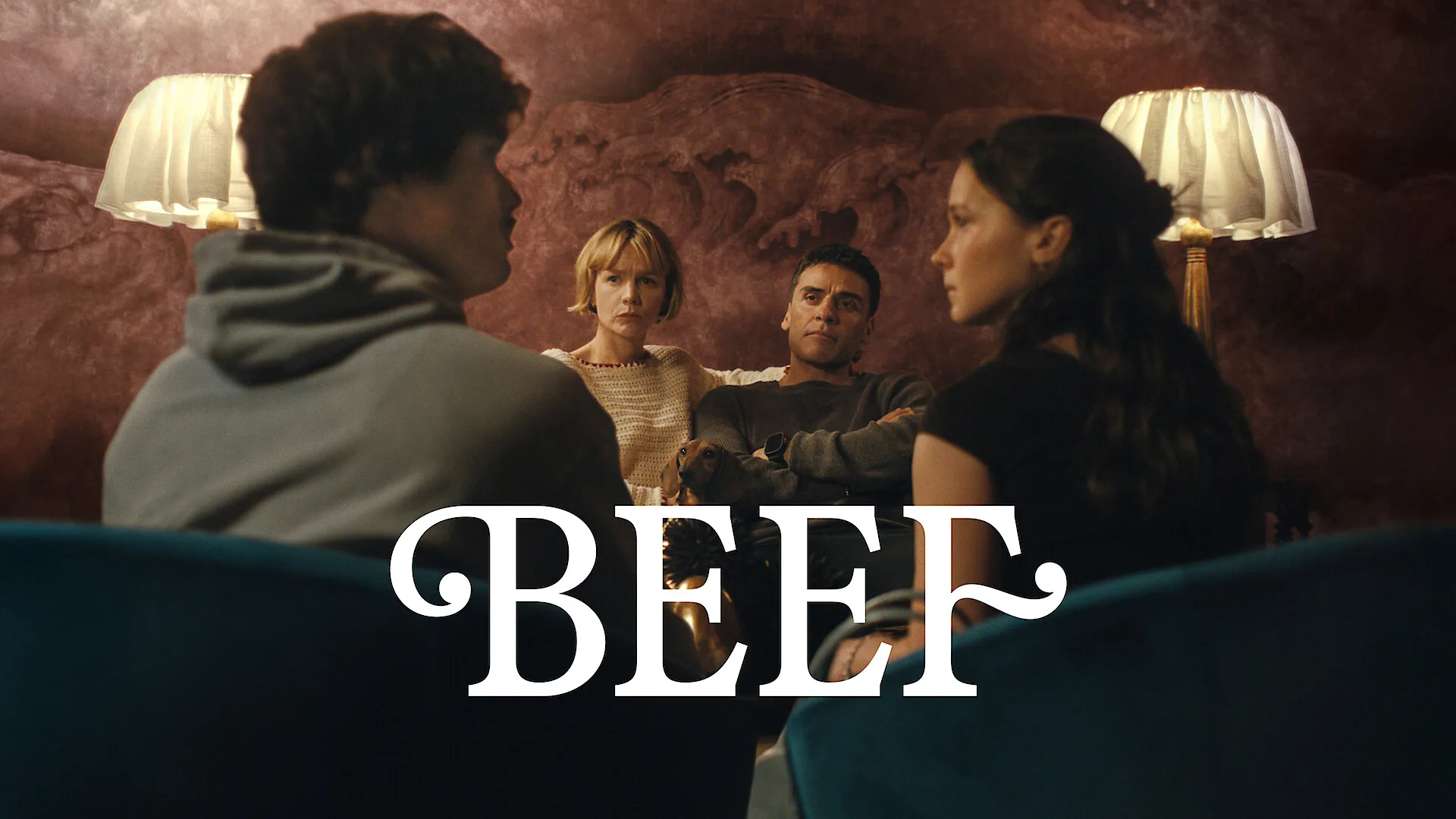

Netflix’s Beef returns for a second season as a fully reconstituted anthology, shedding its original cast and story for something altogether different in scale and setting. The action shifts to Monte Vista Point, an elite Montecito country club where a $300,000 initiation fee buys membership and the uncomfortable illusion of belonging.
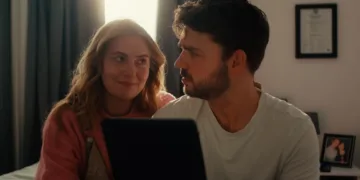
Two couples form the story’s fault lines. Josh Martín (Oscar Isaac) and Lindsay Crane-Martín (Carey Mulligan) are elder millennials who have assembled all the right props of success: the prestigious club position, the social circle, the Hollywood Hills home, with their marriage quietly falling apart behind it all. Ashley Miller (Cailee Spaeny) and Austin Davis (Charles Melton) are young, engaged, and broke, sustained by each other’s company and a faith in a future that keeps receding.
When Ashley and Austin witness and film a violent domestic confrontation between Josh and Lindsay, a chain of blackmail, deception, and mutual destruction is set in motion. Creator Lee Sung Jin expands his canvas considerably, bringing Korean cinema icons Youn Yuh-jung and Song Kang-ho into the mix. The season’s preoccupations are clear from the outset: late-stage capitalism, class aspiration, and the corrosive effect of financial anxiety on love.
The Architecture of Ambition
Beef’s pivot to anthology format was a genuine creative gamble. Eight episodes cover a sprawling web of relationships, schemes, and social positioning, all orbiting a luxury country club that functions as both setting and symbol. The inciting incident is deliberately modest: two low-level employees stumble upon their employer mid-meltdown, phone already in hand. From that seed grows a story of embezzlement, blackmail, forgery, and conspiracy.
The pacing is relentless, and the show rarely permits a breath. That frenetic quality is one of its sharpest tools, but it cuts both ways. Some subplots arrive and vanish too quickly to leave a real mark. The tennis pro’s side operation funneling clients to a Seoul surgery clinic gets introduced with purpose and then largely abandoned. The show’s ambition occasionally outpaces its discipline.
The country club setting is shrewdly chosen. Everyone at Monte Vista Point is either performing wealth or servicing it, and the show tracks the exact gap between those two positions with considerable precision. Josh and Lindsay occupy the aspirational middle: comfortably placed, chronically insecure. Ashley and Austin work the bottom rung, their dreams calibrated to basics: health insurance, a stable income, a shot at a real wedding. Chairwoman Park (Youn Yuh-jung) sits at the summit, a billionaire whose wealth has calcified into something close to absolute control. The visual motif of ants parading across windowsills and bowls of fruit is deployed with real discipline, a recurring image of futile, compulsive striving that never becomes heavy-handed.
The relationships themselves are studied as pressure vessels. Josh spent Lindsay’s inheritance on his dying mother. Ashley hides a frightening medical diagnosis from Austin, who responds to her emotional withdrawal by consulting Reddit. The show’s central provocation is pointed: romantic love, stretched across financial stress and self-deception, may not bend back into shape.
Creatures of Their Own Making
Oscar Isaac carries Josh with a quality of taut, suppressed wreckage. The character is a professional facilitator: always smoothing, always managing, always smiling through other people’s demands while his own life frays at the seams. Isaac makes the contradictions legible without underlining them. Josh is sympathetic and self-serving in equal measure, a man whose guilt about his mother has curdled into a kind of entitlement, and Isaac holds that complexity without tipping the performance into either camp.
Carey Mulligan’s Lindsay is the season’s most combustible presence. Brilliant, underemployed, and furious, Lindsay has sharpened her resentments over years of decorative domesticity and deploys them with surgical accuracy. Mulligan is magnificent in the scathing set-piece moments, the verbal strikes that land with precision, and equally effective in quieter, more exposed scenes when Lindsay’s armour comes down. The anger is earned, and the performance honours that fully.
Cailee Spaeny does something difficult with Ashley: she makes her simultaneously recognisable and surprising. Ashley arrives as a study in naivety and low-grade opportunism, but Spaeny gradually reveals a sharper, more calculating intelligence underneath. The comedy and the dread coexist in the performance without cancelling each other out. Ashley’s instincts are well-honed; her judgment, frequently catastrophic.
Charles Melton is quietly revelatory. Austin is lovable in the way that people who peaked early can be: a little lost, proudly attached to a college football award from his glory days, borrowing the vocabulary of wealth redistribution from podcasts he half-listened to. Melton makes the character’s fumbling earnestness genuinely moving, and the scenes in which Austin confronts his complicated relationship with his Korean heritage are handled with a tenderness that catches you off guard. His chemistry with Spaeny is warm and credible enough that watching it erode carries real weight.
Youn Yuh-jung’s Chairwoman Park is a masterclass in the power of restraint. She commands every scene without apparent effort, and her silences carry as much force as her dialogue. Song Kang-ho’s Dr. Kim arrives late in the season but his presence immediately shifts the dramatic register. Playing against type here, the contrast with his most celebrated screen work is quietly thrilling, and his scenes with the male leads add an unexpected depth of emotional texture.
Surfaces and What Lies Beneath
The season is directed across its eight episodes by Lee Sung Jin, Jake Schreier, and Kitao Sakurai, and the visual approach is consistent enough to read as a single, deliberate style. The country club setting is used expressively: wide, pristine fairways that feel somehow airless; interiors so perfectly appointed they seem designed to suppress honest emotion. Grace Yun’s production design deserves particular attention. The club’s surfaces are oppressively flawless, which makes the disorder breaking through them feel genuinely alarming.
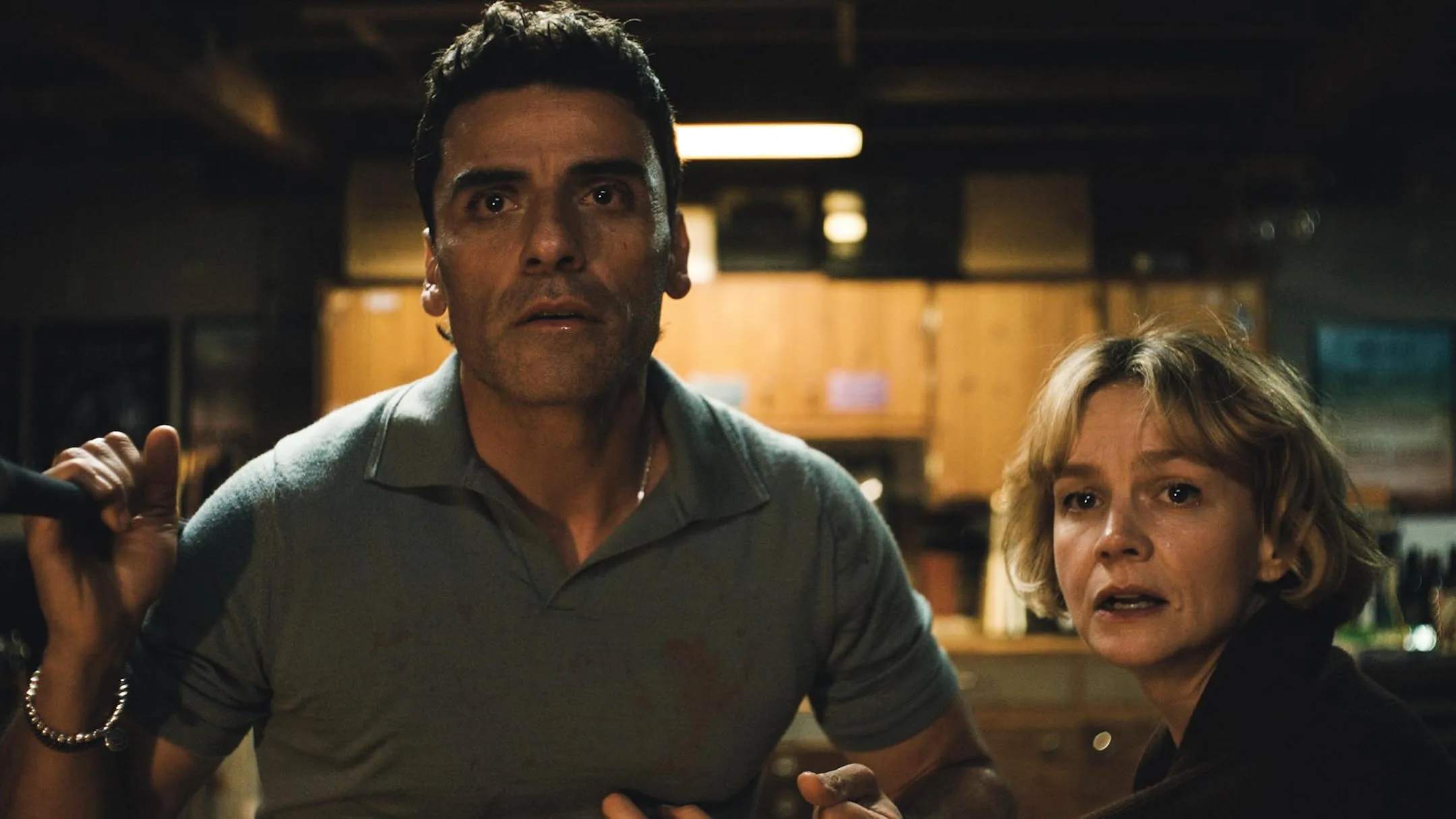
The insect imagery, ants streaming across a bowl of oranges, bees occupying unwanted crevices, is woven through the season with discipline. It functions as a metaphor for infestation and compulsion, the slow creep of wanting more than your circumstances allow, and it lands because it is never overplayed. As the conspiracy tightens in later episodes, the visual grammar tightens with it, moving from the broader social comedy of the opening hours toward something darker and more claustrophobic.
Tonally, the season operates across several registers at once. It is social satire, dark comedy, relationship drama, and conspiracy thriller, sometimes within the same scene. The comedy tends to be acidic and character-specific: the laughs arrive from watching people who believe they are the smartest in the room prove themselves wrong, repeatedly and with great conviction. Finneas’s synth-heavy score keeps the atmosphere unsettled, oscillating between warmth and something quietly menacing.
The season’s weaknesses are real. Certain subplots are set up with care and then inadequately resolved. The finale leans heavily on exposition to state what the performances have already communicated, and that explanatory weight can feel like a lack of trust in the audience.
A Second Serving That Earns Its Place
The anthology gamble pays off, though not without cost. Season 2 is deliberately different in texture from its predecessor, and its willingness to go bigger while retaining the show’s sardonic moral intelligence is its most significant achievement. The echoes between seasons, the recurring preoccupation with interior design, the near-miss car encounter, the coyotes prowling the Southern California edges of the story, read as house-style signatures rather than lazy repetition. The same situations, different people: the results are fundamentally changed.
Where the first season was intimate and interior, focused on the psychological wreckage of two individuals, Season 2 is systemic in its targets. The enemy is the structure itself: the financial architecture that turns love into a liability and converts aspiration into exploitation. Chairwoman Park and Dr. Kim are central to this shift. They bring a transnational dimension to the show’s critique of wealth and power, rooting the season’s concerns in something that extends well past its California setting.
The production design earns its own mention. The club interiors are so perfectly constructed they feel almost satirical, which is precisely the point. Beef Season 2 is the messier, more sprawling, more ambitious follow-up. It earns that sprawl more often than it loses control of it. The performances anchor what the structure occasionally cannot. Bold, flawed, and frequently brilliant, the show has made clear it has a great deal left to say.
The second season of the acclaimed anthology series Beef premiered on April 16, 2026. Transitioning from the intense road rage feud of its first season, this installment shifts focus to an elitist country club setting. The story follows a young couple, played by Charles Melton and Cailee Spaeny, who witness an alarming dispute between their boss and his wife, portrayed by Oscar Isaac and Carey Mulligan. This event triggers a complex web of favors, coercion, and class warfare within the world of a Korean billionaire owner. All eight episodes of the season are available to stream exclusively on Netflix.
Where to Watch Beef Season 2 Online


Full Credits
Title: Beef Season 2
Distributor: Netflix
Release date: April 16, 2026
Rating: TV-MA
Running time: 30 minutes per episode
Director: Lee Sung Jin, Jake Schreier
Writers: Lee Sung Jin, Alice Ju, Carrie Kemper
Producers and Executive Producers: Lee Sung Jin, Steven Yeun, Ali Wong, Jake Schreier, Ravi Nandan, Hallie Sekoff
Cast: Oscar Isaac, Carey Mulligan, Charles Melton, Cailee Spaeny, Youn Yuh-jung, Song Kang-ho, Jang So-yeon, William Fichtner
Director of Photography (Cinematographer): Larkin Seiple
Editors: Nat Fuller, Laura Zempel
Composer: Bobby Krlic
The Review
Beef Season 2
Beef Season 2 is a bold, occasionally unwieldy, and largely triumphant expansion of one of streaming's sharpest series. Lee Sung Jin trades intimacy for scale and mostly wins the exchange. The four central performances are exceptional, the satirical framework is precise, and the country club setting proves a richly loaded arena for the show's class warfare. Some subplots stall and the finale over-explains, but the ambition is genuine and the execution frequently dazzles.
PROS
- Isaac and Mulligan deliver career-best small-screen work
- Spaeny and Melton exceed expectations considerably
- Youn Yuh-jung and Song Kang-ho elevate every scene they inhabit
- Sharp, disciplined visual storytelling
- Capitalism critique lands with wit and real bite
- Finneas's score is perfectly calibrated
CONS
- Several subplots are underdeveloped or abandoned
- The finale relies too heavily on exposition
- Loses some of the first season's intimate focus
- Pacing occasionally substitutes speed for depth