
























![Kingdom Hearts Collection [I-III] Review](https://gazettely.com/wp-content/uploads/2026/10/Kingdom-Hearts-Collection-I-III-1-360x180.webp "Kingdom Hearts Collection [I-III] Review: KHII Holds Steady as Newer Entries Fluctuate 37")





Warner Bros. has moved its next major Westeros bet onto the big screen, confirming at CinemaCon that a new feature film titled Game of Thrones: Aegon’s Conquest is in development for release in 2027 or later. The announcement turns months of reports into an official franchise pivot and gives the studio its first theatrical project set in George R.R. Martin’s fantasy world, a universe that has lived on television since 2011. Beau Willimon, whose recent work includes Andor, is attached to write the script.
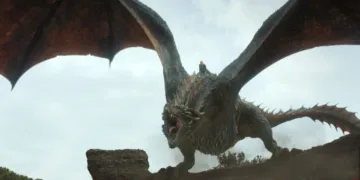
The choice of story matters. Aegon I Targaryen’s campaign to unite Westeros sits at the foundation of the mythology that powered both Game of Thrones and House of the Dragon. It is spectacle-driven material, packed with dragons, war and the forging of the Iron Throne, which makes it easier to imagine as a theatrical event than some of the franchise’s slower political tales. Reports from March said Warner leadership responded strongly to an early draft from Willimon, suggesting the project had already gathered momentum before the studio made it public this week.
The film also appears to settle a question that had hovered over HBO’s development slate for more than a year. In early 2025, HBO drama chief Francesca Orsi spoke of a “very promising” Targaryen-line project without naming it, and industry reporting later tied that effort to Aegon’s conquest. Warner’s decision to reveal a movie title now points to a feature-first strategy, even if the studio has not publicly addressed whether any parallel television version has been shelved.
That strategy lands at a busy moment for the franchise. House of the Dragon is set to return for a third season in June 2026, while A Knight of the Seven Kingdoms debuted on HBO on January 18 and has already been positioned as a recurring pillar of the brand.
The new film gives Warner a chance to test whether Westeros can drive theatrical revenue after years of streaming-led franchise building. It also raises a creative challenge: Aegon’s conquest is legendary in Martin’s canon, which gives filmmakers huge scale to work with, while leaving less room for the kind of character mystery that powered the early years of Game of Thrones.







