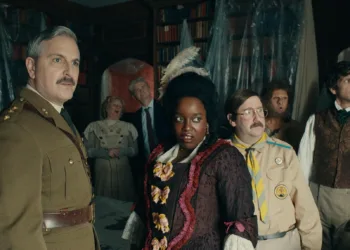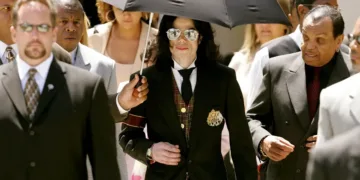

























The Michael Jackson biopic Michael opened this weekend to record-breaking box office numbers, but a new financial disclosure reveals the chaotic road that got it there: director Antoine Fuqua and producer Graham King each received multimillion-dollar supplemental paydays after the film’s entire third act had to be scrapped and reshot due to a legal clause the Jackson estate had failed to identify during development.
According to a Bloomberg report, Fuqua was originally contracted to earn $10 million for directing the film. After 22 days of reshoots in June 2025, he secured an additional $15 million. King, who had spent seven years developing the project, was originally set to receive $6 million as producer — a figure that grew by another $10 million to see the reshoot process through.
A spokesperson for King framed the payments as unavoidable compensation for disruption: “Because the film needed to go back into production and a new budget developed, King and Antoine Fuqua had to postpone other projects and commitments. This was part of the newly formed budget and an advance against the film.”
The trigger was a buried legal landmine. The Jackson estate’s lawyers discovered that a clause in the 1993 settlement with accuser Jordan Chandler explicitly barred any dramatization of him in a film — a restriction the estate had apparently been unaware of when the script was written. Fuqua confirmed to The New Yorker that he had already filmed a recreation of a 1993 police raid on Jackson’s Neverland Ranch connected to those allegations — footage that ultimately went unused.
The film, which originally wrapped its third act around the accusations, was rebuilt from scratch. It now ends in 1988, more than 20 years before Jackson’s 2009 death, and a sequel covering the later period is under consideration at Lionsgate.
The collateral damage extended to the cast. Actress Kat Graham, who had been cast as Diana Ross, confirmed on social media that her scenes were cut due to “legal considerations” — they were almost certainly linked to the sections of the film being removed.
The decision was reportedly also shaped by commercial calculations: concerns that including the abuse allegations could hurt the film’s box office performance played a role in the choice to strip them out. Those concerns proved moot. Despite landing a 38% critics’ score on Rotten Tomatoes, Michael opened to $97 million domestically and $217 million globally, setting an all-time record for a music biopic opening weekend.
James Safechuck, one of the accusers whose story was told in HBO’s 2019 documentary Leaving Neverland, released a video message on opening day addressed to other survivors of childhood sexual abuse.