

























![Kingdom Hearts Collection [I-III] Review](https://gazettely.com/wp-content/uploads/2026/10/Kingdom-Hearts-Collection-I-III-1-360x180.webp "Kingdom Hearts Collection [I-III] Review: KHII Holds Steady as Newer Entries Fluctuate 37")




The 10:00 PM slot on Sky One now carries a curious act of cultural taxidermy: a British rendering of an American giant. Saturday Night Live UK appears decades after its New York ancestor first set the terms for the sketch-industrial complex, landing in a repurposed London studio with the same hard frame Lorne Michaels has kept in place for fifty years.
Producer James Longman supervises the translation, keeping the cold open, the monologue, and the live musical breaks firmly in view. The premiere leans on Tina Fey as a kind of diplomatic ballast, and she handles that task with the ease of a veteran stateswoman, smoothing the distance between the polished NBC surface and the rougher grain of the British comedy circuit.
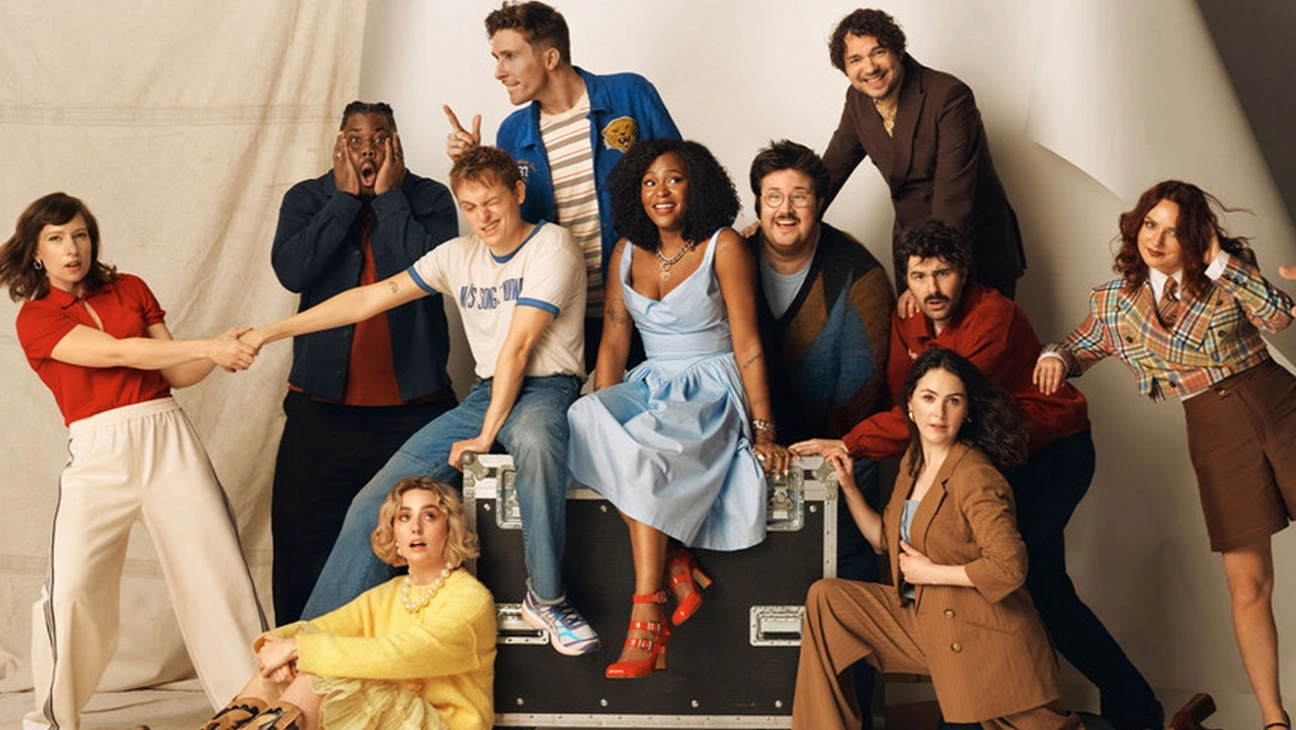
It feels like an odd civic ceremony. The show borrows the visual grammar of 30 Rock and fills it with the fretful pulse of Edinburgh Fringe lifers. What emerges is a broadcast that looks imported and sounds homegrown, a hybrid object in which a multicultural cast of character actors works under the long shadow of an institution that has already fossilized into legend.
It is a British comedy.
Archetypes and the Art of Persona-Shifting
George Fouracres stands out as the chief technician in this new ensemble, offering a study in the beige authority of Keir Starmer. His turn does far more than mimic a voice. He catches a distinct form of modern political paralysis, that drained managerial manner familiar from public life in an age of permanent hesitation.
In “45 Seconds With Fouracres,” he shifts into regional character work, studying the tropes of Irish grandads with a precision so exact it feels absorbed rather than observed. He has the kind of range that can pin the show to something recognizable, which matters in a format that can drift into pure nonsense with alarming speed.
Jack Shep supplies the necessary jolt from the opposite end of the spectrum, working in a register that feels like comedic dysmorphia. His Princess Diana carries a nervous, posh fragility that conjures the nineties like a ghost at a state function, and the performance lands laughs without collapsing into a cheap impersonation. Then he arrives as a dancing baby fetus and injects unruly life into a sketch short on narrative muscle. Shep seems tuned to a separate channel from the rest of the cast, delivering the sort of visual shocks that stop the live format from petrifying into heritage television.
Hammed Animashaun brings a polished sense of timing to material like the Ed Boovies film critic sketch, where his brutally honest influencer gives modern publicity cycles the sort of withering appraisal they richly deserve. Emma Sidi has real command of the stage too, especially as a handsy bra concierge. Both actors treat these sketches as character studies, which marks a clear tonal distinction from the broader caricature that often powers the American version.
Ania Magliano and Paddy Young take their places at the Weekend Update desk with a dry, side-eyed poise. Their chemistry remains young, still forming in public, yet their jokes about royal scandal and international influencers arrive with a flat affect that reads like a refusal of the high-octane American anchor mode. They resemble actual news presenters who have stared too long into the national abyss and come out mildly numb. That, one suspects, is a very local kind of truth.
Linguistic Libertarianism and the Dark Sketch
The move to British television opens the door to darker, stranger comic material. The “Undérage” skincare parody gives an early sign of that tonal shift: a commercial for a product that makes women look so young that people will assume their husbands are nonces. American censors would probably recoil on contact. Here, the premise becomes a sharp jab at age anxiety and the social codes that surround beauty, marriage, and public judgment. The show uses that harsher edge to separate itself from the source model.
Broadcast standards also permit a form of linguistic libertarianism missing from the American version. Profanity changes the pulse of the writing, especially in the “Hamnet” parody. Shakespeare returning to London on a stolen scooter and dropping the c-word carries the sensation of a pressure valve finally giving way. Swearing can easily become lazy, of course. In this case it often works as a practical device, placing these absurd figures inside a recognizably modern London and stripping away the museum glass.
The programme sends up national tropes by pushing toward the surreal rather than settling for the stereotypical. A blood-spattered Paddington. A David Attenborough dinner party with Cilla Black. These sketches prod at the British psyche with a kind of affectionate malice. They have no interest in satisfying tourist expectations. Their focus stays fixed on the peculiar distortions of present-day British life.
The live format still obeys its own old laws, and one of those laws is failure. The birth sketch with the attention-seeking baby felt laboured. The bra-fitting finale drifted into silence. That dead air is part of the bargain. Comedy built in public needs the chance of collapse, or the good material loses its charge and starts to feel pre-approved.
The Architecture of the Funhouse Mirror
The production design aims for a near-faithful copy of the NBC template, producing a funhouse mirror in which every element feels familiar and faintly skewed. The cold open remains. The monologue remains. Yet the room gives off a different pulse. Tina Fey functions partly as a seal of approval, partly as insurance against the national habit of watching new entertainment with folded arms and a readiness to sneer. Her rapid-fire impressions of British soap legends play like an offering to the doubters, a peace treaty delivered in character voices.
Technical differences show up in the visual rhythm. There are no traditional host bumper photos, and the interstitial music works to a different beat. The blocking can look stiff. Performers sometimes line themselves up and face the lens instead of truly playing off one another. That choice creates a mild chill, a small but noticeable distance that the American show usually softens with looser movement.
The Weekend Update set feels physically detached from the rest of the action. The space between Magliano and Young may be a tactical way of sharpening their individual deliveries, yet it slows the exchange of barbs. A tighter layout could produce the friction that a satirical news desk badly needs.
Graham Norton’s repurposed studio gives the broadcast a specific atmosphere. It is smaller than the cavernous New York spaces, and that scale forces intimacy. The live audience appears to wrestle with the format at first, moving from caution toward something closer to ease as the evening unfolds. Watching them adjust becomes part of the show’s drama, which is funny in its own slightly grim way.
Rhythms of the Future and the Local Voice
Wet Leg, as musical guest, supply a flash of genuine cool that fixes the programme in the present tense. Their set cuts through the stop-start comic rhythm and reminds the audience that this format has always functioned as a cultural showcase. Music remains one of the franchise’s dependable strengths, offering relief from the variable quality of the sketches and placing the show inside a living pop moment.
The host dynamic presents a serious test in the weeks ahead. Opening with someone like Fey made perfect strategic sense, yet the series now has to pass that baton to local figures such as Jamie Dornan and Riz Ahmed. Its future rests on how well it can foreground the ensemble instead of allowing the host to swallow each segment whole.
There is also the matter of competition. British television already has panel shows, and it already has hybrid comic machines like Taskmaster. To survive in that environment, this series needs an identity with sharper edges. A lukewarm afterimage of a foreign brand will not do. Its best chance lies in its own surreal streak, its own dark comic instincts, and the particular gifts of its Fringe-heavy cast. If those elements stay central, the show has a shot at riding out the first wave of cynicism.
“Live from London” is an opening declaration. The real test lies in memory and amnesia: how much of its American inheritance it can shed, and how fully it can recover its British voice.
Saturday Night Live UK premiered on Sky One on March 21, 2026, bringing the long-running variety format to a British audience. The series airs live from London at 10 PM each Saturday, featuring a rotating lineup of celebrity hosts and musical guests. Viewers in the United Kingdom can watch the program on Sky One or stream it via the NOW platform. For audiences in the United States, episodes are available on Peacock the day after the initial broadcast. The show focuses on topical sketches and a localized version of the news segment.
Where to Watch Saturday Night Live UK Online


Full Credits
Title: Saturday Night Live UK
Distributor: Sky One, NOW, Peacock
Release date: March 21, 2026
Rating: 15
Running time: 75 minutes
Director: Liz Clare
Writers: Daran Johnson, Al Roberts, Ayo Adenekan, Bella Hull, Celya AB, Charlie Skelton, Chris Cantrill, Ellie Fulcher, Gráinne Maguire, Hari Kanth, Humphrey Ker, James Farmer, Jonno Johnson
Producers and Executive Producers: Lorne Michaels, James Longman, Helen Kruger Bratt, Shanna Baynard, Andy Charles Smith, Sam Salter, Phil Edgar-Jones, Lisa Clark
Cast: Hammed Animashaun, Ayoade Bamgboye, Larry Dean, Celeste Dring, George Fouracres, Ania Magliano, Annabel Marlow, Al Nash, Jack Shep, Emma Sidi, Paddy Young
Director of Photography (Cinematographer): Jeremy Hewson
Editors: Hunter Allen
Composer: Pauli Lovejoy
The Review
Saturday Night Live UK
This experiment in cultural-transplantation functions better than expected. It succeeds when it embraces the dark, surrealist tendencies of the local comedy circuit. It falters when it clings too tightly to its American skeletal structure. The cast shows enough promise to justify the existence of the format. While some sketches overstay their welcome, the production avoids the disaster many predicted. It feels like a genuine attempt to revitalize a stagnant genre.
PROS
- Strong ensemble presence lead by George Fouracres and Jack Shep.
- The shift toward darker, more surrealist comedic sensibilities.
- Linguistic freedom that allows for sharper, more authentic satire.
- High-quality musical integration that feels relevant to the local scene.
CONS
- Structural rigidity inherited from the fifty-year-old American model.
- Pacing issues where sketches frequently overstay their welcome.
- The premiere relied too heavily on the guest host at the expense of the new cast.







