





























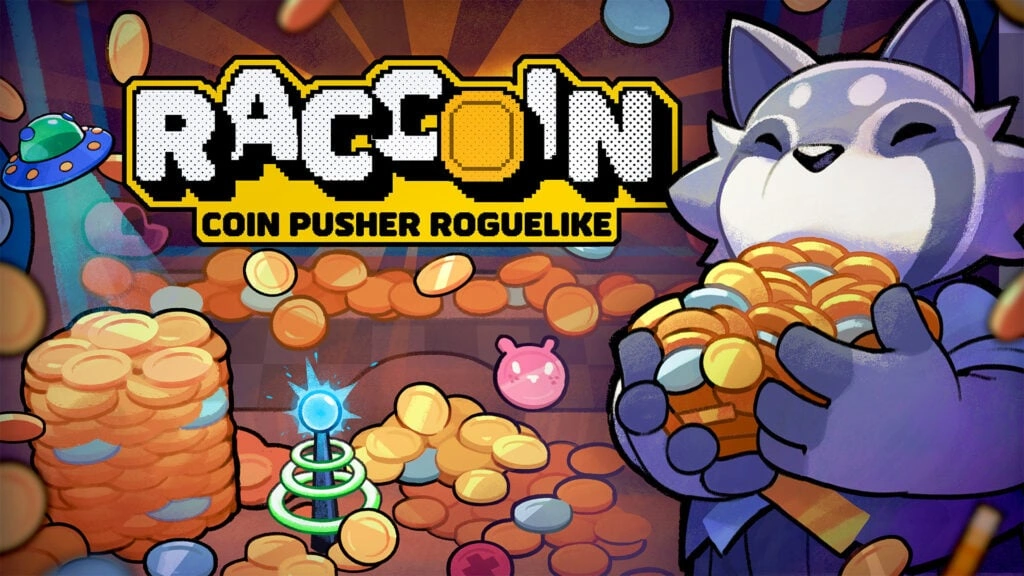

The metallic scrape of a weighted shelf cutting through a pile of copper builds a very specific strain of suspense. A wobbling wall of coins hangs near the edge, and every drop carries the chance of setting off a chain reaction. RACCOIN: Coin Pusher Roguelike builds its appeal from that feeling.
It takes the familiar coin pusher cabinet and pulls out the manipulative parts tied to seaside arcades, leaving a system driven by planning, timing, and physics. You stand in front of a digital machine and work through fifteen rounds with rising target scores. Coins move according to physical rules, free from the hidden tricks common in real cabinets.
The game lets you fire from the left side, the right side, or both, and that choice gives each shot weight. A simple dropping motion becomes a steady pattern of timing, positioning, and resource control. The presentation sticks closely to the look of a standalone cabinet, which keeps your attention on the shifting pile and the small disasters waiting to happen.
Gravity and Greed: The Tactical Loop
Timing carries the whole structure. You fire coins with the keyboard into a moving chute, trying to strike the shelf at the instant it pulls back. The exact landing spot changes how weight spreads across the field. One coin on the far left can tilt a large section of the pile. A drop near the middle can set up a forward shove that sends multiple coins over the lip. The game keeps asking you to read pressure points inside a messy stack.
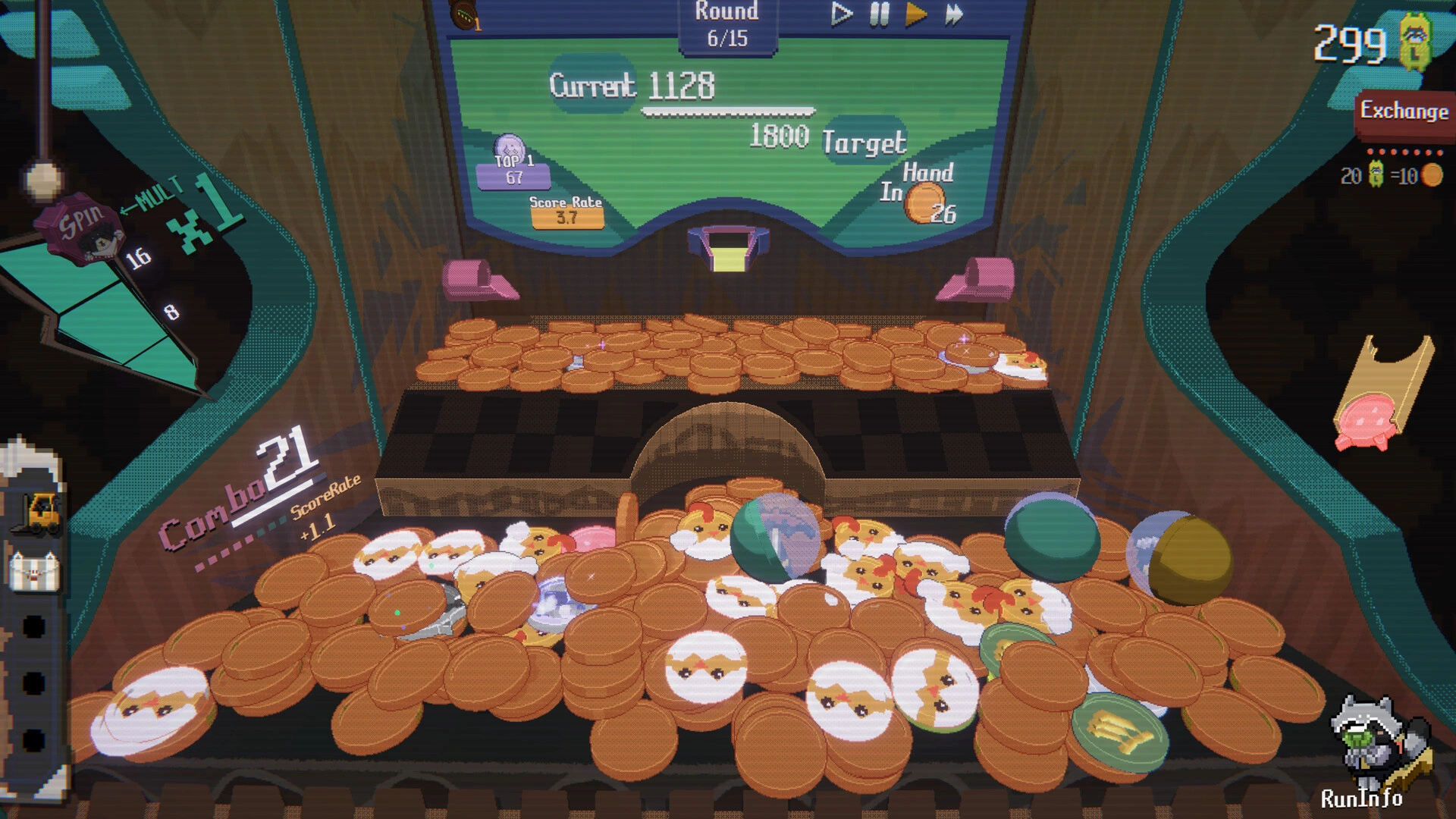
That mechanical base gains extra tension through the combo meter. Every coin that falls into the scoring pit pushes the meter higher, and the rising value increases your scoring rate. The system rewards steady rhythm. Long pauses kill the meter and erase that bonus, so each round turns into a quiet argument between caution and momentum. Saving coins may protect you for a better moment. Spending them quickly may keep the multiplier alive long enough to snowball into a strong score. That decision gives the cabinet a tactical identity that goes past simple spectacle.
Tickets shape the survival layer. You earn them through scoring, then spend them in the shop between rounds on power-ups and tools for the next stage. Running out of coins creates immediate pressure. The exchange function lets you trade tickets for ten extra coins, though each use raises the cost.
That price hike makes every emergency refill feel dangerous. Your last reserve is the cabinet shake, a single shove available once per round. A well-timed shake can knock loose coins hanging on the brink and turn a stalled setup into a payout. It is a physical action with clear value inside the physics system, and its limited use keeps it from becoming a crutch.
The reward structure adds one more layer through the prize wheel. Hitting certain combo thresholds unlocks this mini-game, and one of its strongest outcomes drops a huge coin tower into the center of the cabinet. Watching hundreds of coins collapse after careful setup feels deeply satisfying because the game makes you work for that result. Bad Coins keep the system from becoming too comfortable. These negative coins can destroy nearby pieces or interfere with your multiplier, and dealing with them requires buying specific coins built to eliminate the threat. That need shifts your shopping decisions in meaningful ways.
Forging Wealth through Chaos and Character
The roguelike side grows out of the interaction between more than 150 coin types and a long list of modifiers. Chips form the lasting framework of a run. These artifacts can raise the value of each coin that drops or award tickets each time you score successfully. Prizes and gadgets build around that base. The Blackhole Doll gathers coins into a tighter cluster for a stronger push. The Fishbone Figurine acts like a wall, keeping coins from slipping into the side pits where they earn nothing.
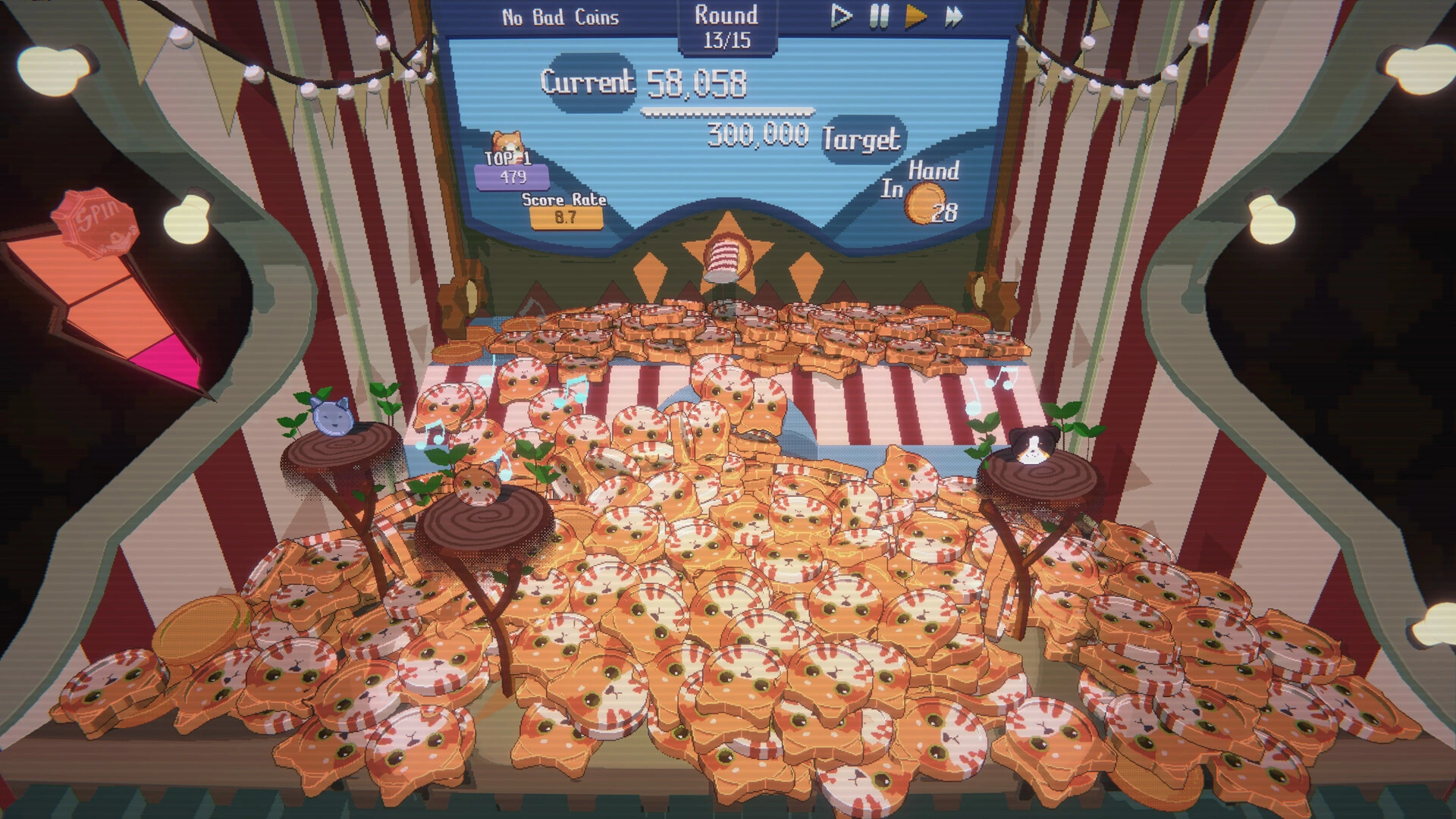
Special coins create room for real experimentation. A Glue Coin sticks nearby coins together, forming a larger and heavier mass that the shelf can move more easily. The Wolf Coin gains value by hunting and consuming Pig Coins already on the field. Shop modifiers can reshape these tools even further.
The Zombie modifier stands out because it turns any coin it touches into a duplicate with the same effect. Putting that modifier on a Multicoin, which triples the value of anything it contacts, can flood the cabinet with coins that multiply value across the board. Systems like that explain how the game expects players to reach the huge scores demanded in later rounds.
Character selection changes the flow of a run in clear ways. The Manager serves as a stable starting point for learning the machine. The Chemist alters the coin pool with elemental and explosive options. The Big Eater introduces a cooking system built around combining specific coins according to discovered recipes, which produces food coins with high values. These characters do more than swap cosmetics or small perks. They reshape what the run asks from the player and what kind of synergies become possible.
Metaprogression supports that structure through unlocks for characters and machine upgrades. Successful runs award points that can improve wheel rewards or change the cabinet’s color. Some keychain upgrades feel slight, such as an eight percent chance to convert a coin. Others have a strong effect on play.
The Pass Loop keychain lets you apply prizes to coins already on the field, and that single interaction can turn an ordinary round into a flood of points. The game gets strong mileage out of discovery. Learning which pieces connect feels rewarding because the cabinet keeps revealing new interactions through play. Each run begins with a Card and a Ticket, which act as deck-style and difficulty modifiers. Shop choices, from refreshing stock to buying a clip expander, shape the kind of score chase you can build.
The Sights, Sounds, and Struggles of the Machine
The visual design uses a clean retro look that keeps the board readable during chaotic moments. Sound does steady work throughout the run. The clinks, slides, and collisions sell the illusion of a real arcade cabinet, and those sounds help you track progress once the screen fills with moving coins and effects.

Performance holds up through most runs. Frame rate drops appear once the machine fills with explosions, towers, or tornado-driven cascades late in a session. At that point, the game has trouble keeping pace with every moving piece inside an overstuffed cabinet.
The interface creates the clearest friction point. Nested tooltips clutter the screen, and you have to pin descriptions to understand specific terms. That design can dump too much information on the player during fast rounds. Control options also split in quality. Mouse and keyboard feel best because they allow quick prize use and accurate firing. A gamepad moves a virtual cursor with the stick, and that method feels slower and less exact. The right shoulder button and d-pad can select coins, though the full layout remains awkward.
Prizes sit in the bottom left, and the coin clip stays in the top right, so your eyes keep jumping across the screen. Learning the interface takes work. Even so, the core physics loop remains the main attraction. A perfectly timed drop still delivers enough satisfaction to cut through the menu friction, and the game’s digital cabinet captures the pleasure of arcade coin pushing without the real-world expense.
The Review
RACCOIN: Coin Pusher Roguelike
RACCOIN succeeds by turning a mechanical concept into a deep strategic experience. The physics based gameplay provides tactile satisfaction that keeps you returning for another run. While the interface presents hurdles and progression feels slow at times, the build variety and character quirks offer significant replay value. It stands as a creative entry that rewards experimentation with chaotic results. The combination of resource management and timing makes every drop feel important.
PROS
- Satisfying physics and coin movement.
- Extensive item variety and build depth.
- Distinct character mechanics like the cooking system.
- Addictive gameplay loop.
CONS
- Clunky and overcomplicated user interface.
- Slow metaprogression and lackluster unlocks.
- Inconsistent controller support.
- Occasional performance drops during intense moments.