




















![Kingdom Hearts Collection [I-III] Review](https://gazettely.com/wp-content/uploads/2026/10/Kingdom-Hearts-Collection-I-III-1-360x180.webp "Kingdom Hearts Collection [I-III] Review: KHII Holds Steady as Newer Entries Fluctuate 33")






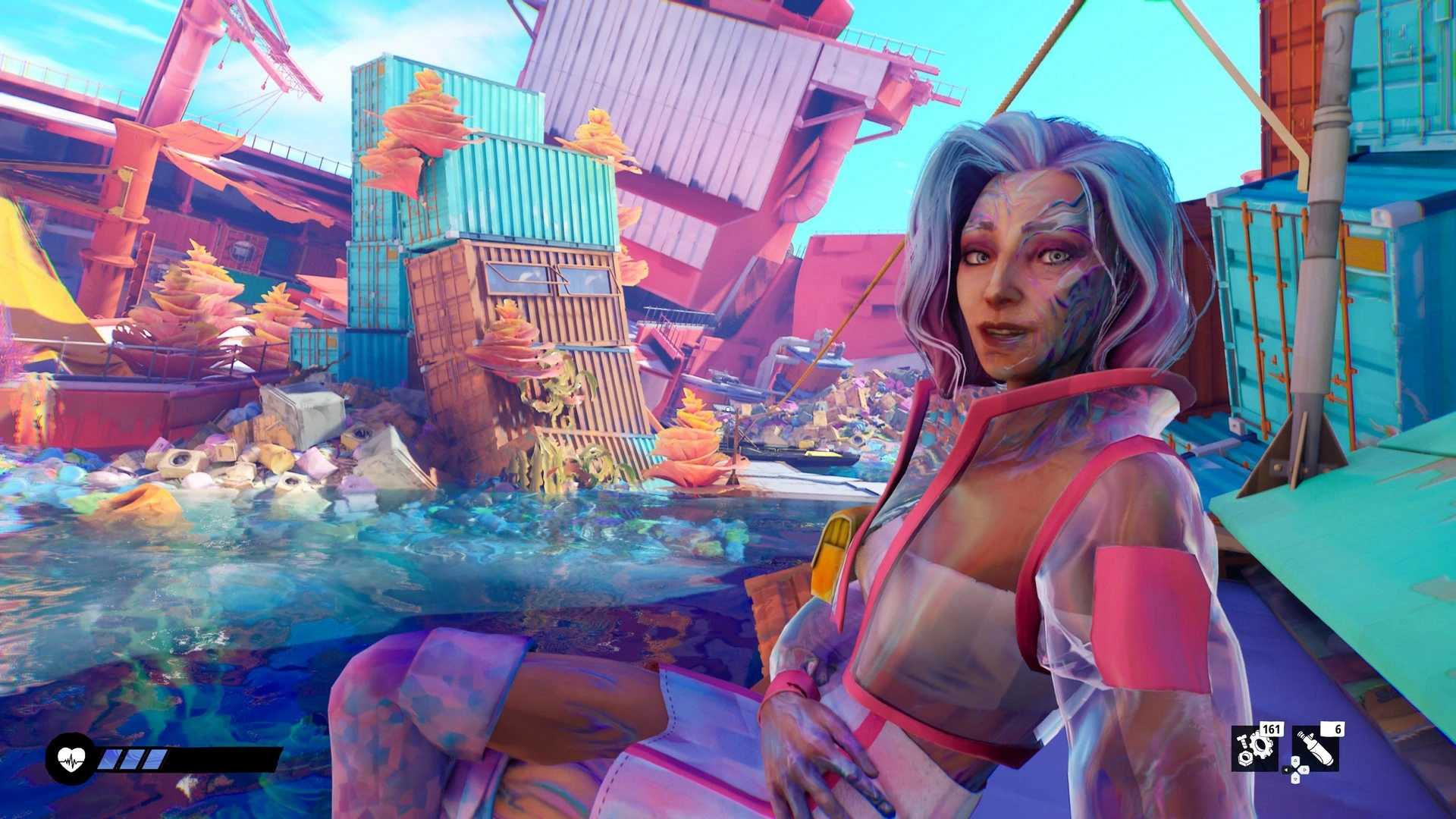

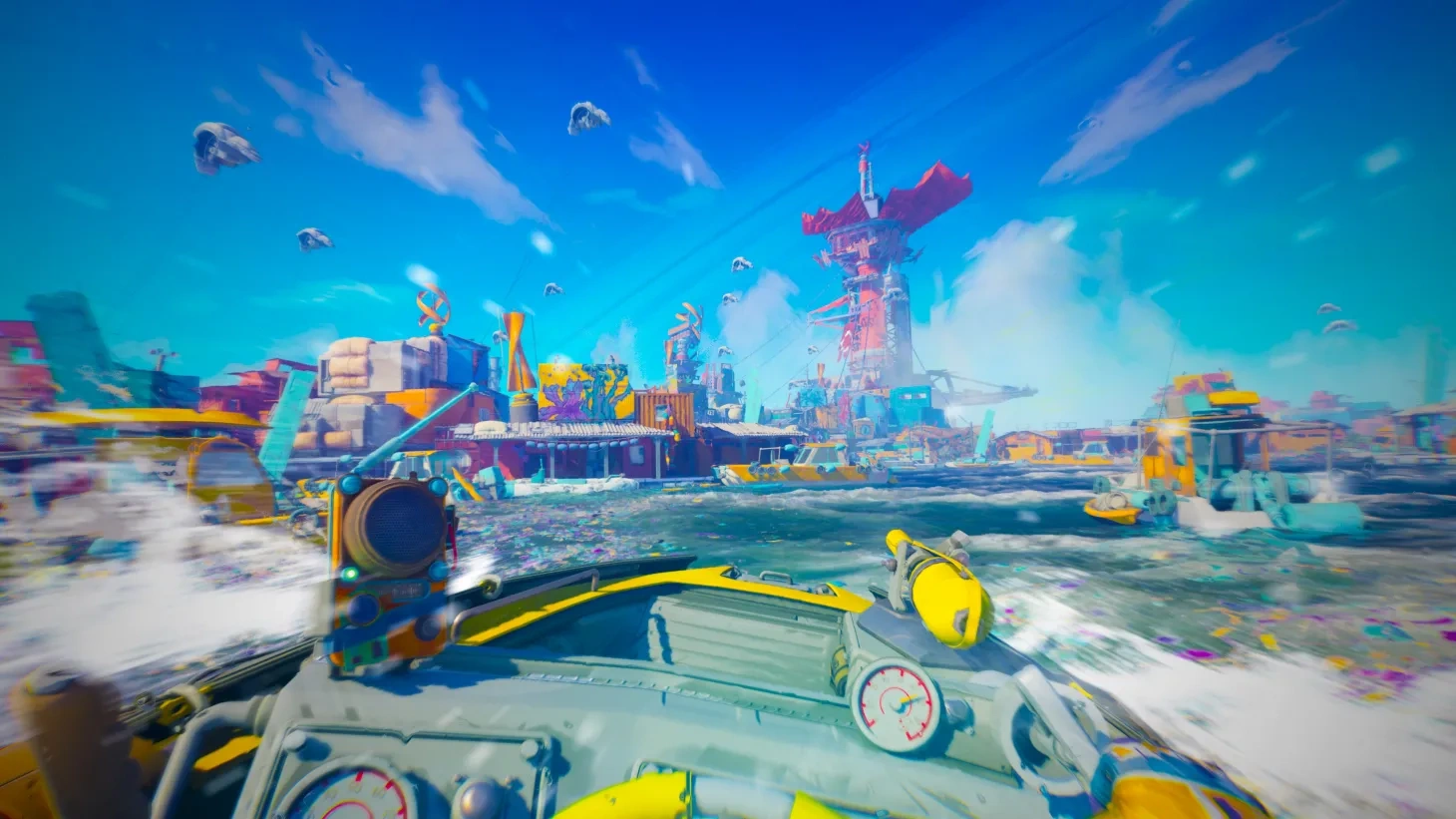
Earth in Tides of Tomorrow has become a graveyard covered by ninety percent water. Civilization clings to makeshift platforms, floating ruins, and endless piles of synthetic trash. That setting shapes the game’s “plasticpunk” identity, a style where bright color sits over a collapsing ecosystem.
The main threat is Plastemia, a horrific sickness that replaces living tissue with microplastics. Victims harden into multicolored mannequins, then become plastic corpses. Survival depends on Ozen, a rare drug that slows the infection.
You enter this world as a Tidewalker, a person with a psychic connection to others like you. You belong to the Deltas, the remaining fragments of modern humanity trying to survive on scattered islands. The spaces around you are small sanctuaries of trade and entertainment built inside a flooded, dystopian free-for-all. The game’s setting works best through its physical bluntness: a planet choking on its own waste, with every platform, corpse, and bottle of medicine tied to that larger collapse.
The Social-Link and the Ghost of the Predecessor
The StoryLink system is the game’s main mechanical idea. It works through asynchronous multiplayer, asking you to choose a predecessor and follow their path through the world. Visual apparitions appear in your field of view, showing the exact movements of a previous human player. These translucent figures can point toward hidden routes, puzzle answers, or the results of dialogue choices.
The system gains texture through consistency. NPCs remember your predecessor’s actions. If that player helped a faction, guards may greet you warmly. If they used violence, you may face hostility or demands for bribes. The same logic applies to the environment. A resource cache may already be empty because the player before you valued their own survival. Your choices then produce an eight-digit seed code for the next person who enters the chain.
That structure keeps you aware of the strangers who passed through before you. The mechanic recalls ideas seen in Death Stranding, especially the sense that unseen players can shape your experience. A predecessor’s selfishness matters when they hoard Ozen. Their generosity matters when they leave useful emotes behind. The game turns isolation into shared memory, with each run marked by traces of another person’s priorities.
The system also creates friction. The jittery ghosts may break immersion for some players. Their alerts can reveal the results of decisions before you reach those moments yourself. Since the game requires you to follow another player, the story can feel partly borrowed. You witness consequences before making your own call, which weakens the sense of discovery common to other RPG titles. The result is a single-player experience built from inherited history. You adjust to a world state that you had only partial control over.
Survival Mechanics in a Flooded Wasteland
The core loop unfolds from a first-person perspective. Movement includes jumping, crouching, and running through linear stages. Stealth becomes necessary in areas controlled by aggressive clans such as the Marauders. Your boat functions as a mobile headquarters, and upgrades improve travel between island hubs. On the water, ship combat and high-speed racing events add bursts of activity between exploration stretches.
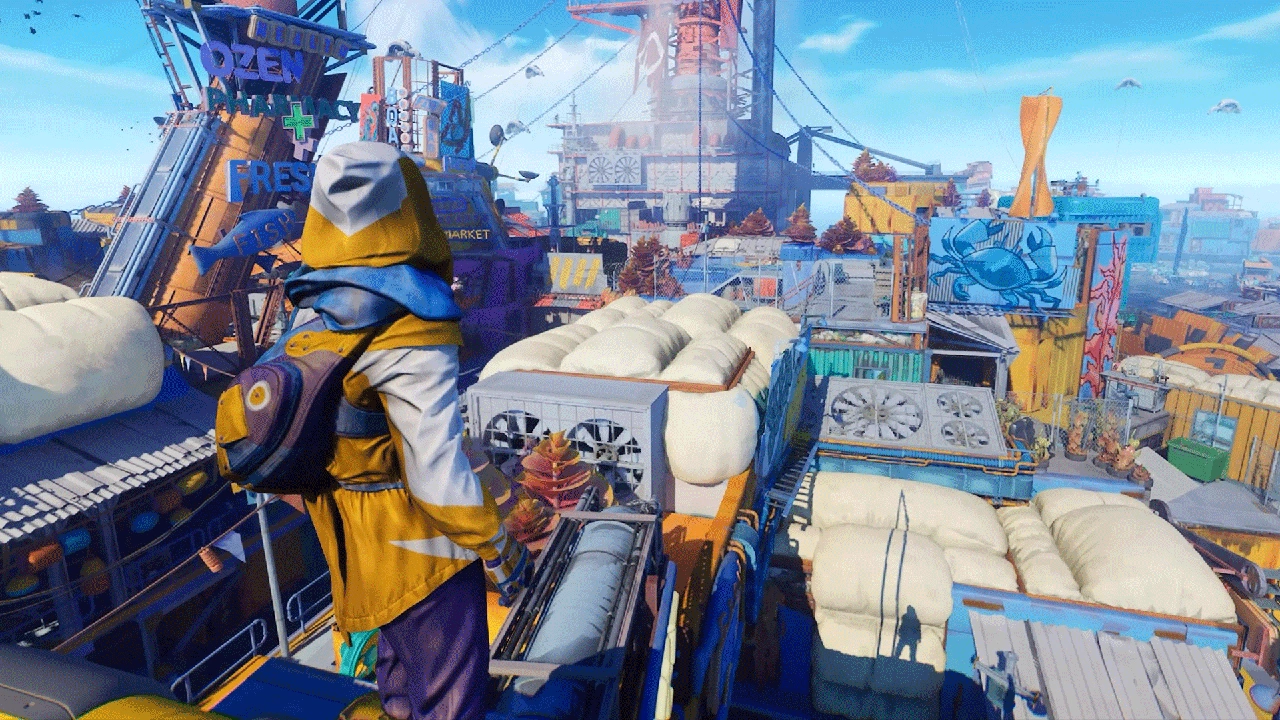
Those systems help vary the rhythm, yet the controls can feel clunky. The speedboat relies on a twin-stick mechanism that often lacks precision. Movement has a heaviness that suits the harsh world, though it can also make basic traversal feel awkward.
Resource management drives most of the tension. Scrap serves as currency, and Ozen becomes the object you constantly hunt. The Plastemia meter tracks the disease inside your body. If it fills, your character dies. That meter gives every search and detour a quiet pressure. Each bottle of Ozen creates a practical decision: use it to stay alive or place it in a communal chest for future players.
That choice gives the game’s ethical structure a mechanical form. Self-preservation and community aid are built into the resource loop. The pacing remains slow. Much of your time is spent searching for secrets, hiding from enemies, and watching your supplies. At times, the game feels close to a walking simulator with survival meters attached. These systems still give the Tidewalker abilities a grounded texture. Your psychic role matters, yet the moment-to-moment play keeps reminding you that you are a scavenger before you are a hero.
Factional Logic and the Weight of Choice
Three major factions compete for control in this flooded world: the Marauders, the Reclaimers, and the Mystics. Each group has a different plan for humanity, and their aims often collide. The narrative avoids clean moral sorting. One dilemma may ask you to choose between painful experiments on animals and protection of the ecosystem. Decisions carry ethical weight because every option sits inside a world already damaged by human appetite.
Characters such as Nyx stress the transactional nature of survival here. Relationships are shaped by trade, need, and immediate gain. The cast uses familiar types, including a tough caring woman and religious zealots with unclear motives. The dialogue sometimes leans on quips that feel misplaced in an apocalypse, especially in scenes built around scarcity, illness, and ecological ruin.
The story follows a linear path, but inherited player data changes the tone of each encounter. NPC opinions can shift in ways that feel disconnected from your own behavior. You may receive praise because someone before you acted kindly. That instability supports the theme of legacy, though it can also distance you from your role in the plot.
Your responses shape the state of the planet for the next Tidewalker. You are one link in a long chain of survivors, carrying damage forward or leaving small forms of help behind. The game’s bright, saturated visuals create sharp tension against the horror of bodies turning into plastic. By the end, your digital presence remains in the world as guidance or warning. Your choices trigger a chain of events that leads into a significant ending.
The Review
Tides Of Tomorrow
Tides of Tomorrow succeeds as a social experiment while stumbling as a traditional action game. The StoryLink system creates a connection between players that few titles achieve. However, imprecise controls and a slow gameplay loop hinder the experience. It is a bold, visually striking look at a plastic-choked apocalypse that prioritizes narrative legacy over mechanical polish. This title stands as a proof of concept for a fresh way to experience shared stories.
PROS
- Original social mechanics
- Striking visual design
- Meaningful player choices
CONS
- Clunky boat handling
- Slow movement speed
- Frequent immersion breaks