





















![Kingdom Hearts Collection [I-III] Review](https://gazettely.com/wp-content/uploads/2026/10/Kingdom-Hearts-Collection-I-III-1-360x180.webp "Kingdom Hearts Collection [I-III] Review: KHII Holds Steady as Newer Entries Fluctuate 37")




A hippopotamus in a Louisiana swamp sounds like a screenwriter lost a bet, which is already a decent starting point for a creature feature. Hungry understands the comic absurdity of that image, then does the wise thing: it refuses to wink itself to death. James Nunn’s survival thriller takes a premise that could have played like parody and treats it with enough seriousness to make the joke curdle into danger.
The film sends a group of tourists into the bayou for an alligator tour, a phrase that already carries legal-waiver energy. Sistine and Hannah arrive in New Orleans looking for a break from ordinary pressure, then join Rodrigo’s boat with a handful of strangers. The trouble begins with a bribe. Dionne wants a photo of a rumored giant gator, Rodrigo accepts the cash, and the route shifts away from safety into the kind of watery nowhere horror films keep on retainer. Then the hippo arrives.
The film’s smartest early move is explaining why such an animal could exist there. It uses strange American history and local myth to make the animal feel like a buried consequence rather than a random gag. Call it ecological absurdism: nature returning in the wrong place because humans, as usual, were very clever for five minutes and reckless for decades.
The People on the Menu
Madison Davenport gives Sistine a steadier emotional spine than the script always earns. She begins as someone already defeated before the bayou touches her, fired after a denied vacation request and carrying the kind of financial and family pressure that makes leisure feel stolen. That detail matters because Hungry is at its best when survival does not begin with the monster. For Sistine, survival has already been a daily condition.
The film makes her almost suspiciously capable. She climbs trees, swims through panic, slips through tight spaces, and moves under the damaged boat toward a tracker system while firelight flickers over the water. A passing line about her old gymnastics background explains some of this, technically.
Emotionally, it still feels like the film found its Final Girl and then started assigning her abilities from a wilderness skill menu. I did laugh once at how much she could do. Then I stopped laughing, because Davenport sells the fear behind the competence.
Hannah gives Sistine a human tether, and the rest of the group works in clean genre shapes. Tim, a retired first responder, brings practical calm. Sally and Mikey add family stakes. Rodrigo’s bad choice creates the nightmare without turning him into a cartoon villain. Walker, played by Joaquim de Almeida, enters as the grizzled hippo authority, the kind of man who seems to know the swamp’s secrets because he has spent years losing arguments with common sense.
Dionne is the most useful irritant. She arrives with luggage, heels, entitlement, and enough terrible decisions to make the hippo seem morally organized. Every creature feature needs one person who makes the audience reconsider its allegiance to humanity. Dionne performs that civic function.
Waiting Beneath the Water
Nunn delays the full hippo reveal for a long stretch, and this choice both helps and hurts the film. At first, it works. The water shifts. A body vanishes. Something massive moves below the surface with no interest in giving the camera a clean look. The bayou becomes a moral object, opaque and indifferent. Characters cling to trees or wreckage, calculating distance in screams.

The problem is rhythm. Hungry sometimes waits so long to serve its main attraction that anticipation turns into impatience. Watching characters retrieve supplies from the water can create tension once. After that, the film has to vary the pressure or risk making the swamp feel like a waiting room with mosquitoes. The action also stutters after the creature appears, as if the film briefly forgets that it has released a giant mouth into the story.
Yet several sequences land with real force. Sistine’s submerged attempt to reach the tracker is the film’s cleanest suspense construction. The geography is readable, the danger is immediate, and the firelit surface above her turns the water into a ceiling that might collapse. The scene works because it turns a simple task into a philosophical trap: rescue requires entering the thing that wants to erase you.
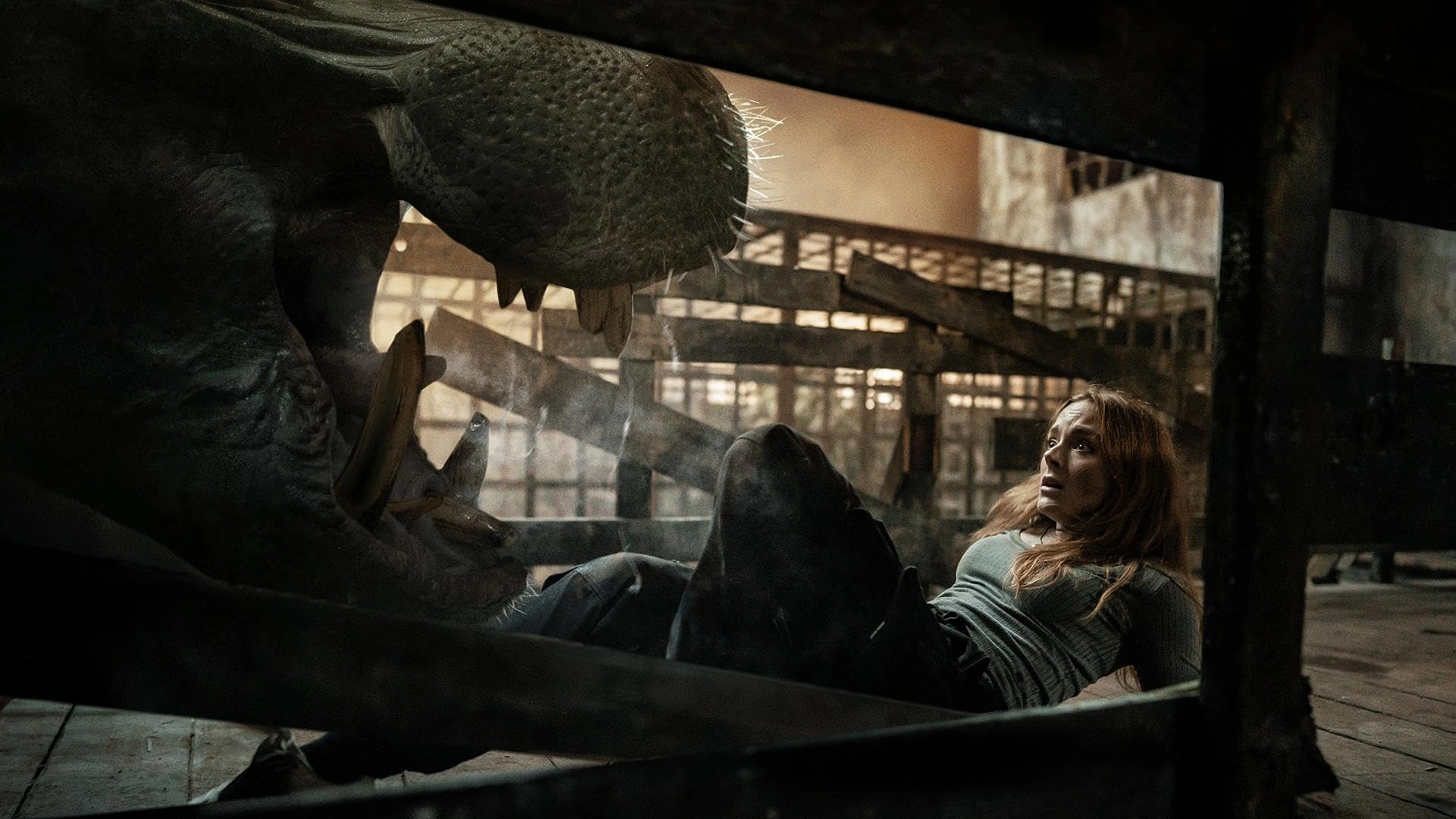
The hippo itself becomes more frightening once the film stops protecting it from view. The cavernous mouth shots are wonderfully grotesque. The tusks have weight. The animal’s speed in water gives the attacks a blunt unfairness. Hungry may cut away from some gore too early, leaving a few deaths less nasty than they should be, but the best moments understand the primal terror of scale. A human body looks very theoretical beside that mouth.
The Monster Has Its Own Argument
Job Reineke’s cinematography gives the swamp a convincing hostility. The dark water is rarely just background; it is a surface that hides intent. Night scenes use fire reflections and heavy shadow to make the characters look trapped between elements. The production design helps sell the illusion, especially around the Broussard Hippo Farm, with its cages, industrial clutter, worn structures, and strange museum-like residue of human control.
The effects are uneven in motion, which is nearly unavoidable with a creature this large. Still, the hippo has texture and presence. Practical touches give it a physical ugliness that pure digital spectacle often lacks. It feels like a beast with mass, and mass is the whole theology of the hippo. It does not need cunning. It has physics.
The film also avoids the laziest animal-attack mistake: giving the creature a human evil. This hippo is territorial, protective, and shaped by captivity. The trapped baby hippo and the history of human interference give the violence a reason without turning the film into a lecture. The animal kills because humans have entered a space they do not understand and tried to own what could never be domesticated. This is not subtle, but subtlety would be a strange request from a movie where a tourist may be swallowed by a hippopotamus.
Hungry still follows the old river-cruise disaster map. The bribe, the wrecked boat, the stranded group, the expert hunter, the designated fool, the final survivor gauntlet: all of it has been gnawed before by sharks, crocodiles, snakes, and every other animal cinema has accused of poor manners. The swap matters, though. A hippo changes the texture of the fear. It takes an animal softened by cartoons, zoos, and childhood games, then restores its ancient insult: you were never safe around this thing. You were merely looking at it from behind glass.
The creature-feature survival thriller Hungry expanded from its limited theatrical window on June 3, 2026, to its official premium home entertainment rollout via Aura Entertainment on June 23, 2026. Directed by James Nunn, the high-stakes narrative centers on a group of thrill-seeking vacationers who book an exclusive riverboat tour through the dense, treacherous Louisiana swamplands. Their adventure takes a terrifying turn when they stray off the standard tourist paths and are forced into an impossible battle for survival against a highly aggressive, rampaging hippopotamus lurking beneath the bayou’s murky waters.
Where to Watch Hungry (2026) Online






Full Credits
Title: Hungry
Distributor: Aura Entertainment, Signature Entertainment
Release date: June 3, 2026 (United States Theatrical Release), June 23, 2026 (Digital and VOD Release)
Rating: 15 (United Kingdom)
Running time: 93 minutes
Director: James Nunn
Writers: James Nunn
Producers and Executive Producers: Ben Jacques, Marc Goldberg, Sarah Gabriel
Cast: Madison Davenport, Tracey Bonner, Joaquim de Almeida, Michel Curiel, Samantha Coughlan, Olivia Bernstone, Jim Meskimen, River Codack, Joe Azzopardi
Director of Photography (Cinematographer): Luke Bryant
Editors: Livio Albertelli
Composer: Austin Wintory
The Review
Hungry
Hungry takes a ridiculous premise and treats it with just enough conviction to make the absurdity bite. Its human drama is thin, and the pacing occasionally waits too long at the water’s edge, but the film understands the primal comedy and terror of a hippopotamus restored to its proper status: a massive, territorial engine of bad news. When Sistine dives under the boat or that mouth fills the frame, the movie knows exactly what it came to do.
PROS
- Strong hippo concept
- Madison Davenport’s grounded lead turn
- Effective tracker sequence
- Tangible swamp production design
- Animal logic with real bite
CONS
- Uneven pacing
- Thin supporting characters
- Some tame attack cutaways
- Sistine’s skills feel underwritten
- Familiar survival structure