


















![Kingdom Hearts Collection [I-III] Review](https://gazettely.com/wp-content/uploads/2026/10/Kingdom-Hearts-Collection-I-III-1-360x180.webp "Kingdom Hearts Collection [I-III] Review: KHII Holds Steady as Newer Entries Fluctuate 37")



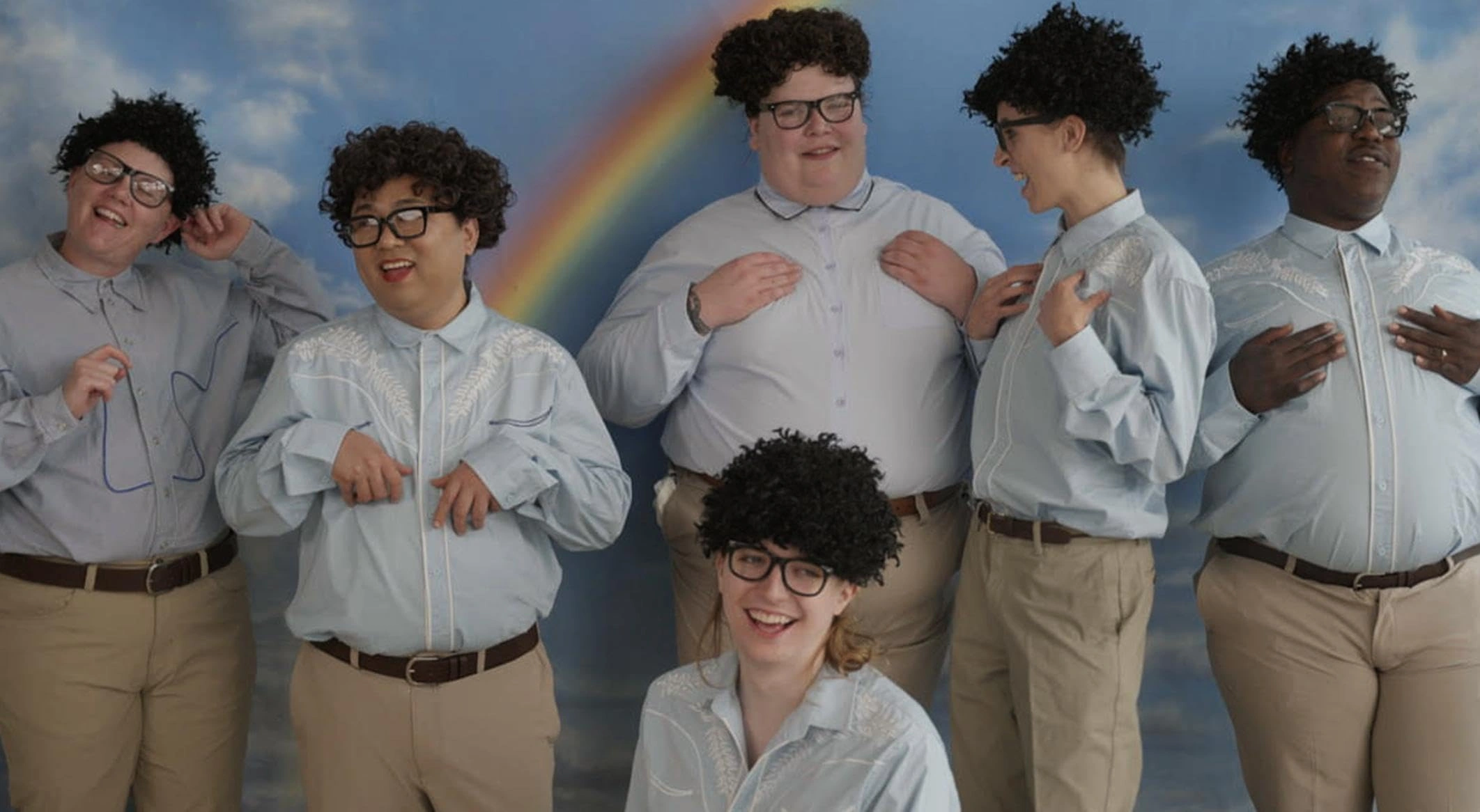

Pat was once a punchline people could quote without asking why the room was laughing. Julia Sweeney’s Saturday Night Live character arrived in 1990 with oversized glasses, curly black hair, tan slacks, and a light blue Western shirt, moving through sketches where everyone nearby became frantic over one question: is Pat a man or a woman? The joke had a surface rhythm, with side characters tossing out coded questions and Pat answering in ways that made the mystery harder to solve.
Rowan Haber’s We Are Pat treats that rhythm like an old game mechanic with an unstable emotional payload. It still produces laughs. It also produces a wince. Haber, a lifelong Pat fan, approaches the character with affection and unease, asking how a figure that gave some nonbinary viewers a strange flash of recognition could also hand bullies a ready-made target. That tension gives the documentary its pulse.
The Room That Rewrites the Joke
The film’s richest scenes come from the writers’ room Haber assembles, filled with trans and nonbinary comics including Roz Hernandez, Brontez Purnell, Nori Reed, James Tom, Ally Beardsley, Murray Hill, and Ever Mainard. Their task is practical, not ceremonial: take Pat apart, find the live wires, and see if the character can function without making gender ambiguity the wound.
The process is funny because comedians are doing the work. They do not handle Pat like a museum object. They test bits, argue over intent, laugh at ideas that probably should not work, and keep returning to the same thorny question: who was the target? In the old sketches, Pat’s coworkers, neighbors, and strangers behave like detectives assigned to someone else’s body.
The Christopher Walken sketch pushes that panic into grotesque absurdity, turning uncertainty into a crisis so severe that the surrounding character cannot survive it. That kind of joke can be read two ways. Pat may be the calm one in a room of lunatics. Pat may also be the spectacle.
We Are Pat is sharpest when it lets both readings sit in the same chair. Several comics describe seeing themselves in Pat before they had a vocabulary for nonbinary identity. That recognition mattered. It came wrapped in embarrassment, which also mattered. The documentary understands that representation can hurt and help in the same breath. Anyone who has ever loved a messy piece of media because it offered the only mirror available will recognize the ache here.
The new Pat material has flashes of real promise. Multiple Pats appear across different races, bodies, and styles, turning one ambiguous figure into a whole comic swarm. An extreme right-wing Pat idea lands because it moves the joke away from “what are you?” and toward the absurdity of ideology, performance, and self-presentation. That shift matters. The same comic shape produces a different feeling when the people inside the joke control the frame.
Sweeney at the Table
Julia Sweeney’s presence gives We Are Pat its most affecting arc. She enters the documentary as the creator of a character who escaped her control, which is a familiar story in comedy, only sharper here because Pat touched people who were rarely allowed to see themselves on mainstream television.
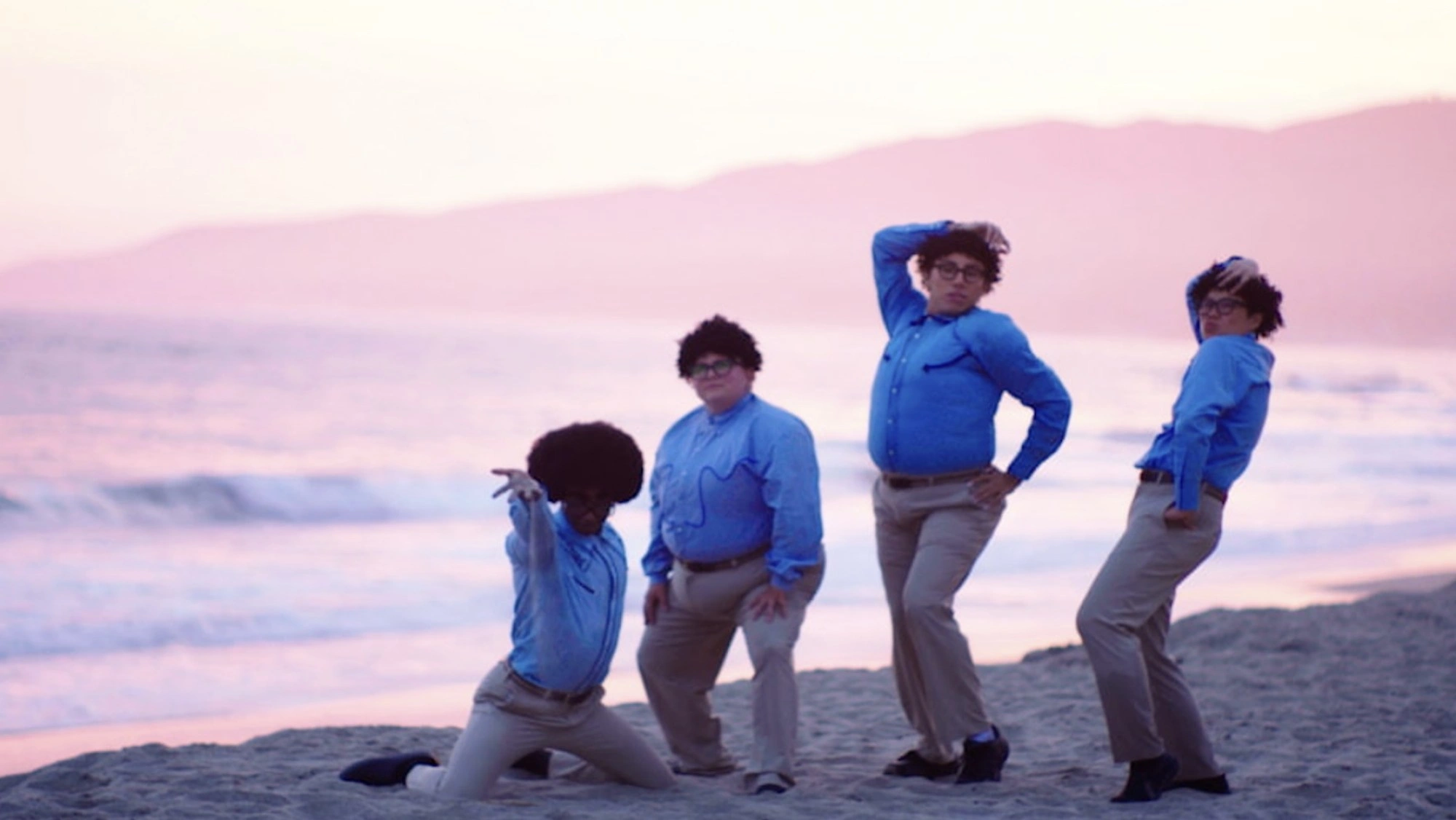
Sweeney explains that Pat was born less from a theory of gender than from a survival instinct inside a male-dominated Saturday Night Live. She was trying to get something on air in a room shaped by strong male personalities and comic assumptions that did not leave much space for her. Her early attempt at male drag did not work; the ambiguity became the joke because the performance could not be pinned down either way. That detail is revealing. Pat was not designed as a manifesto. Pat emerged from failure, pressure, and adaptation.
The meeting between Sweeney and the comics is the film’s best emotional mechanism. Sweeney arrives braced for judgment, and the room gives her something harder: critique with generosity. The comedians tell her what Pat meant to them, where the sketches caused harm, and why the character still has a strange pull. Sweeney’s apology does not feel like a public-relations beat because the film has already shown her listening. Her face changes as she hears that Pat could be both a lifeline and a source of ridicule.
There is a quiet power in watching her become kinder to her younger self without excusing every consequence of the work. The documentary does not ask her to disown Pat. It asks her to sit with the people who inherited Pat.
A Reclamation That Scatters
The film is warmer than it is tidy. Haber starts with a clear dramatic engine: reclaim Pat by writing and performing a new version of the character. Then the documentary widens into a looser portrait of trans and nonbinary comedy, with stage clips, talking-head interviews, personal reflections, and old Saturday Night Live footage braided together. Much of that material is valuable. Some of it pulls the film away from the thing it promised to build.
That looseness affects the final stretch. By the time the new sketch arrives, the writing-room process has become richer than the finished bit. The film spends so much energy on the emotional and cultural math around Pat that the actual reboot feels smaller than the conversations that shaped it. In a strange way, that weakness fits the subject. Reclamation is rarely as clean as a rewritten sketch. It is a room full of people laughing, flinching, correcting each other, trying again.
Haber’s personal connection keeps the film from turning into a detached media-studies exercise. Their fondness for Pat gives the documentary its tenderness, and their discomfort gives it honesty. The editing works best when it cuts from an old sketch to a modern comic explaining exactly why that same beat lands differently now. You can feel the old laugh changing temperature.
We Are Pat may not fully solve Pat, which is probably for the best. The film’s clearest insight is that the culture around Pat has not grown as much as it likes to think. People still treat gender ambiguity like a puzzle box placed in front of them for their own satisfaction. Pat, reframed by the people who once had to claim them through static, becomes less a fixed character than a test of the viewer’s reflexes. The question is no longer “what is Pat?” It is “why did you need to know so badly?”
The provocative independent documentary We Are Pat launched its global premium video-on-demand and digital streaming rollout via Tribeca Films on June 23, 2026, following its initial festival run in 2025. Directed by out trans filmmaker Rowan Haber, the feature dives into a critical, multi-generational interrogation of the iconic and polarizing 1990s Saturday Night Live sketch character “It’s Pat.” The film gathers a prominent group of contemporary queer and trans comedians alongside the character’s original creator and star, Julia Sweeney, attempting to deconstruct how the era’s cultural anxieties around gender nonconformity were weaponized into a national punchline while charting the complex lineage of modern trans visibility.
Where to Watch We Are Pat (2025) Online










Full Credits
Title: We Are Pat
Distributor: Tribeca Films
Release date: June 2025 (Tribeca Festival), June 23, 2026 (Digital Streaming Release)
Rating: 16+
Running time: 86 minutes
Director: Rowan Haber
Writers: Rowan Haber, Hannah Buck
Producers and Executive Producers: Caryn Capotosto, Brydie O’Connor, Rowan Haber, Lilly Wachowski, Chandra Jessee, Geralyn White Dreyfous, Stuart Ford, Marci Wiseman, Jenny Raskin, Frank Evers, Dawn Bonder, Daniel J. Chalfen, Shauna Schmunk, Eric Kuhn, Lauren Greenfield, Bill Harnisch, Ruth Ann Harnisch
Cast: Rowan Haber, Julia Sweeney, Abby McEnany, Ally Beardsley, April Clark, Brontez Purnell, Esther Fallick, Ever Mainhard, Grace Freud, Hayden Johnson, Nori Reed, Nico Carney, Roz Hernandez, Sabrina Wu
Director of Photography (Cinematographer): Mego Lin, Christine Ng
Editors: Hannah Buck, Alex Bohs
Composer: Erick Del Aguila
The Review
We Are Pat
We Are Pat works best as an emotional remapping of a joke that once gave viewers recognition through static. The writers’ room has the spark the finished sketch lacks, and Julia Sweeney’s scenes give the film its most humane movement. The structure drifts, with the broader portrait of trans and nonbinary comedy sometimes pulling attention away from Pat. Still, Rowan Haber finds something generous inside the discomfort: a way to ask why gender ambiguity ever needed to be treated like a punchline.
PROS
- Sharp writers’ room scenes
- Moving Julia Sweeney reckoning
- Strong trans and nonbinary voices
- Smart reframing of old sketches
- Funny, generous tone
CONS
- Loose middle stretch
- Final sketch feels small
- Focus drifts from Pat
- Process outshines payoff